Australia’s decision to halt the expansion of its F-35 Lightning II fleet is not a retreat from advanced airpower—it is a calculated pivot. At first glance, canceling or delaying a fourth squadron of one of the world’s most sophisticated fighter jets might seem counterintuitive, especially as regional security dynamics intensify. But beneath the surface lies a far more nuanced story shaped by capability optimization, budget strategy, and the rapid evolution of next-generation warfare.
The Royal Australian Air Force (RAAF) today stands among the most technologically advanced air forces in the Indo-Pacific. With 72 operational F-35A fighters, Australia has already secured a formidable edge in stealth, sensor fusion, and network-centric warfare. Yet instead of doubling down immediately, Canberra has chosen to step back—reallocating resources, extending legacy platforms, and buying time in a fast-changing defense landscape.
This is not about abandoning the F-35. It is about using it more intelligently.
Australia’s F-35 Fleet: A Powerful Backbone Already in Place
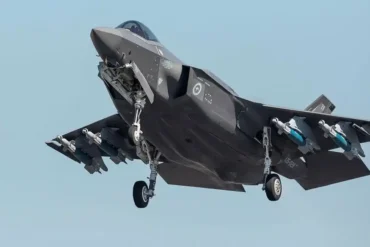
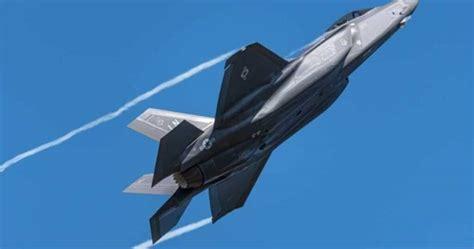
Australia’s F-35 program has been both ambitious and efficient. Having received its final aircraft in December 2024, the country now operates three full squadrons of F-35A Lightning II jets, making it the largest export customer of the program globally.
Unlike many allied nations still awaiting deliveries, Australia accelerated its acquisition timeline and achieved Final Operational Capability (FOC) by mid-2025. This milestone signifies that the fleet is fully mission-ready, capable of executing the full spectrum of operations—from air superiority to deep strike and electronic warfare.
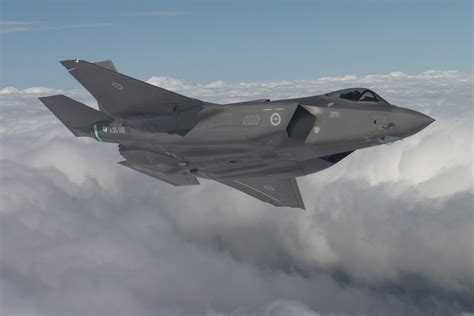
The significance of this cannot be overstated. The F-35 is not just another fighter jet—it is a force multiplier. With advanced stealth characteristics, cutting-edge avionics, and unparalleled data-sharing capabilities, even a relatively smaller fleet can outperform larger, less integrated forces.
This reality sits at the heart of Australia’s decision.
Why More F-35s Are Not Immediately Necessary
In a twist that surprises many observers, the F-35’s exceptional capability is one of the main reasons Australia paused further purchases. Defense officials have openly acknowledged that the aircraft has exceeded expectations in operational performance.
Instead of needing more jets to meet strategic requirements, Australia has found that its current fleet already delivers sufficient combat power and deterrence.
This creates a rare scenario in defense planning: the platform is so effective that it reduces the urgency for expansion.
From a strategic perspective, this allows Australia to avoid overcommitting to a single system too early—especially when technological advancements are accelerating toward sixth-generation platforms.
The Super Hornet Factor: Extending a Proven Workhorse
Another critical piece of the puzzle lies in Australia’s decision to extend the life of its F/A-18F Super Hornet fleet. Originally acquired as a stopgap solution during delays in the F-35 program, these aircraft have proven to be far more than temporary placeholders.
Rather than retiring them by the late 2020s, Australia will now keep its 24 Super Hornets operational into the 2040s, supported by ongoing upgrades.
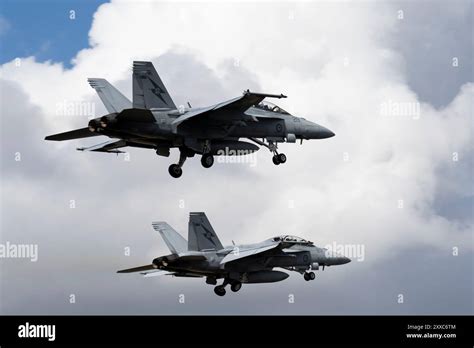
This move accomplishes several objectives at once. It preserves fleet size, maintains operational flexibility, and—most importantly—frees up billions in defense funding that would otherwise go toward additional F-35 purchases.
The Super Hornet remains a highly capable multirole fighter, still in production for the U.S. Navy and supported by a mature logistics ecosystem. Extending its service life is not a compromise—it is a strategic buffer.
Shifting Investment Toward Long-Range Strike Capabilities
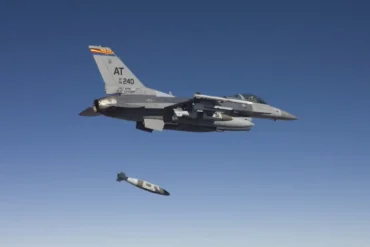
Instead of purchasing more aircraft, Australia is channeling resources into long-range missiles and advanced munitions. This shift reflects a broader transformation in modern warfare, where range, precision, and survivability increasingly outweigh sheer aircraft numbers.
In a potential high-intensity conflict, the ability to strike targets from a distance—while staying outside adversary defenses—can be decisive.
By investing in:
- Long-range anti-ship missiles
- Stand-off precision weapons
- Enhanced targeting and sensor systems
Australia is effectively increasing the lethality of its existing fleet without expanding it.
This approach also aligns with the realities of operating in the vast Indo-Pacific theater, where distances are enormous and forward basing options may be limited.
The Role of Electronic Warfare: Growlers and the F-35 Edge
Australia’s airpower advantage is further amplified by its fleet of EA-18G Growlers, making it the only country outside the United States to operate dedicated electronic warfare aircraft.
These jets specialize in jamming enemy radars, disrupting communications, and enabling strike missions in contested environments.
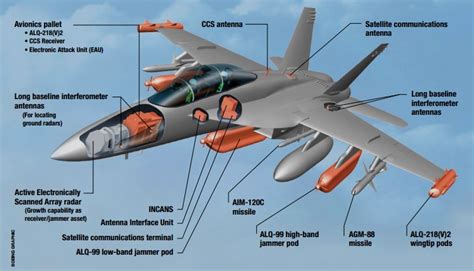
Interestingly, the F-35 itself is emerging as a formidable electronic warfare platform. Its advanced sensors and data fusion capabilities allow it to perform roles traditionally reserved for specialized aircraft.
In multiple international evaluations, the F-35 has demonstrated the ability to outperform combinations of legacy fighters and support aircraft, even when operating alone.
This dual capability—stealth strike and electronic warfare—further reduces the need for a larger fleet.
Political Dynamics and Defense Priorities
Australia’s internal political landscape has also influenced the decision. While there is broad consensus on maintaining a strong air force, opinions differ on timing and procurement priorities.
The Coalition government previously signaled support for expanding the F-35 fleet to the full program of record of 100 aircraft. However, following the 2025 election, the Labor government opted to delay the decision.
This divergence reflects a classic defense dilemma: whether to invest now in proven systems or wait for future technologies.
By postponing the purchase, the current government retains flexibility—keeping the option open without committing prematurely.
Waiting for the Future: Sixth-Generation Fighters and Beyond
Perhaps the most compelling reason behind the delay is the emergence of sixth-generation fighter programs, which promise to redefine air combat.
Australia is actively exploring participation in the Global Combat Air Programme (GCAP)—also known as Tempest—being developed by the United Kingdom, Japan, and Italy.
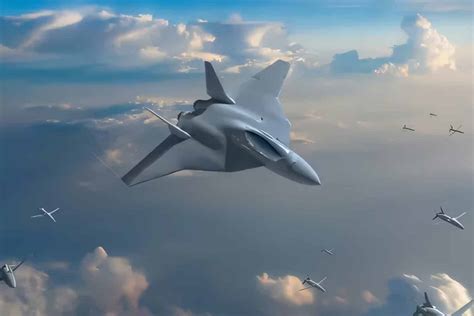
Expected to enter service around 2035, the Tempest/GCAP platform aims to integrate:
- Advanced stealth beyond current standards
- Artificial intelligence-assisted decision-making
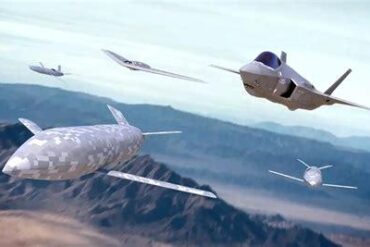
- Swarming drone control (loyal wingmen)
- Next-generation sensors and weapons
At the same time, the United States is developing its own next-gen air dominance fighter, sometimes referred to as the F-47.
By delaying additional F-35 purchases, Australia positions itself to evaluate these emerging options before committing to another generation of aircraft.
It’s a bit like holding off on buying a new smartphone when you know a revolutionary model is just around the corner—except the price tag is measured in billions.
The MQ-28 Ghost Bat: A Glimpse Into Autonomous Warfare
Australia’s future airpower strategy is not limited to manned fighters. The MQ-28 Ghost Bat, a domestically developed loyal wingman drone, represents a major leap toward autonomous and semi-autonomous combat operations.
Designed to operate alongside crewed aircraft like the F-35, the Ghost Bat can perform missions such as:
- Intelligence, surveillance, and reconnaissance (ISR)
- Electronic warfare support
- Decoy and attrition roles
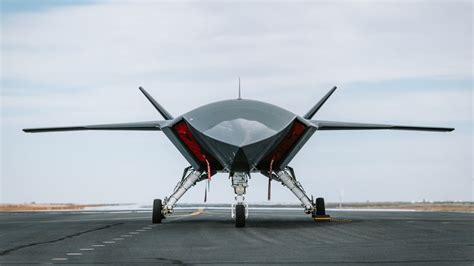
The integration of such systems could fundamentally change force structure requirements. Instead of increasing the number of expensive manned jets, Australia may achieve greater combat mass through unmanned teaming concepts.
This further supports the decision to pause F-35 expansion.
Logistics, Sustainability, and Real Combat Readiness
Raw aircraft numbers often dominate headlines, but real combat effectiveness depends on less visible factors: maintenance capacity, pilot training, munitions stockpiles, and logistical resilience.
Australia’s approach acknowledges this reality. By reallocating funds, the country can strengthen:
- Pilot training pipelines
- Maintenance and spare parts availability
- Weapon stockpiles (“magazine depth”)
- Operational readiness rates
A smaller, fully supported fleet can outperform a larger one that struggles with sustainment.
This is where strategy quietly outclasses spectacle.
Will Australia Eventually Buy More F-35s?
The door remains open—and that’s the key takeaway.
Australia’s original plan for 100 F-35s has not been canceled outright. Instead, it has been deferred. Future governments could still proceed with acquiring the remaining 28 aircraft, especially if strategic conditions demand it.
However, the longer the delay, the more alternatives will emerge. By the early 2030s, Australia could be choosing between:
- Expanding its F-35 fleet
- Investing in sixth-generation fighters
- Scaling up autonomous systems
- Or blending all three into a hybrid force
That flexibility is precisely what the current strategy is designed to preserve.
Conclusion: A Strategic Pause, Not a Step Back
Australia’s decision to halt its fourth F-35 squadron is not driven by doubt—it is driven by confidence. Confidence in the capability of the F-35, in the continued relevance of the Super Hornet, and in the transformative potential of future technologies.
Rather than rushing into additional purchases, Australia is optimizing what it already has while preparing for what comes next. It is balancing immediate readiness with long-term innovation—a delicate act that requires both restraint and foresight.
In an era where defense decisions carry immense financial and strategic weight, sometimes the smartest move is not to accelerate—but to wait, watch, and choose the right moment to strike.