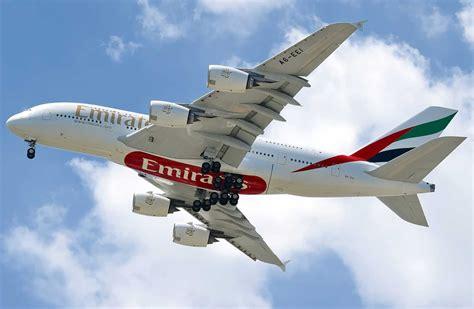
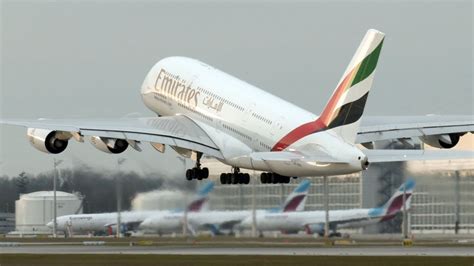
The idea that an airline would acquire another Airbus A380 in today’s market feels almost absurd. The aircraft is no longer in production, widely considered commercially flawed, and steadily disappearing from global fleets. Yet, in 2025, Emirates did exactly that—at least on paper.
But this wasn’t a nostalgic purchase or a symbolic gesture. It was a calculated, strategic move that reveals far more about fleet economics, long-term planning, and the brutal realities of operating the world’s largest passenger aircraft than it does about sentimentality.
To understand why Emirates made this decision, you have to look beyond the headline—and into the machinery of global aviation finance.
The “New” A380 That Wasn’t New at All
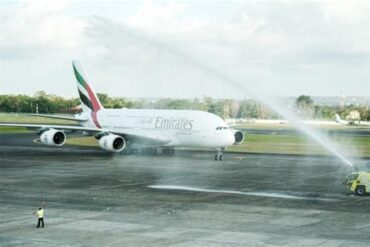
In October 2025, aircraft asset manager Stratos confirmed that Emirates had agreed to purchase an Airbus A380 it had already been operating for years. The aircraft, registered as A6-EOO, had originally been delivered in 2015 and leased under a long-term agreement.
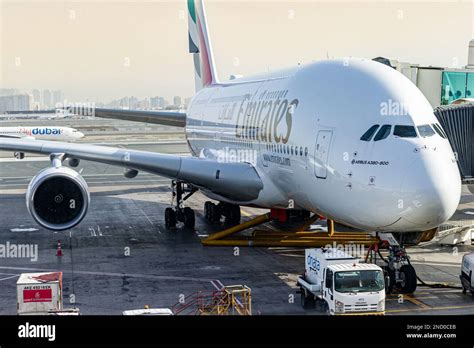
This wasn’t a case of Emirates adding capacity or expanding its fleet. Instead, it was a classic lease-to-own transition—a financial maneuver where the operator converts a long-held leased asset into a fully owned one.
That distinction matters.
For airlines, leasing aircraft provides flexibility. It reduces upfront capital expenditure and allows fleets to scale up or down with demand. But over time, particularly for aircraft that remain central to operations, ownership becomes more attractive. It eliminates lease payments, increases asset control, and simplifies long-term planning.
In this case, Emirates didn’t “gain” a new aircraft—it tightened its grip on an existing one.
Why Ownership Matters More Than Ever
The timing of this purchase is no coincidence. The aviation leasing market has undergone profound changes in recent years, particularly following geopolitical shocks like the 2022 sanctions on Russia, which exposed the vulnerabilities of lease-heavy fleets.
At the center of the leasing world sits AerCap, the largest owner of commercial aircraft globally. Companies like AerCap—and smaller players like Stratos—have long dominated aircraft ownership, leaving airlines dependent on external financing structures.
But dependence has risks.
When leasing relationships sour or geopolitical events intervene, access to aircraft can become uncertain. By purchasing the A380 outright, Emirates reduces its exposure to external lessors and gains full operational sovereignty over a critical asset.
For an airline that relies heavily on a single aircraft type, that level of control is invaluable.
Emirates’ Radical Bet on the Airbus A380
No airline in history has committed to the A380 like Emirates. While most carriers treated the aircraft as a limited experiment, Emirates went all-in—ordering 123 units, nearly half of total global production.
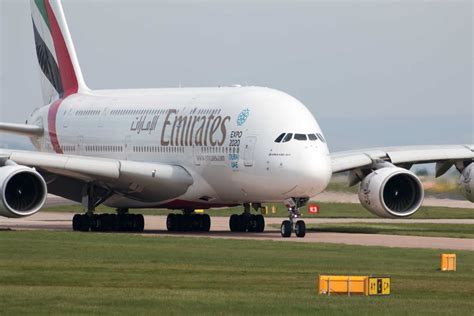
This scale changes everything.
Where other airlines struggled with the A380’s economics—high maintenance costs, complex logistics, and limited route flexibility—Emirates turned those weaknesses into strengths. By operating a massive fleet, it achieved:
- Economies of scale in maintenance and training
- Streamlined pilot certification pipelines
- Bulk procurement advantages for spare parts
- Operational consistency across long-haul routes
For smaller A380 operators, maintaining even a dozen aircraft meant sustaining an entire ecosystem—specialized mechanics, infrastructure, and supply chains—for a tiny fleet. That imbalance drove many airlines to retire their A380s early.
Emirates, by contrast, built its entire long-haul strategy around the aircraft.
Why the A380 Still Works in Dubai’s Unique Model
The A380 is not a universally viable aircraft. In fact, for most airlines, it’s a financial burden. But Emirates operates under a very specific model that allows the superjumbo to thrive.
At the heart of this model is Dubai International Airport, one of the world’s busiest long-haul hubs. Emirates channels massive volumes of passengers through this single hub, filling A380s on trunk routes connecting Europe, Asia, Africa, and the Americas.
This hub-and-spoke strategy is perfectly suited to the A380’s strengths:
- High-capacity routes with consistent demand
- Slot-constrained airports where larger aircraft maximize efficiency
- Premium-heavy cabins that generate high yields
Additionally, Emirates operates an all-widebody fleet, eliminating the complexity of mixed narrowbody operations. This simplifies scheduling, maintenance, and crew deployment—further enhancing the A380’s viability.
In short, Emirates didn’t just adapt to the A380. It built a system where the A380 makes sense.
A Mid-Life Asset Worth Owning
At around 10.5 years old, the purchased A380 sits squarely in the middle of its expected service life. Widebody aircraft typically operate for 25 to 30 years, though many A380s have been retired far earlier due to unfavorable economics.
For Emirates, however, this aircraft still represents decades of potential utility.
Owning it outright allows the airline to:
- Extend its operational life without lease constraints
- Modify or retrofit cabins without lessor approval
- Use the aircraft as a long-term parts source if needed
That last point is particularly important.
The Growing Importance of Cannibalization
With the A380 program officially dead, the global supply chain supporting the aircraft is slowly eroding. Manufacturers have shifted focus, suppliers are exiting the market, and producing new components is becoming increasingly difficult.
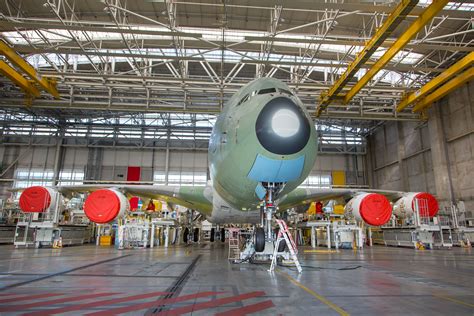
This creates a harsh reality: the future of the A380 depends on itself.
Airlines are increasingly turning to cannibalization—harvesting parts from retired aircraft to keep active fleets flying. It’s a practice common in both commercial and military aviation, but it becomes critical when production ends.
By owning more A380 airframes, Emirates strengthens its ability to:
- Maintain a steady supply of spare parts
- Reduce reliance on shrinking external supply chains
- Extend the lifespan of its active fleet
This transforms aircraft from mere operational assets into strategic inventories of components.
Why Other Airlines Walked Away
If the A380 can work so well for Emirates, why did so many other airlines abandon it?
The answer lies in scale—and in strategy.
Airlines like Air France, Lufthansa, and China Southern never operated enough A380s to justify the infrastructure required. Meanwhile, carriers such as Qatar Airways have openly criticized the aircraft, with executives labeling it a costly misstep.
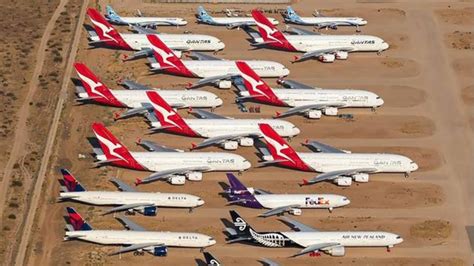
For these airlines, smaller, more flexible twin-engine aircraft like the Airbus A350 and Boeing 787 Dreamliner offered better economics:
- Lower fuel consumption
- Reduced crew requirements
- Greater route flexibility
- Easier integration into diverse networks
The industry shifted decisively toward efficiency over scale, leaving the A380 as a niche solution rather than a universal one.
Emirates’ Unfulfilled Dream: The A380neo
Despite the global retreat, Emirates has never lost faith in the A380 concept. Airline president Tim Clark has repeatedly expressed interest in a modernized A380neo—a version equipped with more efficient engines and updated aerodynamics.
However, Airbus has no intention of reviving the program.
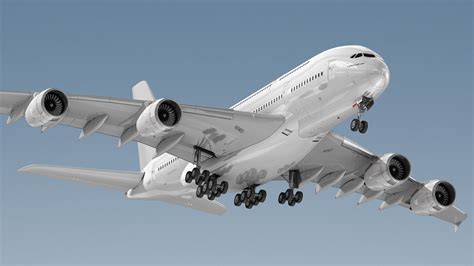
The economics simply don’t work. Developing a new variant would require billions in investment, and demand outside Emirates would be virtually nonexistent.
Airbus has instead focused on aircraft families like the A350 and future narrowbody replacements, effectively closing the chapter on the superjumbo era.
For Emirates, this means one thing: the existing fleet is all there will ever be.
Bridging to the Future: The Boeing 777X
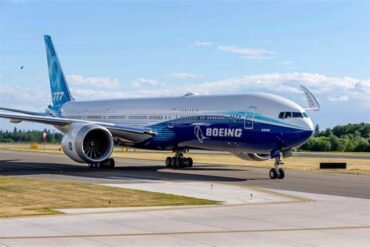
As the A380 gradually ages, Emirates is preparing for its eventual replacement. The airline has placed massive orders for the Boeing 777X, which will become the largest passenger aircraft in production once it enters service.
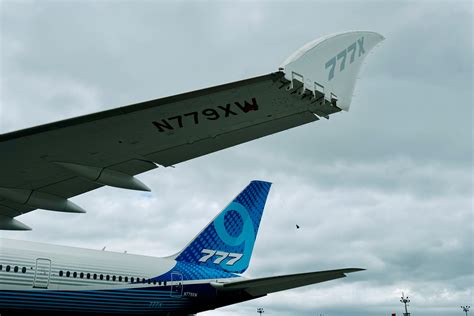
The 777X represents a different philosophy:
- High capacity, but not extreme
- Twin-engine efficiency
- Greater route flexibility
- Lower operating costs per seat
With 270 aircraft on order, Emirates is positioning the 777X as the backbone of its future fleet. Yet, the transition will take time, with deliveries expected to stretch into the next decade.
Until then, the A380 remains indispensable.
A Strategic Move Disguised as Routine Paperwork
Seen in isolation, the purchase of a single mid-life A380 might seem trivial. But in context, it reveals a deeper strategy.
Emirates is not expanding its A380 fleet—it is consolidating control, securing resources, and extending the viability of a unique operational model.
This move underscores several critical realities:
- The A380 is no longer a growth asset—it’s a managed legacy
- Ownership is becoming more valuable as external support declines
- Scale remains Emirates’ ultimate competitive advantage
In an industry that has largely moved on from the superjumbo, Emirates continues to extract value from it with remarkable precision.
The Final Chapter of the Superjumbo Era
The global A380 fleet is on a one-way trajectory toward retirement. Most airlines will phase out their aircraft by the mid-2030s, as maintenance costs rise and replacement options mature.
Emirates, however, may continue flying the A380 into the 2040s—long after others have exited the stage.
This isn’t stubbornness. It’s strategy.
By doubling down on ownership, leveraging scale, and adapting its operations, Emirates has turned what many consider a failed aircraft into a cornerstone of its identity and profitability.
The 2025 purchase of an “additional” A380 wasn’t about growth. It was about control, resilience, and maximizing the value of a fading giant.
And in doing so, Emirates has once again proven that in aviation, success isn’t determined by the aircraft itself—but by how intelligently it’s used.