Flying has evolved far beyond the simple choice of economy versus business class. In today’s global travel landscape, premium economy has firmly established itself as the optimal balance between comfort and cost, offering significant value to discerning travelers. First introduced in the early 1990s by EVA Air, this class has grown into a standard across major long-haul carriers. But what exactly makes it so compelling?
A Smoother Ground Experience from the Start
Unlike traditional economy, flying premium economy often begins with a noticeably smoother airport experience. Many airlines grant premium economy passengers access to dedicated check-in counters, significantly cutting down wait times. While this class typically does not include lounge access, benefits such as priority boarding and additional baggage allowance offer notable convenience.
Passengers board earlier than those in standard economy, meaning more time to settle in, organize carry-ons, and avoid the stress of crowded boarding areas. US-based airlines such as Delta (SkyPriority) and United (Premier Access) group these perks into seamless service tiers, enhancing efficiency at every step of the journey.
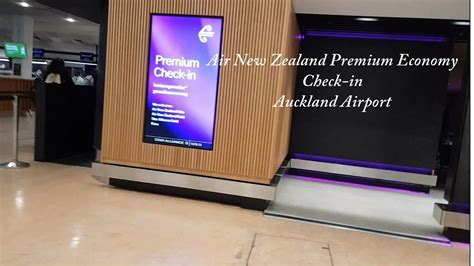
Once the journey concludes, premium economy flyers often enjoy expedited baggage claim, a subtle yet meaningful end to an overall upgraded experience. It’s not the opulence of first class, but it undeniably elevates the travel process from start to finish.
Comfort in the Skies: The Seat Is the Star
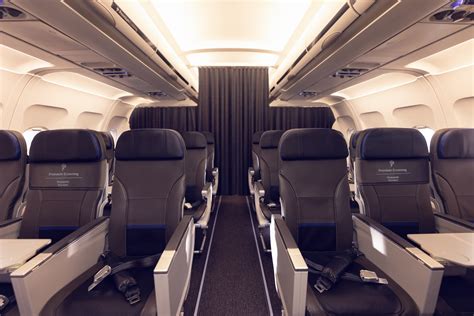
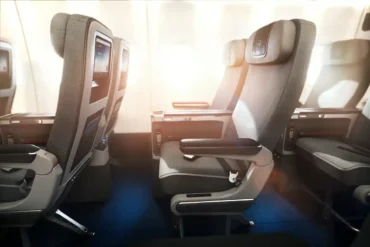
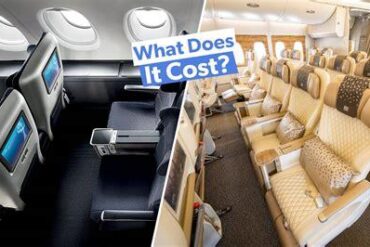
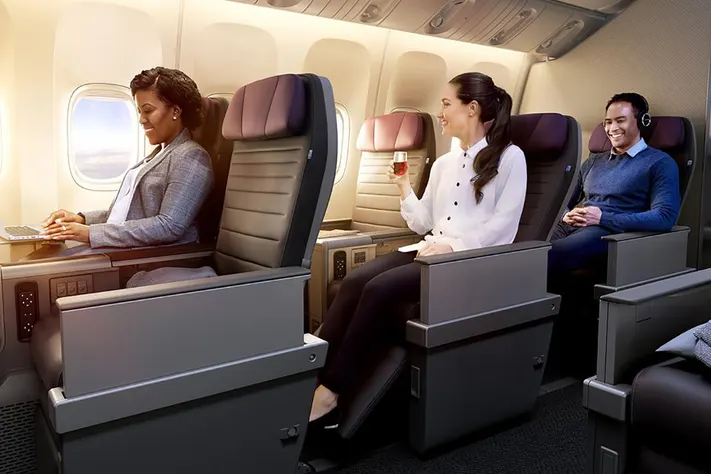
The seat is arguably the crown jewel of premium economy. While not quite the lie-flat experience of business class, premium economy seats offer significant upgrades over their economy counterparts. With 38–42 inches of pitch and wider dimensions, these seats provide tangible improvements in both legroom and personal space. Fewer seats per row — usually six to eight depending on the aircraft — translate into fewer middle seats and a less claustrophobic cabin environment.
These seats often feature recline functions, adjustable leg and footrests, and larger armrests that house your tray table and sometimes additional storage. Onboard aircraft like the Boeing 787, Airbus A350, and 777, the premium economy cabin is specifically designed for comfort, offering an experience closer to domestic first class than standard international economy.
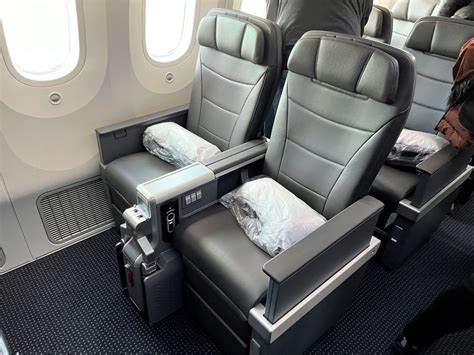
The inflight entertainment experience also receives an upgrade, with larger personal screens, enhanced headphone quality, and additional charging ports. Altogether, these enhancements make long-haul travel exponentially more pleasant, especially for those who may want rest without breaking the bank.
Dining and Service: Elevated Yet Approachable
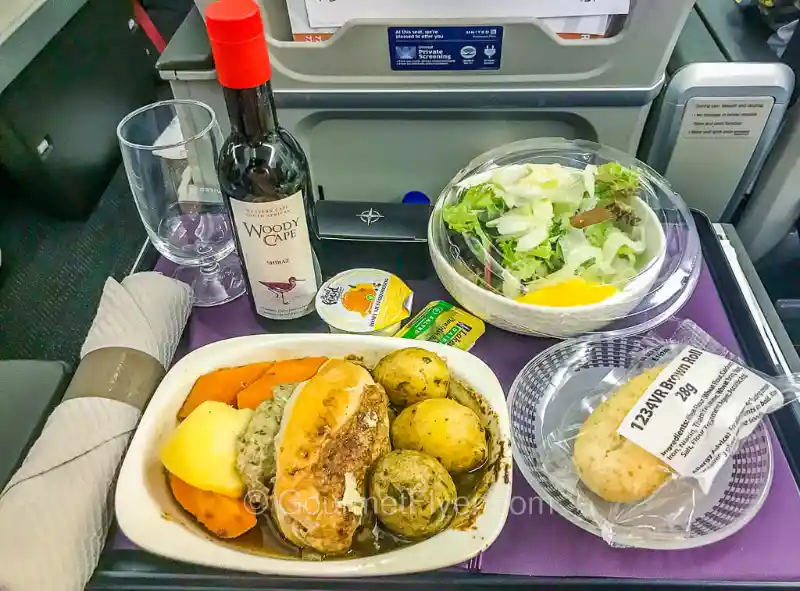
Dining in premium economy feels more restaurant-inspired than cafeteria-like. Meals are served on ceramic plates, with metal cutlery, cloth napkins, and improved presentation. While you won’t be choosing from à la carte menus like in business class, meal options are often more diverse and curated for quality.
Service delivery also sees improvement. Because premium economy cabins are smaller — often limited to 24–70 seats depending on the airline — flight attendants provide faster and more attentive service. Many carriers begin service in premium economy before moving to the back, ensuring hot meals and prompt requests.
Additionally, travelers are frequently offered hot towels, and in some cases, amenity kits with travel essentials like eye masks, lip balm, and toothbrushes. While these touches may seem minor, they compound into an experience that feels personal and elevated.
Who Is Flying Premium Economy – And Why?
The rise of “premium leisure” travelers — vacationers willing to pay more for comfort without stretching to business class — has reshaped airline cabin strategies. For many, especially those flying long-haul for pleasure or non-corporate travel, premium economy is the sweet spot.
These passengers are price-sensitive, but value-focused. They don’t require lie-flat seats or access to airport spas. What they want is legroom, good food, faster boarding, and a more civilized flying experience — without the premium price tag of business class.

Airline Economics: Why Premium Economy Is a Profit Powerhouse
Interestingly, airlines themselves have embraced premium economy not just for passengers’ comfort, but for the balance it strikes in revenue per square foot. The margins on premium economy now rival — and in some cases exceed — those of business class. This is because the hard and soft product costs are only modestly higher than economy, yet the seats can be sold for significantly more.
From an airline’s perspective, two to three premium economy seats can occupy the same space as one business class pod, while generating nearly the same revenue per square meter. That’s why airlines like Singapore Airlines, EVA Air, and British Airways have rapidly expanded their premium economy footprint, even installing it on narrow-body aircraft in some regions.
This profitability ensures continued investment into premium economy — benefiting both travelers and airlines in a sustainable feedback loop.
Variations by Airline: Not All Premium Economies Are Created Equal
While the core principles of premium economy are largely consistent — wider seats, better food, priority services — actual implementations vary. For instance:
- EVA Air’s Boeing 777-300ER boasts 64 premium economy seats, making it one of the largest configurations in the world.
- Delta’s A350-900 features 40 seats, while still offering robust legroom and enhanced service.
- KLM’s 777-300ER includes a more compact cabin with just 24 seats, creating a quieter, more exclusive atmosphere.
The design differences impact pricing and value. For instance, a larger premium economy cabin may offer better upgrade chances or lower prices due to supply. Conversely, smaller cabins might feel more private and luxurious but command higher costs.
When Premium Economy Is Worth the Splurge
Determining the value of premium economy depends on your destination, duration, and price differential. On ultra-long-haul flights (such as New York to Singapore or Los Angeles to Sydney), the additional comfort is often well worth the premium — particularly if you need to arrive well-rested.
If the price difference between premium economy and standard economy is modest — say $200 to $400 USD — the added comfort, food, and priority services represent excellent value. However, when the price begins to approach or match business class, the decision becomes more nuanced. If business class offers lie-flat seating for only a slight increase, it may be the better investment.
A smart traveler watches for airline sales, frequent flyer upgrades, or credit card points redemptions that can make premium economy even more accessible.
A Class for the Modern Age of Travel
Ultimately, premium economy has emerged as a strategic sweet spot in global aviation. It addresses a widening demand among travelers who value comfort, service, and efficiency, but don’t need every luxury business class entails. The growing availability of this class signals not just a passing trend, but a permanent shift in how airlines cater to modern passengers.
As airlines continue to fine-tune their offerings, premium economy is poised to be the default choice for a large segment of travelers — offering a refined yet accessible way to explore the skies.