Alaska Airlines, despite its strong geographic association with the State of Alaska, has long used the abbreviation AS, not AK. For those outside the aviation industry, this often raises a seemingly logical question: why does the airline not align its abbreviation with the two-letter postal code for Alaska—AK? The answer lies in a complex interplay of aviation history, regulatory systems, branding heritage, and international code designations. What appears to be a mismatch is, in fact, a reflection of deeply embedded legacy codes and a nuanced evolution of naming conventions in commercial aviation.
The Origin of the AS Code: Alaska Star Airlines
The airline we know today as Alaska Airlines began its journey under the name Alaska Star Airlines. In 1944, the company dropped the “Star” from its name but retained the initials that had already become associated with its operations. This decision established “AS” as an operational moniker that predates many modern regulatory frameworks, including the postal system’s adoption of two-letter state abbreviations.
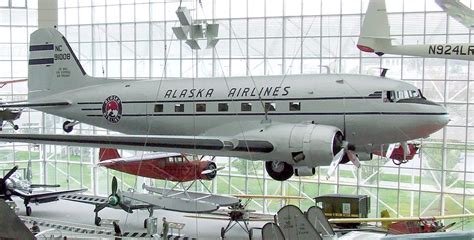
While many believe abbreviations are developed around geographical logic, in the world of aviation, they often reflect corporate origin stories and regulatory precedence. AS was, and remains, the IATA (International Air Transport Association) code for Alaska Airlines. This designation, rooted in its former name, has been consistently used across schedules, bookings, interline agreements, and baggage tags for decades.
Understanding IATA and ICAO Designations
In global aviation, there are two primary types of airline identifiers:
- IATA codes: Two-letter codes used for public-facing purposes like ticketing and timetables.
- ICAO codes: Three-letter codes used for air traffic control and operations.
Alaska Airlines’ IATA code is AS, and its ICAO code is ASA. These designations are not arbitrary but are managed and assigned by respective governing bodies to prevent overlap, ensure clarity, and recognize historical precedence. Once allocated, these codes are rarely changed unless the airline undergoes complete rebranding or mergers.
Crucially, AK is already in use. It is the IATA code for AirAsia, a major Malaysian low-cost carrier. Therefore, even if Alaska Airlines wanted to rebrand with AK as its official airline code, it would face a conflict of assignment.
Tail Numbers, FAA Registrations, and the Shift to AK
The confusion about AS versus AK also arises from a different kind of designation: aircraft tail numbers, also known as N-numbers in the United States. These are akin to a vehicle’s license plate and are governed by the Federal Aviation Administration (FAA). U.S. registrations begin with the letter N, followed by a series of numbers and letters.
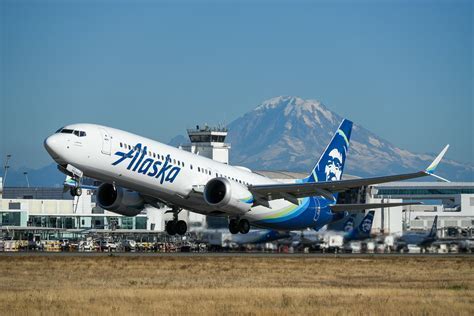
Historically, Alaska Airlines adopted tail numbers ending in AS, such as N123AS. However, as the airline’s fleet grew—especially with the arrival of modern aircraft like the Boeing 737 MAX 9—they began to run out of available AS combinations. This led the airline to search for meaningful alternatives.
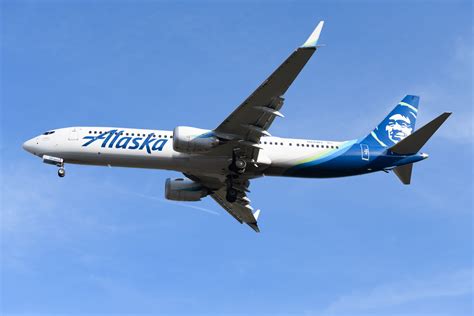
They settled on AK, representing the state abbreviation of Alaska. The shift was more than symbolic. As Russell Summers, Alaska Airlines’ Manager of Aircraft Acquisitions, noted:
“Considering our airline growth, and understanding we were running out of AS registrations, we searched for a new, meaningful set of trailing letters and settled on AK – the two-letter code for the State of Alaska.”
Therefore, AK tail numbers do appear on Alaska Airlines aircraft—not as a replacement for their IATA code, but as part of their FAA registration strategy.
The Role of USPS and the Timing of Abbreviations
The United States Postal Service (USPS) adopted two-letter state codes like AK for Alaska only in the late 1960s and early 1970s. By that time, Alaska Airlines had already been using “AS” for decades. The idea of aligning airline codes with state abbreviations simply wasn’t a consideration at the time aviation codes were assigned.
Indeed, Alaska Airlines predates Alaska’s statehood altogether. The airline was founded in 1932, and Alaska only became the 49th U.S. state in 1959. That chronology matters. The airline’s operational identity had already matured long before the state’s two-letter postal abbreviation existed.
Misconceptions and Digital Era Confusion
In today’s digitally-driven logistics world, confusion often arises when shipping platforms or e-commerce sites rely on state codes to determine eligibility for services. Some platforms—either through poor coding or design shortcuts—exclude customers based on the input of AK as a state code, even if the ZIP code data is correct. This frustration sometimes misleads people into thinking Alaska Airlines should adopt “AK” to avoid ambiguity.
Yet, this is a software design flaw, not an airline branding issue. Shipping exclusions, postal codes, and customer data validation fall under website development best practices, not aviation regulation.
The Rise of AL and Other Tail Codes
As AS and AK suffixes become saturated, Alaska Airlines has also introduced tail numbers ending in AL, a natural extension derived from the airline’s name and a creative workaround. Aircraft like the N704AL reflect this evolving registration strategy. These suffixes are not codes in the official sense but are registration suffixes used for internal and fleet tracking purposes.
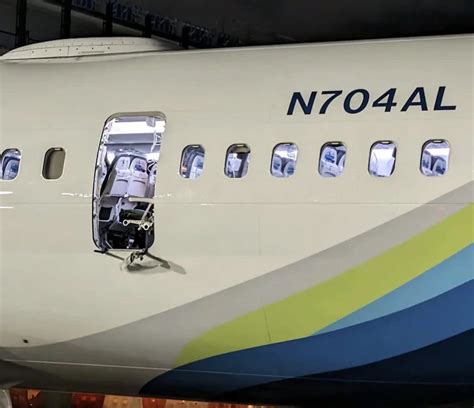
While the FAA does not require suffixes to align with the airline’s name, many carriers prefer easily recognizable or brand-consistent designators. Alaska Airlines’ transition across AS, AK, and AL suffixes is a direct reflection of both fleet expansion and thoughtful legacy alignment.
Comparisons Across the Airline Industry
This naming paradox is not unique to Alaska Airlines. Several global airlines operate under designators that don’t appear intuitive to the casual traveler:
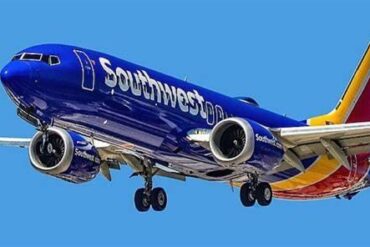
- Southwest Airlines uses the IATA code WN, a reference to its early identity as “WesterN Airlines.”
- Finnair uses AY, derived from its original name “Aero Yhtiö.”
- Icelandair holds FI, from “Flugfélag Íslands.”
- Spirit Airlines uses NK, the roots of which are less clear but often speculated to align with older, now-defunct carriers.
These examples reinforce the idea that airline codes are rarely geographical; they are artifacts of history, business mergers, regulatory frameworks, and the availability of letter combinations at the time of assignment.
Conclusion: AS Is Here to Stay
The abbreviation AS is far more than a random designation—it is a living artifact of Alaska Airlines’ heritage as Alaska Star Airlines, solidified in the global aviation infrastructure through IATA and ICAO designations. The more recent use of AK and AL in FAA tail numbers does not signal a change in branding, but rather reflects practical needs amid fleet expansion.
Changing the IATA code from AS to AK would not only involve overcoming regulatory hurdles but would also create unnecessary confusion for millions of passengers and industry stakeholders. The AS code is deeply integrated into booking systems, loyalty programs, flight itineraries, and more.
Ultimately, Alaska Airlines has successfully balanced its historical identity with modern operational demands, proving that legacy and innovation can coexist—even in a field as regulated and acronym-filled as commercial aviation.