The Airbus A318 was an aircraft built around an unusually specific idea: take the proven architecture of the A320 family, shrink it into a roughly 100-seat airliner, and give it the ability to operate where larger narrowbodies faced restrictions. On paper, that combination looked remarkably sensible. In practice, it produced one of the most interesting commercial stories in modern aviation—a jet whose most ingenious capability was also a clue to why its market would remain so small.
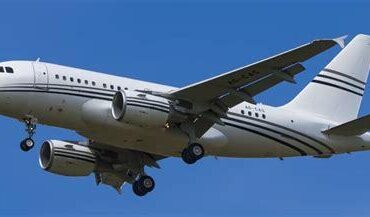
The A318 entered service in 2003 as the smallest member of the A320 family. Airbus shortened the A319 fuselage while retaining the family’s wide single-aisle cabin, cockpit philosophy, fly-by-wire controls, and much of its operational commonality. The result was a compact mainline jet that could carry far more passengers than a regional aircraft while occupying substantially less physical space than an A320.
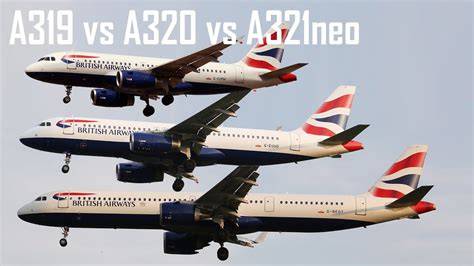
Its dimensions illustrate just how much Airbus compressed the design. The A318 measures about 103 feet 2 inches (31.44 meters) long, compared with 111 feet for the A319 and 123 feet 3 inches for the A320. Its wingspan, however, remains substantial at about 111 feet 11 inches, meaning the aircraft did not simply become a scaled-down version of the entire A320 family. It was a shortened fuselage wrapped around essentially the same basic wing and systems philosophy.
That arrangement gave the A318 an unusual combination of strengths. It could fit into the smaller end of the single-aisle market while retaining the characteristics that made the A320 family attractive to airlines. More importantly, it could be equipped for steep-approach operations, a capability that would become inseparable from the aircraft’s identity.
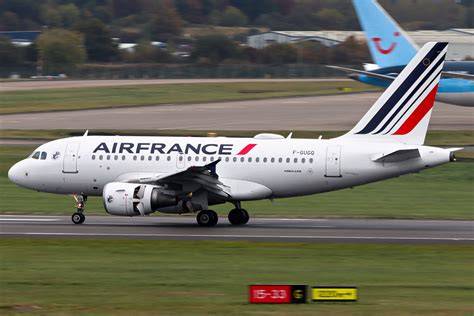
The Airbus A318 Was Designed for the 100- to 120-Seat Market
Airbus developed the A318 to push the A320 family into a segment occupied by smaller narrowbodies and larger regional jets. The aircraft became known informally as the “Baby Bus”, an appropriate nickname for a jet that retained the unmistakable appearance and systems philosophy of its larger siblings while losing a significant portion of its fuselage length.
The basic concept was straightforward. Airlines wanted the efficiency and commonality of a mainline narrowbody but did not always need the capacity of an A320. A smaller aircraft could theoretically open thinner routes, serve secondary markets, and maintain a better balance between frequency and demand. The A318 could carry roughly 100 to 120 passengers depending on configuration, putting it directly into that space.
The problem was that the A318 inherited much of the complexity of the larger A320 family without being able to spread those costs across as many seats. An airline purchasing an A318 was not buying a radically simpler aircraft. It was essentially buying the smallest member of a sophisticated narrowbody family.
That distinction mattered enormously as airline economics evolved. The A319 already provided a larger cabin while retaining family commonality, and the A320 offered even more capacity with relatively modest increases in trip cost. For many carriers, the additional seats of the larger aircraft were simply more valuable.
Airbus ultimately delivered only 80 A318s, an extremely small production run compared with the thousands of A319s, A320s, and A321s produced. The aircraft was therefore never going to become a common sight at airports around the world.
Yet its most interesting engineering feature gave it a reason to exist beyond simple capacity.
The A318 Steep-Approach System Was an Exceptionally Clever Solution
The most famous technical feature of the A318 emerged from the requirements of London City Airport. The airport’s location in central London creates a combination of operational constraints that can make conventional large-airliner approaches unsuitable. The approach path is significantly steeper than the approximately three-degree profile commonly associated with commercial jet operations.
Airbus responded with a solution that was remarkably elegant because it did not require a completely new aircraft architecture.
The A318 could be certified for a 5.5-degree approach, allowing it to descend much more steeply toward the runway. Instead of relying on an elaborate mechanical system designed solely for this purpose, Airbus adapted the aircraft’s existing flight-control architecture and spoiler system.
This is where the A318’s fly-by-wire technology became particularly useful. The aircraft’s flight-control computers could modify how the existing control surfaces were used, allowing additional drag to be generated during the steep approach. The basic airplane did not have to be transformed into something mechanically exotic.
During the certified steep-approach procedure, modified flight-control laws manage the relevant systems and provide the flight crew with the necessary indications and alerts. Below approximately 120 feet (37 meters), specified spoiler panels can deploy automatically during the landing sequence, increasing drag as the aircraft transitions toward touchdown.
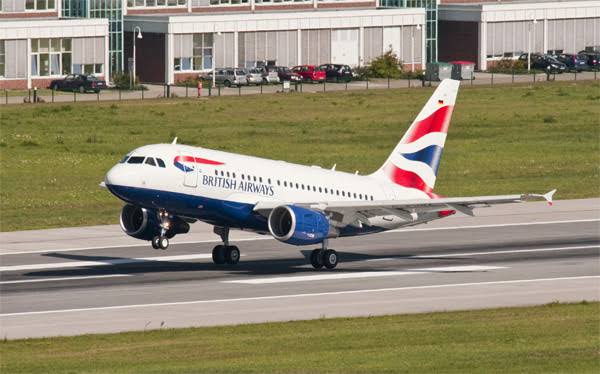
The cleverness lies in what Airbus did not have to build. There was no need for an entirely separate landing architecture, a special external drag device, or a fundamentally different aircraft family. Existing spoilers, existing control surfaces, and the aircraft’s software-based flight-control system could be coordinated to create an unusual operational capability.
The result was an A318 that could approach London City on a profile substantially steeper than a conventional narrowbody. It was an excellent example of how software and flight-control logic can extend the practical capability of an established airframe.
London City Airport Made the A318 Famous
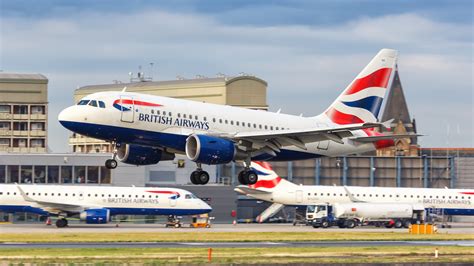
The A318’s steep-approach certification became most visible through its relationship with London City Airport. The airport effectively gave the smallest Airbus narrowbody a mission that larger members of the family could not easily replicate in the same form.
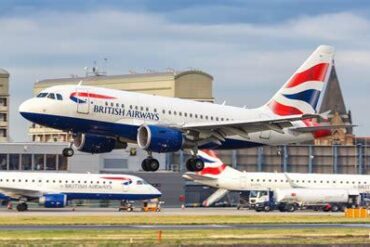
The aircraft’s most celebrated application came when British Airways operated an all-business-class service between London City and New York. The route was unusual not simply because it crossed the Atlantic from a relatively small city airport, but because the A318 made the concept operationally possible.
Passengers could board a relatively small narrowbody in central London, fly across the Atlantic, and arrive in New York with a premium-focused cabin. The aircraft’s ability to operate from London City was therefore not a minor technical curiosity. It became a central part of the route’s identity.
But the very thing that made the A318 fascinating also revealed its fundamental commercial weakness.
There are only so many airports where a 5.5-degree approach capability creates meaningful additional value. Most airlines do not need such a capability on the overwhelming majority of their routes. A feature can therefore be extremely useful without being sufficiently useful often enough to justify buying a particular aircraft.
For a carrier operating from airports without unusual obstacle, runway, or noise constraints, the A319 could often perform a similar mission while carrying more passengers. The A320 could carry still more. The additional capacity could then improve revenue potential without requiring the airline to maintain a specialized fleet.
The A318 was consequently becoming an aircraft designed around a problem that relatively few airlines actually had.
Why the A318 Struggled Against Larger Airbus Narrowbodies
The A318’s commercial problem was not that it was a poor aircraft. In several respects, it was remarkably capable. Its problem was economic flexibility.
Airlines value aircraft that can move easily between different routes as demand changes. A 150-seat aircraft can potentially replace a smaller jet when demand rises, while a smaller aircraft can preserve frequency on thinner routes. The A318 occupied a narrower part of that spectrum.
Its shortened fuselage reduced capacity, but many of the underlying systems, maintenance requirements, crew requirements, and fleet-support considerations remained connected to the broader A320 family. An airline therefore had to ask whether the smaller capacity delivered enough operational value to justify adding another subtype.
For operators that already possessed A320-family aircraft, commonality helped. The A318 could share important characteristics with its siblings, reducing some of the barriers associated with introducing a completely unrelated airplane.
But commonality alone could not overcome the seat-count disadvantage.
The A319 offered more capacity while maintaining much of the same family infrastructure. The A320 went further. As fuel prices, labor costs, airport charges, and seat economics became increasingly important, airlines had more reasons to favor aircraft that could carry additional passengers efficiently.
The A318’s niche therefore remained real, but narrow.
The Airbus A220 Changed the Economics of Small Narrowbodies
The arrival of the Airbus A220 made the A318’s position even harder to defend. The A220 was developed specifically around the smaller end of the single-aisle market rather than being created primarily by shortening an existing larger aircraft.
That difference is crucial.
The A318 represents a classic derivative strategy: take an established aircraft family and reduce its fuselage length while preserving as much commonality as possible. The A220 approaches the problem from another direction, with a newer structure, modern aerodynamics, and engines designed for the aircraft’s size and mission.
For airlines, that means the A220 can provide smaller-capacity economics across ordinary network operations. It does not need a rare airport constraint to demonstrate its value.
Air France provides perhaps the clearest illustration of this transition. The airline ordered 60 A220-300s as part of its fleet renewal, with the newer aircraft taking over missions previously served by smaller A320-family aircraft, including the A318 and A319.
The A220’s advantages are particularly important because they apply across a much wider range of routes. Better fuel efficiency, lower seat costs, reduced noise, and modern passenger capacity make it attractive whether an aircraft is landing at a constrained city airport or flying into a conventional major hub.
That is precisely the environment in which the A318 struggles.
Its most distinctive capability remains impressive, but an airline cannot build an entire fleet strategy around a handful of airports that require unusually steep approaches. The A220, by contrast, can earn its keep every day.
Air France Became the A318’s Last Major Commercial Home
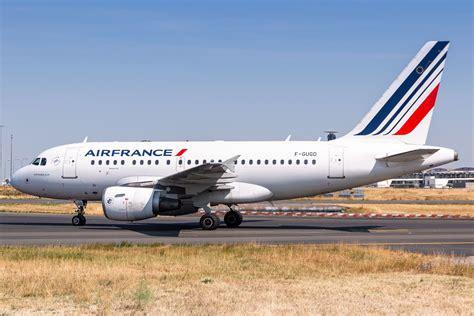
As other operators retired their A318s, Air France became the aircraft’s most visible remaining scheduled passenger operator. The airline inherited a fleet that had once made practical sense within a broader European network but gradually became harder to justify as newer aircraft arrived.
The retirement of TAROM was another important milestone. The Romanian airline operated the A318 from the mid-2000s before completing its final commercial service on October 26, 2024. Its aircraft were subsequently offered for sale to an end-of-life specialist, removing another operator from the shrinking A318 population.
After TAROM’s departure, Air France was left as the final scheduled passenger operator of the type.
Current fleet reporting identifies just four Air France A318s, registered F-GUGM, F-GUGN, F-GUGO, and F-GUGP. That is an astonishingly small number for an aircraft that once represented Airbus’ attempt to establish a significant presence in the 100-seat mainline market.
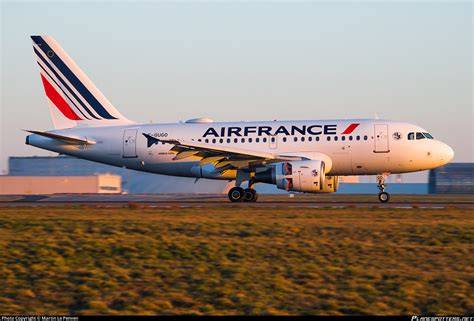
The remaining aircraft have continued operating within Air France’s European network, although their future is increasingly tied to the airline’s fleet replacement schedule rather than to the original niche that made the A318 famous.
Current schedule filings extend A318 operations into March 2027, although scheduled dates can change and do not necessarily guarantee that a particular aircraft will remain in service until that point. The important point is that the type has entered its final chapter.
Every additional retirement makes operating the remaining aircraft less attractive. Maintenance support, spare parts, crew planning, engineering expertise, and fleet management all become harder to justify when only a handful of airframes remain.
The A318’s Cleverest Feature Became Its Commercial Limitation
There is an appealing irony in the A318 story. The aircraft’s most technically distinctive feature demonstrated exactly what made it special—and exactly why it could not become a mainstream success.
The 5.5-degree steep-approach capability was brilliant engineering. Airbus used software and existing flight-control hardware to solve a highly specific operational challenge without creating an entirely separate aircraft architecture. At London City, that capability gave the A318 access to an environment that helped define its reputation.
But aviation markets reward aircraft that can solve many problems, not just one.
The A318 was exceptionally useful when an airline needed its combination of size, performance, and steep-approach capability. Outside those circumstances, a larger A319 or A320 could often generate more revenue with similar family commonality. Later, the A220 could attack the smaller single-aisle market with a more modern and economically optimized design.
That left the A318 caught between two worlds. It was too sophisticated and costly to be treated like a simple small regional jet, yet too small to offer the seat economics that made larger narrowbodies attractive.
Its 80-aircraft production run tells the story better than almost any statistic. Airbus had built an aircraft capable of doing something remarkable, but the number of airlines that truly needed that capability was tiny.
Why Only Four Airbus A318s Remain Flying
The disappearance of the A318 is therefore not really a story about an aircraft failing technically. It is a story about specialization losing to economics.
The jet’s steep-approach system worked. Its A320-family commonality worked. Its compact size worked. London City Airport proved that all of those characteristics could be combined into a genuinely valuable operation.
What did not work was the idea that enough airlines would need those advantages frequently enough to justify a dedicated small A320-family variant.
As airlines moved toward newer aircraft, the A318’s remaining advantages became increasingly difficult to separate from its disadvantages. Modern aircraft can carry similar passenger numbers while consuming less fuel, producing less noise, and offering stronger economics over a far broader range of missions.
That is why the A318 is heading toward extinction even though its cleverest feature remains a fascinating piece of aircraft engineering.
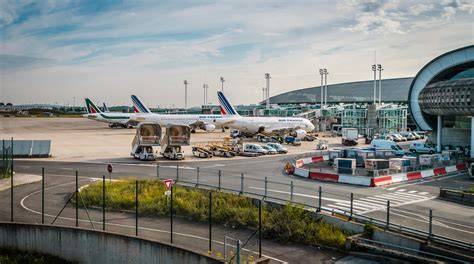
The Airbus A318 will ultimately be remembered less for how many aircraft Airbus sold than for how precisely it solved an unusual problem. It was a true mainline jet squeezed into a remarkably compact package, equipped with sophisticated fly-by-wire controls, and capable of descending toward London City on a 5.5-degree approach that would have been impossible for many conventional airliner operations.
Its final disappearance will not mean that the engineering idea was wrong. Quite the opposite. The A318 proved that a carefully designed combination of software, existing flight controls, and operational certification could unlock capabilities far beyond what the aircraft’s basic dimensions suggested.
The problem was that the world did not have enough London City Airports.
As Air France replaces its remaining A318s with newer aircraft, the Baby Bus is becoming an increasingly rare sight. If current schedules hold, commercial operations could continue into 2027, but the aircraft’s future is already clear. The A318 solved a very clever problem exceptionally well; the aviation industry simply found that it needed a more economical answer to the much bigger problem of carrying passengers efficiently in the 100- to 150-seat market.
And that is perhaps the most fitting legacy for the A318: an aircraft whose smartest feature helped prove just how specialized the aircraft itself had become.