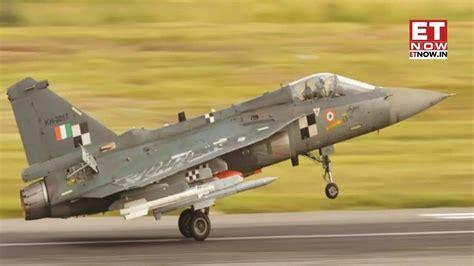
The roar of fighter jets slicing through the sky during Operation Bandar was a resounding message of India’s military intent. As Indian Air Force (IAF) aircraft penetrated enemy airspace, conducting precision strikes on terror infrastructure and targeting air bases across the border, one crucial reality remained unspoken — India’s aerial dominance still runs on foreign engines. Amid the surge of patriotism, a pressing strategic vulnerability emerged once again: India’s dependence on imported jet engines. Today, the clarion call on social media under the hashtag #FundKaveriEngine is no less urgent than the call to arms — the Indian Air Force needs the Kaveri engine now.
Kaveri Engine: The Indigenous Answer to Foreign Dependence
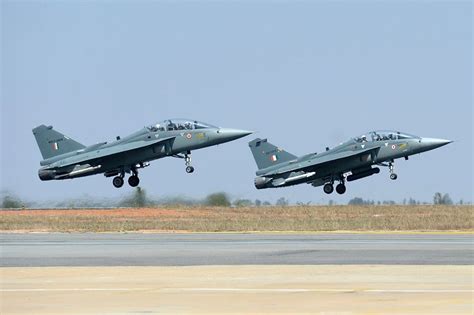
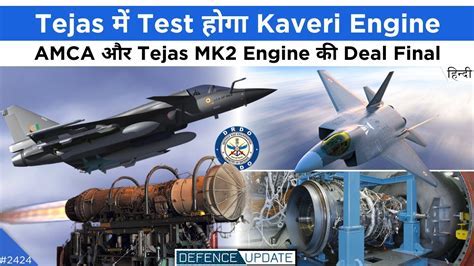
Developed by the Gas Turbine Research Establishment (GTRE) under the Defence Research and Development Organisation (DRDO), the Kaveri engine was envisioned as a homegrown solution to power the Light Combat Aircraft (LCA) Tejas. Featuring a low-bypass, twin-spool, modular design and Full Authority Digital Engine Control (FADEC), it was intended to generate 80 kN of thrust with afterburner. This setup is tailored for India’s operational environments, such as high-altitude theatres in Ladakh and the northeastern frontier. Its flat-rated thrust profile ensures optimal performance even in high ambient temperatures and altitudes, characteristics essential for Indian missions near the Line of Control (LOC).
Inspired by the American General Electric F404, the very engine that powers the Tejas Mk1, Kaveri was meant to replace it — creating a critical shift toward strategic self-reliance. Unfortunately, despite initial promise, the project stumbled.
What Went Wrong: A Chronicle of Setbacks
The Kaveri project, launched in 1986 with a modest budget of ₹382 crore, has seen more than ₹2,000 crore invested over decades. Yet, it still hasn’t met the performance thresholds required for IAF deployment. The core issues were clear:
- Thrust Deficiency: Kaveri could only achieve 70–75 kN with afterburner, falling short of the 85–90 kN necessary for Tejas variants.
- Weight Disadvantages: It was heavier than Western counterparts, reducing the thrust-to-weight ratio and impacting maneuverability.
- Technology Denials: After India’s 1998 nuclear tests, sanctions from the West denied access to key technologies like single crystal turbine blades, essential for high-temperature performance.
- Testing Limitations: India lacked sea-level and high-altitude test facilities, forcing reliance on Russia’s Gromov Flight Research Institute for critical flight tests.
- Failed Collaborations: A planned co-development with France’s Snecma collapsed, further delaying progress.
Revival Underway: A New Strategic Vision
Despite its temporary removal from the LCA program in 2008, the Kaveri engine is not dead. It is undergoing a strategic reorientation:
- Dry Kaveri for Ghatak UCAV: A non-afterburning variant is being re-engineered to deliver 46–50 kN for the Ghatak stealth unmanned combat aerial vehicle.
- Successful Flight Testing: In 2018, Kaveri was successfully flight-tested on a Russian IL-76 platform, proving its airworthiness and potential for adaptation.
- Private Sector Engagement: Indian firms like Godrej Aerospace and MTAR Technologies are contributing critical components, signifying the growing defense-industrial ecosystem.
- French Partnership Prospects: During French President Emmanuel Macron’s 2023 visit, discussions emerged about collaborating with Safran, the maker of the M88 engine for Rafale, to assist India in developing an advanced Kaveri variant.
Strategic Necessity: The Stakes Couldn’t Be Higher
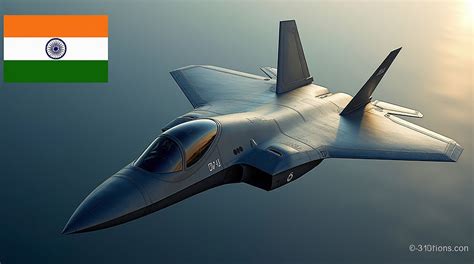
India is preparing to unveil its fifth-generation stealth fighter — the Advanced Medium Combat Aircraft (AMCA). Expected to fly by 2028 and operationalize by the early 2030s, the AMCA will initially rely on twin foreign engines — likely GE F414s — but long-term plans center on an indigenous replacement.
A next-gen Kaveri derivative, capable of generating over 110 kN of thrust, is intended to power future AMCA variants. This shift is not merely symbolic — it is strategic. It would ensure that India’s crown jewel of aviation remains free from the whims of foreign suppliers, sanctions, or supply chain disruptions.
Economic Rationale: Saving Billions in the Long Run
India’s dependence on foreign engines like the GE F404 and F414 costs billions of dollars in imports. Over the next 20–30 years, replacing these with a domestic alternative could save:
- Billions in foreign exchange
- Years in license negotiations and technology transfers
- High logistics costs for servicing, parts, and maintenance overseas
In addition, domestic engine production would foster an aerospace manufacturing base, creating thousands of jobs, enabling export opportunities, and driving innovation across sectors.
Global Context: Why Jet Engine Mastery Defines a Superpower
Only five nations — the United States, Russia, China, France, and the United Kingdom — have independently mastered jet engine technology. These nations are permanent UNSC members and global military powerhouses. The jet engine isn’t just a mechanical system; it’s a symbol of advanced scientific prowess, national sovereignty, and warfighting capability.
India has already demonstrated technological depth by producing:
- Ballistic and cruise missiles
- Nuclear submarines
- Aircraft carriers
- Space missions like Chandrayaan and Mangalyaan
Yet, despite this pedigree, it continues to import the heart of its fighter fleet. This incongruity must be addressed.
The Public Movement: A Wake-Up Call for Policymakers
The rise of #FundKaveriEngine is not a fringe trend — it’s a grassroots strategic movement. Defense experts, retired IAF officers, aerospace engineers, and common citizens have voiced support, demanding that the Indian government make the Kaveri program a national priority.
The Kaveri engine’s success would:
- Enable Tejas variants to fly fully Indian
- Power the Ghatak UCAV and future drones
- Be adapted for naval trainers and transport aircraft
- Open export avenues to friendly nations in Southeast Asia, Africa, and Latin America
Conclusion: The Heart of Air Superiority Must Beat in India
The Indian Air Force is at the cusp of transformation. From strike capability to stealth operations, every facet is evolving. But without an indigenous jet engine, India remains strategically handicapped.
The Kaveri engine, though delayed and challenged, still holds promise. With renewed political will, robust funding, and global partnerships that prioritize technology transfer, the vision of a 100% Indian fighter aircraft is within reach.
It’s not just about engineering excellence — it’s about strategic autonomy, economic wisdom, and national pride. The time to act is not tomorrow.
India needs the Kaveri engine now.