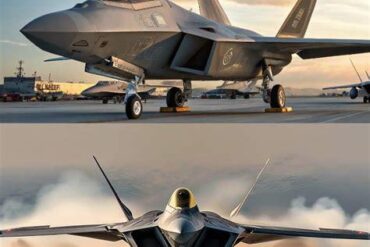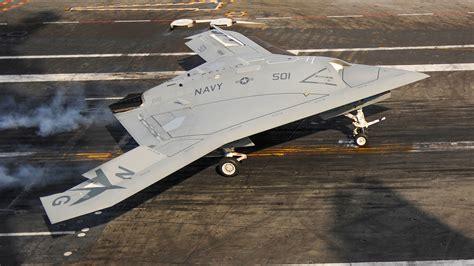
The X-47B Unmanned Combat Air System (UCAS) represents a bold leap into the future of carrier-based military aviation, redefining what unmanned systems can achieve when integrated into the highest echelons of aerial warfare. Designed and built by Northrop Grumman, the X-47B is not merely an experiment—it is a proof of concept, a milestone, and a harbinger of how unmanned combat aircraft may eventually supplement or even replace manned fighter jets in future naval operations.
Conceived under the Unmanned Combat Air System Carrier Demonstration (UCAS-D) program, the X-47B emerged in response to the U.S. Navy’s strategic desire to expand the capabilities of its Carrier Air Wing with autonomous aircraft. In 2007, Northrop Grumman was awarded the contract to deliver a tailless, stealthy, strike-capable drone that could take off and land from aircraft carriers autonomously—something no other unmanned aerial vehicle had accomplished at the time.
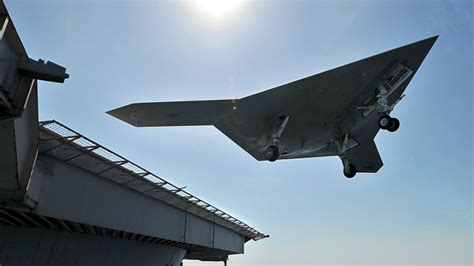
Engineering Marvel: A Strike Fighter Without a Tail
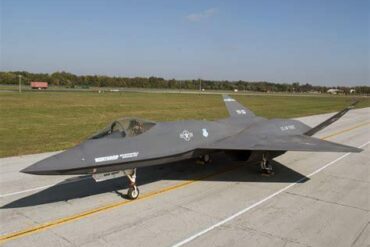
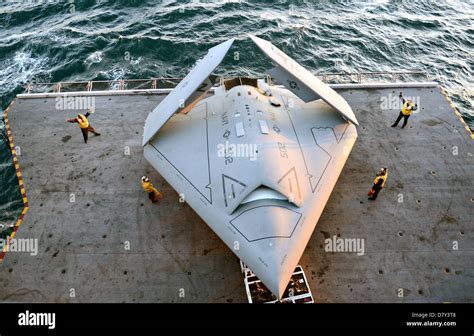
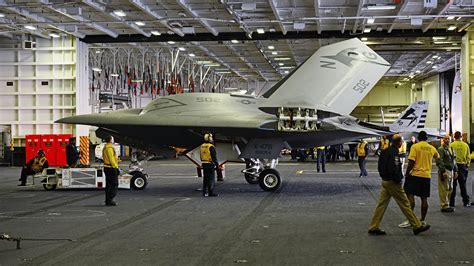
The design of the X-47B is as radical as its mission profile. It is tailless, with a blended wing-body layout that minimizes radar cross-section and enhances its stealth capabilities. Roughly the size of a F/A-18 Super Hornet, the X-47B boasts a wingspan of 62.1 feet and a length of 38.2 feet. However, its foldable wings allow it to be stored and maneuvered within the tight confines of an aircraft carrier’s hangar bay and elevators.
Its propulsion comes from a single Pratt & Whitney F100-PW-220U turbofan engine, providing sufficient thrust for both high-speed transit and loitering missions. The absence of vertical stabilizers and conventional control surfaces is compensated by sophisticated fly-by-wire flight control systems, enabling it to maintain stability and maneuver with precision.
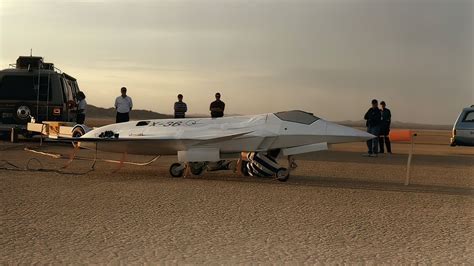
Historic Milestones in Carrier Integration
The X-47B first took flight in February 2011 at Edwards Air Force Base, California. However, it wasn’t until 2013 that the program achieved a watershed moment in aviation history: the first successful catapult launch and arrested landing of an autonomous unmanned aircraft from a moving aircraft carrier. These operations took place aboard the USS George H.W. Bush (CVN-77) and marked a paradigm shift in what carrier-based aviation could become.
These trials validated that unmanned systems could autonomously handle complex tasks such as precision landings on a pitching, moving deck, navigating airspace alongside manned fighters, and conducting standard carrier flight deck operations. The X-47B executed repeated touch-and-go landings, night deck operations, and coordinated movement with other aircraft on the deck without pilot intervention.
Autonomous Aerial Refueling: A New Combat Radius Frontier
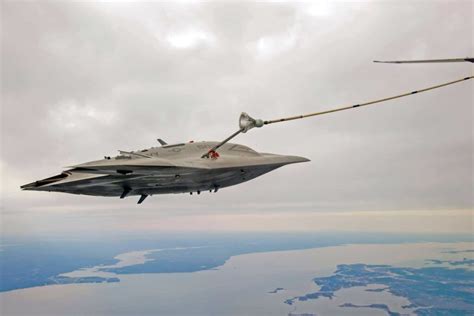
In April 2015, the X-47B shattered another ceiling by becoming the first unmanned aircraft to perform Autonomous Aerial Refueling (AAR). Utilizing probe-and-drogue refueling techniques, the drone successfully connected to a Navy tanker aircraft in midair, receiving fuel completely autonomously.
This capability is transformational. AAR exponentially extends the combat radius and mission endurance of unmanned systems, allowing them to carry out long-duration ISR (Intelligence, Surveillance, and Reconnaissance) and strike missions without the need to return to base. In conflict zones where endurance and stealth are paramount, aerial refueling positions drones like the X-47B as formidable assets.
Integration with Manned Aircraft: Seamless Coordination
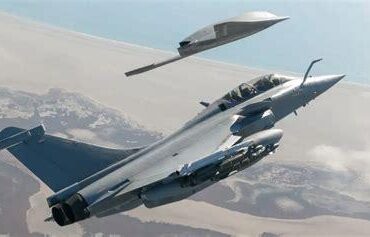
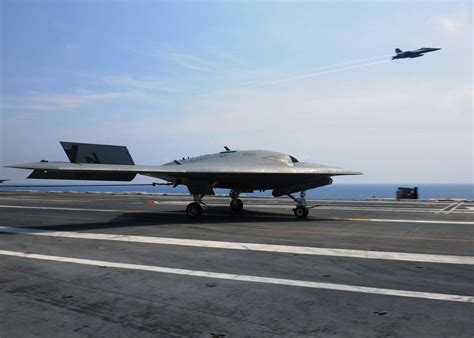
The X-47B’s flight testing didn’t stop at launches, landings, and refueling. It was also evaluated for interoperability with manned aircraft, a critical element for future Carrier Air Wing cohesion. Tests confirmed that the X-47B could autonomously taxi, take off, and land in tight coordination with F/A-18s and other manned aircraft, sharing the flight deck and adhering to Navy-standard launch and recovery cycles.
This seamless integration showcased the potential of mixed manned-unmanned operations in future naval missions. Not only could unmanned systems serve as scouts or decoys, but they could also carry out strike missions deep into contested territory, reducing the risk to human pilots and maximizing operational flexibility.
Low Observability and Stealth Performance
The X-47B’s stealth is more than skin deep. Built with radar-absorbent materials, an internal weapons bay, and minimal protruding surfaces, the aircraft is designed to penetrate denied airspace and operate in contested environments where traditional aircraft might be detected and targeted. Its tailless design significantly reduces radar signature, while its fuselage contours and engine intake shielding further minimize its electromagnetic footprint.
Though not weaponized during the UCAS-D program, the X-47B was engineered with two internal bays capable of carrying up to 4,500 pounds of precision munitions. This foresight underscores its long-term strategic value: the drone is not just a testbed—it’s a prototype for future stealth strike UAVs.
The Role of the X-47B in Naval Aviation’s Future
While the X-47B program itself was never intended to become a production aircraft, its impact on the Navy’s unmanned future is foundational. The technologies it validated have informed subsequent programs, most notably the MQ-25 Stingray, a carrier-based aerial refueling drone designed to extend the reach of the Navy’s strike aircraft.
Beyond hardware, the program forced the Navy to revise doctrine, procedures, and training paradigms for deck handling, communication, and airspace management. Carrier Air Wings are now preparing for a future where AI-driven drones fly alongside manned platforms, transforming not only how wars are fought but also how aircraft carriers are conceptualized.
Technological Legacy and Future Pathways
The X-47B’s success has reverberated across both military and aerospace innovation sectors. Its achievements provided critical data for:
- Autonomous flight control algorithms
- Sensor fusion for deck landing precision
- Secure datalink protocols for drone-carrier coordination
- Aerial refueling systems for unmanned aircraft
- Human-drone operational safety standards
This legacy lays the groundwork for integrating next-generation UCAVs with broader battlefield networks. Swarming drones, satellite-linked autonomous ISR nodes, and optionally piloted strike vehicles will all trace part of their DNA to the lessons learned from the X-47B UCAS.
Conclusion: A Pioneering Milestone in Military Aviation
The X-47B UCAS is more than an experimental aircraft—it is a symbol of transition. From carrier takeoffs to aerial refueling, from deck coordination with manned jets to stealthy flight in contested airspace, it demonstrated that unmanned combat aviation is no longer speculative—it is operationally viable.
By proving that autonomous aircraft can be integrated safely and effectively into carrier operations, the X-47B has irrevocably changed the trajectory of naval aviation. It serves not just as a marvel of engineering, but as a strategic enabler for how the U.S. Navy—and potentially other naval forces—will project power, gather intelligence, and dominate the skies in the decades ahead.