Air combat has always captured the imagination. Sleek interceptors streak across the sky at supersonic speeds while strategic bombers lumber toward distant targets carrying enormous payloads. Yet between these two extremes exists a class of aircraft that has quietly shaped the outcome of wars for more than a century: the ground attack aircraft.
These machines were never designed for glamour. Their job is brutal, dangerous, and intensely close to the battlefield. Instead of dueling in the high atmosphere, they descend toward smoke, artillery, and anti-aircraft fire. Their mission is simple and unforgiving—destroy enemy forces threatening troops on the ground.
Ground attack aircraft occupy a fascinating middle ground in aviation design. They must be durable enough to survive heavy fire, stable enough to deliver weapons accurately, and versatile enough to carry bombs, rockets, cannons, and missiles. Many have become legends not because they were the fastest aircraft in the sky, but because they repeatedly returned from the most dangerous missions imaginable.
From fragile biplanes of World War I to modern aerial artillery platforms, these aircraft demonstrate the relentless evolution of military technology. Each one reflects the demands of its era and the changing nature of warfare on the ground.
The following aircraft stand out as some of the most iconic ground attack planes in military aviation history—machines that proved decisive in conflicts and left lasting marks on both aviation engineering and battlefield tactics.
Halberstadt CL.II – One of the First True Ground Attack Aircraft
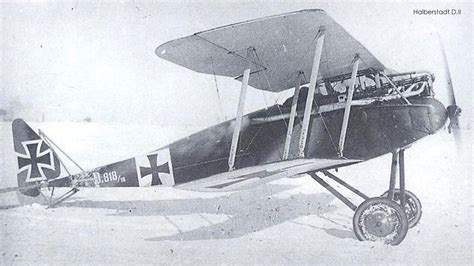
The brutal stalemate of World War I trench warfare forced military planners to search for ways to break enemy lines. Aircraft, originally used only for reconnaissance, soon evolved into weapons platforms capable of supporting troops directly. Among the earliest aircraft designed specifically for this role was the Halberstadt CL.II, introduced by Germany in 1916.
The CL.II represented an early attempt to combine fighter agility with ground-attack capability. Built primarily from wood and fabric, the aircraft weighed only about 2,495 pounds—lighter than many modern cars. Despite its delicate appearance, the aircraft proved remarkably effective in low-altitude combat operations.
Powered by a 160–180 horsepower Mercedes engine, the biplane could reach speeds of around 102 mph. That may seem slow today, but at the time it allowed the aircraft to sweep over enemy trenches quickly while strafing troops and equipment.
The two-person crew arrangement made the aircraft unusually flexible. The pilot operated two forward-firing 7.92 mm machine guns, ideal for attacking infantry positions or pursuing enemy aircraft. Meanwhile, the rear gunner had a dual role. He could drop bombs on ground targets while also defending the aircraft using a mounted machine gun capable of rotating to engage enemy fighters.
Although the distinction between fighter and ground-attack aircraft was still developing, the CL.II demonstrated how aircraft could directly influence battles on the ground. These early experiments in close air support laid the foundation for an entirely new dimension of warfare.
Sopwith Salamander – Britain’s Purpose-Built Trench Fighter
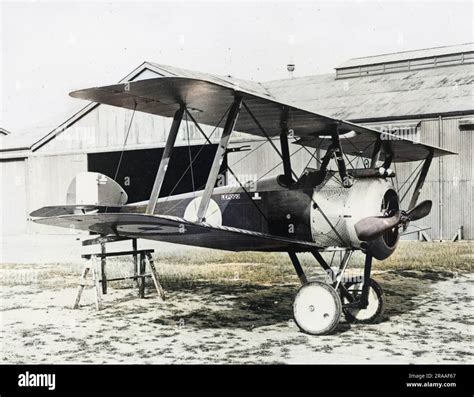
The British response to Germany’s evolving ground-attack strategy was the Sopwith Salamander, an aircraft specifically designed to survive the deadly environment above trench warfare.
By 1917, British pilots flying the famous Sopwith Camel were frequently tasked with attacking ground targets. The Camel excelled as a fighter but was never meant to fly low and slow over enemy lines. The result was heavy losses to rifle and machine-gun fire.
Military planners realized a specialized aircraft was needed—one that could endure punishment while supporting ground troops. Sopwith answered with the Salamander, which it described as a “trench fighter.”
One of the Salamander’s most innovative features was its integrated armor plating. Instead of simply bolting armor onto the airframe, engineers built protective metal structures directly around the cockpit. This shielded the pilot from bullets fired from the ground—an early step toward the heavily armored attack aircraft that would emerge decades later.
Powered by a 230 horsepower Bentley rotary engine, the Salamander could reach speeds of roughly 125 mph at low altitude, making it fast enough to conduct quick attack runs while remaining maneuverable.
The aircraft carried two .303 Vickers machine guns and up to 100 pounds of bombs, allowing it to strafe trenches or strike enemy strongpoints. Despite its promise, the Salamander arrived late in the war. Its first flight occurred in April 1918, only months before the conflict ended.
Production orders were canceled after the armistice, but the design represented an important conceptual leap: an aircraft engineered specifically for battlefield support rather than air superiority.
Messerschmitt Bf 110 – The Heavy Fighter Turned Strike Aircraft
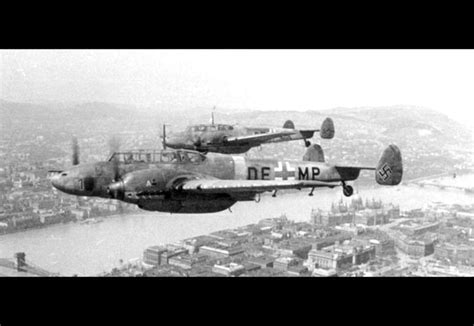
By the outbreak of World War II, aviation technology had advanced dramatically. Metal airframes, powerful engines, and heavier weapons allowed aircraft to carry out far more destructive missions.
Germany’s Messerschmitt Bf 110 began its life as a heavy fighter intended to escort bombers and destroy enemy aircraft at long range. However, during the Battle of Britain, the aircraft suffered heavy losses against more agile British fighters.
Rather than abandoning the aircraft entirely, the Luftwaffe adapted it for other missions—including ground attack and maritime strike operations.
The Bf 110’s twin-engine configuration gave it impressive power for the era. It could reach speeds approaching 350 mph, making it significantly faster than earlier attack aircraft. Its larger airframe also allowed engineers to pack an extraordinary amount of firepower into the design.
Some variants carried 20 mm cannons, multiple machine guns, heavy bomb loads, and even 72 rockets mounted beneath the wings, capable of saturating ground targets with explosive firepower.
The aircraft also included a rear gunner position, giving it defensive capability against pursuing fighters. Later versions incorporated radar systems for night fighting, highlighting the aircraft’s remarkable adaptability.
Although it never fulfilled its original heavy-fighter role, the Bf 110 proved that a large, heavily armed aircraft could still play a vital role in ground attack missions, particularly when used against slower or poorly defended targets.
Ilyushin Il-2 Sturmovik – The Legendary Flying Tank
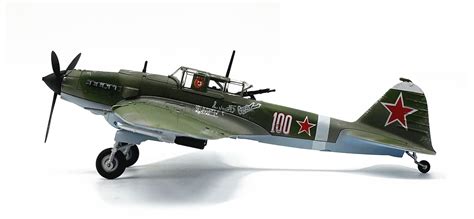
Few aircraft in history have earned reputations as formidable as the Ilyushin Il-2 Sturmovik, the Soviet Union’s most famous ground attack aircraft of World War II.
When German forces launched Operation Barbarossa in 1941, the Soviet Union urgently needed an aircraft capable of attacking armored formations and supporting troops under relentless assault. The Il-2 answered that need with brutal effectiveness.
Designer Sergey Ilyushin envisioned the aircraft as a “flying tank.” Unlike many planes of the era, the Sturmovik incorporated a massive armored shell surrounding the cockpit and engine. This structure protected critical components from ground fire, allowing the aircraft to survive damage that would destroy lighter planes.
The aircraft carried an intimidating arsenal including 23 mm cannons (later upgraded to 37 mm), machine guns, rockets, and up to 1,000 pounds of bombs.
One particularly devastating weapon was the PTAB anti-tank bomblet, designed to penetrate armored vehicles from above. Released in large clusters, these tiny explosives could devastate entire tank formations.
The Il-2 became the most produced combat aircraft of World War II, with more than 31,000 built. On the Eastern Front it became a nightmare for German armored divisions and an enduring symbol of Soviet resistance.
Douglas A-1 Skyraider – The Propeller Plane That Outlasted the Jet Age
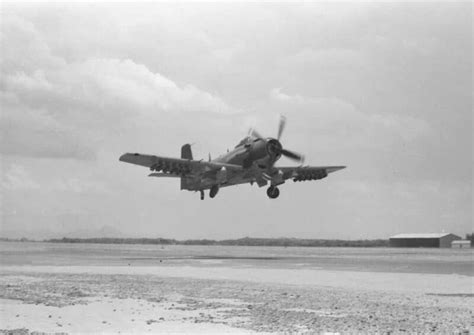
The arrival of jet engines after World War II transformed aviation, yet one aircraft proved that propeller-driven planes still had a crucial role in modern warfare.
The Douglas A-1 Skyraider first flew in 1945 but entered combat during the Korean War and later became legendary in the Vietnam War.
Its defining feature was an enormous payload capacity. Despite having a single piston engine, the Skyraider could carry up to 8,000 pounds of weapons, rivaling the payload of early heavy bombers.
Powered by the Wright R-3350 radial engine, the aircraft reached speeds of about 318 mph while maintaining excellent endurance. This allowed it to circle battlefields for extended periods, waiting to strike when ground troops needed support.
Its arsenal ranged from bombs and rockets to torpedoes, gun pods, and mines. In jungle warfare environments, this versatility proved invaluable.
The Skyraider also became part of military legend during rescue missions, including the dramatic operation where Colonel Bernard Fisher landed under fire to save a downed pilot, earning the Medal of Honor.
Douglas A-4 Skyhawk – Compact Jet Attack Power
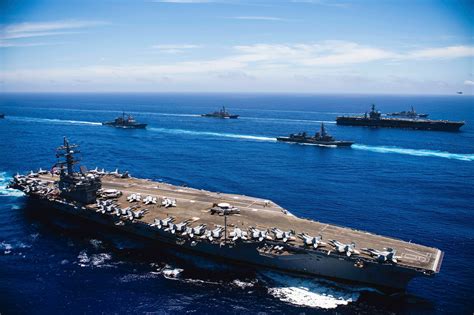
The Douglas A-4 Skyhawk marked a new era in naval aviation. Introduced in 1956, it was one of the earliest jet aircraft built specifically for the ground attack role.
Despite its small size, the aircraft packed impressive power. Equipped with engines such as the Pratt & Whitney J52, the Skyhawk could reach speeds of about 670 mph.
Its compact airframe made it ideal for aircraft carrier operations, while its payload capacity—up to 8,200 pounds of weapons—allowed it to strike targets with devastating effectiveness.
During the Vietnam War, the Skyhawk flew more combat missions than any other U.S. Navy aircraft. Pilots relied on its reliability and simplicity while delivering bombs, rockets, and guided missiles against heavily defended targets.
The aircraft also played a role in Cold War nuclear strategy, as it was capable of carrying tactical nuclear weapons during specialized strike missions.
General Dynamics F-111 Aardvark – High-Speed Precision Strike
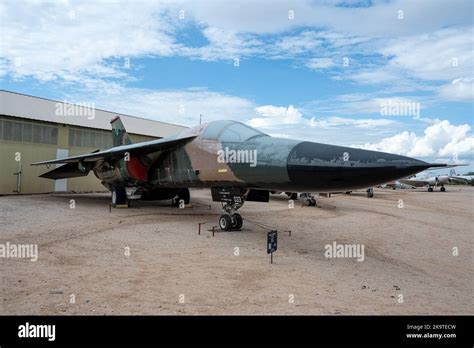
The F-111 Aardvark represented a dramatic shift in attack aircraft philosophy. Rather than relying on armor and slow attack runs, it used speed, advanced avionics, and precision targeting.
Introduced in the late 1960s, the aircraft featured variable-sweep wings, allowing pilots to adjust the wing angle for different flight conditions.
Two powerful Pratt & Whitney TF30 engines enabled the aircraft to exceed 1,400 mph, while its large fuel capacity allowed ranges approaching 3,600 miles.
The F-111 also pioneered advanced targeting systems like the Pave Track laser designator, allowing pilots to strike targets accurately even in darkness or poor weather.
The aircraft served prominently in the Vietnam War and later during Operation Desert Storm, where its precision strikes proved highly effective against strategic targets.
AV-8B Harrier – The Vertical Takeoff Ground Attack Pioneer
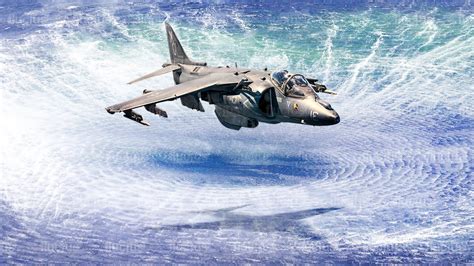
Few aircraft capture public imagination like the AV-8B Harrier, famous for its vertical takeoff and landing capability.
Using a vector-thrust Rolls-Royce Pegasus engine, the Harrier directs exhaust through rotating nozzles, allowing the aircraft to lift vertically like a helicopter before transitioning to conventional flight.
This remarkable ability allowed the aircraft to operate from small carriers, forward bases, and improvised runways, dramatically expanding operational flexibility.
Armed with weapons such as laser-guided bombs, rockets, and a 25 mm cannon, the Harrier proved its value during the Falklands War, as well as later conflicts in the Middle East.
The aircraft’s concept eventually inspired the design of modern STOVL fighters, including the F-35B.
Sukhoi Su-25 Frogfoot – The Soviet Close Air Support Workhorse
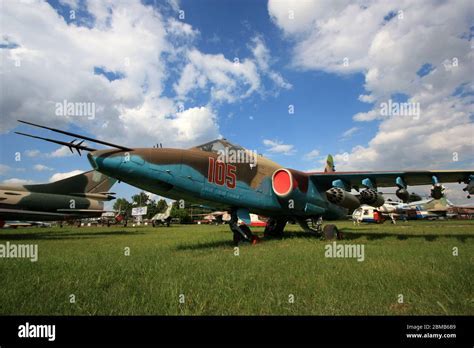
The Sukhoi Su-25 Frogfoot was developed during the Cold War as the Soviet answer to the American A-10 Thunderbolt.
Entering service in the early 1980s, the aircraft was built to survive heavy battlefield conditions while delivering powerful ground strikes.
Twin R-195 turbojet engines provide speeds of around 590 mph, while heavy armor protects the cockpit and essential systems.
The aircraft carries weapons on ten external pylons, including missiles, rocket pods, bombs, and guided munitions.
The Su-25 proved especially effective during the Soviet-Afghan War and continues to operate in modern conflicts decades after its introduction.
Fairchild Republic A-10 Thunderbolt II – The Tank Hunter
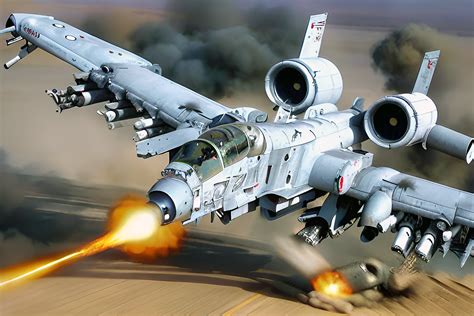
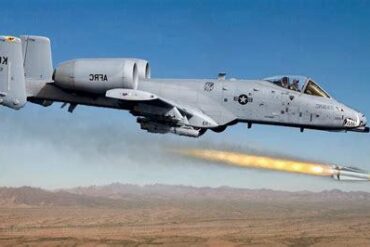
The A-10 Thunderbolt II, commonly known as the Warthog, is perhaps the most recognizable ground attack aircraft ever built.
Unlike multi-role fighters, the A-10 was designed for one mission above all else: destroy enemy armored vehicles and protect ground troops.
The aircraft is built around the massive GAU-8/A Avenger 30 mm rotary cannon, capable of firing thousands of armor-piercing rounds per minute.
Its cockpit sits inside a titanium armor shell, while redundant flight systems ensure the aircraft can survive severe damage.
With long loiter times and the ability to carry up to 16,000 pounds of weapons, the A-10 has proven invaluable during conflicts in Iraq and Afghanistan.
Lockheed AC-130 Gunship – The Flying Artillery Platform
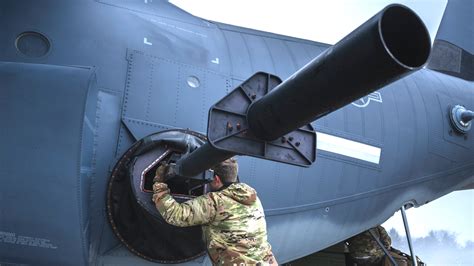
Unlike any other aircraft on this list, the Lockheed AC-130 Gunship operates as a circling aerial artillery platform.
Built on the rugged C-130 Hercules transport aircraft, the gunship carries heavy weapons mounted along one side of its fuselage. During combat, it flies in a slow circle while firing continuously at ground targets.
Modern versions include an extraordinary array of weapons such as a 105 mm howitzer, 40 mm cannon, and 25 mm Gatling gun.
Advanced infrared sensors, night vision systems, and targeting computers allow the aircraft to identify enemy forces even in total darkness.
Since its introduction during the Vietnam War, the AC-130 has remained one of the most effective close-support aircraft ever created, capable of delivering overwhelming firepower with remarkable precision.
The Evolution of Ground Attack Aircraft
Across more than a century of aviation history, ground attack aircraft have transformed dramatically—from fragile biplanes dropping hand-thrown bombs to sophisticated aircraft equipped with precision weapons and advanced sensors.
Despite technological revolutions in stealth fighters, drones, and satellite-guided weapons, the mission of these aircraft remains unchanged: protect friendly forces and destroy threats on the battlefield.
Whether it was the armored Il-2 Sturmovik, the brutal firepower of the A-10 Warthog, or the devastating artillery of the AC-130, these aircraft demonstrate how engineering evolves in response to the brutal realities of war.
They may not always receive the spotlight given to high-speed fighters, but their role has often been decisive. In the dangerous airspace directly above the battlefield, ground attack aircraft have repeatedly proven to be the most reliable ally soldiers can have overhead.