Speed is one of the most critical yet enigmatic attributes of a modern military submarine. While many focus on stealth and firepower, it is the velocity at which these submerged predators travel that can define tactical dominance beneath the waves. Measuring submarine speed isn’t as straightforward as reading a speedometer. Factors such as water resistance, depth, currents, and hull shape affect how fast these titans glide through the ocean. This article dives into the five fastest operational submarines that prowl the deep, each representing the pinnacle of naval engineering from the world’s leading military powers.
The Duality of Submarine Speed: Surface vs. Submerged
Submarine speed comes in two flavors: surface speed, measured when the vessel travels above water, and submerged speed, which is far more relevant in the modern era. Today’s stealth submarines are designed to remain submerged for months, operating in silence and invisibility. This makes submerged speed the dominant metric — and the focus of this article.
Another complexity lies in how speed is calculated. Traditionally expressed in knots (nautical miles per hour), speeds can vary based on how they’re measured. While GPS-based systems track movement relative to fixed land points, other naval systems use internal instrumentation. Either way, only a handful of submarines can claim true top-tier speed status — and those that do, showcase the convergence of powerful nuclear propulsion, streamlined design, and cutting-edge materials.
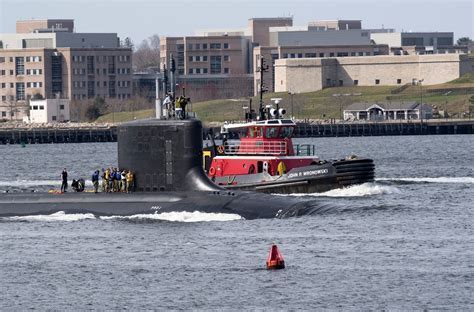
Virginia Class (USA) – 25 Knots of Versatility and Stealth
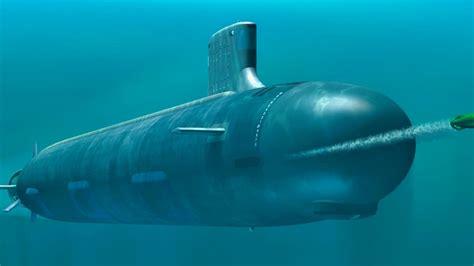
Launched in the early 2000s, the Virginia Class submarines are the workhorses of the U.S. Navy’s undersea dominance strategy. Built to replace the aging Los Angeles class, these boats are 114.8 meters long and displace a massive 10,200 tons.
Despite a top speed of 25 knots (29 mph) — relatively modest on this list — the Virginia class makes up for it with versatility. Each carries Tomahawk cruise missiles, Mk 48 torpedoes, and a nuclear reactor that allows sustained submersion for up to 120 days. Designed with modular construction and cutting-edge sensors, the class boasts a crew of 145 and includes features such as lockout chambers for Navy SEALs.
Currently, over 40 vessels are active, and while newer Columbia-class boats are in development, Virginia subs remain pivotal to America’s naval power until the arrival of the next-generation SSN(X) expected in the 2040s.
Astute Class (United Kingdom) – 30 Knots of British Engineering Excellence
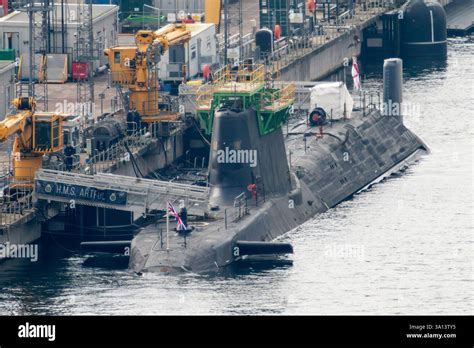
The Astute Class, launched in 2007 by the Royal Navy, represents the finest British submarine engineering. With a top submerged speed of 30 knots (34.5 mph), these nuclear-powered submarines pack incredible capability into a 97-meter-long hull.
Constructed with over 39,000 acoustic tiles, Astute submarines are designed for stealth and endurance. The PWR 2 nuclear reactor by Rolls-Royce allows for 25 years of operation without refueling, although food stocks limit the crew’s deployment to about three months. Each vessel displaces 7,900 tonnes and accommodates 98 personnel, with offensive capabilities including Spearfish torpedoes and Tomahawk cruise missiles.
Seven boats are expected in total, offering the UK a reliable, quiet, and fast platform for deep-ocean warfare, intelligence gathering, and strategic deterrence.
Shang Class (China) – 30 Knots and Expanding Power
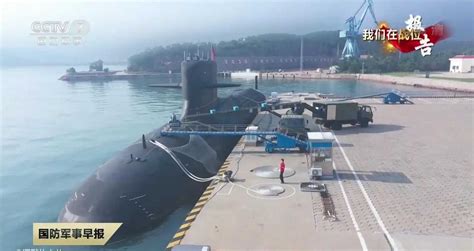
China’s Shang Class (Type 093) submarines represent an aggressive push into modern naval warfare. Built by China Shipbuilding Industry Corporation, these nuclear-powered vessels match the Astute’s 30-knot top speed, despite being larger at 107 meters long and displacing 7,000 tonnes.
Equipped with vertical launch systems (VLS), torpedoes, and land-attack cruise missiles, the Shang Class serves as a multi-mission platform capable of anti-ship, anti-submarine, and land assault roles. The onboard nuclear reactor ensures extended underwater endurance, while crew accommodation and VLS capabilities point to ambitions for global power projection.
Three major variants exist, including the advanced Type 09-III-B, which reportedly entered service in 2015. Exact details remain classified, but credible sources confirm that at least six Shang-class submarines are operational today.
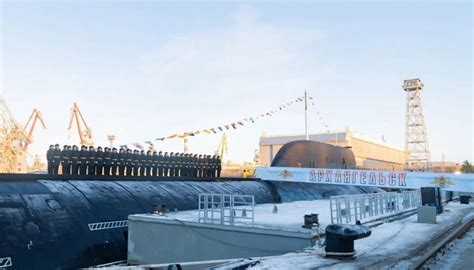
Yasen M Class (Russia) – 31 Knots of Deadly Silence
Russia’s Yasen M Class submarines, known in NATO circles as “Granay,” are among the most lethal underwater assets in the world. With a top submerged speed of 31 knots (36 mph), this class strikes a balance between sheer size, firepower, and quiet propulsion.
Each vessel is 130 meters long, with a displacement of 13,800 tons — making it the heaviest submarine on our list. Power comes from a 200-megawatt pressurized water reactor designed by Afrikantov, converting into a staggering 268,000 horsepower via a single-shaft propulsion system and twin thrusters.
What sets the Yasen M apart is its arsenal: Kalibr cruise missiles, Zircon hypersonic missiles, and Fizik-2 torpedoes, enabling simultaneous sea, land, and anti-submarine attacks. These vessels can descend below 520 meters and stay submerged for over three months. With at least six vessels active, the Yasen M is a cornerstone of Russia’s underwater strike capability.
Seawolf Class (USA) – 35 Knots of Dominant Speed
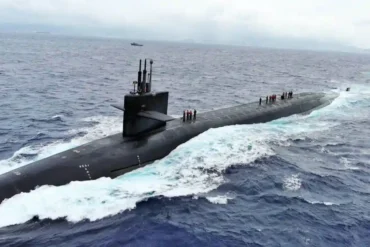
Topping the list is the legendary Seawolf Class, the fastest operational submarine in the world, with a submerged speed of 35 knots (40 mph). Only three Seawolf submarines were ever built due to their high cost, but each remains a formidable asset.
Commissioned in the 1990s, these boats feature 9,138-ton displacement, are 107.6 meters long, and offer an unmatched blend of speed, silence, and firepower. Admiral Bruce DeMars once called the Seawolf “the fastest, the quietest, and the most heavily armed” sub in existence — and for good reason.
The USS Jimmy Carter, a variant of the class, includes a 100-foot extended hull for advanced warfighting capabilities and classified missions. Though nearly three decades old, Seawolf submarines remain cutting-edge, supporting special operations, surveillance, and rapid-response missions where conventional subs can’t go.
Why Speed Still Matters in Modern Submarine Warfare
While stealth, endurance, and firepower dominate discussions around submarine design, speed is equally crucial. In the age of multi-domain warfare, a fast submarine can evade detection, close gaps quickly, reposition with urgency, or outmaneuver torpedoes. Faster subs can reach critical areas of engagement or withdrawal zones in record time — something that could prove decisive in a real-world conflict.
Moreover, speed enhances survivability. When combined with sonar-absorbent materials, decoys, and jamming technologies, a quick burst of submerged movement could mean the difference between being targeted or staying hidden.
Conclusion: Submarines That Redefine the Deep
These five submarines — Virginia, Astute, Shang, Yasen M, and Seawolf — aren’t just marvels of modern technology. They are strategic tools that redefine naval supremacy and underwater warfare in the 21st century. Each brings unique strengths to its nation’s defense framework, and while their true capabilities are often classified, what is publicly known is enough to awe, intimidate, and command respect.
In the murky, pressure-filled world below the waves, these vessels race in silence. They are the phantoms of the deep, and among them, only a few claim the title of fastest.