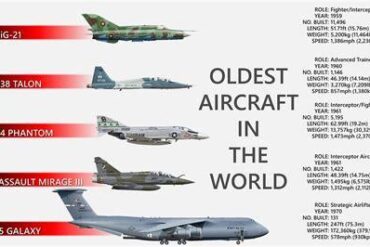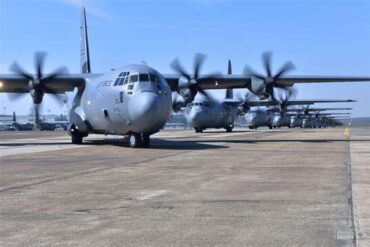
Some of the United States Air Force’s oldest aircraft remain deeply connected to the bases that have supported them for decades. While newer platforms such as the F-35A, B-21 Raider, and KC-46 Pegasus represent the future of American airpower, several installations continue to operate aircraft whose origins reach back to the early Cold War.
These aircraft have survived repeated changes in technology, doctrine, and global strategy because their basic capabilities remain valuable. More importantly, decades of modernization have allowed aging airframes to perform missions that their original designers could scarcely have imagined. At five US Air Force bases, that story is especially visible.
The aircraft based at these installations represent some of the most remarkable longevity in military aviation. The KC-135 Stratotanker, T-38 Talon, RC-135 Rivet Joint, U-2 Dragon Lady, and B-52 Stratofortress all entered service in an era when the Cold War was taking shape. Yet they remain relevant in 2026, supported by new engines, sensors, communications systems, weapons, and training methods.
Their continued operation also demonstrates that an aircraft’s service life is not determined simply by its age. Structural condition, modernization potential, mission requirements, operating costs, and the availability of replacements can all keep an older platform flying long after newer aircraft have entered the inventory.
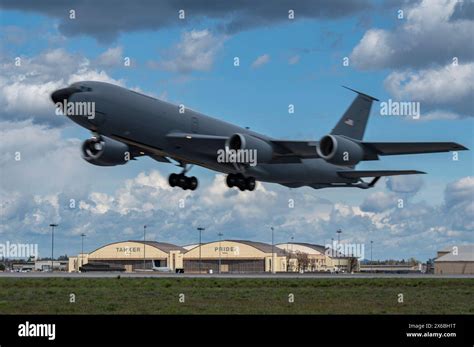
Fairchild Air Force Base and the KC-135 Stratotanker
Located in eastern Washington, approximately 279 miles east of Seattle, Fairchild Air Force Base has a history that stretches back to the years immediately preceding World War II. Local residents helped establish the installation by raising approximately $125,000 in less than a week to purchase 1,400 acres of land. The property was subsequently transferred to the War Department, and the installation was officially established in 1942.
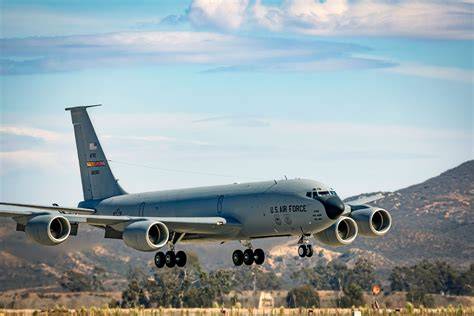
Today, Fairchild is closely associated with the Boeing KC-135 Stratotanker, one of the most enduring aircraft in American military service. The base is home to the 92nd Air Refueling Wing, whose mission revolves around providing aerial refueling and associated global mobility capabilities.
The KC-135 itself is a remarkable survivor. The first production aircraft were delivered to Castle Air Force Base in California in June 1957, meaning the type has been supporting American military operations for nearly seven decades. Its original purpose was straightforward but strategically essential: extend the range and endurance of other aircraft by transferring fuel in flight.
That capability remains indispensable. Fighter aircraft, bombers, intelligence platforms, transport aircraft, and other specialized assets can all depend on aerial refueling when operating far from their home bases. A tanker therefore does not merely transport fuel; it expands the geographic reach of almost the entire force.
Fairchild’s fleet has included 68 KC-135R/T aircraft, giving the base one of the most significant concentrations of the type in the Air Force. The broader USAF Stratotanker fleet has numbered hundreds of aircraft, although the service is gradually transitioning toward the KC-46 Pegasus.
The KC-135’s survival is partly explained by modernization. Although the airframe dates to the 1950s, successive upgrades have transformed its avionics, engines, communications equipment, navigation systems, and defensive capabilities. The aircraft flying today are therefore very different machines internally from the Stratotankers that first entered service.
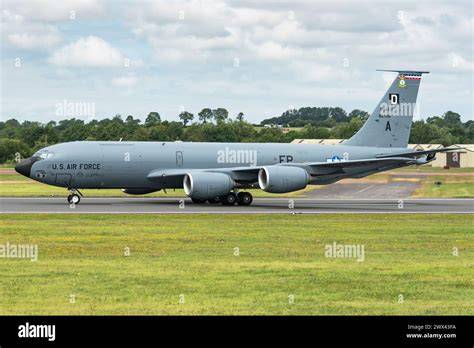
The transition to the KC-46 will eventually reduce the Stratotanker’s role, but replacement of such a large fleet takes years. Until enough new tankers are available and fully integrated into operational squadrons, the KC-135 remains an essential component of America’s global reach.
Laughlin Air Force Base and the T-38 Talon
In Texas, Laughlin Air Force Base preserves another extraordinary aviation legacy. The installation was established during World War II as Laughlin Army Air Field and was named after First Lieutenant Jack T. Laughlin, a Del Rio native who was killed while flying a mission in a B-17 Flying Fortress over Java.
After closing at the end of the war, Laughlin reopened in 1952 and became a pilot-training installation. Its current identity is centered on the 47th Flying Training Wing, which has trained more than 15,000 pilots since September 1972 for the US Air Force and allied nations.
The aircraft at the center of that training mission is the Northrop T-38 Talon. First flown in 1959, the supersonic trainer became one of the most influential training aircraft ever operated by the USAF. More than 1,100 T-38s were delivered between 1961 and 1972.
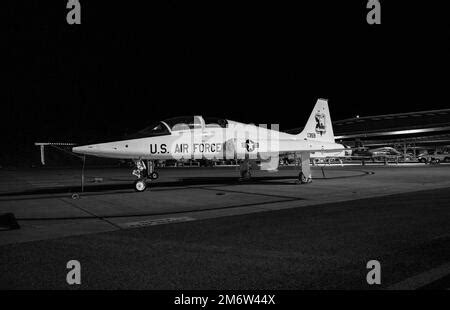
The Talon was designed during a period when the Air Force increasingly needed pilots capable of handling fast, high-performance fighters. Its compact twin-engine configuration and supersonic capability made it an effective bridge between basic flight training and operational aircraft.
Its influence can be measured by the pilots who passed through its cockpit. T-38 graduates have gone on to fly aircraft including the F-15E Strike Eagle, F-16 Fighting Falcon, B-1B Lancer, A-10 Thunderbolt II, and F-22 Raptor. The trainer therefore became part of the foundation supporting generations of American combat aviation.
Yet the T-38 is finally approaching the end of its extraordinary career. The Air Force is replacing it with the Boeing-Saab T-7A Red Hawk, a modern trainer designed around the demands of fifth-generation and future combat aircraft.
Following Milestone C approval in April 2026, Boeing received a $219 million contract covering the first 14 production T-7A aircraft along with associated equipment, spares, support, and training. The wider program is expected to involve 351 aircraft, with Laughlin among the bases scheduled to receive the new trainer.
The transition will not happen overnight. For now, the T-38 remains a familiar sight over Texas, continuing a training role that has lasted for more than six decades.
Offutt Air Force Base and the RC-135 Rivet Joint
Nebraska’s Offutt Air Force Base is home to perhaps one of the most unusual examples of aircraft longevity in the Air Force. The installation’s origins date back to Fort Crook, a frontier military post named after Major General George Crook. Its airfield was renamed Offutt Field in 1924 in honor of First Lieutenant Jarvis J. Offutt, an Omaha native and World War I aviator who was killed in France.
The installation became Offutt Air Force Base in 1948 after the creation of the independent US Air Force. Today, its host organization is the 55th Wing, the largest wing in Air Combat Command.
The 55th Wing operates the Air Force’s entire fleet of 17 RC-135 Rivet Joint aircraft, which are permanently based at Offutt while regularly deploying around the world. These aircraft are among the most important intelligence-gathering platforms in the American inventory.
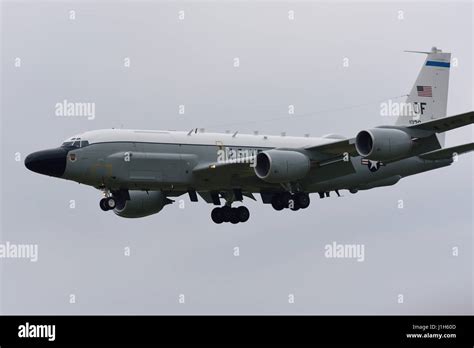
The RC-135 achieved initial operating capability in January 1964, putting its origins firmly in the Cold War. Unlike a conventional combat aircraft, the Rivet Joint’s value lies primarily in its ability to collect and analyze signals and other forms of information from the electromagnetic environment.
That mission has remained relevant through successive generations of warfare. The aircraft have supported operations ranging from the Vietnam War and conflicts in the Middle East to Operation Iraqi Freedom and more recent American military operations.
The aircraft’s longevity illustrates another important principle of military aviation: an airframe can remain useful when its mission systems evolve continuously. The RC-135 fleet has received extensive modifications over the decades, allowing aircraft that began their careers in the early Cold War to perform sophisticated intelligence missions in an era dominated by advanced digital communications and networked warfare.
Offutt’s Rivet Joints therefore represent more than old aircraft continuing to fly. They demonstrate how an established airframe can become a long-term platform for constantly evolving technology.
Beale Air Force Base and the U-2 Dragon Lady
Few aircraft in American aviation history have a reputation as distinctive as the Lockheed U-2 Dragon Lady. At Beale Air Force Base in California, this Cold War reconnaissance aircraft remains operational more than 70 years after its first flight.
Beale itself has an unusual history. Unlike many Air Force installations named after aviators, it honors Edward Fitzgerald Beale, a 19th-century pioneer, Naval Academy graduate, and California militia officer. Camp Beale opened in October 1942 as a training installation for Army formations before transferring to the Air Force in 1948.
The U-2 arrived at Beale in July 1976 with the 9th Strategic Reconnaissance Wing. At the time, the base also supported the legendary SR-71 Blackbird, giving Beale an extraordinary concentration of high-altitude reconnaissance technology.
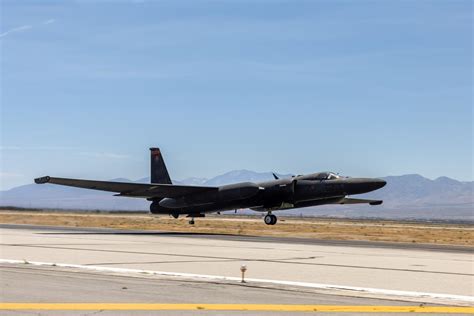
The U-2 had first entered service in 1956, originally designed to gather intelligence from extreme altitude. Its ability to fly above much of the world’s conventional air defense infrastructure made it particularly valuable during the Cold War. Missions over the Soviet Union, China, Cuba, and Southeast Asia established the aircraft as one of America’s most important intelligence platforms.
Its survival into the 21st century reflects a combination of exceptional altitude performance and continuous modernization. The U-2 has been repeatedly upgraded with improved sensors, communications equipment, cockpit technology, and mission systems.
The Air Force continues to operate the Dragon Lady through the 9th Reconnaissance Wing at Beale. Historical inventory figures should be treated carefully, however, because a previously published figure of 33 aircraft dates to September 2015 and included training and NASA-operated aircraft rather than representing a verified current operational fleet.
Despite the arrival of satellites, unmanned aircraft, and increasingly sophisticated space-based surveillance systems, the U-2 retains a valuable niche. Its ability to rapidly deploy, carry different sensor packages, and operate at extreme altitude gives commanders an intelligence option that cannot always be replicated by other systems.
Barksdale Air Force Base and the B-52 Stratofortress
If one aircraft best represents the concept of longevity in the US Air Force, it may be the Boeing B-52 Stratofortress. At Barksdale Air Force Base in Louisiana, the bomber has been part of the installation’s identity since the late 1950s.
Barksdale Field was dedicated on February 2, 1933, in honor of Second Lieutenant Eugene Hoy Barksdale. During World War II, the installation became an Air Corps flying school and trained replacement crews and entire units before their deployment overseas.
The first B-52 arrived at Barksdale on August 14, 1958, only a few years after the Air Force ordered its first production aircraft. The 2nd Bomb Wing eventually became the base’s principal B-52 organization, and the Stratofortress has remained closely associated with Barksdale ever since.
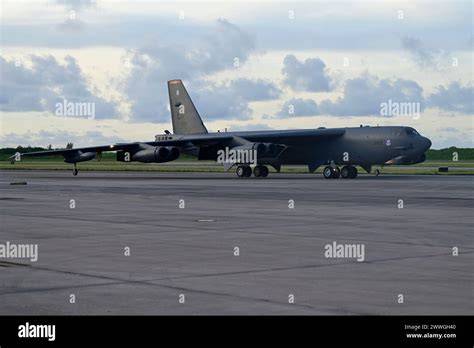
The scale of the original B-52 production effort was enormous. From the XB-52 through the B-52H, 774 aircraft were approved, produced, and fielded in just over a decade. Yet only a fraction of those aircraft remain today, making the current fleet the product of decades of attrition, maintenance, upgrades, and modernization.
B-52s based at Barksdale participated in major operations including Linebacker II, Arc Light, Young Tiger, Operation Just Cause, Desert Shield, Desert Storm, Enduring Freedom, and more recent operations. The bomber’s enormous range and payload capacity have repeatedly allowed it to adapt to changing strategic requirements.
Its future is particularly remarkable. Rather than simply preserving the aircraft in its existing form, the Air Force is investing heavily in extending its useful life. The B-52H is being equipped with new Rolls-Royce F130 engines through the Commercial Engine Replacement Program, while modernization also includes a new AESA radar.
These changes are intended to keep the Stratofortress operational into the 2050s, potentially giving an aircraft family designed in the early Cold War a service life approaching a century from initial conception to retirement.
Why America’s Oldest Aircraft Are Still Flying
The continued presence of these aircraft at Fairchild, Laughlin, Offutt, Beale, and Barksdale reveals an important feature of American military aviation. Age alone does not make an aircraft obsolete. A platform becomes obsolete when it can no longer perform its mission effectively, economically, or safely.
The KC-135 remains valuable because aerial refueling is fundamental to global operations. The T-38 remains useful because generations of pilots still need advanced jet training. The RC-135 provides intelligence that remains strategically important. The U-2 offers a specialized high-altitude reconnaissance capability, while the B-52 combines extraordinary range and payload with a modernization pathway capable of accommodating new weapons and sensors.
There is also an economic dimension. Developing an entirely new aircraft is enormously expensive, and replacing a large established fleet can take decades. When an existing platform has a strong structural foundation and can accept new technology, modernization may deliver a much more practical solution than starting from scratch.
That is why these five bases remain living museums of American aviation history without actually being museums. Their aircraft are not preserved merely because they are old. They continue flying because they still provide capabilities the Air Force needs.
The remarkable part is that each aircraft has survived for a different reason. The KC-135 extends the reach of other aircraft, the T-38 develops the people who fly them, the RC-135 gathers information, the U-2 reaches extraordinary altitudes for intelligence collection, and the B-52 provides long-range heavy strike capability.
Together, they demonstrate how American airpower has repeatedly adapted old airframes to new eras. At a time when the USAF is introducing the B-21, F-47, T-7A, and other next-generation systems, these veterans remain a powerful reminder that the future of military aviation does not always require abandoning the past.