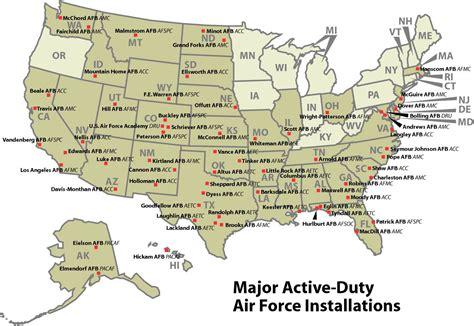
North America hosts some of the most powerful military aviation infrastructure on Earth. The United States, Canada, and Mexico share the continent, but when the discussion turns to airpower concentration, the United States dominates the landscape with extraordinary scale. The U.S. military operates thousands of aircraft across multiple service branches, and the density of those aircraft at certain installations creates what analysts often call “superbases”—massive complexes capable of launching, training, maintaining, and deploying hundreds of aircraft simultaneously.
Aircraft count alone does not tell the entire story of military capability. Mission diversity, training infrastructure, operational readiness, and logistical depth also shape the strategic value of a base. Still, the sheer number of aircraft parked on ramps, housed in hangars, and cycling through missions gives a striking visual indicator of aviation power concentrated in a single location.
Across North America, several installations stand out for their remarkable aircraft populations. These bases host everything from stealth fighters and strategic airlifters to special operations aircraft and electronic surveillance platforms. Some serve as operational hubs, others function as advanced training centers, and a few combine both roles while supporting multinational exercises.
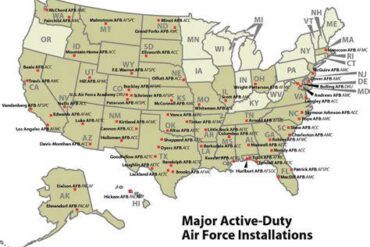
Together, the following six air bases represent the largest concentrations of military aircraft in North America, measured by the number of airframes typically stationed at or regularly operating from the installation.
[image-48321: ]
NAS Oceana – The Atlantic Fleet’s Master Jet Base
Naval Air Station Oceana in Virginia Beach holds the distinction of being the largest aviation base in North America by aircraft count. Known within naval aviation circles as the “Master Jet Base of the East Coast,” Oceana functions as the primary shore base for the U.S. Navy’s Atlantic Fleet strike fighter squadrons.
The installation dates back to World War II, when it was constructed to support the rapid expansion of naval aviation. Over decades, the base evolved alongside the increasing speed, weight, and complexity of carrier aircraft. Today the facility covers nearly 6,000 acres, centered around the massive Apollo Soucek Field airfield complex.
Aircraft numbers at Oceana fluctuate significantly depending on carrier deployment cycles. When multiple Carrier Air Wings are in port rotation, the base can host over 250 fighter jets simultaneously, and during certain periods the total approaches 300 aircraft. However, because these squadrons are attached to aircraft carriers, roughly half are typically deployed at sea at any given moment.
The base supports four major Carrier Air Wings—1, 3, 7, and 8—along with the headquarters of Strike Fighter Wing Atlantic. Most aircraft stationed here are Boeing F/A-18E and F/A-18F Super Hornets, the backbone of modern U.S. Navy carrier aviation.
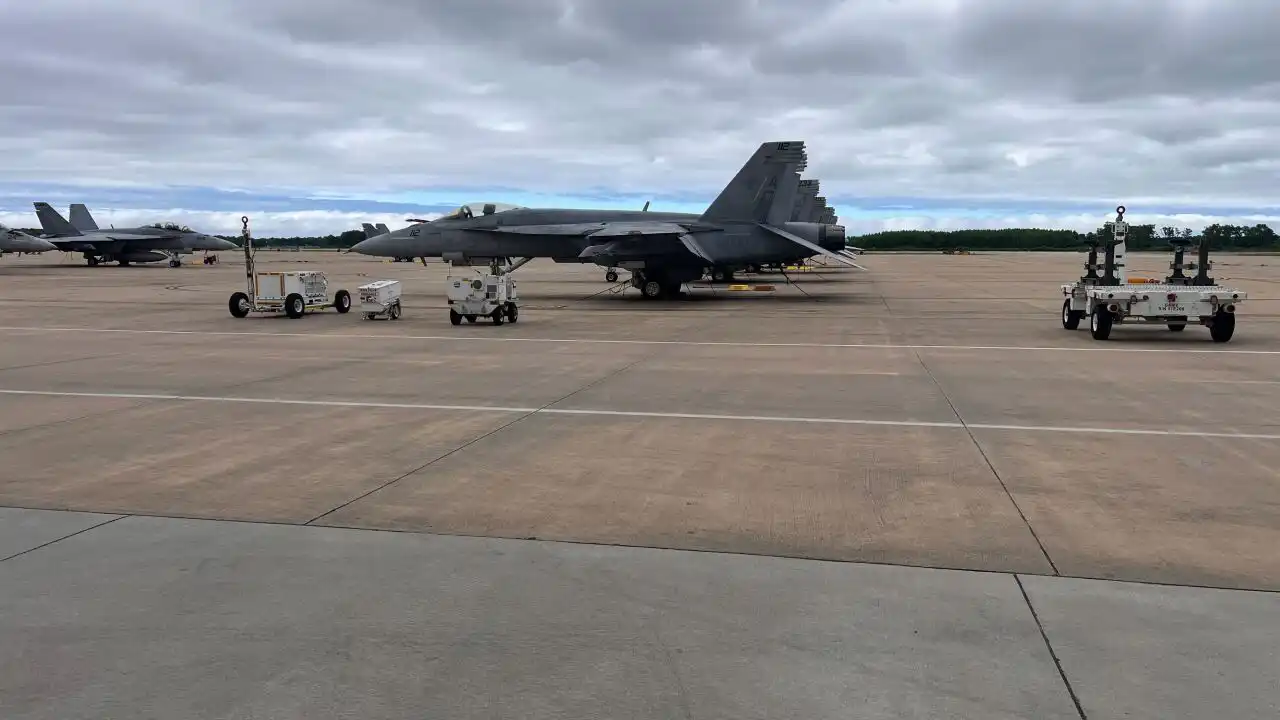
Pilot training also occurs at Oceana through the Fleet Replacement Squadron (FRS). Newly minted naval aviators arrive here to learn the operational intricacies of carrier-capable strike fighters before joining deployable squadrons.
The installation includes two crucial satellite facilities. NALF Fentress in nearby Chesapeake allows pilots to practice Field Carrier Landing Practice (FCLP), simulating carrier landings on land. Meanwhile, Dam Neck Annex supports technical training and advanced operational units.
Future developments may further expand Oceana’s aviation role. The U.S. Navy has been evaluating plans to introduce the F-35C Lightning II carrier stealth fighter to Atlantic Fleet squadrons based here, potentially adding the most advanced naval fighter to an already formidable aviation hub.
Luke Air Force Base – Global Training Ground for F-35 Pilots
Deep within the Arizona desert lies Luke Air Force Base, one of the most important fighter training centers in the world. The installation is home to the 56th Fighter Wing, the largest fighter wing in the entire U.S. Air Force.
Luke gained international fame during the Cold War era as the place where thousands of pilots learned to fly the F-16 Fighting Falcon. For decades, virtually every F-16 pilot across NATO and allied air forces passed through this desert training hub.
The base has since transitioned into the global training center for the Lockheed Martin F-35 Lightning II, the fifth-generation stealth fighter designed to replace numerous legacy aircraft. Luke now trains approximately 75 percent of all F-35 pilots worldwide, making it one of the most influential aviation training installations on the planet.
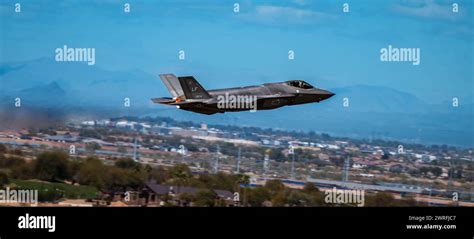
Aircraft numbers continue to grow as the base completes its transformation into a fully operational F-35 training hub. Ultimately, Luke is expected to host more than 150 F-35 aircraft, making it one of the largest concentrations of stealth fighters anywhere.
Training at Luke extends far beyond classroom instruction and local flight operations. Pilots conduct exercises across the Barry M. Goldwater Range, a massive training area covering nearly two million acres of desert terrain. This range allows aircrews to practice complex missions including precision strike, electronic warfare, and close air support.
International participation remains a defining characteristic of Luke’s mission. Pilots from Singapore, the Netherlands, Denmark, Belgium, and other allied nations routinely train here alongside U.S. Air Force personnel. The environment fosters interoperability among NATO and allied air forces, ensuring that multinational forces can operate together in real combat scenarios.
With stealth fighters filling its ramps and multinational training programs operating year-round, Luke Air Force Base stands as a cornerstone of global fifth-generation fighter pilot training.
Nellis Air Force Base – The World’s Premier Air Combat Training Arena
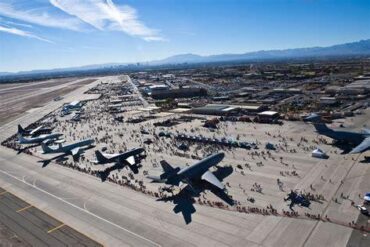
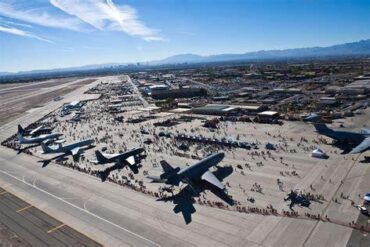
Few locations carry the mythic reputation of Nellis Air Force Base in Nevada. For military aviators, flying at Nellis represents something akin to a graduate school for air combat.
Located near Las Vegas, the base anchors the enormous Nevada Test and Training Range, a vast aerial training area larger than many U.S. states. This airspace allows realistic combat exercises involving hundreds of aircraft simultaneously.
Aircraft numbers at Nellis are technically variable, since units from around the world rotate through the base for training. Even so, the permanent and visiting aircraft population typically exceeds 150 airframes.
The base hosts the famous Red Flag exercises, widely considered the most advanced aerial combat training events in existence. During a typical Red Flag exercise, nearly 100 aircraft launch twice per day, flying complex missions that simulate the first ten combat sorties pilots might experience in wartime.
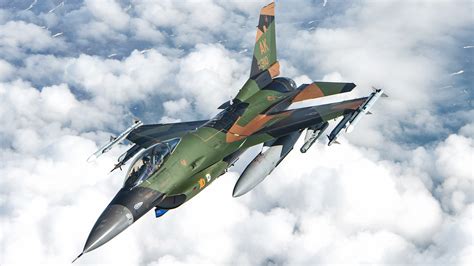
One of Nellis’ most intriguing features is its Aggressor Squadrons. The 64th and 65th Aggressor Squadrons fly aircraft painted in unique camouflage patterns designed to mimic potential adversaries. Their job is to replicate enemy tactics, forcing U.S. and allied pilots to face realistic threats during training missions.
Permanent aircraft at Nellis include F-16s, F-35s, tanker aircraft, search-and-rescue helicopters, and logistical platforms. Heavy bombers such as the B-1B Lancer and B-52 Stratofortress also deploy here periodically to participate in complex joint exercises.
Foreign aircraft frequently appear on the flightline as well. Fighters such as the Eurofighter Typhoon and other NATO aircraft often participate in multinational training events.
This constant flow of international squadrons, combined with cutting-edge training infrastructure, ensures Nellis remains the epicenter of advanced air combat training in the Western world.
Little Rock Air Force Base – The World’s Largest C-130 Hercules Hub
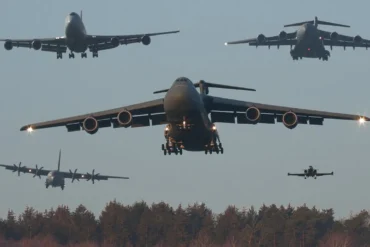
While fighter bases often capture the public imagination, airlift power forms the backbone of modern military operations. In this category, Little Rock Air Force Base in Arkansas stands unrivaled.
Little Rock hosts the largest concentration of Lockheed C-130 Hercules aircraft anywhere in the world, with more than 100 airframes typically stationed at the installation.
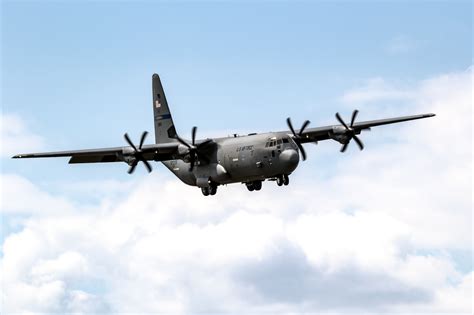
The base serves as the primary training center for the C-130, one of the most versatile military aircraft ever built. Variants of the Hercules perform missions ranging from tactical cargo transport and humanitarian relief to special operations support and aerial firefighting.
The majority of aircraft at Little Rock fall into two major categories:
- C-130H Hercules
- C-130J Super Hercules
The modern C-130J version incorporates upgraded avionics, improved engines, and advanced digital flight systems that significantly increase range and payload efficiency.
Training at Little Rock is managed primarily by the 314th Airlift Wing, which trains more than 1,500 student aircrew members each year. These students include not only U.S. military personnel but also pilots and loadmasters from over 47 allied nations.
The installation’s infrastructure reflects its specialized mission. A 12,000-foot runway accommodates heavy transport aircraft, while a dedicated assault landing strip allows pilots to practice landings on short or unimproved runways.
Another unique unit stationed here is the 29th Weapons Squadron, which provides advanced tactical training for experienced C-130 crews. The program teaches complex mission profiles such as low-level infiltration flights, night operations, and special operations support.
Little Rock’s enormous fleet and global training role ensure the Hercules continues to serve as the workhorse of international military airlift operations.
Joint Base Elmendorf-Richardson – Arctic Airpower Gateway
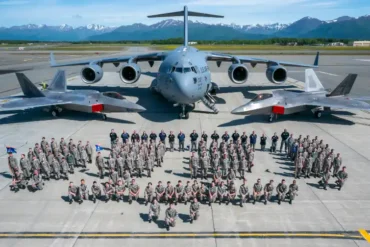
Perched along Alaska’s southern coast, Joint Base Elmendorf-Richardson (JBER) occupies one of the most strategically important positions in North America. Its location places it within rapid reach of the Arctic, the Pacific, and northern Asia, making it a crucial platform for power projection.
JBER was created by merging Elmendorf Air Force Base with Fort Richardson, forming a joint installation capable of supporting both Air Force and Army operations.
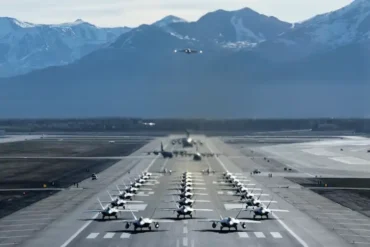
The base maintains over 100 aircraft, including one of the largest concentrations of Lockheed Martin F-22 Raptor stealth fighters in the world.
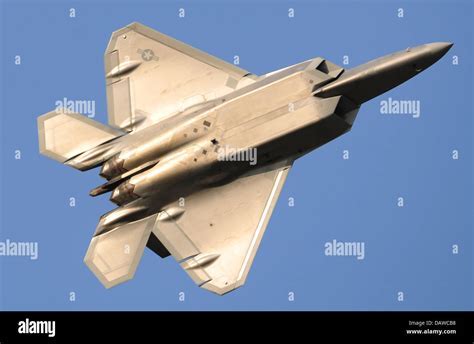
The F-22 Raptor was the first operational fifth-generation fighter aircraft, designed with stealth technology, advanced sensors, and supercruise capability. Having a large number of these aircraft stationed in Alaska provides the United States with a powerful air superiority presence near the Arctic and Pacific regions.
Beyond its fighter squadrons, JBER hosts significant airlift and command-and-control capabilities. The base operates C-17 Globemaster III strategic transport aircraft, capable of moving troops and equipment across intercontinental distances.
Another major asset is the Boeing E-3 Sentry AWACS aircraft, which functions as an airborne radar command center capable of monitoring vast airspaces and coordinating combat operations.
Large-scale exercises such as Red Flag-Alaska and Northern Edge bring additional aircraft from U.S. Navy, Marine Corps, and allied air forces. During these events, the aircraft population at JBER can surge well beyond its normal numbers.
Its geographic position, advanced fighters, and heavy airlift fleet combine to make Elmendorf-Richardson one of the most strategically significant aviation hubs in North America.
Eglin Air Force Base – America’s Ultimate Weapons Testing Superbase
Stretching across the Florida Panhandle, Eglin Air Force Base represents one of the largest and most diverse military aviation complexes in the United States. The installation spans over 700 square miles, making it one of the most geographically expansive air bases in the world.
Around 90 or more aircraft operate from Eglin on a typical day, representing a wide variety of mission types. Unlike bases that focus on a single aircraft type, Eglin serves primarily as the U.S. Air Force’s premier aircraft and weapons testing center.
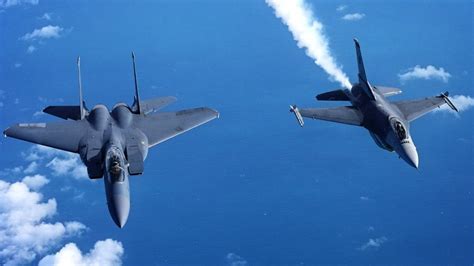
The base hosts the 53rd Wing, responsible for operational testing and evaluation of nearly every aircraft and weapons system used by the Air Force. When new technologies or weapon systems are developed, they often undergo extensive evaluation here before entering full operational service.
Several specialized squadrons operate from the installation, including the 40th Flight Test Squadron and the 85th Test and Evaluation Squadron. Aircraft used in testing include platforms such as the F-15 Eagle, F-16 Fighting Falcon, and A-10 Thunderbolt II.
Eglin also plays a central role in training pilots to operate the F-35A Lightning II. The 33rd Fighter Wing runs one of the largest F-35 training programs in the Air Force.
Beyond aviation, the base hosts more than 50 tenant units from multiple branches of the U.S. military. Among them are the Army’s 7th Special Forces Group and the 6th Ranger Training Battalion, which conducts the infamous swamp phase of the Army Ranger School.
One unusual feature of Eglin is its shared runway arrangement with Destin–Fort Walton Beach Airport, meaning civilian and military aircraft operate from the same facility.
Just offshore lies an enormous Gulf of Mexico test range, where aircraft can safely test new weapons systems over open water. This range plays a crucial role in evaluating everything from precision-guided bombs to advanced missile systems.
The combination of vast airspace, cutting-edge testing infrastructure, and diverse aircraft makes Eglin one of the most technologically influential air bases in the world.
Across deserts, coastlines, forests, and Arctic frontiers, these six installations represent the largest concentrations of military aviation power in North America. From the carrier strike fighters at NAS Oceana to the stealth training fleet at Luke Air Force Base and the global airlift hub at Little Rock, each installation plays a distinct role in shaping modern airpower.
The aircraft counts themselves are impressive, but the deeper significance lies in what these bases enable: training new generations of pilots, testing revolutionary weapons, coordinating multinational operations, and projecting airpower across the globe. In a world where air superiority remains a decisive factor in military strategy, these colossal aviation hubs function as the beating heart of North America’s aerial strength.