As transborder travel demand continues to recover, Air Canada is making a notable statement by significantly increasing its widebody operations to the United States for the busy summer season. The Canadian flag carrier has expanded its scheduled widebody flights by 35% compared with the same period last year, signaling renewed confidence in one of North America’s most competitive aviation markets. Rather than spreading aircraft across numerous destinations, the airline has strategically concentrated additional capacity on two high-demand routes where premium traffic, business travelers, leisure passengers, and connecting customers continue to drive strong bookings.
The increase represents more than just additional flights. It reflects a broader network strategy that prioritizes operational efficiency while maximizing revenue opportunities. Widebody aircraft are traditionally reserved for long-haul international services, yet Air Canada continues to demonstrate that deploying larger aircraft on select transborder routes can generate significant advantages during peak travel periods.
According to aviation analytics data from Cirium, Air Canada will operate 188 one-way widebody services between Canada and the United States throughout the third quarter, up from 139 one-way flights during the same period last year. That additional 49 scheduled flights highlights the airline’s growing confidence in cross-border demand after several years of market recovery.
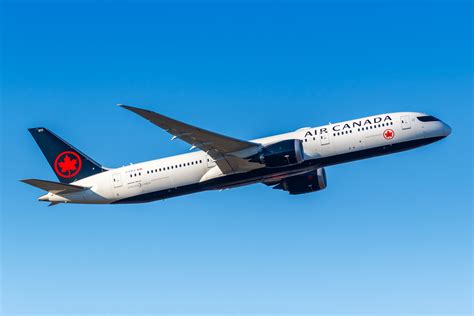
Daily Boeing 787-9 Service Strengthens Vancouver–Newark Connection
One of the most significant additions this summer is the introduction of a daily Boeing 787-9 Dreamliner service linking Vancouver International Airport (YVR) with Newark Liberty International Airport (EWR).
The nearly 2,961-mile (4,766-kilometer) journey takes just over five hours, providing passengers with a convenient morning departure from Vancouver and an afternoon arrival in the New York metropolitan area. This schedule is particularly attractive for both business travelers and leisure passengers seeking same-day connectivity throughout the northeastern United States.
Deploying the Boeing 787-9 on this route represents a substantial investment. The aircraft offers modern passenger amenities, quieter cabins, larger windows, improved humidity levels, and enhanced fuel efficiency compared with older widebody models. It also provides considerably greater cargo capacity, an increasingly valuable revenue stream for airlines operating international services.
Competition remains strong. JetBlue continues serving the New York market from Vancouver through John F. Kennedy International Airport, while United Airlines operates seasonal flights into Newark. Nevertheless, Air Canada’s decision to utilize one of its flagship aircraft demonstrates confidence that sustained premium demand can support year-round widebody operations.
Toronto–Los Angeles Receives Even More Widebody Capacity
The busiest beneficiary of Air Canada’s expansion remains the highly competitive Toronto Pearson International Airport (YYZ) to Los Angeles International Airport (LAX) corridor.
Throughout the summer schedule, passengers will find up to two daily widebody departures on select days. Depending on operational requirements, Air Canada will rotate among three different aircraft types:
- Boeing 787-8 Dreamliner
- Boeing 787-9 Dreamliner
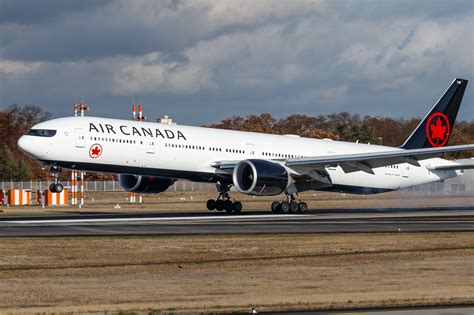
- Boeing 777-200LR
The route covers approximately 2,172 miles (3,494 kilometers) and typically requires around five hours of flying time. While some departures continue to utilize narrowbody aircraft, the increased presence of widebody jets provides substantially more passenger seats, premium cabin availability, and cargo capacity during the busiest travel weeks.
Unlike many seasonal leisure routes, Toronto–Los Angeles benefits from exceptionally diverse passenger demand. Business travelers, tourists, entertainment industry professionals, visiting families, and international connecting passengers all contribute to consistently strong load factors throughout the summer months.
Why Air Canada Is Concentrating Growth on Just Two Routes
Instead of rapidly expanding into numerous U.S. destinations, Air Canada appears to be focusing its resources where demand is both predictable and profitable.
Los Angeles remains one of North America’s largest international gateways, providing seamless onward connections across the United States, Mexico, Asia-Pacific destinations, and Latin America. Travelers beginning their journey in Toronto can connect efficiently onto dozens of partner and alliance flights operating from LAX.
Similarly, Newark functions as a major gateway to the New York metropolitan area while offering extensive onward connections through United Airlines’ hub operations. The route also supports premium corporate traffic between western Canada and one of the world’s largest financial centers.
By deploying widebody aircraft only where passenger demand consistently justifies the additional capacity, Air Canada can maximize aircraft utilization without overextending its fleet.
How 2026 Compares With Previous Years
Although this summer represents meaningful growth, Air Canada’s transborder widebody network has not yet returned to historic levels.
Last year’s third-quarter schedule featured 139 one-way widebody flights, with Toronto–Los Angeles accounting for the overwhelming majority of operations. During select periods, Montréal–Trudeau International Airport also received Airbus A330-300 service to Los Angeles, but that deployment has not returned for this summer’s schedule.
Even with the current expansion to 188 one-way flights, Air Canada remains well below earlier capacity benchmarks. Following the pandemic recovery, the airline operated 452 widebody transborder flights in 2022, while its record year of 2019 reached 1,254 flights.
Those numbers illustrate both how much the airline has recovered and how much additional growth potential still exists as international travel continues normalizing.
Growing Confidence in Cross-Border Demand
Air Canada’s latest scheduling decisions suggest that management sees strengthening fundamentals in Canada–United States travel. Leisure demand remains healthy, business travel continues its gradual recovery, and international connecting traffic is steadily increasing through the airline’s major Canadian hubs.
Widebody aircraft also provide operational flexibility. During peak periods, they allow Air Canada to increase passenger capacity without requiring additional airport slots or significantly increasing flight frequencies. At slot-constrained airports such as Los Angeles and Newark, this strategy enables the carrier to transport more travelers while maintaining efficient schedules.
The airline’s emphasis on modern Boeing 787 Dreamliners further supports its long-term fleet strategy, combining lower operating costs with improved passenger comfort and strong cargo performance.
Air Canada’s Summer Expansion Signals a Strategic Shift
Rather than pursuing rapid network expansion, Air Canada is taking a disciplined approach by strengthening proven high-demand markets. The 35% increase in U.S. widebody operations demonstrates confidence in transborder travel while reflecting careful capacity management that aligns aircraft deployment with passenger demand.
Daily Dreamliner flights between Vancouver and Newark, expanded widebody frequencies from Toronto to Los Angeles, and continued investment in premium long-haul aircraft collectively position the airline to capitalize on one of the busiest summer travel seasons in recent years. Although overall transborder widebody capacity remains below pre-pandemic highs, the latest expansion suggests Air Canada is steadily rebuilding toward a larger North American network while maintaining a strong focus on profitability, connectivity, and operational efficiency.