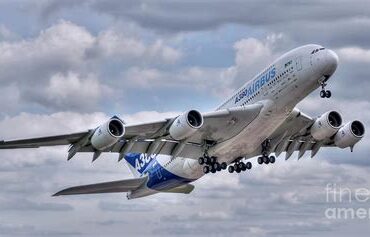
The Airbus A380 stands as one of the most fascinating paradoxes in aviation history. Once labeled a $30 billion commercial miscalculation, the aircraft has evolved into one of the most beloved passenger experiences in modern aviation. Airlines may have struggled to make the economics work, but travelers consistently praise the aircraft for its comfort, quietness, and unparalleled onboard luxury.
Nearly two decades after its first commercial flight, the A380 continues to command admiration. Aviation enthusiasts photograph it obsessively. Premium passengers deliberately choose flights operated by it. Airports adjust their infrastructure just to accommodate it. In an industry defined by efficiency and relentless cost control, the A380 represents something rarer: an aircraft designed to deliver an unforgettable experience in the sky.
In 2026, the A380 occupies a unique place in aviation. It is no longer the future of air travel, yet it remains one of the most iconic aircraft ever built—a technological giant that reshaped how passengers experience long-haul flights.
The Vision Behind The Airbus A380 Program
During the 1990s, Airbus sought to challenge Boeing’s dominance in the long-haul aircraft market. Boeing’s 747 “Jumbo Jet” had ruled global aviation since the 1970s, symbolizing the golden age of mass air travel. Airbus envisioned something even bigger.
The concept was bold: the world’s largest commercial passenger aircraft, capable of transporting more travelers than any jet before it.
Airbus designed the A380 specifically for the hub-and-spoke airline model, where passengers from multiple origins converge at major hubs before continuing to final destinations. Under this model, aircraft with enormous capacity were ideal because they could move vast numbers of travelers between global megahubs like Dubai, London, Singapore, and Los Angeles.
Development costs quickly soared. Advanced composite structures, complex wiring systems, and the engineering challenges of building the first full double-deck passenger aircraft pushed the program budget beyond expectations.
Despite the challenges, Airbus pressed forward. On April 27, 2005, the enormous jet finally took to the skies.
The aircraft officially entered commercial service two years later.
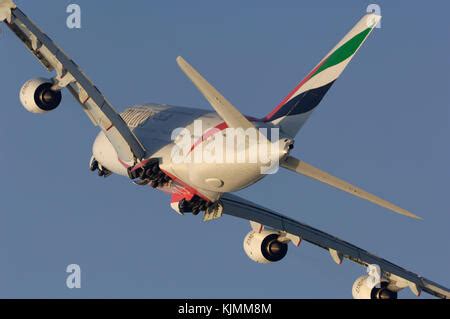
For Airbus, it was a historic achievement. The company had built the largest passenger aircraft ever flown—and one of the most ambitious engineering projects in aviation history.
Entering Commercial Service In 2007
The launch customer for the Airbus A380 was Singapore Airlines, one of the world’s most prestigious carriers. When the airline introduced the aircraft in October 2007, the event generated global headlines.
Passengers rushed to book the inaugural flight between Singapore and Sydney, with some tickets auctioned online for charity. The aircraft immediately became synonymous with premium long-haul travel.
Unlike previous widebody aircraft, the A380 offered airlines something extraordinary: two complete passenger decks running the entire length of the aircraft.
This configuration unlocked a completely new level of cabin creativity. Airlines could design lounges, suites, and premium spaces previously impossible on traditional jets.
Typical airline configurations carried 480 to 520 passengers, though Airbus certified the aircraft to carry as many as 853 passengers in an all-economy layout, making it the highest-capacity commercial jet ever built.
Technical Specifications Of The World’s Largest Passenger Aircraft
The A380’s sheer size continues to amaze travelers and aviation professionals alike. Its dimensions and capabilities remain unmatched in commercial aviation.
Key technical highlights include:
- Maximum passenger capacity: 853 passengers
- Typical airline configuration: 480–520 passengers
- Range: 8,000 nautical miles (14,816 km)
- Cruise speed: Mach 0.85
- Engines: Four Rolls-Royce Trent 900 or Engine Alliance GP7000 engines
- Wingspan: 79.8 meters (261 feet)
- Length: 72.7 meters (238 feet)
The aircraft was engineered to compete with several large long-haul aircraft, including the Boeing 747-8, Boeing 777-300ER, and Airbus A350-1000.
Yet the A380’s defining feature remained its double-deck cabin, which allowed airlines to create unmatched onboard environments.
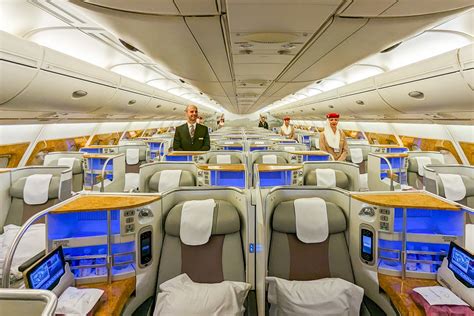
Passengers frequently describe the aircraft as noticeably quieter and smoother than other jets. The massive wings absorb turbulence efficiently, and the four powerful engines allow the aircraft to cruise with remarkable stability.
For long-haul travelers, especially those spending 10 to 15 hours in the air, that difference matters.
Why Airlines Struggled With The A380
Ironically, the A380 itself was never the problem.
The aircraft performed exactly as designed. The challenge came from dramatic shifts in airline economics and passenger travel patterns during the 2000s.
Several global events reshaped aviation during the A380’s early years:
- The 9/11 terrorist attacks reshaped airline demand
- The 2008 global financial crisis reduced long-haul travel
- Rapid fuel price increases made four-engine aircraft expensive
- Airlines increasingly adopted point-to-point route networks
Instead of funneling passengers through massive hubs, airlines began using smaller, fuel-efficient aircraft like the Boeing 787 Dreamliner and Airbus A350 to connect secondary cities directly.
Twin-engine aircraft proved dramatically more efficient. They burned less fuel, required less maintenance, and could operate economically even with fewer passengers.
The A380, by contrast, required consistently high passenger loads to be profitable.
When airlines could not fill 500 seats, the economics quickly deteriorated.
The Airline That Saved The A380: Emirates
If one airline defined the A380 era, it was Emirates.
The Dubai-based carrier embraced the aircraft more aggressively than any other airline in the world.
Out of the 251 A380 aircraft built, Emirates alone took delivery of 123 aircraft, accounting for nearly half of the global fleet.
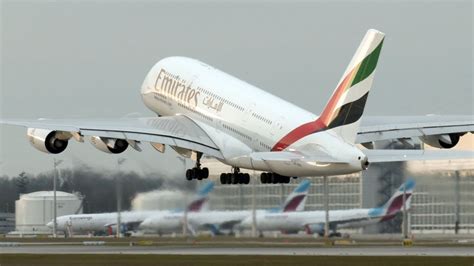
Emirates’ business model was perfectly suited for the aircraft. Dubai operates as one of the world’s largest international hubs, connecting passengers between Europe, Asia, Africa, and the Americas.
The airline could consistently fill the A380’s enormous capacity thanks to this global network.
Emirates even built dedicated infrastructure for the aircraft:
- Concourse A at Dubai International Airport, designed specifically for A380 operations
- Specialized maintenance facilities operated by Emirates Engineering
- Extensive cabin retrofit programs upgrading older aircraft interiors
The airline expects to operate its A380 fleet well into the 2040s, ensuring the aircraft remains visible in global skies for decades to come.
The Most Innovative Cabins Ever Built
If the A380 struggled commercially, it excelled spectacularly in passenger experience.
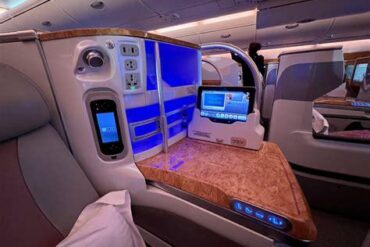
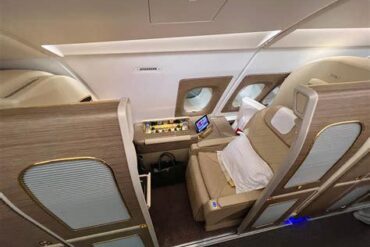
The aircraft’s spacious double-deck cabin gave airlines the freedom to introduce some of the most luxurious features ever seen in commercial aviation.
Emirates led the innovation race with several groundbreaking amenities.
The Onboard Shower Spa
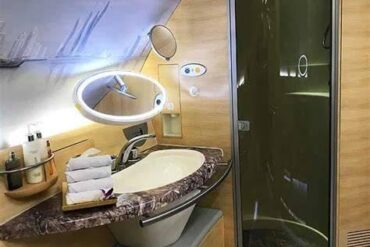
First-class passengers on Emirates A380 aircraft can take a shower at 40,000 feet. Two dedicated shower suites located at the front of the upper deck allow travelers to refresh during ultra-long-haul flights.
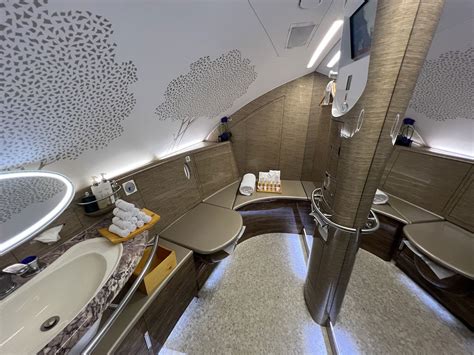
This feature instantly became one of aviation’s most famous luxuries.
The Sky Lounge Bar
At the rear of the upper deck, Emirates created an in-flight lounge and cocktail bar exclusively for premium passengers.
Travelers gather here during long flights to socialize, enjoy drinks, and stretch their legs. The lounge quickly became one of the most recognizable features of the A380 experience.
Etihad’s “Residence In The Sky”
Etihad Airways took luxury even further.
The airline introduced The Residence, the most exclusive commercial aviation cabin ever created.
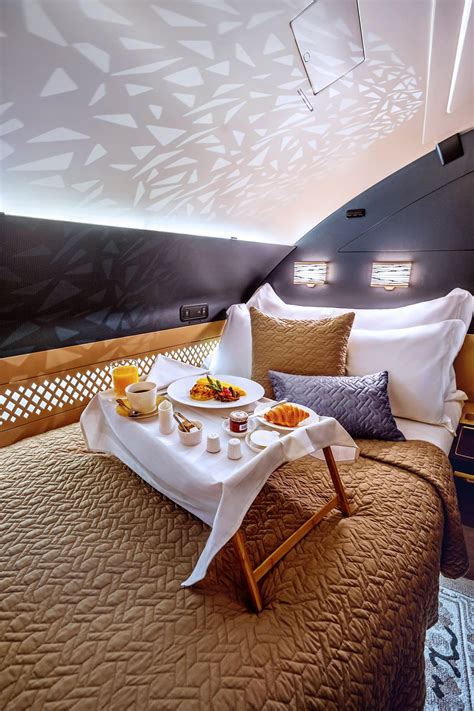
This ultra-premium suite includes:
- A living room with leather seating
- A separate bedroom
- A private ensuite shower
Only one Residence suite exists on each Etihad A380 aircraft, making it one of the most exclusive airline products in the world.
Singapore Airlines First Class Suites
Singapore Airlines also used the A380 to redefine luxury travel.
Its First Class Suites include a reclining leather seat and a separate full-size bed. On selected rows, two suites can combine into a double bed for couples, creating one of the most romantic experiences in commercial aviation.
The A380 Fleet In 2026
Despite production ending in 2021, the A380 remains active across global skies.
As of early 2026, approximately 190 aircraft remain in service, operated by about ten airlines.
The COVID-19 pandemic initially threatened the aircraft’s survival. With global travel collapsing in 2020, many airlines permanently retired their A380 fleets.
Carriers such as:
- Air France
- Malaysia Airlines
- China Southern
- Thai Airways
removed the aircraft entirely.
Yet as travel demand rebounded, several airlines rediscovered the value of the A380.
Major operators returning the aircraft to service include:
- Emirates
- Singapore Airlines
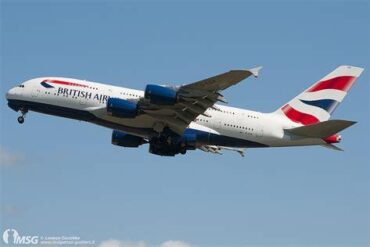
- British Airways
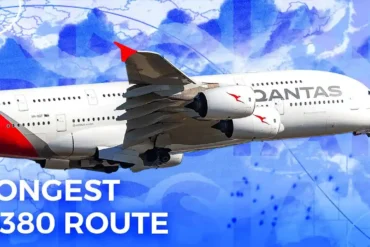
- Qantas
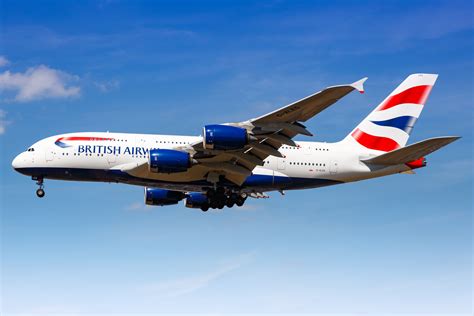
These airlines recognized the aircraft’s strength on slot-constrained routes, where increasing passenger capacity per flight is the only realistic way to grow.
Why Passengers Still Love The Airbus A380
For travelers, the A380 delivers something increasingly rare in aviation: space.
Compared with modern twin-engine jets designed primarily for efficiency, the A380 feels spacious, quiet, and comfortable.
Passengers frequently praise several aspects of the experience:
- Wider cabins and higher ceilings
- Reduced cabin noise
- More stable flight characteristics
- Large premium cabin spaces
- Dedicated onboard lounges
The aircraft’s enormous wingspan also reduces turbulence sensations, making long flights noticeably smoother.
For aviation enthusiasts, flying the A380 has become something of a bucket-list experience.
Is There A Future Replacement For The A380?
Despite the aircraft’s popularity with passengers, manufacturers remain cautious about building another aircraft of similar size.
Modern aviation priorities focus on efficiency, sustainability, and flexible route planning—areas where smaller twin-engine aircraft excel.
However, a challenge is emerging.
Global passenger demand continues to grow rapidly, while many major airports face severe slot limitations.
When airports cannot add more flights, airlines must increase passengers per flight.
Aircraft such as the upcoming Boeing 777-9 may partially address this challenge, offering higher capacity than today’s twin-engine jets.
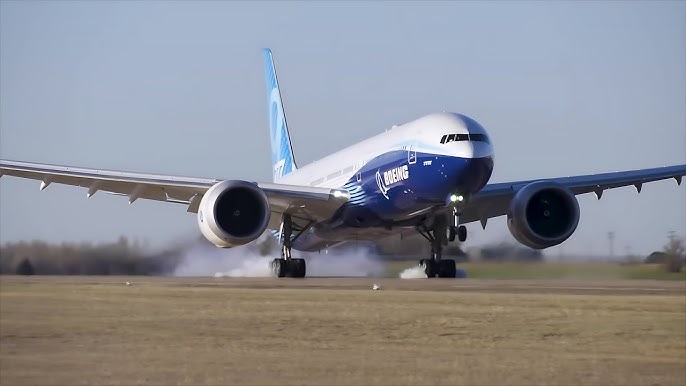
Still, even the 777-9 cannot match the sheer passenger capacity of the A380.
Some industry discussions have floated the idea of stretched versions of the Airbus A350 or Boeing 777X, though no official programs currently exist.
For now, the A380 remains the undisputed giant of commercial aviation.
A $30 Billion Failure That Became An Icon
Measured purely by financial returns, the A380 program did not meet Airbus’ expectations. The company invested more than $30 billion into development and ultimately delivered only 251 aircraft.
Yet success in aviation is not always measured in profit alone.
The A380 reshaped passenger expectations for long-haul travel. It introduced new standards of comfort, luxury, and onboard innovation.
Most importantly, it captured the imagination of millions.
Even today, when the massive aircraft appears on the horizon, travelers instinctively look up.
Nearly twenty years after its debut, the Airbus A380 remains what it has always been:
A technological marvel, an aviation icon, and one of the most beloved passenger aircraft ever built.