American Airlines has quietly ignited industry speculation by revealing a shortlist of ten international cities under active consideration for future service. The announcement, made during a company event where attendees were invited to vote on their preferred additions, signals a calculated and data-driven approach to network growth. While no formal launch dates have been confirmed, the earliest realistic timeline points toward 2027, reflecting both aircraft delivery schedules and strategic long-haul planning cycles.
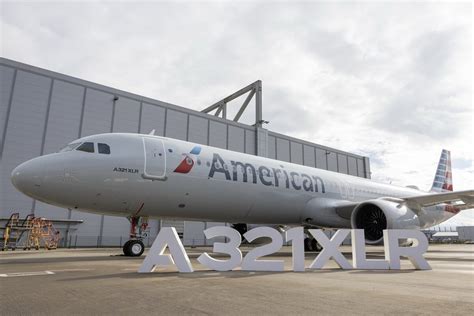
At the center of this expansion blueprint sits the Airbus A321XLR, a long-range narrowbody aircraft designed to economically connect secondary European cities with major U.S. hubs. The aircraft’s importance cannot be overstated. Its extended range and lower operating costs allow American to test thinner transatlantic markets that would be unsustainable with larger widebody jets. The airline has already committed the A321XLR to operate its newly announced Philadelphia–Porto service, reinforcing its role as a network enabler rather than a niche experiment.
The shortlist spans Europe, Africa, and South America, with a clear geographic concentration in Southern Europe. That regional focus aligns with post-pandemic travel patterns, where leisure demand—particularly to Mediterranean destinations—continues to outperform corporate-heavy routes. One destination, however, stands apart for its sheer distance and geopolitical complexity: Cape Town.
Southern Europe Dominates Strategic Thinking
The data underpinning American’s shortlist reflects a powerful transatlantic trend. Southern European countries including Portugal, Spain, Italy, Greece, and Malta are experiencing record seat capacity from the United States. For the third quarter of 2026, airlines plan approximately 6.9 million round-trip seats between these regions, marking an 8% increase year-over-year and a striking 44% surge compared to pre-pandemic levels in 2019.
Italy leads year-over-year growth, closely followed by Spain at 8.3%. These figures are not abstract statistics; they represent a structural shift in demand. U.S. travelers are prioritizing cultural tourism, culinary exploration, and family visits over traditional business corridors. American Airlines is clearly aligning its network strategy with that momentum.
Palma de Mallorca and Seville exemplify this opportunity. Both destinations are tourism powerhouses with strong seasonal flows yet limited direct connectivity to the United States. The A321XLR’s economics make nonstop service viable without requiring the traffic density of major capitals like London or Paris.
Seville: An Untapped Gateway to Andalusia
Seville presents one of the most intriguing possibilities on the shortlist. As the capital of Andalusia, the city blends architectural grandeur, flamenco heritage, and year-round sunshine. Yet it has never hosted scheduled passenger flights to North America. It currently lacks any long-haul service, making it a blank slate for transatlantic development.
Booking data for the twelve months ending November 2025 indicates approximately 110,000 round-trip passengers traveled between Seville and the United States via connecting hubs. While not overwhelming, that base provides a measurable foundation. Nonstop service often stimulates additional demand through reduced travel time and increased market visibility. History consistently shows that when direct flights are introduced, traffic expands beyond existing connecting volumes.
Greater New York accounts for roughly 31,000 of those passengers, positioning JFK as a logical candidate for service. However, operational considerations complicate that scenario. Seville’s intense summer heat can affect aircraft performance, particularly for long-range narrowbodies departing with full payloads. Philadelphia, with its strong domestic feed and established transatlantic hub infrastructure, may ultimately offer a more operationally resilient option.

Palma de Mallorca: Tourism Power Meets Transatlantic Potential
Palma de Mallorca represents another compelling Southern European prospect. The Balearic Islands attract millions of visitors annually, including a growing share from North America. While Palma is well connected within Europe, direct U.S. service remains absent. Introducing nonstop flights would instantly reposition the island within the American leisure market.
The strategic appeal is straightforward. High-yield leisure travelers, premium vacation packages, and strong seasonal peaks align well with the A321XLR’s capacity profile. By launching service from Philadelphia or potentially Charlotte, American could funnel traffic from across its domestic network into a differentiated Mediterranean destination that competitors have yet to dominate.
Cape Town: Ambition Meets Complexity
Cape Town is the outlier on the list, both geographically and strategically. At 6,663 nautical miles from Miami, the route would become American Airlines’ second-longest nonstop flight, trailing only Dallas–Brisbane. Unlike the European candidates, this service would likely require a Boeing 787-9 due to distance constraints.
Operational feasibility is only part of the equation. Diplomatic tensions between the United States and South Africa, combined with traffic rights considerations, complicate the near-term viability of such a route. Delta and United already serve Cape Town, adding competitive pressure to an already demanding long-haul sector. While the destination’s tourism appeal is undeniable, geopolitical realities suggest that Cape Town remains a longer-term aspiration rather than an imminent launch.

Resumptions and Strategic Re-Entries
Several shortlisted cities represent potential resumptions rather than first-time entries. Berlin, Brussels, Shannon, and Córdoba all have historical ties to American Airlines’ network. Re-entering these markets would leverage brand familiarity while capitalizing on evolving demand patterns.
Brussels, for instance, maintains strong transatlantic connectivity through competitors. American previously operated flights from Philadelphia and Dallas, indicating prior confidence in the market. Shannon similarly offers pre-clearance advantages for U.S.-bound travelers, enhancing its appeal as a secondary Irish gateway.
Casablanca introduces a different strategic angle. Although American announced service in 2019, the pandemic halted implementation. Morocco’s growing tourism sector and Royal Air Maroc’s existing U.S. operations suggest a partnership-friendly environment, particularly within the Oneworld alliance framework.
A Calculated Expansion Strategy
The absence of a formal timeline underscores the methodical nature of American’s planning process. Aircraft deliveries, bilateral agreements, airport slot availability, and seasonal demand modeling all factor into route launches. Even recently announced services, such as Philadelphia–Porto, will not commence until May of next year, highlighting the long lead times inherent in long-haul network development.
What emerges from this shortlist is not a scattershot wish list but a disciplined expansion thesis. American Airlines appears to be targeting underserved leisure-heavy markets where the A321XLR can deliver competitive advantage. Rather than chasing saturated primary hubs, the carrier is probing high-potential secondary cities with strong tourism fundamentals.
In an era where fleet efficiency and route precision define profitability, this strategy reflects a broader industry recalibration. Long-haul growth is no longer solely about megacities. It is about smart connectivity, data-informed experimentation, and deploying the right aircraft to the right runway at the right time.
The coming months will determine which of these ten cities transitions from aspiration to booking engine reality. For now, the message is clear: American Airlines is preparing its next chapter of global reach, guided as much by analytics as by ambition.