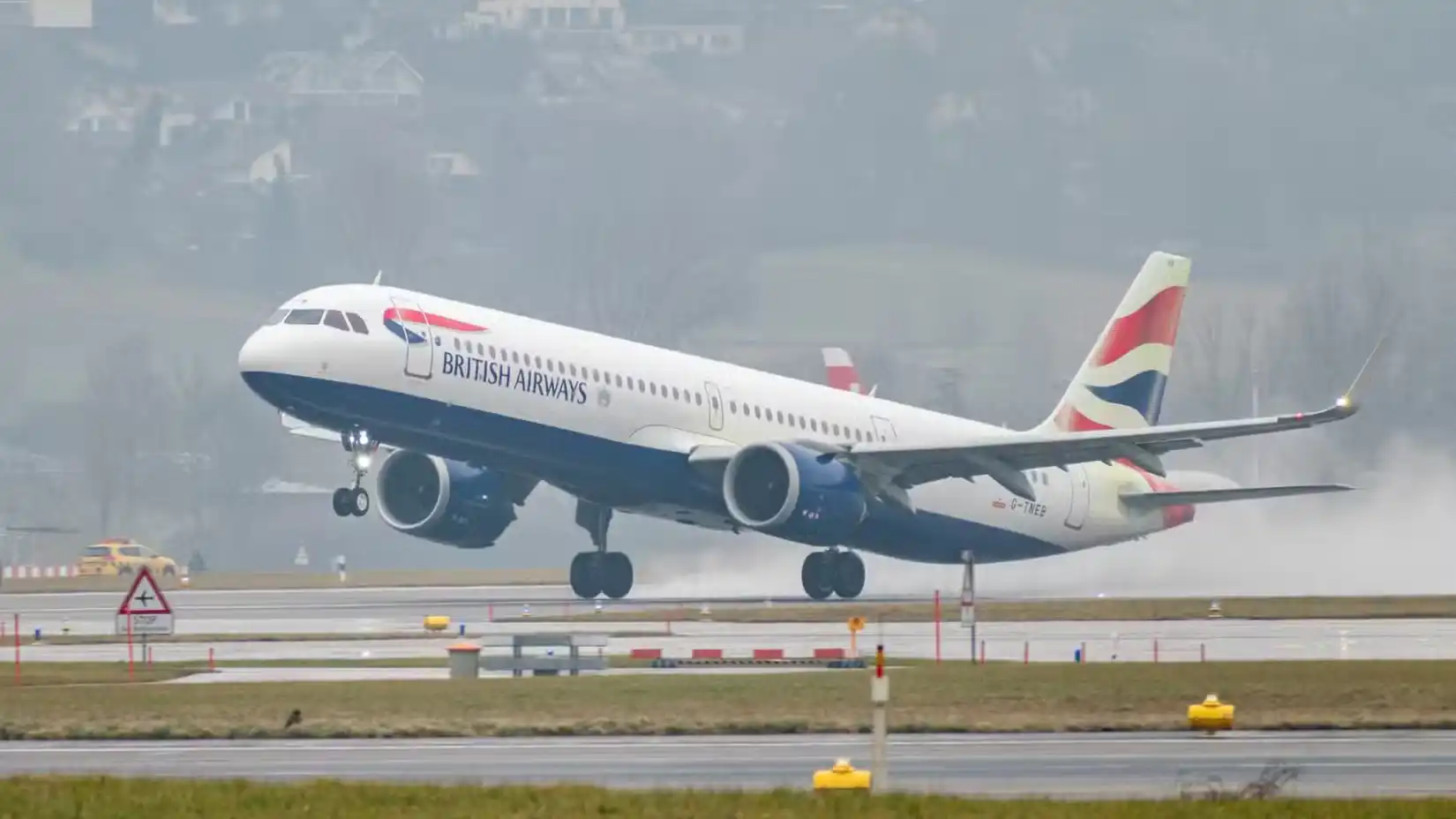
London and Paris are among Europe’s most important aviation markets, with thousands of passengers moving between the two cities every day. Although the Eurostar provides a fast and popular alternative, air travel remains an important link for business travelers, tourists, and connecting passengers. For one British Airways service on Thursday, however, a routine 45-minute journey became a more than two-hour trip that ultimately returned to its starting point.
British Airways flight BA308, operating from London Heathrow Airport (LHR) to Paris Charles de Gaulle Airport (CDG), was unable to complete its scheduled journey after severe thunderstorms affected the Paris region. The aircraft eventually returned to Heathrow rather than attempting to land at CDG, leaving passengers to complete their journey on another flight.
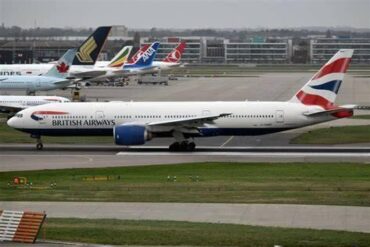
The flight was operated by Airbus A321neo G-TNEA, a narrowbody aircraft regularly used on British Airways’ European network. According to Flightradar24 tracking data, BA308 spent more than two hours in the air despite normally requiring only around 45 minutes for the London-Paris sector. The unusual operation illustrates how quickly thunderstorms can disrupt even short-haul flights when airport congestion and air traffic restrictions begin to compound one another.
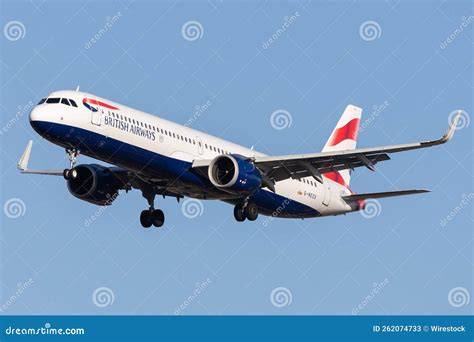
British Airways BA308 Diverted Back to Heathrow
Thursday’s BA308 was scheduled to depart Heathrow at 3:05 PM local time and arrive in Paris at approximately 5:30 PM. The schedule already allowed substantially more time than the aircraft would normally spend in the air because airlines account for taxiing, air traffic restrictions, and operational contingencies in published timetables.
Instead, the aircraft did not leave Heathrow until 5:03 PM, almost two hours behind its planned departure time. When G-TNEA eventually landed at 7:12 PM, it was not at Paris Charles de Gaulle. It had returned to London Heathrow, turning the service into what could accurately be described as a “flight to nowhere.”
The primary issue was not a mechanical problem with the aircraft. A band of thunderstorms had moved across France, creating difficult operating conditions around Paris and generating substantial congestion among inbound flights. Aircraft unable to approach their destinations were required to hold or remain subject to changing air traffic restrictions, increasing the pressure on available arrival capacity.
British Airways confirmed that BA308 returned to Heathrow because weather around Paris caused excessive holding. The airline subsequently arranged overnight accommodation and rebooking for affected passengers, recognizing that the disruption had made the original itinerary impossible to complete.
Thunderstorms Caused Widespread Paris Flight Delays
BA308 was only one part of a much broader disruption affecting Paris aviation operations. British Airways had seven scheduled flights between Heathrow and Charles de Gaulle that day, but their performance varied considerably. Two operated on time, two were canceled, two were delayed, and BA308 was diverted back to London.
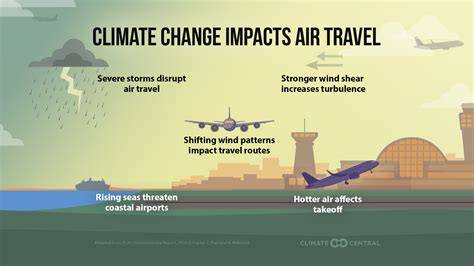
Data from FlightAware showed that 18 departures and 18 arrivals at CDG were canceled, while the scale of delays was much greater. Approximately 314 departures, representing 40% of the airport’s departures, were delayed. Another 333 arrivals, equivalent to 42% of incoming flights, also experienced delays. Paris Orly Airport faced similar difficulties, with 173 departures, or 51%, running late.
These figures demonstrate why a flight can remain airborne for an extended period even when an airport has not completely closed. Thunderstorms do not necessarily stop airport operations altogether. Instead, air traffic controllers may reduce arrival and departure rates, creating queues of aircraft waiting for suitable opportunities to approach. Once that queue becomes large, an otherwise short flight can spend far longer in the sky than planned.
London Airports Also Experienced Weather Disruption
The disruption was not limited to France. London-area airports also experienced significant delays as weather conditions changed following weeks of exceptionally dry and hot conditions. Heathrow, Gatwick, and Luton each recorded three-figure totals for both arrival and departure delays.
At London Luton Airport, lightning strikes also affected air traffic control systems, adding another operational complication. Such incidents demonstrate how thunderstorms can influence aviation infrastructure as well as aircraft operations. Even when an aircraft itself remains perfectly capable of flying, disruptions to airport systems, runway availability, air traffic control, or surrounding airspace can make a scheduled journey impractical.
G-TNEA Continued Flying After the Diversion
The disruption to BA308 also affected the aircraft’s planned schedule. Because G-TNEA failed to reach Paris, its associated BA309 return service was canceled. Rather than remaining grounded for the rest of the day, however, the A321neo later operated BA764 from Heathrow to EuroAirport Basel-Mulhouse-Freiburg in eastern France.
That flight arrived at approximately 11:10 PM, around 30 minutes behind schedule. The aircraft subsequently returned to Heathrow early Friday morning before operating another Paris service. This time, the journey was far more successful.
G-TNEA operated BA302 to Paris Charles de Gaulle, arriving at 11:13 AM, only 18 minutes behind schedule. Its return flight, BA303, subsequently reached London at 12:49 PM. The aircraft therefore completed the London-Paris mission successfully the following day, highlighting how dramatically weather conditions can change within hours.
For passengers on BA308, the experience was a stark reminder that a short European flight can become surprisingly complicated when severe weather intersects with congested airspace. The aircraft was capable of continuing, but safe airline operations depend on much more than the aircraft itself. In this case, thunderstorms, airport congestion, and excessive holding transformed a routine British Airways flight into a two-hour journey that ended exactly where it began.