A Delta Air Lines flight from Los Angeles to Tampa took an unexpected turn on August 29 when severe thunderstorms forced the aircraft to divert to Fort Myers, Florida. The disruption became more complicated after some passengers were instructed to leave the secure gate area to collect their checked baggage, only to discover that the TSA checkpoint had closed before the aircraft was ready to continue to Tampa.
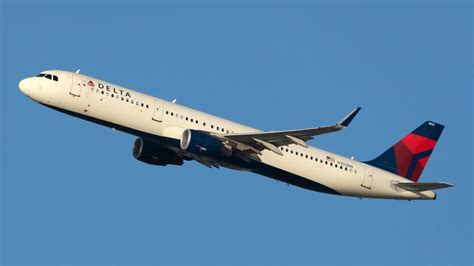
Delta Flight 749, operating an Airbus A321neo, departed Los Angeles International Airport (LAX) at 10:54 AM local time. Its scheduled destination was Tampa International Airport (TPA), with an expected arrival at 6:20 PM. However, thunderstorms around Tampa prevented the aircraft from landing, forcing it to enter a holding pattern before ultimately diverting to Southwest Florida International Airport (RSW).
The aircraft, registered N589DT, landed at Fort Myers shortly after 7:00 PM. What followed turned a weather-related diversion into a passenger-handling problem. According to passenger Randi Hipper, a flight attendant instructed travelers to proceed to Carousel 7 to retrieve their checked luggage. Some passengers followed those directions and left the secure area, while others remained near the gate.
The distinction became critical because Fort Myers airport’s TSA checkpoints do not operate around the clock. Southwest Florida International Airport states that its security checkpoints generally remain open until approximately 30 minutes before the final scheduled departure from each concourse. Since the diverted Delta aircraft arrived late in the evening and was preparing to depart again after 9:00 PM, passengers who had exited to baggage claim could no longer simply return to the gate.
Delta Flight 749 Leaves Passengers Behind at Fort Myers
Delta ultimately re-operated Flight 749 from Fort Myers at 9:14 PM, approximately two hours after landing. The A321neo then reached Tampa at 9:36 PM, completing the disrupted journey without the passengers who had left the secure area.
Hipper said she was among those who followed the instruction to collect baggage. After reaching the public side of the terminal, she discovered that the TSA checkpoint was closed. Other passengers who had remained near the gate were able to reboard the aircraft because they never had to pass through security again.
The unusual result was that some passengers were left behind in Fort Myers while their checked luggage continued to Tampa aboard the aircraft. Hipper described the situation as particularly frustrating because she said passengers had followed instructions from a Delta flight attendant rather than voluntarily abandoning the flight.
The episode highlights how a seemingly simple instruction during an irregular operation can create major consequences when airport security access is restricted. During diversions, passengers are already dealing with uncertainty over where the aircraft will go, how long they will remain there, and whether they should collect their belongings. Clear communication therefore becomes especially important.
I’m stranded at a closed airport @Delta
After flying 20 hours in a row, I was diverted to Fort Myers because the plane ran out of gas. The flight attendant then told the flight to go to baggage claim. Now the plane is taking off without me and with my bags.
I have no hotel and… pic.twitter.com/e66aDK6HBG
— Randi Hipper (@missteencrypto) August 30, 2026
Delta Confirms a Communication Error
Delta subsequently confirmed that the passengers did not simply misunderstand the situation. The airline acknowledged that an internal communication error contributed to several customers leaving the gate area.
According to Delta, flight attendants initially announced that passengers should proceed to baggage claim. The airline’s airport customer service team then corrected the instruction and told passengers to remain by the gate. By that point, however, some travelers had already moved into the baggage claim area and could not return through TSA.
This distinction could become important when determining what assistance affected passengers should receive. Under normal circumstances, leaving an aircraft during a delay can create uncertainty about whether a traveler will be permitted to reboard when the aircraft departs. However, passengers who were directed to leave the secure area by airline personnel have a different argument: they were not necessarily making an independent decision to abandon the flight.
TSA Hours Created a Critical Barrier
The physical layout of RSW also played an important role. Delta operates from Concourse C, while baggage claim and other public areas are located outside the secure portion of the terminal. Travelers entering the concourses must pass through TSA screening.
Once those checkpoints closed, passengers who had followed the baggage-claim instruction effectively lost access to their departure gate. The aircraft, meanwhile, remained capable of continuing to Tampa and eventually departed with those who had stayed airside.
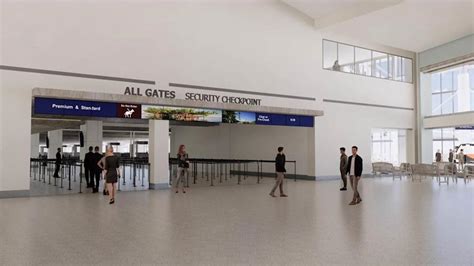
The incident also illustrates why airport operating hours can become especially significant during diversions. A flight may arrive at an airport capable of handling its aircraft, but that does not necessarily mean every passenger-processing facility will remain available throughout the disruption. TSA checkpoint hours, terminal access, baggage procedures, and airline communication all have to align for a smooth recovery.
Compensation and Passenger Assistance Remain Unclear
The question of what Delta owes the affected passengers is less straightforward. Delta’s contract of carriage provides for ground transportation following certain diversions, but the relevant provision depends on whether the diversion airport and original destination fall within the same designated city group. Fort Myers and Tampa are not treated as the same designated city group, despite being roughly 110 miles apart.
Federal Department of Transportation rules also generally distinguish between passengers who remain with an aircraft during a delay and those who voluntarily leave. In this case, however, the affected travelers can argue that they left the secure area because Delta personnel instructed them to do so.
For the passengers stranded overnight in Fort Myers, that distinction could prove significant. They reportedly had no accommodation arranged while their checked bags were transported to Tampa. What began as a weather diversion therefore became a much more complicated customer-service incident, demonstrating how quickly operational disruptions can escalate when communication errors meet limited airport security hours.