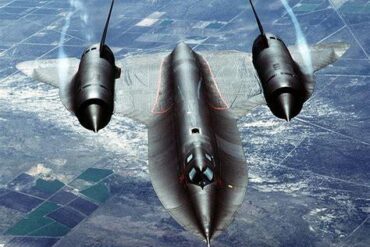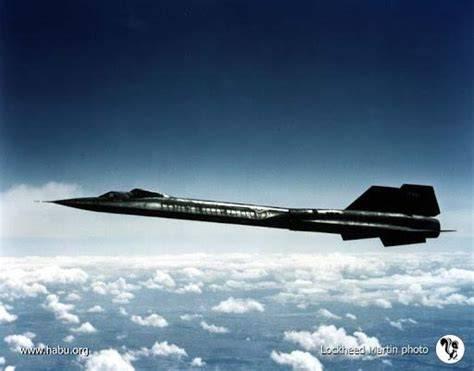
The Lockheed SR-71C Blackbird was never supposed to exist. Unlike the SR-71A fleet, which was purpose-built for strategic reconnaissance, or the SR-71B, which was designed as a dedicated trainer, the SR-71C emerged from necessity, scarcity, and an unusually creative piece of aerospace salvage. Its story began with a destroyed trainer, a wrecked YF-12A interceptor prototype, and an engineering test fuselage that was never intended to fly.
The result was 61-7981, the only SR-71C ever constructed. It became the final Blackbird produced by Lockheed and served the U.S. Air Force as a trainer from 1969 until 1976. Yet its strange construction gave the aircraft a reputation unlike any other Blackbird. Pilots nicknamed it “The Bastard,” while its early flight-test problems made it one of the most troublesome aircraft in an already extraordinarily demanding fleet.
The SR-71C story also reveals something important about the Blackbird program. These aircraft were extraordinarily expensive, technically complicated machines, and production was tightly controlled. When one of the two SR-71B trainers was destroyed in 1968, the Air Force needed a replacement but could not simply order another aircraft. The tooling was already being prepared for destruction. Lockheed therefore had to look at what was already available.
The SR-71 Trainer Crisis
The immediate reason for the SR-71C was an accident involving SR-71B 61-7957 in January 1968. The aircraft was performing an emergency landing when it was destroyed. Both pilots survived by ejecting, but the loss created a serious training problem because Lockheed had produced only two SR-71B trainers.
The SR-71B was not simply a standard Blackbird with a few minor changes. It was configured specifically to train pilots transitioning to an aircraft capable of sustained speeds above Mach 3 and operations at extreme altitudes. The second cockpit allowed an instructor to accompany a student during the demanding process of learning how to operate the Blackbird.
With one SR-71B gone, the Air Force was left with only one dedicated trainer. That would have been inconvenient under normal circumstances, but the timing made the problem considerably harder to solve.
The SR-71 production program was approaching its end, and Lockheed had been ordered to destroy the specialized tooling associated with the SR-71, A-12, and YF-12 programs. The order meant that building a conventional replacement SR-71B was no longer a practical option. The Air Force needed another trainer, but the industrial infrastructure required to produce one had effectively been scheduled for disposal.
Lockheed and the Air Force therefore looked for another solution: rather than manufacture an entirely new aircraft, they would construct one from components that already existed.
The Wrecked YF-12A Provided the Key
One of the most useful pieces in Lockheed’s inventory came from YF-12A 60-6934, the first YF-12 interceptor prototype. The YF-12 was closely related to the A-12 and SR-71 family, but it had been developed for a very different mission. Instead of carrying cameras for reconnaissance, it was conceived as a high-speed interceptor capable of engaging enemy aircraft.
The prototype had suffered a serious landing accident at Edwards Air Force Base in 1966. The damage was severe enough that 60-6934 never returned to flight. Yet an aircraft does not have to be airworthy for every part of it to be valuable.
The rear fuselage remained usable. That section would eventually become one half of the most unusual Blackbird ever assembled.
The other major component was an SR-71 static test airframe. Unlike an operational aircraft, a static test unit was built for engineering work rather than routine flight. It was essentially an experimental structural article used to evaluate the airframe and its ability to withstand the stresses imposed during operation.
Lockheed’s solution was therefore remarkably unconventional. Engineers combined the forward portion of the SR-71 static test article with the usable rear fuselage of the damaged YF-12A.
Building the “Frankenstein” Blackbird
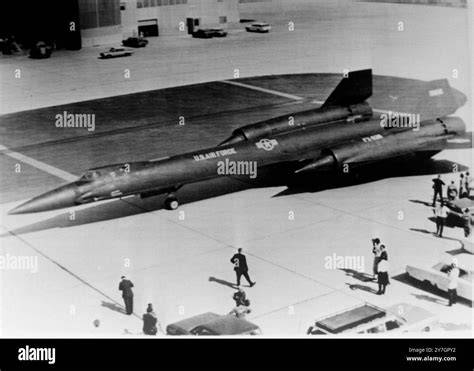
The newly assembled aircraft was designated SR-71C, carrying serial number 61-7981. It represented the 32nd and final SR-71 produced.
From an engineering standpoint, however, creating the aircraft was far more complicated than simply joining two pieces of metal. The A-12, YF-12, and SR-71 families shared a common lineage, but individual aircraft were designed for different purposes and incorporated structural and systems differences.
The SR-71C therefore had an unusual heritage. Its front section came from an engineering test article, while its rear section originated with a crashed YF-12A. The aircraft looked like a Blackbird, but its construction was fundamentally different from that of the standard production aircraft surrounding it.
That unusual origin explains the nickname “The Bastard.” It was not an official designation, but it captured the aircraft’s hybrid identity perfectly.
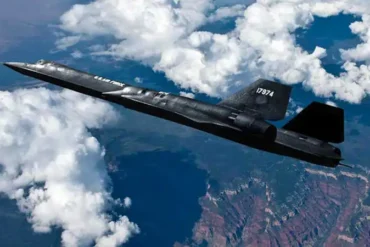
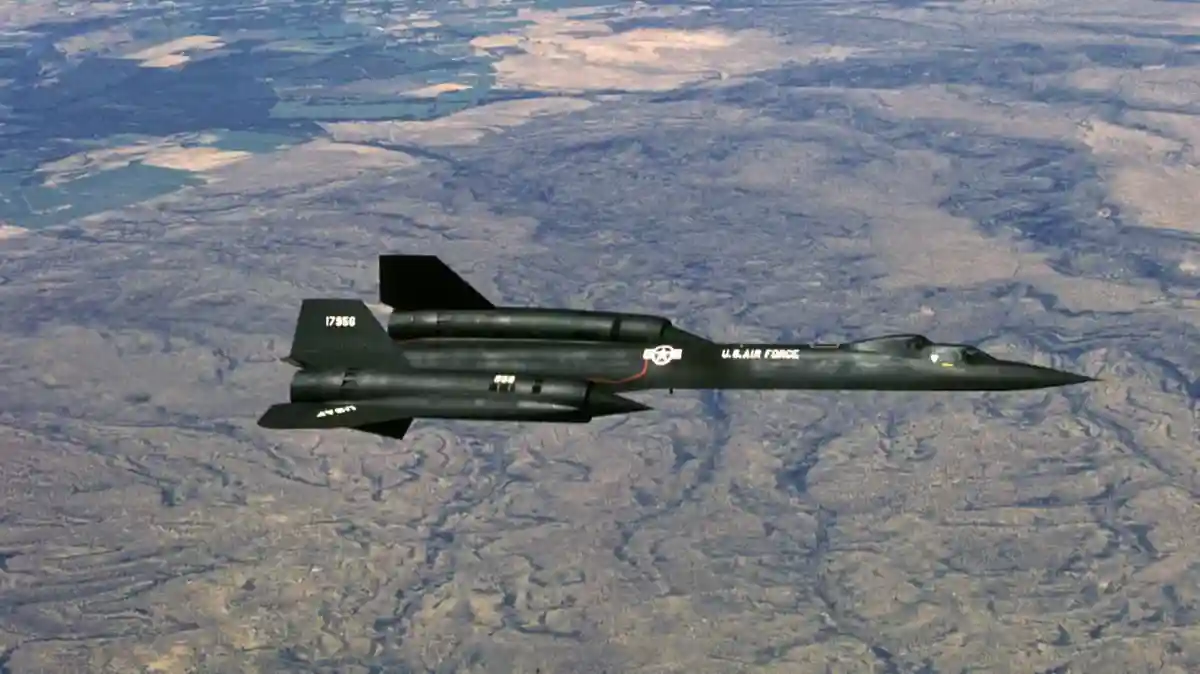
Externally, the SR-71C looked remarkably similar to the SR-71B. Someone unfamiliar with the Blackbird family could easily have mistaken it for an ordinary trainer. Underneath the distinctive black skin, however, it was an aircraft assembled from components with very different histories.
The differences even extended to its fuel system. The SR-71C had five fuel tanks, compared with six in the SR-71B. That distinction was small compared with its unusual structural origins, but it further demonstrated that this was not simply another standard trainer pulled from a production line.
Why the SR-71C Flew “Crooked”
The strangest chapter in the aircraft’s story came during flight testing.
The SR-71C developed a reputation for being difficult almost immediately. Its acceptance testing took significantly longer than expected, and one of its most serious problems involved the engine inlets.
The Blackbird’s propulsion system depended on extremely precise management of airflow into its powerful engines. At Mach 3 speeds, the inlet was not merely a passive opening. It was an aerodynamic system that controlled and compressed incoming air before it reached the engine.
When the inlet system malfunctioned, the aircraft could experience an inlet unstart. In simple terms, the carefully positioned supersonic shockwave inside the inlet could suddenly collapse and move forward. The resulting disturbance could produce a violent change in airflow and cause a substantial disturbance to the engine.
The SR-71C experienced this problem repeatedly.
Pilots also noticed something that appeared even more alarming. The aircraft’s instruments consistently indicated approximately four degrees of yaw to the left. In other words, the cockpit instruments suggested that the Blackbird was flying slightly sideways rather than straight.
For an aircraft operating at extreme speeds, such an indication could not simply be ignored.
The Yaw String Revealed the Truth
Engineers needed to determine whether the aircraft was genuinely flying crooked or whether the instrumentation was providing incorrect information.
Their solution was beautifully simple. They installed a yaw string, using a strip of Nomex material positioned ahead of the cockpit. The device provided a direct visual indication of airflow over the aircraft.
The results were surprising.
When the SR-71C was flying straight and level, the yaw string remained centered. The aircraft itself was not actually yawed four degrees to the left.
The problem was somewhere else.
Further investigation revealed that the aircraft’s pitot boom was approximately four degrees out of alignment. The component was physically misaligned, and that misalignment created the misleading information that pilots were seeing on their instruments.
More importantly, the faulty pitot information was also being supplied to the systems responsible for controlling the engine inlets. The result was a vicious cycle: bad information was producing incorrect inlet behavior, which contributed to the aircraft’s troublesome flight characteristics.
Once engineers corrected the alignment of the pitot boom, the mysterious four-degree yaw indication disappeared.
The SR-71C had not been flying crooked after all. Its measurement system had been crooked.
That discovery turned what initially looked like a fundamental aerodynamic problem into a much more manageable instrumentation and alignment problem. After the correction, the aircraft could operate normally, although it retained a reputation for being more maintenance-intensive and less pleasant to fly than other Blackbirds.
The Blackbird That Had a Short Career
The SR-71C made its first flight in 1969, roughly a year after the loss of the SR-71B that had created the need for it.
Its role was straightforward: replace the destroyed trainer and help prepare crews for the demanding SR-71 mission. The aircraft performed that function until 1976, but its career was relatively brief.
By the mid-1970s, the Air Force’s need for two dedicated SR-71 trainers had diminished. The Blackbird program had already passed its peak operational period, and the service had accumulated enough trained personnel that maintaining an unusual second trainer no longer made as much sense.
The SR-71C had also accumulated only about 556.4 flight hours when it was retired. For an aircraft of such historical importance, that is remarkably little flying time.
Its unusual construction contributed to its maintenance burden, and there was little reason to keep an unconventional trainer in service when the standard SR-71B could fulfill the remaining training requirement.
The Air Force therefore retained the more conventional trainer and retired the Frankenstein Blackbird.
From Palmdale Storage to Hill Aerospace Museum
Retirement did not immediately mean the end of 61-7981.
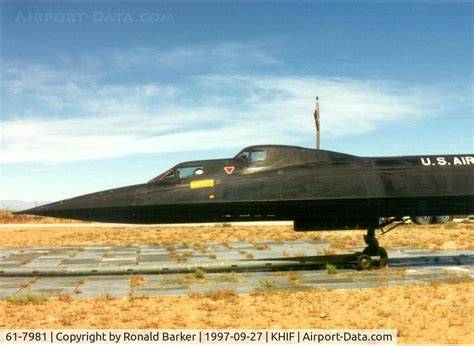
The aircraft was placed into long-term storage at Lockheed’s facility in Palmdale, California. For several years, the only SR-71C remained out of public view, preserved as an unusual artifact of the Blackbird program.
Its eventual preservation was helped by Utah Senator Orrin G. Hatch, who advocated for the aircraft to be transferred to the Hill Aerospace Museum.
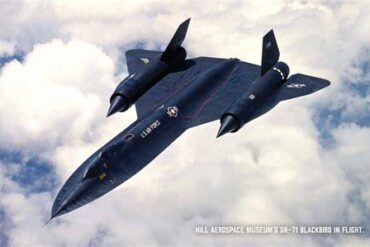
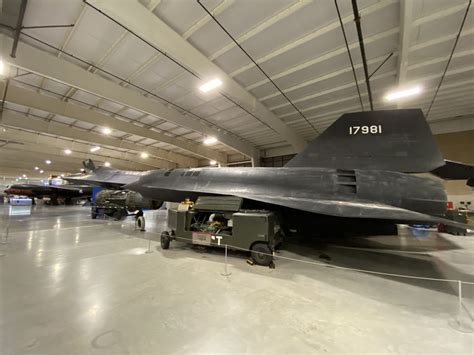
The aircraft was subsequently disassembled, transported to Utah, and reassembled at the museum. Since 1991, visitors have been able to see the one and only SR-71C at the Hill Aerospace Museum.
Its museum presence gives the aircraft an importance beyond its relatively short operational career. Visitors are not simply looking at another Blackbird. They are looking at an aircraft that could not have been produced in the normal way.
It is the physical record of a moment when an extraordinarily sophisticated aircraft program encountered a very ordinary problem: the loss of a training aircraft at exactly the wrong time.
The SR-71C and the Legacy of the Blackbird
The story becomes even more remarkable when we consider the aircraft’s place within the larger Blackbird family.
The SR-71 evolved from the Lockheed A-12, the CIA’s high-altitude reconnaissance aircraft. The YF-12 represented another branch of the same family tree, developed as a Mach 3 interceptor. The M-21 adapted the basic architecture for launching the D-21 reconnaissance drone. The SR-71 itself became the Air Force’s long-range strategic reconnaissance platform.
Only 32 SR-71s were produced, consisting of 29 SR-71As, two SR-71Bs, and one SR-71C. That makes the C-model exceptionally rare even within an aircraft family that was already produced in very small numbers.
The SR-71 was built around extraordinary technological demands. Its titanium structure, specialized propulsion system, high-altitude performance, and thermal management allowed it to cruise at more than Mach 3 and operate above 85,000 feet. Its speed and altitude made it extraordinarily difficult for contemporary Soviet interceptors and surface-to-air missiles to engage.
Yet the same complexity that made the Blackbird revolutionary also made it expensive and demanding to maintain.
The aircraft’s operational story eventually came to an end. The USAF retired the Blackbird in 1989, although the fleet was later reactivated before final retirement in 1998. NASA continued operating the last airworthy examples into 1999.
By then, satellites, stealth aircraft, and increasingly sophisticated reconnaissance technologies had changed the strategic environment.
Why the Only SR-71C Still Matters
The SR-71C 61-7981 was never the fastest Blackbird, the longest-serving Blackbird, or the most operationally significant one. Its importance comes from something much stranger.
It demonstrates how engineers solved a problem when conventional production was no longer available. A destroyed YF-12A supplied a usable rear fuselage. An SR-71 static test article supplied the foundation. Lockheed combined them into a flyable trainer, corrected a mysterious four-degree yaw indication, and returned the aircraft to service.
The result was an authentic Blackbird assembled from the remnants of two very different chapters in Lockheed’s high-speed aircraft program.
That is why the SR-71C deserves its place in aviation history. It was not simply the final SR-71 to leave Lockheed. It was the only Blackbird born from an accident, an engineering test article, and a desperate need for another trainer.
Today, 61-7981 survives as a reminder of the extraordinary ingenuity surrounding the Blackbird program. Its crooked flight, troublesome inlets, unusual fuel arrangement, and hybrid construction would make it an aviation curiosity on their own. Together, they make the SR-71C one of the most fascinating aircraft ever associated with the legendary Blackbird name.