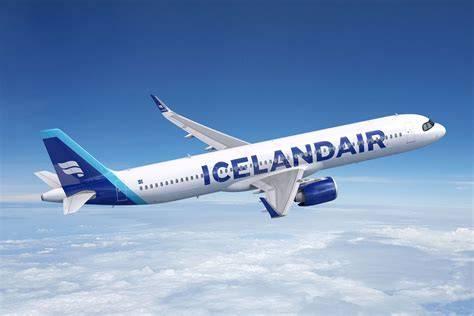
Icelandair will operate its first transatlantic trips with the Airbus A320neo in the second half of 2027, sending the narrowbody twinjet to Toronto Pearson International Airport from September 13, 2027. John F. Kennedy International Airport will follow on October 1. Both routes will operate on each of the six weekly rotations, running evening departures from Keflavik Airport in Iceland (KEF) and overnight return flights departing North America at 11:10 PM.
Toronto and New York Lead Icelandair’s A320neo Transatlantic Debut
The Toronto operation has been filed as FI605/604, while the New York service is filed as FI619/618. Scheduled departures from Keflavik are expected to start at 8:00 PM for Toronto and 7:50 PM for New York; both flights are timed to return overnight from North America at 11:10 PM. The destination pairs are themselves significant, because Icelandair already serves Toronto Pearson and John F. Kennedy International Airport, so the change is not a brand-new pair of destinations in North America. Instead, it’s a substitution of aircraft on two busy routes that the airline already sells, which matters more for capacity than for the route map itself.
A 154-Seat Cabin That Rethinks Transatlantic Capacity
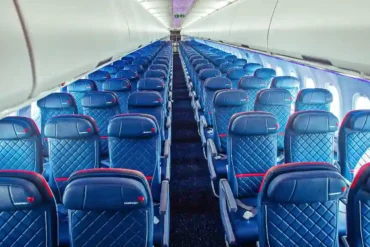
Each A320neo will carry 154 seats, split between 16 seats in Saga Premium and 138 in economy. It’s a deliberately small layout for a transatlantic airplane. The A320neo will be positioned strictly as a smaller-capacity alternative, allowing Icelandair to keep frequency high on routes like Toronto and New York while trimming the number of seats exposed to off-peak demand. These two routes will also free the airline’s largest narrowbodies, the A321LRs and 737 MAX jets, to handle services where range or seat count is more important.
How the A320neos Fit Icelandair’s Fleet Simplification and Cost Strategy
Icelandair has secured 10 used Airbus A320neos through long-term lease agreements with AviLease and Aircastle. The jets are powered by Pratt & Whitney engines and were built between 2018 and 2020. The airline plans to take four aircraft ahead of summer 2027, and the first three are said to have flown with IndiGo as VT-IJQ, VT-ISA, and VT-ISI. The remaining six should arrive during the winter of 2027–28. The leases underpin a broader transition: Icelandair intends to retire its remaining passenger Boeing 757s and 767s and run its passenger network entirely on new-generation aircraft.
At the signing announcement in July, CEO Bogi Nils Bogason said the following year would mark a key milestone: the airline would operate its whole passenger network with aircraft consuming up to 30% less fuel per seat. That figure is the main reason the fleet shift matters; a smaller aircraft isn’t simply a smaller aircraft, but rather a tool for matching seats to demand more precisely. During the October earnings call, Bogason framed the tradeoff plainly: Icelandair expects more frequencies but slightly fewer seats in summer 2027 as the older widebodies leave the fleet. Smaller aircraft, he said, would improve connectivity while giving the airline a finer adjustment knob for capacity.
Balancing the A320neo Against Longer-Range Airbus Narrowbodies
The A320neo is only one piece of the fleet picture. Icelandair’s first A321LR entered service in December 2024, and nine A321LRs are expected to be in operation by early 2027. Deliveries of the longer-legged A321XLR should start in 2029, under an agreement that includes 12 purchase rights on top of the firm order. Those aircraft, alongside the 737 MAX, are the ones entrusted with replacing the 757 and 767 passenger fleets. Icelandair expects its fleet renewal to bring the average aircraft age down to about 5.5 years.
Alaska Airlines Codeshare Expansion Boosts North American Connectivity
The A320neo deployment will run alongside a wider partnership push. Alaska Airlines has expanded its codeshare agreement with Icelandair, turning previously one-way arrangements into two-way codeshares on six European routes from Reykjavik:
- Bergen, Norway
- Oslo, Norway
- Frankfurt, Germany
- Munich, Germany
- Zurich, Switzerland
- Vagar, Faroe Islands
Alaska Airlines and Icelandair have partnered for more than a decade, and the expanded deal supports connecting itineraries, loyalty benefits, and reciprocal lounge access. Alaska Airlines also began seasonal nonstop flights between Seattle and Reykjavik in May 2026, adding more ways for Alaska passengers to reach Europe via one stop.
What the Toronto and New York A320neo Flights Mean
Taken together, the 2027 transatlantic A320neo schedule shows Icelandair trying to grow its network without adding new destinations or buying new larger aircraft. On Toronto and New York, the A320neo maintains frequency while holding back capacity; meanwhile, the Alaska codeshare extends the airline’s reach across the United States. The result is a carrier prepared to enter 2027 with a younger, more efficient fleet, a more carefully matched seat count, and a more flexible set of partner connections across the Atlantic.