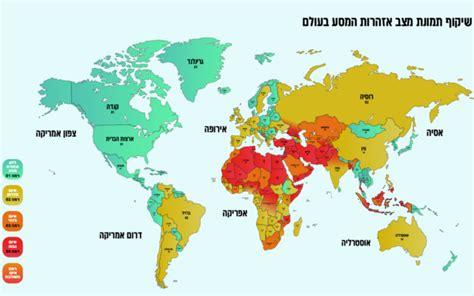
Israel has now been added to the highest-level U.S. travel warning list—joining Mexico, Venezuela, Haiti, Russia, Iran, Mali, and Belarus—due to escalating armed conflict, terrorism threats, and a rapidly deteriorating security situation that has forced the U.S. government to authorize the departure of its personnel and families from the region. This rare move places Israel in the same category as some of the world’s most dangerous destinations and is already sending shockwaves through its tourism sector, where flight cancellations, travel suspensions, and collapsing visitor confidence now threaten what was once a fragile post-war recovery. Since the outbreak of conflict in October 2023, Israel now shares the highest U.S. travel warning level with countries long marked by extreme violence, government instability, and international isolation. The U.S. Department of State has officially placed Israel alongside Mexico, Venezuela, Haiti, Russia, Iran, Mali, and Belarus in its strongest “Do Not Travel” alert—citing terrorism, armed conflict, civil unrest, and a fast-deteriorating security situation. This new classification is more than symbolic; it sends a powerful message that Israel’s status as a safe travel destination has collapsed under the weight of ongoing regional threats and escalating violence.
What Prompted the Alert
On June 14, the U.S. government authorized the departure of family members and some non-emergency personnel from its embassy in Israel. The move followed intensified conflict in northern Israel and near the Gaza border, increased rocket attacks, and the looming threat of war with Hezbollah. The travel alert warns Americans against visiting Israel due to “armed conflict, terrorism, and civil unrest”—language usually reserved for full-scale war zones. The updated advisory not only urges U.S. citizens to avoid Israel entirely but also specifically prohibits U.S. government employees and their families from visiting key areas such as the Old City of Jerusalem, parts of the West Bank, and the 4-kilometer zone along the Lebanese and Syrian borders. Travel restrictions are expected to expand as security risks evolve.
War and U.S. Travel Warning Deliver a Serious Blow to Israel’s Tourism Industry
The war-driven instability, combined with the U.S. government’s strongest travel warning, is delivering a serious blow to Israel’s already fragile tourism sector. Tour operators are suspending trips, airlines are reevaluating flight schedules, and global travelers are pulling out in large numbers. Just as the country began seeing signs of recovery after last year’s conflict, this latest alert has triggered a wave of cancellations and insurance withdrawals, cutting off key revenue streams. Hotels in Jerusalem, Tel Aviv, and Eilat are reporting mass booking declines, while pilgrimage tours and cultural exchange programs are vanishing overnight. With its image as a safe destination shattered, Israel’s once-thriving tourism economy is now facing its steepest downturn in decades.
Joining the World’s Most Dangerous Destinations
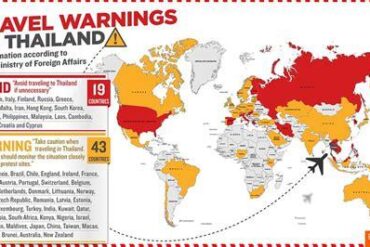
Israel’s addition to the Level 4 “Do Not Travel” list places it alongside countries that have suffered years of chronic instability, including: Mexico, where violent cartels dominate regions such as Sinaloa, Guerrero, and Michoacán; Venezuela, where wrongful detentions, political persecution, and torture of U.S. nationals have become routine; Haiti, currently under a national state of emergency, plagued by daily kidnappings, mob violence, and gang rule; Russia, where war, surveillance, and wrongful arrests pose immense risks to American citizens; Iran, where U.S. travelers are routinely arrested and used as political leverage; Mali, home to frequent terror attacks and a deteriorating security infrastructure; Belarus, which has become a geopolitical flashpoint due to its alliance with Russia and sweeping repression. By joining this list, Israel is no longer viewed as merely unstable—it is officially considered unsafe for American travelers under any circumstance.
Impact on Israel’s Tourism Sector
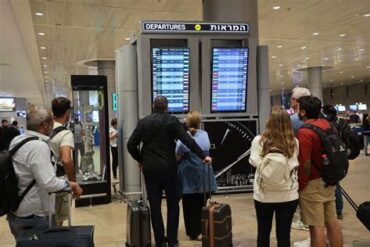
The timing couldn’t be worse for Israel’s tourism sector, which was already struggling to recover from the October 2023 Hamas attacks and the subsequent war in Gaza. After a total collapse in Q4 of 2023, Israel saw a fragile rebound in early 2024, particularly from short-haul markets in Europe and domestic tourism. But with this new U.S. warning, that fragile recovery now appears doomed. Tour operators catering to American and Western travelers have already begun canceling group itineraries. Airlines are reviewing flight schedules, with some U.S. carriers expected to cut services into Tel Aviv’s Ben Gurion Airport if the situation worsens. U.S. insurance providers may also pull coverage for travel to Israel under force majeure clauses tied to government warnings. Even more concerning, regional tensions with Iran, Syria, and Hezbollah could trigger new outbreaks of violence that completely halt international travel. The U.S. advisory specifically warns that airlines could cancel or curtail flights without notice, trapping travelers during sudden escalations—echoing the chaos seen during the first days of the Hamas-Israel conflict last year.
Echoes of Venezuela and Haiti
Israel’s travel downgrade mirrors the trajectory seen in countries like Venezuela and Haiti—once tourist-friendly, now no-go zones for Americans. In Venezuela, travel warnings became progressively severe as the country descended into dictatorship, economic collapse, and mass detentions of foreigners. Haiti, once a Caribbean cultural magnet, is now ruled by heavily armed gangs with daily kidnappings. In both cases, once the U.S. issued its strongest alert, tourism flatlined—and never recovered. A similar collapse is now likely for Israel’s international tourism, at least from the U.S. and other Western countries that follow American advisories closely. The economic implications are significant: tourism contributed more than $6 billion to Israel’s GDP pre-2023, with U.S. visitors forming a major chunk of that revenue.
Broader Regional Fallout
Israel’s inclusion in the top-level travel warning adds to the growing perception that the Middle East is entering a new period of instability. Lebanon, Syria, Iraq, and parts of Jordan are already listed under varying travel restrictions. With Israel now grouped with Iran and war-hit regions like Gaza and southern Lebanon, the geopolitical image of the region as a whole suffers. If hostilities with Hezbollah escalate further, and full-scale war breaks out along Israel’s northern border, this advisory could stay in place for months—or even years. That would devastate not just leisure tourism, but business travel, cultural exchange programs, and pilgrimage traffic, including Christian tours, Jewish heritage tours, and interfaith missions.
What Comes Next
For now, travelers already in Israel are being urged to remain alert, avoid crowded areas, monitor security updates, and be prepared for evacuation. Many embassies, including the U.S., are restricting movements of their staff. The unpredictability of attacks—particularly from lone-wolf actors or missile strikes—makes civilian areas just as dangerous as known conflict zones. If violence escalates further or if a major war breaks out between Israel and Hezbollah or Iran, the next step could be a full evacuation order for U.S. diplomatic staff—effectively severing formal in-country support for U.S. citizens.
Israel has joined Mexico, Venezuela, Haiti, Russia, Iran, Mali, and Belarus on the U.S.’s strongest travel alert list due to escalating conflict, terrorism risks, and embassy staff evacuations. The move signals a major blow to Israel’s tourism sector as safety fears drive cancellations and halt recovery efforts.
A Turning Point for Israeli Travel
This latest warning marks a turning point not only for U.S.-Israel relations but also for how the global travel industry views the country. What was once considered a vibrant cultural and spiritual destination is now officially on par with failed states and authoritarian regimes. Unless stability returns fast, Israel’s tourism sector—already battered and bruised—may not recover for a long time. And with every rocket fired, every border sealed, and every embassy restriction added, the road back grows longer.