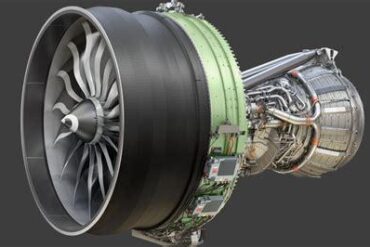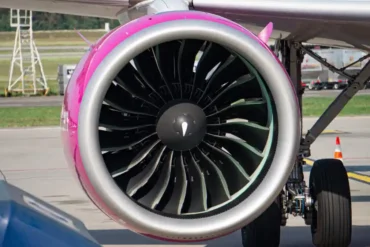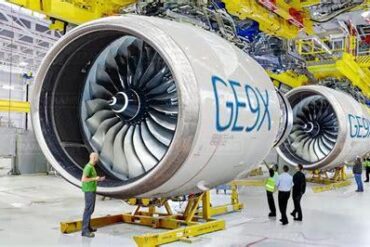
A jet engine is a reaction engine, which means it generates thrust by expelling a reaction mass. This principle aligns with Newton’s third law of motion: for every action, there is an equal and opposite reaction. Most aviation jet engines are air-breathing, axial flow gas turbine engines.
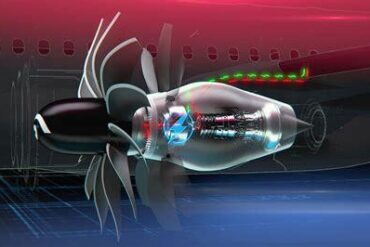
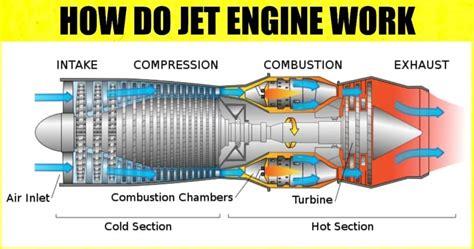
A gas turbine operates as a rotary engine that extracts energy from the flow of combustion gases. First, ambient air enters the engine intake, where an axial or centrifugal compressor increases both the pressure and temperature of the air before sending it into the combustion chamber. In the combustion chamber, fuel mixes with the hot, compressed air and ignites. Once the ignition occurs, it becomes self-sustaining because the constant flow of air and fuel maintains ongoing combustion.
The high-energy exhaust stream produced from burning the fuel-air mixture exits the combustion chamber and passes through one or more turbines that drive the compressors. The remaining exhaust gas is then expelled through a nozzle, generating thrust that propels the aircraft forward. A turbojet engine operates most efficiently when the aircraft’s speed closely matches the speed of the exhaust gas. However, many aircraft are designed to fly slower than typical jet exhaust speeds, so engine turbines also power other components like fans, propellers, or machinery.
This approach leads to turboprop, turbofan, and turboshaft engines being optimized for the specific speed and type of aircraft they support. For extremely high-speed applications, some engines are being developed without the need for a powered compressor. In “ram” engines such as ramjets or scramjets, the air entering the engine is compressed by the geometry of the intake and compressor section, along with the aircraft’s high forward speed. Consequently, these engines do not need a compressor or a turbine to drive it, but they cannot operate while the aircraft is stationary.