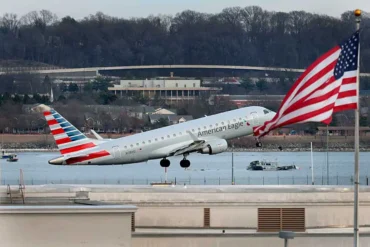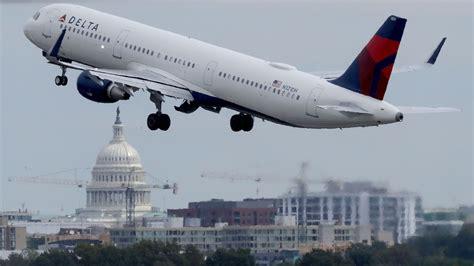
A new Senate proposal could significantly reshape operations at Ronald Reagan Washington National Airport (DCA) by reducing flight capacity, limiting hourly arrivals, and targeting long-distance services that operate beyond the airport’s traditional perimeter. Introduced by Virginia Senators Tim Kaine and Mark Warner, the DCA Air Safety Act is intended to address congestion and operational risks in one of the most constrained airports serving the Washington metropolitan area. The legislation follows the final investigation into the January 2025 midair collision that killed 67 people near the airport.
The proposal does not simply call for fewer flights. It would change how aircraft movements are distributed throughout the day, with the Federal Aviation Administration (FAA) required to establish a lower arrival rate and prevent takeoffs and landings from becoming concentrated in particularly busy periods. The bill would also remove 30 daily slots over five years, beginning in 2028, with at least 26 of those removals coming from exemptions that allow flights to travel beyond DCA’s 1,250-mile perimeter. Because there are currently 50 beyond-perimeter slots, the targeted reduction represents slightly more than half of that category.
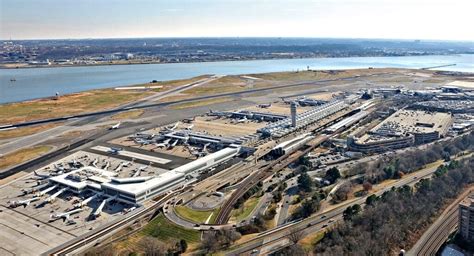
DCA Air Safety Act Targets Airport Congestion
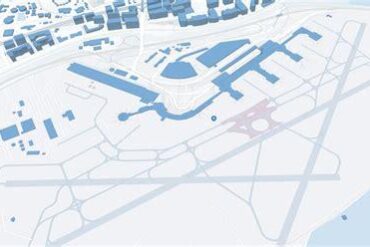
The proposed legislation comes after years of debate over how much traffic Reagan National can safely handle. Since 2000, lawmakers have authorized 64 additional daily slots at DCA, increasing pressure on an airport whose physical footprint, runway configuration, and surrounding airspace leave limited room for expansion. The senators argue that the combination of additional traffic and complex airspace has created an environment in which controllers and flight crews must manage demanding operations with little margin for error.
Under the bill, the FAA would be required to reduce DCA’s Airport Arrival Rate to no more than 28 aircraft during any consecutive 60-minute period. The current rate is 30, following changes made by the FAA after the 2025 collision. The agency initially reduced the rate considerably before gradually increasing it after determining that higher traffic levels could be handled safely. The proposed legislation would therefore establish a statutory ceiling rather than leaving the decision entirely to administrative adjustments.
The legislation also addresses flight clustering, a particularly important issue at a capacity-constrained airport. Within 180 days, the FAA would have to establish binding limits governing operations during 30-minute intervals. The objective is to distribute takeoffs and arrivals more evenly instead of allowing numerous aircraft movements to accumulate within short periods. For controllers, spreading traffic could reduce sudden workload spikes even if the airport continues to handle substantial daily demand.

Why Long-Distance Flights Are Central to the Proposal
The most consequential part for airlines and passengers is the proposed elimination of 30 daily slots, because at least 26 would have to come from beyond-perimeter exemptions. DCA generally limits nonstop scheduled service to destinations within 1,250 miles, although Congress has repeatedly authorized exemptions for selected longer routes. The exemption system has allowed airlines to connect Washington with destinations that would otherwise fall outside the perimeter restriction.
The bill would phase out six slots each year from 2028 through 2032, completing the 30-slot reduction by the end of 2032. Since a slot represents authorization for one takeoff or one landing, eliminating 30 slots would translate into a reduction of 15 daily round trips if the affected authorizations are paired in that manner. The legislation does not itself identify which individual routes would disappear. Instead, the FAA would determine which slots are removed through a public process.
That distinction matters because the proposal is frequently described as cutting roughly 50% of DCA’s long-distance flights, but the bill formally targets beyond-perimeter slots, not half of every long-distance route or passenger market. With at least 26 of the 30 reductions required to come from the beyond-perimeter exemption pool, the impact on that category would be substantial, while the exact airline and route consequences would depend on the FAA’s eventual allocation decisions.
The 2025 Potomac River Collision Changed the Debate
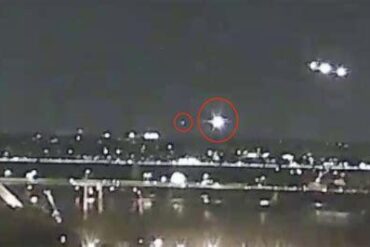
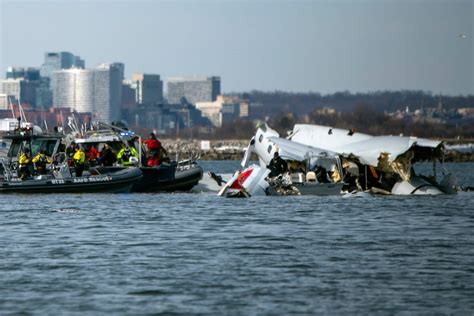
The legislation is closely connected to the January 29, 2025 collision involving American Airlines Flight 5342, operated by PSA Airlines, and a U.S. Army UH-60 Black Hawk helicopter. The aircraft collided near Reagan National during the passenger jet’s approach, killing all 67 people aboard the two aircraft. The NTSB’s final investigation identified excessive airspace complexity and controller workload among the factors contributing to the accident.
According to information cited by Kaine and Warner, one controller was responsible for managing 29 aircraft during an 18-minute period on the night of the accident, including six takeoffs or landings during a five-minute span. Those figures have become central to the senators’ argument that reducing overall traffic and preventing concentrated bursts of operations should form part of the broader safety response.
FAA Would Decide Which DCA Slots Disappear
The legislation would give the FAA responsibility for identifying the slots to be eliminated, rather than directly naming airlines or destinations. The agency would publish a proposed list, provide a 60-day public comment period, and then publish its final list within 120 days after comments close. This process would allow airlines, airports, local governments, passengers, and other interested parties to respond before the reductions are finalized.
The debate therefore extends beyond a simple question of reducing flights. Reagan National remains a major airport for the region, alongside Washington Dulles International Airport (IAD) and Baltimore/Washington International Airport (BWI). Moving some demand toward those airports could alter airline schedules, passenger travel patterns, and access to nonstop destinations, particularly for western U.S. markets that currently benefit from DCA’s downtown location.
For now, the DCA Air Safety Act is a proposed change, not an immediate schedule reduction. If enacted, its most visible effects would emerge gradually, beginning with operational limits and then annual slot reductions from 2028. The central question for Congress will be how to balance Reagan National’s unusually valuable location and passenger demand against the capacity, airspace, and controller-workload concerns highlighted by the 2025 tragedy and subsequent safety investigations.