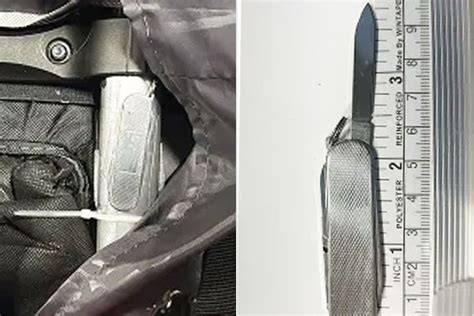
A routine security screening at Dane County Regional Airport (MSN) in Madison, Wisconsin, took an unexpected turn when Transportation Security Administration officers discovered a knife deliberately concealed inside a passenger’s carry-on bag. The discovery itself was concerning, but what reportedly surprised the screeners most was the passenger’s unusually direct explanation for why she had attempted to hide the blade.
According to the TSA, the woman admitted that she had intentionally concealed the knife because she did not want to pay a baggage fee. She reportedly had an upcoming camping trip and wanted to bring the knife with her, but instead of placing it in checked luggage, she attempted to get it through the security checkpoint inside her hand luggage. The TSA said she wanted to avoid a $100 baggage fee, turning what might otherwise have been an accidental packing mistake into a deliberate attempt to bypass screening rules.
The incident highlights an important distinction in airport security: finding a prohibited item in a passenger’s bag does not necessarily mean the passenger intended to use it as a weapon. Knives can sometimes appear in carry-on luggage because travelers forget they packed them, particularly after previous outdoor trips. In this case, however, the TSA said the passenger’s own admission established that the concealment was intentional. That admission prompted officers to take the situation more seriously.
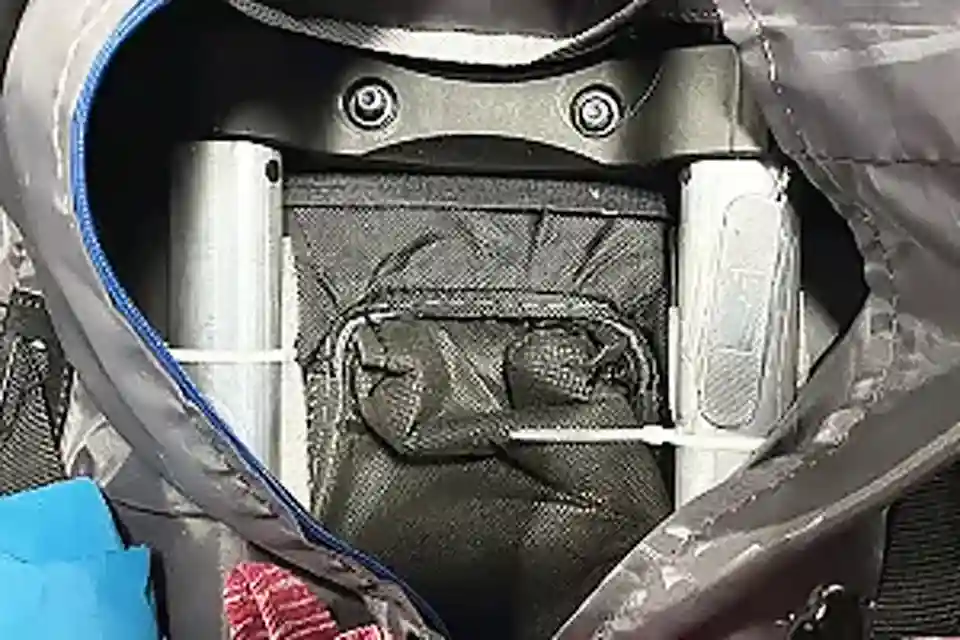
TSA Officers Discover a Concealed Knife at Madison Airport
TSA Officer Callie Meis reportedly spotted the knife while examining the passenger’s luggage through an X-ray screening system. The image prompted further inspection, with fellow officer Jim Kohn conducting a physical search of the bag. The knife had been “artfully concealed,” according to the TSA’s account, rather than simply sitting openly among the passenger’s belongings.
The discovery demonstrated why X-ray screening remains such a critical part of airport security. A passenger may believe an item is sufficiently hidden from view, but screening officers are specifically trained to recognize unusual shapes, densities, and arrangements inside luggage. Objects that might be difficult to see during a casual inspection can become immediately apparent on an X-ray image.
The passenger reportedly acknowledged that she knew the knife was inside the bag and had deliberately attempted to conceal it from TSA officers. She explained that she was preparing for a camping trip, providing a practical reason for possessing the knife but not a justification for carrying it through the passenger screening checkpoint.
Meis said the combination of discovering the knife and hearing the passenger acknowledge that she had intentionally concealed it led her to request law-enforcement assistance. Officers from the Dane County Sheriff’s Office responded, while TSA Manager Annie Lu and other personnel also became involved in handling the situation.
Why the Passenger Tried to Avoid the $100 Baggage Fee
The explanation given by the passenger made the incident particularly unusual. According to the TSA, she wanted to avoid paying the $100 baggage fee that would have applied if she checked the luggage containing the knife. Instead, she chose to keep the bag with her and conceal the blade inside it.
The decision created a significant mismatch between the relatively small value of the item and the potential consequences of attempting to bring it through security. TSA Officer Andrew Kasten, who examined the bag and the knife, emphasized that travelers should not jeopardize their income or freedom merely to avoid losing an inexpensive personal item.
The TSA said the passenger also indicated that she had not expected officers to discover the knife. That expectation illustrates the fundamental purpose of airport screening. Security personnel are tasked with detecting prohibited objects regardless of whether a traveler believes an item is likely to be noticed.
Ultimately, the passenger voluntarily surrendered the knife to TSA and was cleared for travel, according to the agency. The incident therefore did not end with the passenger being prevented from continuing her journey, but the discovery provided a clear reminder that intentionally concealing prohibited items can trigger a much more serious response than accidentally packing one.
What TSA Rules Say About Knives in Carry-On Bags
Under standard TSA rules, knives are generally prohibited in carry-on baggage. Travelers who need to transport a knife for camping, hunting, work, cooking, or another legitimate purpose generally need to place it in checked baggage, subject to applicable packing and airline requirements.
The TSA lists only limited categories of sharp objects as permitted in carry-on luggage. These include items such as disposable razors, knitting needles, and crochet hooks when properly wrapped. Cigar cutters are generally permitted as well, although TSA recommends placing them in checked baggage.
The agency also notes that TSA officers retain discretion to prohibit an item at the checkpoint if they determine that it represents a security threat. Consequently, travelers should check the current TSA guidance before arriving at an airport rather than relying on assumptions about whether a particular object will be permitted.
For travelers heading on outdoor trips, the safest approach is straightforward: do not place a knife in a carry-on bag and do not attempt to disguise or conceal it. A camping knife may be perfectly legitimate equipment at a destination, but its intended use does not change the security requirements governing how it reaches that destination.
The Madison incident ultimately ended without the passenger continuing with the knife, but it demonstrated how quickly an attempt to save a baggage charge can become an airport security matter. For passengers, the lesson is equally simple: a $100 baggage fee may be frustrating, but deliberately concealing a prohibited item at a TSA checkpoint can create consequences far beyond the cost of checking a bag.