In a year defined by shifting demand and network recalibration, Southwest Airlines has confronted a series of underperforming routes that reveal the hidden complexity of managing a largely domestic operation. With 77.8% average loads across its system, the carrier remains a formidable force, yet the granular data from the US Department of Transportation paints a more nuanced picture. Certain markets—especially new or experimental routes—show a startling divergence from the airline’s broader performance, slipping far below the halfway mark and highlighting operational friction points that demand scrutiny.
The DOT’s dataset between September 2024 and August 2025 exposes ten routes that struggled to attract passengers, even as the airline maintained steady domestic leadership. Several of these routes were new entrants with limited time to mature, but their immediate underperformance underscores how delicate route planning can be when demand forecasts lean too optimistic. Colorado Springs’ ambitious launch to Cancun stands as the starkest example, with just 35.7% of seats filled—a reminder that even popular leisure destinations can falter when paired with a smaller market and limited brand presence.
The Colorado Springs–Cancun experiment was brief, spanning only nine round-trip flights and generating a mere 918 passengers out of 2,574 available seats. Scheduled to reappear in December, the route’s first attempt raises enduring questions about seasonality, local demand, and whether the future reinstatement will fare better. Meanwhile, Long Island–Miami and the short-haul Hawaiian interisland corridors reveal different structural challenges, from competitive saturation to operational overcapacity that suppresses load factors despite constant movement.
Hawaii’s Intrastate Puzzle and the Weight of Overcapacity
Southwest’s push into Hawaii has always carried strategic symbolism: resilience, leisure appeal, and high-volume traffic flowing between islands and the mainland. While the carrier enjoyed an impressive 89.4% load across Hawaii overall, its intrastate performance tells a different story. The interisland network filled only 51.9% of seats over the 12-month period, even as it carried 1.8 million passengers. The math reveals a simple but stubborn truth—too much capacity chasing finite demand.
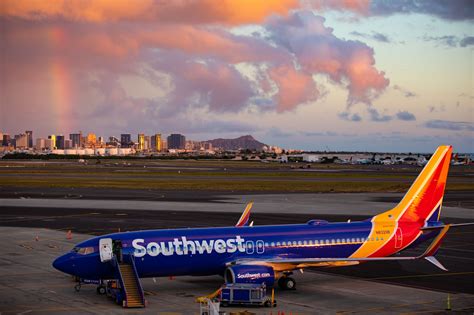
Routes such as Kahului–Lihue, Honolulu–Kahului, and Kahului–Kona routinely moved large passenger volumes but still struggled to cross 50% load efficiency. The competitive pressure from Hawaiian and Alaska Airlines, especially with their higher frequencies, required Southwest to lean heavily on discounted fares to maintain relevance. Although this helped stabilize demand, it did little to remedy the underlying capacity mismatch. The airline’s reduction of interisland supply by 8% produced only a modest rise in load factor, suggesting deeper structural recalibration is still necessary.
Florida and Short-Haul Southeast Routes Falter
Florida’s crowded airspace has long been a testing ground for airlines hoping to balance local demand with feeder traffic. Southwest’s short routes such as West Palm Beach–Orlando and Sarasota–Orlando entered the network in August 2025 with clear connectivity intentions, yet their immediate performance lagged. Loads remained below 50%, reflecting the challenge of appealing to travelers when road alternatives are fast, cheap, and familiar. This dynamic reinforces that not every short segment benefits from the brand loyalty Southwest enjoys elsewhere.
The Broader Airport View: Where Loads Struggle Most
Looking beyond individual routes, the DOT’s deeper airport-level analysis reveals that Havana recorded the airline’s weakest overall load factor at 51.7%. The carrier ultimately exited Cuba entirely in August 2025, concluding a chapter marked by regulatory turbulence and unpredictable demand. Among stations that remain in the network, Hilo recorded just 61.6%, despite being served exclusively from Honolulu and carrying nearly 400,000 passengers. The popularity of the route masked a familiar issue: too many available seats diluting efficiency.
Strategic Implications for the Year Ahead
The revelations from these underperforming segments mark a significant moment for Southwest’s strategy. The airline’s overwhelmingly domestic footprint means that even small inefficiencies ripple across its vast network. Low-load routes—whether due to timing, overcapacity, or misaligned demand—signal opportunities to refine deployment and reinforce profitable corridors. As new aircraft deliveries and schedule overhauls take shape, these insights will likely guide decisions on where Southwest tightens, experiments, or doubles down. The story behind the numbers is not merely about empty seats; it is about building a more resilient and responsive network in an increasingly unpredictable marketplace.