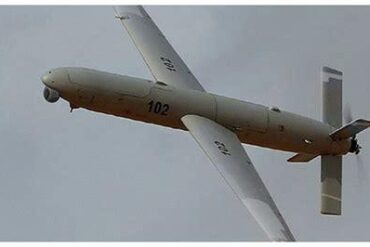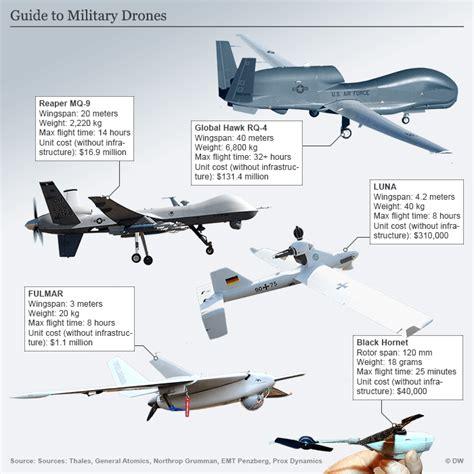
Among the many technological revolutions in modern warfare, unmanned aerial systems (UAS) stand as one of the most transformative tools in the arsenal of the United States Armed Forces. Over the last few decades, these autonomous and semi-autonomous aircraft have become essential for reconnaissance, tactical surveillance, strike capabilities, and strategic intelligence. The Pentagon has developed a five-tier classification system to manage its expanding drone fleet, separating platforms by size, altitude, speed, and operational purpose. This in-depth guide examines each of these five categories of military drones, revealing their specifications, use cases, and individual aircraft that define their tier.
Tier 1: Very Light, Very Low-Altitude Intelligence Aircraft
These drones are the smallest and most agile in the military’s toolkit, designed primarily for battlefield reconnaissance and short-range surveillance. Often deployed by hand or using compact launchers, Tier 1 drones provide real-time tactical intelligence to ground units in active combat zones.
Operating at a nominal altitude of approximately 1,200 feet and with a maximum takeoff weight of 0-20 lbs, these drones are indispensable for missions where stealth, portability, and fast deployment matter most. Their cruising speed hovers around 100 knots, making them perfect for loitering over a small battlefield area for extended periods.
Notable aircraft in this category include:
- RQ-11 Raven: Manufactured by AeroVironment, with over 19,000 units produced since 2003. This hand-launched drone provides critical ISR (intelligence, surveillance, reconnaissance) support to Army and Air Force units.
- Wasp III: Another AeroVironment platform, prized for its miniaturized electro-optical and infrared cameras.
- RQ-20 Puma: Features longer endurance and improved imaging capabilities for broader tactical overviews.
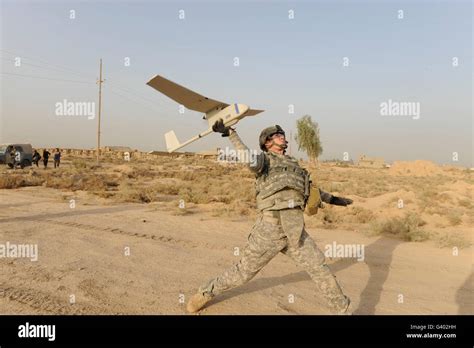
The deployment of these drones directly on the frontlines allows combatants to assess terrain, monitor enemy movements, and verify targets without exposing themselves to direct fire.
Tier 2: Light, Low-Altitude Intelligence Aircraft
Tier 2 drones bridge the gap between handheld systems and larger, more sophisticated reconnaissance platforms. Operating at altitudes of less than 3,500 feet, with weights ranging from 21-55 lbs, these aircraft still favor portability but offer extended range, flight time, and sensor capabilities.
Speeds remain modest at under 250 knots, but these aircraft are more autonomous, capable of broader area coverage and longer loitering times compared to Tier 1.
Prominent Tier 2 drones include:
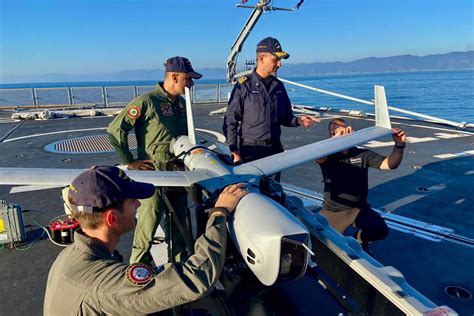
- MQ-27 ScanEagle: A product of Boeing Insitu, used extensively by the Navy for maritime surveillance. It’s launched via a pneumatic catapult and recovered by a SkyHook retrieval system.
- Aerovel Flexrotor: A tilt-rotor aircraft with vertical takeoff and landing (VTOL) capability, ideal for ship-based operations.
- PDW C100: A heavy quadcopter that supports rapid deployment by individual soldiers.
These drones allow battalion and brigade-level intelligence units to extend their situational awareness without relying on larger fixed-wing assets.
Tier 3: Small, Medium-Altitude Aircraft
Tier 3 is the most crowded category in the military’s drone classification, encompassing a diverse group of larger ISR and light strike drones. With maximum takeoff weights below 1,320 lbs, these systems operate at altitudes up to 18,000 feet and fly at speeds under 250 knots.
This class includes both fixed-wing and rotary-wing aircraft, designed for longer missions requiring enhanced payload capacity and endurance.
Standout drones in this category include:
- RQ-21 Blackjack: Often deployed from ships and used by both the Navy and Marine Corps, it builds on the ScanEagle’s legacy with expanded payload options.
- Arcturus T-20: Offers dual sensor payloads and up to 24 hours of flight time; also capable of delivering lightweight ordnance.
- Shield AI V-BAT: An autonomous VTOL drone used in both urban and austere environments.
- RQ-7B Shadow: Provides day/night reconnaissance for ground commanders, operated by the Army.
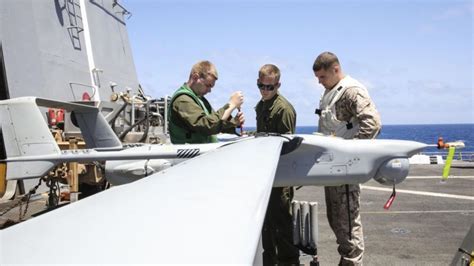
Other models in this tier, such as the Vanilla UAV and Resolute Eagle, cater to niche intelligence missions, capable of long endurance flights with customized sensors or communication payloads.
Tier 4: Heavy, Medium-Altitude Drones
These are the workhorses of American drone operations, providing both lethal and non-lethal support with higher payload capacities, speeds, and operational flexibility. Tier 4 drones operate at altitudes similar to Tier 3 — up to 18,000 feet — but with speeds exceeding 250 knots and takeoff weights well above 1,320 lbs.
The three primary aircraft in this category are:
- MQ-1A/B Predator: Perhaps the most iconic strike drone in military history. Developed by General Atomics, the Predator revolutionized modern drone warfare with its ability to carry AGM-114 Hellfire missiles and deliver real-time surveillance.
- MQ-1C Gray Eagle: A Predator derivative developed for the U.S. Army, featuring improved avionics, greater endurance, and enhanced weapons capacity.
- MQ-8B Fire Scout: A rotary-wing UAS deployed from naval vessels, used for real-time ISR missions and target acquisition.
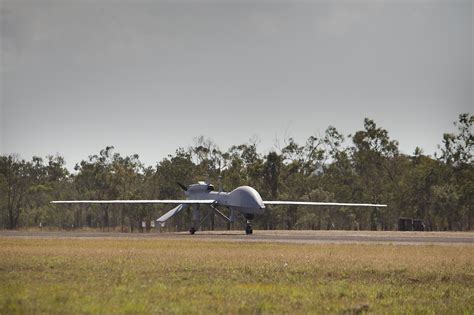
These drones conduct long-duration missions, providing commanders with persistent eyes in the sky, deep penetration strike capabilities, and the ability to surveil or destroy targets with minimal risk to human pilots.
Tier 5: Heavy, High-Altitude Drones
At the pinnacle of drone warfare technology are Tier 5 platforms — strategic UAVs that operate at altitudes above 18,000 feet and at speeds exceeding 250 knots. These aircraft feature large wingspans, massive payloads, and advanced sensor arrays designed for global reconnaissance and high-value target engagement.
Tier 5 drones represent the most sophisticated systems in the Pentagon’s drone arsenal:
- MQ-9 Reaper: A direct successor to the Predator, the Reaper is a long-endurance, high-altitude precision strike drone with the ability to carry a variety of munitions including laser-guided bombs and Hellfire missiles.
- RQ-4 Global Hawk: Designed for high-altitude, long-range surveillance, capable of 30+ hour missions at stratospheric altitudes. The Global Hawk maps terrain, tracks enemy movements, and provides all-weather, day/night reconnaissance.
- MQ-4C Triton: A navalized version of the Global Hawk, used for maritime surveillance with enhanced radar and environmental sensors.
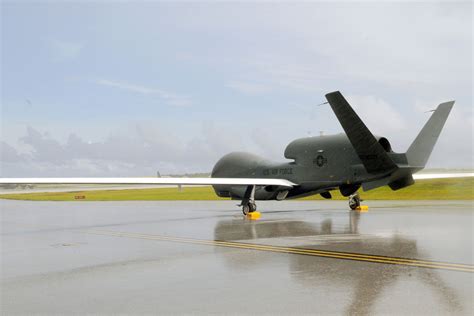
These aircraft form the backbone of strategic intelligence gathering, often operating from airbases thousands of miles from the conflict zone, communicating through secure satellite links, and sharing data across multiple branches of the armed forces and allied nations.
Conclusion: The Future of U.S. Military Drone Operations
The United States military’s five-tier drone classification system reveals the depth and breadth of UAS deployment strategies across modern battlefields. From handheld scouts to transcontinental surveillance aircraft, drones now serve as critical multipliers in intelligence, combat, and logistics operations. As artificial intelligence, stealth materials, and advanced propulsion systems continue to evolve, the line between human and machine capabilities on the battlefield will blur further.
Each tier reflects not only a technical specification but also a doctrinal shift in how warfare is conducted — prioritizing precision, efficiency, and the minimization of human risk. With adversaries developing their own UAV arsenals, the technological race to dominate the skies without a pilot has only just begun.