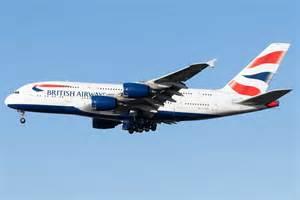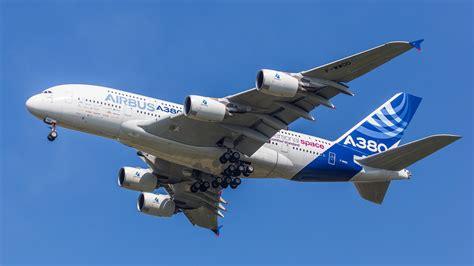
The Airbus A380, the world’s largest passenger aircraft, continues to dominate ultra-long-haul routes to the United States in 2026, showcasing not only its extraordinary range but also the enduring appeal of high-capacity air travel across continents. Despite a 5% reduction in A380 flights to the US compared to early 2025, and a notable 31% drop from pre-pandemic levels in 2019, seven prominent global airlines are operating the aircraft on extensive transpacific and transatlantic routes. These include Emirates, Qantas, Korean Air, All Nippon, Asiana, British Airways, and Lufthansa, collectively spanning 23 unique US routes.
The 18h 50m Epic: Emirates’ Dubai–New York via Milan
No route exemplifies the A380’s endurance like Emirates’ flight from Dubai to New York JFK via Milan Malpensa, clocking in at up to 18 hours and 50 minutes. This one-stop fifth-freedom route has been a staple since 2015, offering passengers a rare transatlantic leg on an A380 outside of the carrier’s home region. Though technically less direct, its block time sets the record among all A380 services to the US, symbolizing the aircraft’s unmatched global connectivity.
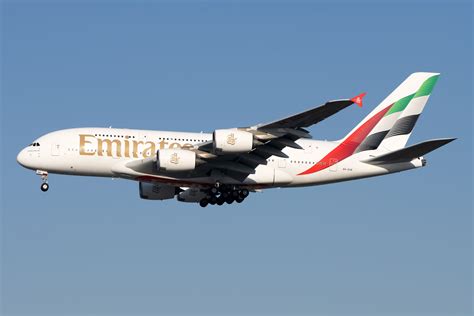
While its inclusion might be debatable due to the intermediate stop, the duration and passenger offering affirm its status as a cornerstone in the ultra-long-haul A380 landscape. Emirates operates this route daily, ensuring a steady presence on the world’s longest A380 service to the US.
Qantas’ Marathon South Pacific Connections
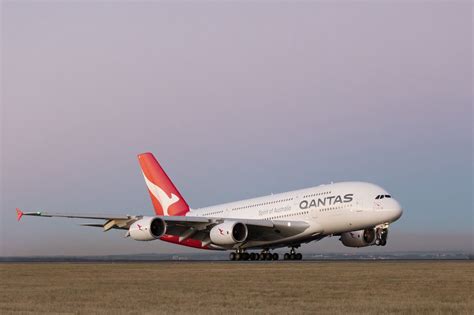
Australian flag carrier Qantas places its A380s on some of the most grueling transpacific sectors. The return flight from Dallas/Fort Worth to Sydney clocks in at 17 hours and 25 minutes, making it the longest nonstop A380 journey without a transit point. This route capitalizes on the A380’s range and payload capabilities, efficiently connecting the American South with Australia’s largest city.
Not far behind is Los Angeles to Melbourne, which Qantas operates twice weekly at a maximum duration of 15 hours and 55 minutes. Meanwhile, the daily Los Angeles to Sydney flight returns to the list with a still-impressive 13 hours and 50 minutes.
These routes underscore the A380’s strategic value for Qantas, delivering both capacity and prestige while catering to high-yield long-haul markets.
Emirates’ Multi-City US Dominance
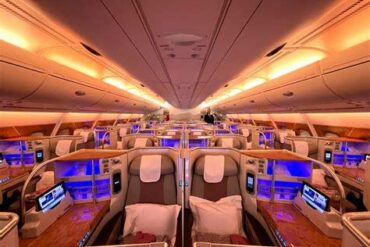
Beyond its record-breaking JFK service, Emirates deploys the A380 extensively across the US, reinforcing its image as the superjumbo’s strongest commercial proponent. The Dubai to Houston flight, at 16 hours and 35 minutes, ranks as the longest nonstop US-bound A380 service operated by Emirates. Houston has had an uninterrupted A380 presence since late 2022, and all flights now include premium economy—an amenity growing in demand on long-haul routes.
Other significant Emirates operations include:
- Dubai to Los Angeles: 16 hours and 20 minutes
- Dubai to San Francisco: 16 hours
- Dubai to Washington Dulles: 14 hours and 45 minutes
- Dubai to New York JFK (nonstop): 14 hours and 40 minutes
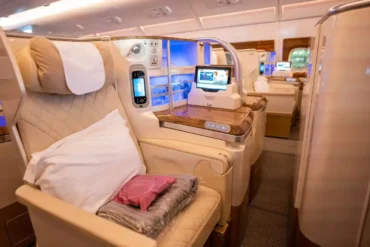
This layered network connects the Gulf region to both coasts and the American heartland, with Emirates betting on the A380’s comfort and onboard luxury to attract premium and economy travelers alike.
Korean Air Recommits to New York JFK
Korean Air’s decision to maintain A380 service on the Seoul Incheon to New York JFK route exemplifies the aircraft’s resilience in Asia–US operations. Initially scheduled to transition fully to the Boeing 777-300ER by late March, updated plans now confirm the daily A380 flight will continue through summer 2026.
For January, flight KE81 departs Seoul at 10:00 am and lands in New York at 10:00 am local time, a 14-hour journey. The return service, KE82, leaves JFK at noon, arriving back in Seoul at 5:45 pm the next day after a 15-hour 45-minute haul.
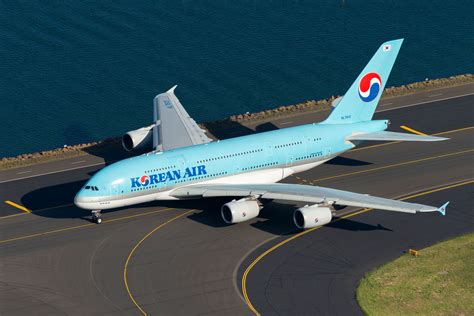
This route is now the seventh longest A380 flight to the US and reflects Korean Air’s confidence in demand recovery, particularly for its premium cabins. The continuation of A380s on this corridor also signals the airline’s fleet management flexibility amid the ongoing Asiana merger, with Incheon–JFK being the only US market served by both carriers using the A380.
A Shrinking, Yet Strategic, Superjumbo Footprint
Despite fewer total A380 US flights compared to pre-2020 levels, the aircraft’s presence remains strategically vital. Airlines concentrate its deployment on high-yield, slot-constrained, or prestige routes where the A380’s size and service level create a unique value proposition. Notably, while the total number of airport pairs dropped, critical links remain robust thanks to concentrated efforts by top carriers.
Some cities, such as Houston, Washington Dulles, and Dallas/Fort Worth, see just one A380 operator, emphasizing the aircraft’s niche role. In contrast, Los Angeles and New York JFK remain hotbeds of superjumbo activity, benefiting from their global connectivity and demand density.
Looking at the January–June 2026 period alone, the block times on these routes highlight the evolving but enduring legacy of the Airbus A380. These operations prove that, in select scenarios, no other aircraft yet surpasses the A380 for passenger volume, comfort, and long-haul reliability.