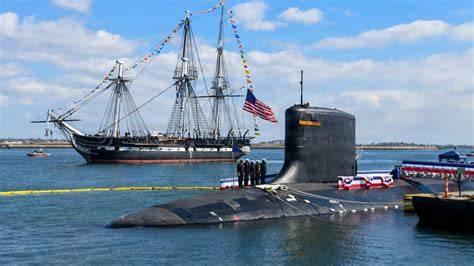
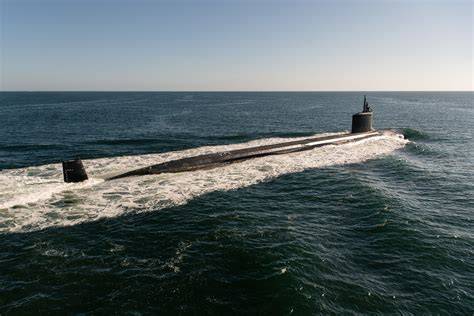
The U.S. Navy has made an unusual decision with its newest Virginia-class fast-attack submarine, sending the USS Massachusetts toward fleet tasking without the customary post-shakedown availability. The move is designed to put a new nuclear-powered submarine into operational hands faster while also freeing valuable shipyard capacity at a time when the Navy is under pressure to expand and maintain its undersea force. The Navy announced the decision on August 17, 2026, after determining that the submarine had demonstrated the material condition and combat readiness required for fleet operations.
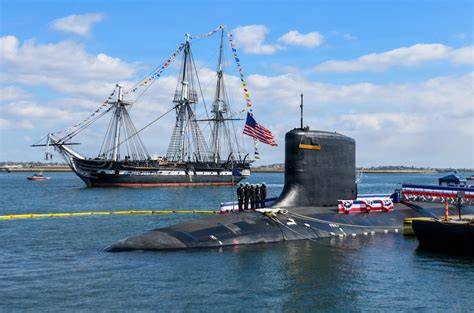
The vessel involved is USS Massachusetts (SSN-798), not SSN-709. It is the 25th Virginia-class submarine produced and the seventh Block IV boat. The submarine was delivered by HII Newport News Shipbuilding to the Navy on November 21, 2025, and was commissioned in Boston Harbor on March 28, 2026. During its subsequent testing and shakedown process, the submarine reportedly met or exceeded the construction and safety standards required to enter service.
That background makes the Navy’s latest decision particularly significant. A newly delivered warship normally moves through a series of inspections, trials, corrections and maintenance periods before reaching sustained fleet operations. For Massachusetts, however, the Navy concluded that another scheduled shipyard period was unnecessary. Chief of Naval Operations Adm. Daryl Caudle described the submarine as “ready to fight”, saying that putting it directly into the hands of sailors and making it available to the fleet was exactly where the Navy needed it.
Why the US Navy Skipped the Post-Shakedown Availability
The decision centers on a maintenance period known as post-shakedown availability, or PSA. Shakedown trials are intended to push a new ship through demanding operating conditions so that engineers and sailors can identify problems that might not appear during construction or initial testing. Once those trials are complete, the PSA provides an opportunity to correct deficiencies, perform maintenance and make other adjustments before a vessel settles into regular fleet service.
For most new warships, that process is an important safety and reliability buffer. Submarines are particularly demanding platforms because almost every major system must operate reliably in an environment where access to the vessel’s machinery and equipment can be severely restricted once the boat is deployed. A submarine cannot simply return to port every time a minor problem appears. Reliability at sea is therefore central to combat readiness.
The Navy’s decision does not mean that the normal process has been abandoned across the submarine force. Instead, it represents a specific judgment about Massachusetts after its trials. The service said the submarine demonstrated “superb material condition and combat readiness”, allowing officials to waive the scheduled availability. Vice Adm. Rob Gaucher, director of submarine programs, characterized the move as a calculated risk while emphasizing that the Navy would not compromise sailor safety or submarine quality.
That distinction matters. The Navy is not claiming that maintenance is unnecessary for Massachusetts indefinitely. Rather, it has determined that keeping the submarine in a shipyard for the planned PSA is less valuable than making the boat available to the fleet now. Any future maintenance requirements can be addressed through the submarine’s normal operational and maintenance cycle.
A Fast-Track Decision With Broader Strategic Benefits
The most interesting part of the decision may actually have little to do with Massachusetts itself. Every submarine that remains in a shipyard represents capacity that cannot be used on another boat. By eliminating a scheduled availability period for a submarine judged to be in exceptional condition, the Navy can potentially redirect shipyard workers, facilities and maintenance resources toward other submarines.
That is an increasingly important consideration for the American submarine fleet. Virginia-class production has become strategically important as the Navy works to replace aging Los Angeles-class attack submarines while simultaneously expanding its future undersea capabilities. Shipyard capacity, skilled labor and maintenance infrastructure have all become critical constraints.
The Navy explicitly said that waiving Massachusetts‘ availability would allow its shipbuilding workforce to focus on other priorities, including building the next generation of submarines. In other words, the decision creates a double benefit: one additional submarine becomes available for fleet tasking, while shipyard resources can be concentrated elsewhere.
USS Massachusetts Brings Virginia-Class Stealth and Firepower
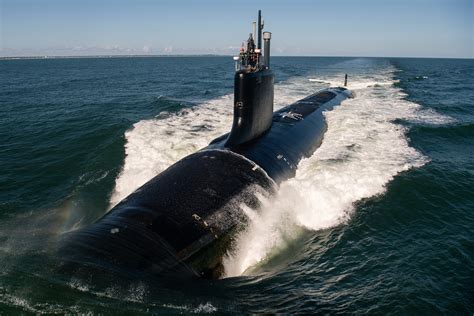
The USS Massachusetts is not simply another replacement submarine. As a Block IV Virginia-class attack submarine, it represents a mature version of one of the Navy’s most important undersea platforms.
The boat is approximately 377 feet long and displaces about 7,800 tons, with a crew of roughly 135 sailors and officers. Its nuclear propulsion system gives it the endurance required for extended deployments without the conventional refueling limitations associated with diesel-powered submarines. That endurance is one of the fundamental advantages of a nuclear-powered fast-attack submarine: it can remain at sea for long periods while its operational range is constrained primarily by provisions, crew endurance and mission requirements rather than fuel.
The Block IV configuration also reflects the Navy’s effort to make Virginia-class submarines more capable while improving fleet availability. Massachusetts carries the Virginia Payload Tube configuration, with two large vertical payload tubes capable of accommodating multiple cruise missiles. The class also features advanced sonar and acoustic systems, sophisticated combat-management equipment, special-warfare capabilities and extensive stealth technology.
The result is a submarine designed to perform far more than traditional anti-submarine warfare. Virginia-class boats can conduct intelligence, surveillance and reconnaissance missions, support special operations, collect information, operate against enemy submarines and surface forces, and deliver long-range strikes. Their greatest advantage, however, remains difficult to measure: the ability to operate underwater while remaining extremely difficult for an adversary to locate.
Why the Decision Matters for the Future Submarine Fleet
The timing of the Massachusetts decision is arguably as important as the decision itself. The Navy is attempting to maintain a credible undersea advantage while facing enormous demands on its shipbuilding and maintenance system. A submarine that becomes operational even somewhat earlier can provide additional deployment capacity, training opportunities and fleet flexibility.
There is also an important industrial dimension. Every day that a submarine occupies a dry dock or maintenance facility is capacity that cannot be used elsewhere. If the Navy can safely reduce unnecessary maintenance periods on selected new vessels, it can potentially improve the productivity of an industrial base that has struggled to meet ambitious submarine construction schedules.
A Calculated Risk, Not a New Normal
Still, skipping a post-shakedown availability should not be interpreted as proof that new submarines no longer need extensive post-trial maintenance. The Navy itself calls the decision a calculated risk. That language is important because submarine operations leave little room for complacency.
The unusual treatment of Massachusetts will therefore be watched closely. If the submarine performs reliably during fleet tasking, the decision could become an example of how the Navy can accelerate delivery of combat power without sacrificing safety or quality. If significant problems emerge later, critics could argue that the customary maintenance period existed for good reason.
For now, however, the Navy’s assessment is clear. USS Massachusetts completed its shakedown trials, demonstrated the required level of readiness, and was judged capable of moving directly toward fleet tasking. The submarine’s early availability gives the Navy another stealthy nuclear-powered attack platform while simultaneously releasing scarce shipyard resources for other work.
The significance goes beyond one submarine bearing the name of a state. In an era when undersea warfare is becoming increasingly central to naval strategy, every additional combat-ready Virginia-class submarine represents another difficult target, another intelligence-gathering platform and another potential source of long-range striking power. The Navy’s message is therefore unusually direct: Massachusetts is not being held back for another routine maintenance milestone. It has been judged ready to enter the fight.