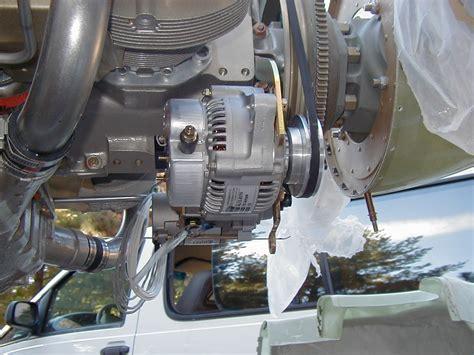
In the world of aviation, a deep understanding of aircraft electrical systems is crucial for both pilots and engineers. One recurring point of confusion revolves around a simple yet significant question: what powers the airplane — the battery or the alternators? This topic is not merely academic; it influences how pilots manage electrical failures and how instructors teach system operations.
Context and Misconceptions About Aircraft Electrical Power
In aircraft like the Piper Seminole, the debate often centers on two perspectives. Person A asserts that the two 14-volt alternators directly supply power to the aircraft’s electrical bus and maintain the charge of the 12-volt battery. In contrast, Person B argues that all electrical current flows through the battery first because turning off the Master switch in-flight kills all electrical power, despite alternators spinning. This divergence raises essential questions about electrical architecture.
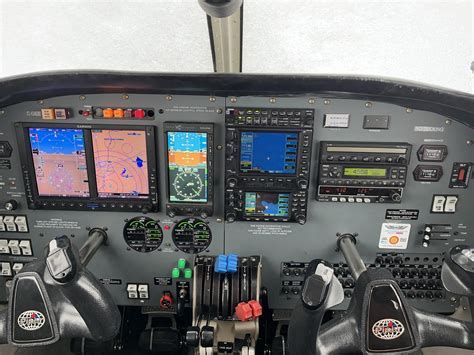
Upon examining the technical design, it becomes clear that the Master switch actually controls the bus connection, not the battery connection directly. Turning it off disconnects the bus from its sources — effectively isolating the entire electrical system — even though the alternators themselves continue operating mechanically. This design prevents unpredictable electrical feedback during maintenance or emergencies, ensuring pilot control over the system state.
How Alternators Interact with the Electrical Bus
To fully appreciate the reality, it is necessary to understand how an alternator and a voltage regulator collaborate. The alternator outputs a stabilized 14 V DC supply to the aircraft’s main bus. Electrical loads — radios, lights, avionics — draw from this stabilized voltage. Meanwhile, when the battery’s voltage reaches equilibrium with the bus voltage, no significant current flows into or out of the battery. In this steady state, the battery behaves as though “cut out” of the system, present but passive.
This setup can be likened to a hydraulic analogy: imagine a high-pressure pump (the alternator) feeding a network of pipes (the electrical bus). The battery, in this case, is like an accumulator — ready to supply pressure if the pump fails, but otherwise quietly stabilizing the system.
Why the Alternator Dominates: Voltage Potential Principles
A fundamental principle of electrical systems states: the higher potential wins. Since the alternator consistently supplies 14 volts, compared to the battery’s 12 volts, it naturally powers all loads and simultaneously charges the battery. The battery only becomes an active player if the bus voltage falls below its resting voltage, such as during an alternator failure or a heavy electrical surge.
In simple terms, the alternator does not first “fill” the battery and then “empty” it into the bus; instead, it simultaneously serves both roles — power supplier and battery charger — without routing current unnecessarily through the battery first.
Testing the Current Flow: Evidence Beyond Theory
One method to empirically demonstrate this behavior involves using clamp-on ammeters on the bus connections. Under normal operation:
- The alternator-to-bus connection would show continuous positive current.
- The battery-to-bus connection would show minimal to zero current unless a surge or failure occurs.
This setup proves that the alternators — not the battery — are responsible for sustaining the aircraft’s operational loads.
What Happens During Alternator Failure?
In the unfortunate event of an alternator failure, the associated control unit automatically disconnects the failed alternator to prevent system contamination. The battery then assumes the load, supplying power as its voltage gradually declines through 13 V, 12 V, and eventually below 11 V, at which point critical equipment starts shutting down due to insufficient voltage.
This degradation highlights the battery’s role as a temporary backup — essential but not sustainable for prolonged flight. Pilots must recognize the warning signs of declining electrical capacity and prioritize load-shedding to extend battery life until a safe landing can be executed.
Transient Contributions of the Battery: The Millisecond Moments
It is worth noting that even during normal operations, the battery occasionally contributes micro-currents during sudden, high-demand events. For example, flipping on high-draw devices like landing lights or pitot heat might momentarily exceed the alternator’s immediate response capacity. During these milliseconds, the battery momentarily “smooths” the load, preventing bus voltage sags. However, these instances are transient and involve negligible current relative to the continuous output of the alternators.

Master Switch Design and System Interpretation Challenges
Much of the confusion stems from the design of aircraft Master switches and their wiring schematics. In many light aircraft, including the Seminole, the Master switch actually consists of two switches — one for the battery and one for the alternators. The combination allows pilots to selectively engage or disengage power sources during preflight checks, emergency procedures, and maintenance activities.
In practice, however, when the Master switch is turned off in flight, it disconnects the alternators from the bus, meaning no power flows regardless of mechanical alternator operation. This behavior feeds the mistaken impression that “the battery powers everything,” when in fact it is the circuit architecture — not battery dominance — that causes system shutdown.
Simplified Teaching Versus Technical Accuracy
In initial pilot training, instructors often simplify the explanation, saying the alternator “charges the battery,” and the battery “powers the airplane.” While this framing is serviceable at a beginner level, it becomes dangerously misleading if not corrected in advanced instruction. For effective flight operations, it is critical to understand that under normal circumstances, the alternators are the primary power source, and the battery is a backup reservoir.

Conclusion: Understanding Electrical Source Hierarchy in Aircraft
After careful examination, the technical consensus is clear: the alternators power the airplane during normal operations. They supply continuous electrical current to the bus, maintain voltage stability, and simultaneously float-charge the battery without routing main current through it. The battery, while vital, remains a secondary player until system anomalies force it to the forefront.
Misinterpretations about the Master switch’s behavior and simplified educational models have contributed to widespread misconceptions. Nevertheless, for pilots, engineers, and instructors striving for precision, understanding this true flow hierarchy is not optional — it is foundational.
Future discussions about aircraft electrical systems must respect this reality to better prepare aviators for complex scenarios involving electrical management and system failures.
Multi-Alternator Systems: Redundancy and Power Sharing
In more complex aircraft designs, such as twin-engine models and commercial airliners, the presence of multiple alternators introduces another layer of sophistication to the electrical system. Each engine typically drives its own alternator, providing redundancy in case of a single-unit failure. In systems like that of the Piper Seminole, both 14 V alternators contribute power to a common electrical bus, either working simultaneously or independently, depending on the demand and operating conditions.
When both alternators are online and healthy, their outputs are combined through a paralleling circuit that balances the load distribution. This ensures that one alternator does not bear the entire electrical burden while the other remains idle. Load sharing improves reliability, reduces wear, and enhances system resilience in case one alternator’s output falters.
If an alternator failure occurs, the remaining unit automatically assumes the full load — provided the system is designed with appropriate capacity margins. The battery again stands ready to cushion sudden surges or temporary deficits, but it remains a secondary resource until absolutely required.
Voltage Regulators: The Silent Guardians of Stability
A critical but often overlooked component in aircraft electrical systems is the voltage regulator. This device continuously monitors the electrical bus voltage and adjusts the alternator’s field current to maintain a stable output. Without a voltage regulator, alternators could produce excessive or unstable voltages, risking serious damage to avionics, lighting systems, and flight instruments.
The regulator’s function is particularly vital during flight phases with fluctuating RPMs, such as during takeoff, climb, and landing. As engine RPM changes, the alternator’s potential output varies; the voltage regulator compensates, ensuring that the bus voltage remains anchored close to the desired 14 V mark.

Failures of the voltage regulator, though rare, can mimic alternator failure symptoms. Pilots must be trained to recognize the distinct indicators: a regulator failure typically leads to bus overvoltage or undervoltage conditions, triggering warning lights and requiring immediate corrective action, including potentially shedding non-essential electrical loads or manually disabling the alternator.
The Role of Batteries in Aircraft Certification Standards
From a regulatory standpoint, aviation authorities like the Federal Aviation Administration (FAA) impose strict requirements on battery performance. Even though the battery is not the primary power source during flight, it must be capable of supporting essential electrical loads — such as communication radios, transponders, and primary flight instruments — for a minimum duration following a total alternator failure.
For Part 23 certificated aircraft (small airplanes), the standard mandates that the aircraft must be able to continue safe flight and landing with essential electrical loads powered solely by the battery for at least 30 minutes. For larger or commercial aircraft under Part 25, even stricter endurance requirements apply, often involving complex battery monitoring and maintenance programs.
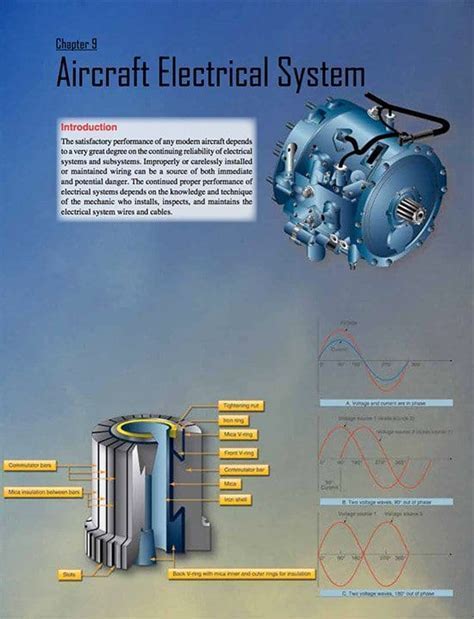
This regulatory framework underscores why batteries are meticulously maintained, regularly tested, and promptly replaced when performance declines — even though, under normal conditions, they remain in a passive, standby role.
Troubleshooting Electrical Problems: Diagnosing the True Source
When electrical anomalies arise in flight, diagnosing the correct source of the problem demands a nuanced understanding of the system’s architecture. Common pilot-reported symptoms include:
- Low bus voltage: Often indicates a failed alternator or faulty voltage regulator.
- High bus voltage: Suggests a runaway alternator or malfunctioning voltage regulator.
- Battery discharge indications: Points to alternator failure or broken alternator-bus connection.
Effective troubleshooting requires systematic checks. Pilots are trained to observe bus voltage readings, verify annunciator panel warnings (such as “ALT FAIL” lights), and isolate faulty components by selectively switching alternators or shedding electrical loads.
In maintenance settings, technicians employ diagnostic tools such as clamp-on ammeters, multimeters, and continuity testers to pinpoint faults. Advanced aircraft may also feature built-in test equipment (BITE) systems that automatically log and report electrical anomalies for rapid ground-based analysis.

Advanced Electrical Architectures: Beyond the Basics
Modern high-performance aircraft and business jets often employ even more complex architectures, including:
- Split bus systems: Isolate different electrical sections to enhance fault tolerance.
- Essential bus prioritization: Automatically shed non-critical loads during emergencies.
- Generator Control Units (GCUs): Integrate alternator control, bus regulation, and fault protection into a single smart module.
- Lithium-ion battery integration: In cutting-edge designs, lightweight, high-capacity batteries augment traditional lead-acid or NiCad systems.
These sophisticated architectures further decouple alternators from battery dependency, reinforcing the primacy of alternators during flight operations.
Teaching and Operational Implications: Why Accuracy Matters
For flight instructors and aviation educators, accurately conveying the electrical system’s behavior is essential. Oversimplifying the concept — telling students “the battery powers everything” — fosters dangerous misconceptions that may impair emergency decision-making.
In advanced training environments, especially for commercial pilot candidates and future flight instructors, it is imperative to shift from simplistic narratives to technically correct explanations. Doing so builds critical thinking, improves troubleshooting skills, and cultivates a culture of precise systems knowledge — all of which contribute to aviation safety.
Pilots who truly understand their electrical system architecture are better equipped to manage:
- Alternator failures.
- Partial bus failures.
- Master switch malfunctions.
- Battery degradation emergencies.
Such proficiency can make the difference between a manageable diversion and a cascading in-flight electrical emergency.
Final Thoughts: Building a Foundation of Technical Excellence
The question of “what powers the airplane — the battery or the alternators” is far more than theoretical. It touches every aspect of aircraft operation, from preflight checks and normal procedures to critical emergency management. The evidence is overwhelming: alternators are the primary power source, sustaining the aircraft’s electrical bus during all normal phases of flight.
The battery remains an indispensable component — vital as a standby source, a buffer for transients, and a cornerstone of regulatory compliance — but it does not dominate the system under ordinary circumstances.
Recognizing the subtle interactions between alternators, voltage regulators, bus systems, and batteries elevates pilot competence, enhances safety, and honors the engineering excellence that makes modern aviation possible. As aviators, engineers, and educators, it is our duty to pass forward this precise understanding, ensuring the next generation of pilots is as technically capable as they are operationally skilled.