The global fighter market is entering an unusual period. While fifth-generation stealth fighters continue to dominate discussions about the future of air combat, several air forces are deliberately investing in highly advanced fourth- and 4.5-generation fighter jets instead of waiting for a fifth-generation solution. Their choices are not necessarily a rejection of stealth. In many cases, they reflect a more complicated calculation involving cost, sovereignty, delivery schedules, industrial policy, operational requirements, and the uncertain timeline of next-generation combat aircraft.
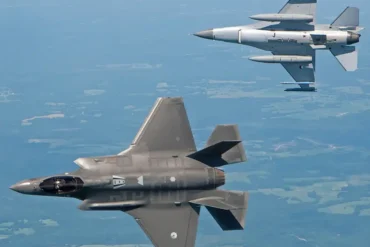
The F-35 Lightning II has transformed expectations for modern tactical aviation. Its combination of low observability, sensor fusion, networking, electronic warfare, and precision strike capabilities gives operators an extraordinary level of situational awareness. However, acquiring and operating such an aircraft can involve substantial financial and political commitments. For countries that need additional combat power now, a sophisticated 4.5-generation fighter can offer a faster and potentially more flexible route.
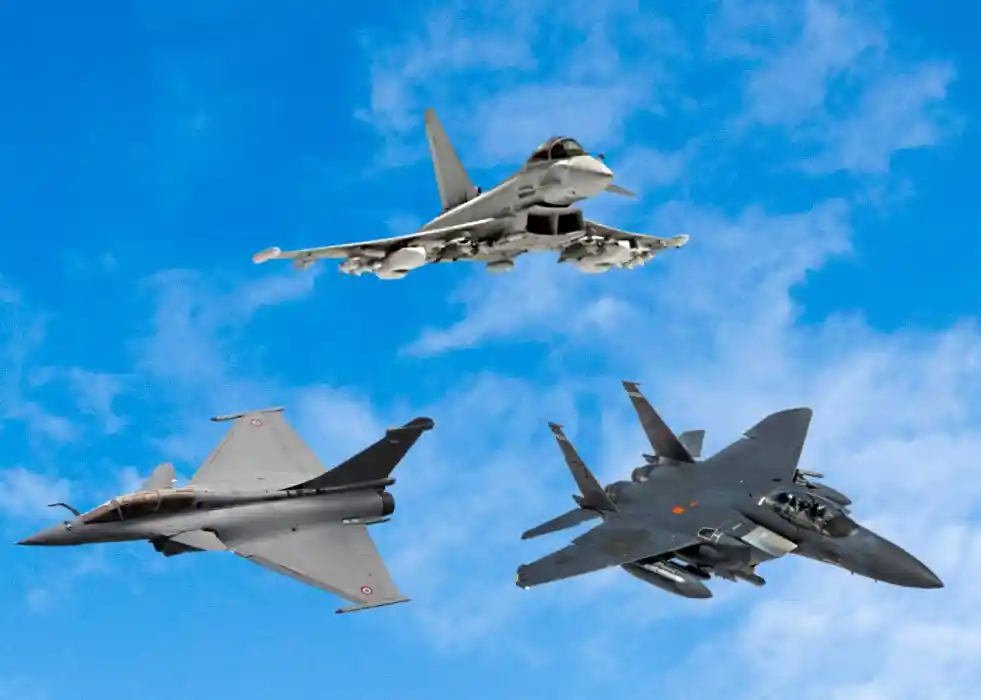
This has created an increasingly important middle ground. Aircraft such as the Eurofighter Typhoon, Dassault Rafale, Boeing F-15EX Eagle II, and Saab Gripen E are far removed from the original fourth-generation fighters introduced during the Cold War. Modern versions incorporate powerful AESA radars, advanced electronic warfare, digital cockpits, networked weapons, improved sensors, and sophisticated beyond-visual-range missiles. They cannot reproduce every advantage of a true stealth aircraft, but they can deliver formidable combat capability while keeping existing industrial and logistical ecosystems alive.
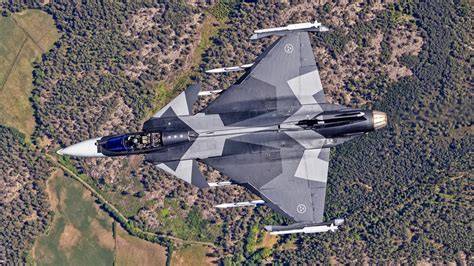
The resulting procurement strategy can be described as “bridge generation” warfare. Instead of buying an expensive fifth-generation fleet that may not perfectly match national requirements, or waiting decades for a sixth-generation aircraft, governments can modernize their existing fleets with aircraft that are available today. Six air forces in particular illustrate how this strategy is taking shape.
1. Royal Saudi Air Force: Building a Powerful 4.5-Generation Fleet
The Royal Saudi Air Force (RSAF) is pursuing one of the most ambitious fourth-generation modernization programs in the world. Rather than relying on a single fighter type, Saudi Arabia is developing a layered fleet centered on the F-15 family and Eurofighter Typhoon, with the possibility of additional Rafales further expanding its capabilities.
Saudi Arabia’s position is heavily influenced by the geopolitical restrictions surrounding the F-35. The United States has historically maintained strict controls over the aircraft’s export to countries in the Middle East, meaning that acquiring the Lightning II is not simply a matter of signing a purchase agreement. Riyadh can therefore obtain considerable combat capability by continuing to develop platforms already integrated into its force.
The Eurofighter Typhoon is particularly important. Saudi Arabia has been pursuing discussions with BAE Systems regarding 48 additional Typhoons, potentially bringing the country’s total Typhoon fleet to around 120 aircraft. The aircraft provide a modern multirole capability with advanced radar, electronic warfare, air-to-air weapons, and precision strike systems.
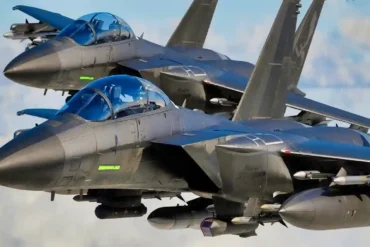
The F-15 side of the equation is equally significant. Saudi Arabia is moving toward acquiring 60 new F-15EX Eagle IIs, while a major modernization effort upgrades existing F-15S/SA aircraft. The Eagle II is not stealthy, but its enormous size and payload capacity give it an unusual advantage as a missile and weapons carrier.
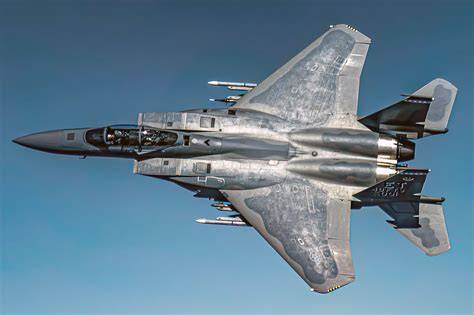
This illustrates why fifth-generation technology is not automatically superior in every mission. A stealth fighter may penetrate defended airspace more effectively, but an aircraft such as the F-15EX can carry a very large weapons load and operate as a heavily armed node within a broader network of aircraft, sensors, and standoff weapons.
Saudi Arabia has also explored acquiring Dassault Rafale fighters. If those plans develop further, Riyadh would possess one of the world’s most diverse high-end fighter fleets, combining American and European aircraft rather than committing entirely to one technological path.
2. Qatar: Rafale, Typhoon and F-15QA Form a High-End Force
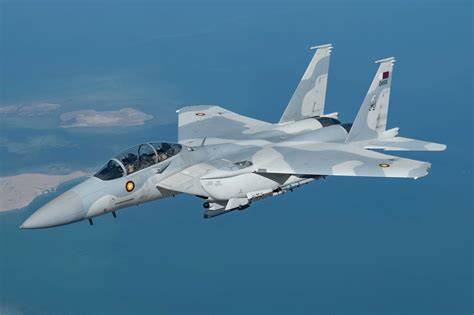
Qatar has taken a remarkably similar approach, creating a 4.5-generation fighter fleet built around three sophisticated aircraft families: the Rafale, Eurofighter Typhoon, and F-15QA.
The Qatar Emiri Air Force operates 36 F-15QA fighters acquired through a major procurement program. These aircraft incorporate advanced avionics, fly-by-wire controls, powerful sensors, and extensive weapons capabilities. Their configuration gives Qatar an aircraft that sits firmly at the high end of fourth-generation technology.
The Rafale adds another dimension. Qatar’s existing Rafales are highly capable multirole aircraft equipped with advanced targeting and helmet-mounted display technology, while their weapons ecosystem includes the MBDA Meteor beyond-visual-range air-to-air missile and SCALP-EG cruise missile. Upgrading the fleet toward the newer F4 standard would further improve networking, sensor integration, and combat effectiveness.
Qatar has also ordered 24 Eurofighter Typhoons, adding another advanced platform to its relatively small but technologically sophisticated air force. These aircraft are particularly important because modern Typhoons can combine AESA radar technology with Meteor and other advanced weapons.
The result is a compact air force with capabilities that exceed what its fleet size alone might suggest. Qatar does not need hundreds of fighters to create a credible high-end force. Instead, it has invested heavily in quality, weapons, sensors, training, and interoperability.
3. Swedish Air Force: Gripen E Offers a Different Definition of Modernity
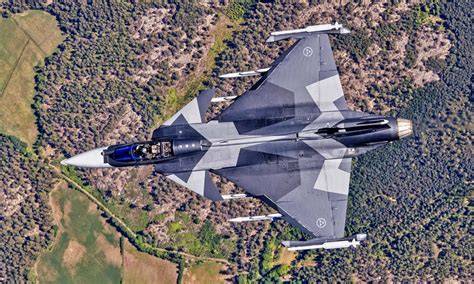
Sweden provides perhaps the clearest example of why a fifth-generation aircraft is not universally necessary. The Saab JAS 39 Gripen E sacrifices stealth compared with the F-35, but it offers a distinctive combination of speed, electronic warfare, networking, operational flexibility, and relatively low operating complexity.
Sweden’s strategic circumstances make the Gripen particularly attractive. The country has a long tradition of designing fighters around the realities of operating from dispersed bases and maintaining aircraft under difficult conditions. The Gripen E continues that philosophy while introducing substantially more advanced avionics and electronic systems.
The aircraft can reach approximately Mach 2.0, compared with the F-35’s roughly Mach 1.6 maximum speed. Speed alone does not make one aircraft superior, of course, but it reflects the Gripen’s emphasis on performance and flexibility.
Its greatest strength may instead be its electronic warfare architecture. Advanced electronic support and countermeasure capabilities can help compensate for the absence of low observability in certain environments. The Gripen is therefore not intended to imitate the F-35. It represents a different operational philosophy in which electronic warfare, networking, dispersal, and readiness become central components of survivability.
Sweden’s entry into NATO has also increased the importance of interoperability. The Gripen E can contribute to a larger alliance network while retaining a significant degree of national control over its combat aircraft.
4. Spain: Eurofighter Becomes the Bridge to the Next Generation
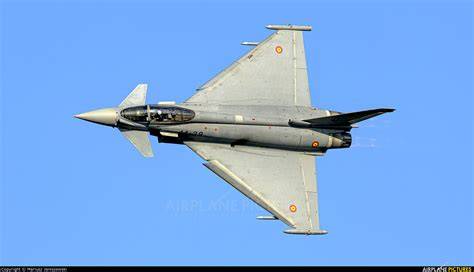
Spain has taken another notable path by emphasizing the Eurofighter Typhoon rather than purchasing F-35A fighters for its conventional air force requirements. The decision reflects the desire to modernize the Spanish fighter fleet while maintaining a European industrial base and preserving flexibility for future-generation programs.
The Halcon I and Halcon II procurement tranches represent a substantial investment in additional Typhoons. Together, they provide Spain with a modern replacement pathway for aging aircraft while avoiding an immediate transition to an entirely different ecosystem.
The decision becomes even more interesting when naval aviation is considered. Spain’s AV-8B Harrier II fleet continues to provide the country’s short-takeoff and vertical-landing capability from the amphibious assault ship Juan Carlos I. Extending the Harrier’s service life demonstrates just how valuable existing capabilities can remain when a direct replacement is unavailable or strategically undesirable.
At the same time, Spain faces a larger question about the future of European combat aviation. The country has been associated with European next-generation initiatives, and its eventual transition beyond the Typhoon will depend heavily on how multinational sixth-generation programs evolve.
The Typhoon therefore serves as more than a fighter purchase. It is a strategic bridge, giving Spain modern combat power while leaving room for a future transition to a next-generation aircraft.
5. Germany: Eurofighter Expansion Meets Electronic Warfare
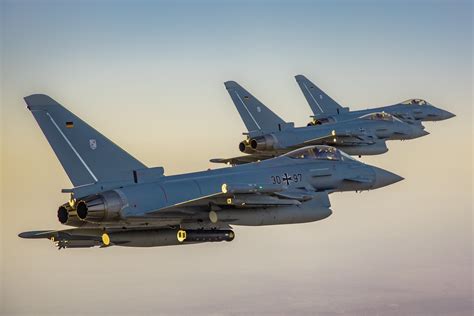
Germany presents a more complicated case because the Luftwaffe has not completely rejected the F-35. Berlin has selected the F-35A for the nuclear-sharing mission, where its stealth and specialized capabilities are considered particularly valuable. Nevertheless, the F-35 will not become the sole foundation of German tactical aviation.
The Eurofighter Typhoon remains central to the Luftwaffe’s future. Germany ordered additional Typhoons after earlier purchases, strengthening the aircraft’s position as the backbone of the conventional fighter fleet.
This approach also reflects industrial considerations. The Eurofighter program supports European aerospace companies and provides Germany with greater influence over development and modernization compared with simply purchasing an American aircraft.
Electronic warfare is becoming particularly important. Germany plans to introduce Eurofighter EK aircraft equipped with advanced electronic warfare systems, including Saab’s Arexis suite. These aircraft are intended to improve the Luftwaffe’s ability to disrupt hostile radar and air-defense networks.
That capability matters because future air warfare will not be determined exclusively by who possesses the smallest radar signature. Electronic attack, cyber resilience, sensor fusion, decoys, networking, and long-range weapons can all influence whether a fighter survives in a contested environment.
Germany’s experience also highlights the risk of waiting for a next-generation program that may suffer delays. Europe’s FCAS initiative has faced serious industrial and political disagreements, reinforcing the need for an effective aircraft available during the transition.
6. Royal Air Force and Royal Navy: Typhoon Upgrades Before GCAP
The United Kingdom offers perhaps the clearest example of an air force deliberately using an advanced fourth-generation fighter as a bridge to sixth-generation aviation.
Britain was deeply involved in the F-35 program from its earliest stages and remains an important operator of the aircraft. The Royal Navy’s Queen Elizabeth-class carriers use the F-35B, while the RAF operates the F-35A for future requirements. Yet Britain is not planning to build its entire future combat fleet around the Lightning II.
Instead, the Eurofighter Typhoon is receiving substantial upgrades to remain relevant through the 2030s. Dozens of aircraft are being modernized with advanced systems, including the ECRS Mk2 radar and improved electronic warfare capabilities.
This is strategically important because Britain cannot afford a capability gap while waiting for its next-generation aircraft. The UK’s answer is the Global Combat Air Programme (GCAP), developed with Japan and Italy. The future Tempest system is expected to combine crewed fighters with autonomous systems, advanced sensors, networked weapons, and other technologies associated with sixth-generation warfare.
Until that aircraft arrives, upgraded Typhoons provide the necessary combat mass.
The British approach therefore demonstrates that buying or retaining a fourth-generation fighter does not necessarily mean falling behind technologically. Instead, the aircraft can become a highly capable platform within a larger combat architecture. The objective is not to make Typhoon equal to a stealth fighter. It is to ensure that the fleet remains effective until the next technological leap is ready.
Why Advanced Fourth-Generation Fighters Still Make Sense
The renewed interest in 4.5-generation fighters reveals something important about modern military procurement: stealth is enormously valuable, but it is not the only measure of combat power.
A modern Typhoon, Rafale, Gripen E, or F-15EX can incorporate AESA radar, infrared search and track systems, sophisticated electronic warfare, helmet-mounted displays, high-speed data links, precision-guided weapons, and long-range air-to-air missiles. These capabilities can dramatically increase the effectiveness of aircraft that lack the extreme low observability of fifth-generation designs.
Cost and availability also matter. A country facing an immediate security requirement may prefer an aircraft that can be delivered, integrated, maintained, and upgraded within a predictable timeframe rather than waiting for a developmental program that could take decades.
There is also a strategic issue of sovereignty. Some countries want greater control over software, weapons integration, upgrades, and operational data. European fighters can offer different industrial arrangements that appeal to nations seeking to preserve or expand their domestic aerospace capabilities.
Finally, the battlefield itself is changing. Future air combat will increasingly involve networks of fighters, drones, satellites, ground-based sensors, electronic warfare platforms, and long-range missiles. In such an environment, an aircraft does not necessarily have to perform every task independently.
The Fighter Fleet of the 2030s May Look Very Different
The most interesting lesson from these six air forces is that the future will not necessarily belong to a single fighter generation. Instead, mixed fleets are likely to become increasingly important.
Saudi Arabia and Qatar are assembling powerful 4.5-generation fleets because geopolitical restrictions and operational requirements make that approach attractive. Sweden has built its strategy around the Gripen E’s combination of readiness, electronic warfare, and affordability. Spain and Germany are using Typhoons to preserve conventional combat capacity while preparing for future systems. Britain is upgrading Typhoon specifically to bridge the gap toward GCAP.
In each case, the underlying calculation is different, but the conclusion is similar: waiting for the perfect fifth- or sixth-generation fighter can create an operational gap today.
The result is a new procurement philosophy. Rather than treating fourth-generation fighters as obsolete placeholders, air forces are turning them into sophisticated networked combat platforms that can remain relevant well into the 2030s and beyond.
The F-35 will unquestionably remain one of the defining combat aircraft of the era. Yet its success has not eliminated the market for advanced non-stealth fighters. Instead, it has pushed competitors to evolve their fourth-generation designs into increasingly capable 4.5-generation aircraft.
That may ultimately be the most important trend. The future of air power is unlikely to be decided by the label painted on the aircraft’s generation. It will be decided by how effectively the aircraft’s sensors, weapons, electronic warfare systems, pilots, drones, and networks work together. For these six air forces, the fastest route to that future does not necessarily begin with a fifth-generation fighter.