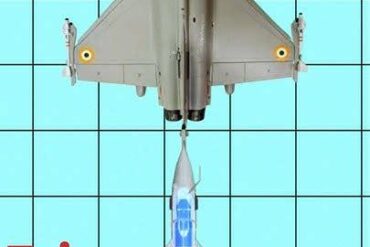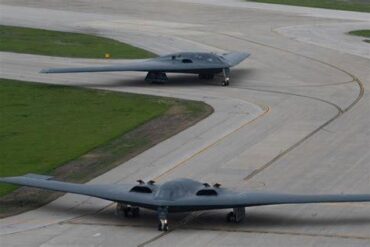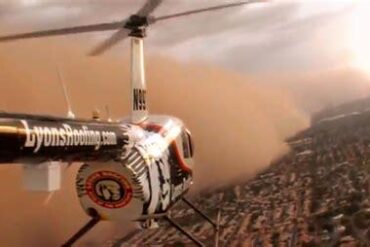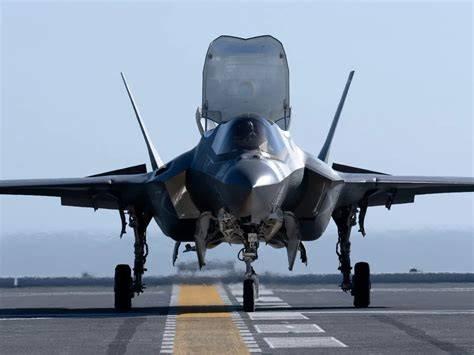
A fighter jet appears to have every advantage over a helicopter. It is faster, usually operates at a higher altitude, carries sophisticated sensors, and can employ weapons designed to destroy airborne targets from considerable distances. Yet the simple equation of speed versus speed breaks down when the helicopter drops close to the ground. In that environment, terrain, line of sight, sensor limitations, and extreme differences in speed can transform an apparently easy interception into a surprisingly difficult tactical problem.
The reason is rooted in basic physics and geometry. A helicopter does not need to fight a fighter jet on the fighter’s terms. It can fly behind ridgelines, disappear among buildings, use forests as concealment, and change direction without maintaining the predictable flight path associated with a fast fixed-wing aircraft. A fighter arriving from several miles away may have only seconds to detect, identify, position itself against, and engage a target before the helicopter vanishes again.
This does not mean helicopters are inherently difficult targets. Far from it. A helicopter caught above flat terrain, exposed against the sky, or operating at medium altitude can become extremely vulnerable to modern infrared missiles, radar-guided weapons, and networked targeting systems. The important distinction is therefore not whether a fighter jet can destroy a helicopter, but why the tactical circumstances surrounding a low-level encounter can dramatically change the odds.
Terrain Masking Changes the Geometry of the Fight
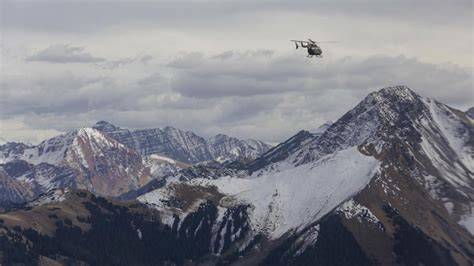
The most important advantage available to a low-flying helicopter is terrain masking. When an aircraft flies only a few dozen meters above the surface, hills, ridges, trees, buildings, and other obstacles can block an approaching fighter’s line of sight. This creates a peculiar situation in which the faster aircraft may have less useful information about the target than the slower aircraft hiding below it.
Imagine a fighter several miles away approaching an area where a helicopter is operating at extremely low altitude. The fighter’s sensors may have excellent range, but range does not automatically guarantee a useful engagement. The helicopter can remain below the radar horizon or disappear behind terrain before the fighter obtains a stable track. Even a powerful sensor cannot attack what it cannot reliably see, locate, identify, and continuously track.
This is one reason low-level helicopter operations have historically emphasized nap-of-the-earth flight. The helicopter uses the landscape almost like a second weapon system, exploiting every fold in the ground to reduce exposure. Unlike a fast jet, it can also maneuver around obstacles and remain close to the surface without needing to maintain a straight, high-speed flight path.
Modern fighters have substantially improved this contest. AESA radars, infrared search-and-track systems, electronic sensors, data links, and airborne early-warning aircraft can provide information that the fighter itself might not be able to obtain independently. A networked fighter can potentially receive a target location from another sensor and approach the area already knowing where to look.
Even then, the final engagement can remain difficult. A helicopter may have moved behind a ridge, entered a built-up area, or changed direction by the time the fighter reaches the predicted location. The sensor advantage is therefore real, but it does not eliminate the physical limitations imposed by the terrain.
Why Speed Can Become a Disadvantage
It sounds counterintuitive, but extreme speed can complicate an interception against a very slow target. Fighter aircraft are optimized to maneuver at speeds vastly greater than those of helicopters. That is normally an enormous advantage, but an engagement is not simply a race to reach the target first.
A helicopter moving at low speed can occupy the battlespace in a way that creates a difficult geometry for the fighter. A fast jet closing rapidly on the helicopter may have only a narrow window in which its nose, sensors, and weapons are properly aligned. With a conventional aircraft gun, the problem becomes especially obvious because the fighter must maneuver its weapon toward the target while managing a huge difference in velocity.
Missiles reduce some of this difficulty because they can maneuver independently after launch. Modern short-range infrared-guided weapons are particularly dangerous to helicopters because their engines and exhaust systems provide a strong thermal signature. But the missile still requires a viable target track and an engagement opportunity.
The same basic problem has appeared in attempts to intercept slow-moving drones. Fast fighters can destroy such aircraft, but their high closing speed creates demanding tactical conditions. A pilot must manage closure, weapon employment, sensor tracking, and maneuver simultaneously. A helicopter hiding close to terrain can make the problem even more complicated because the engagement window may disappear almost as quickly as it appears.
The Helicopter’s Greatest Weapon Is Often Time
A low-flying helicopter does not need to remain hidden forever. It may only need to remain hidden long enough to survive the fighter’s approach.
This is where the pop-up attack profile becomes important. A helicopter can remain concealed behind terrain, briefly rise to observe an area or engage a target, and then descend again. From the perspective of an enemy fighter, this creates a fleeting target that may appear and disappear within moments.
The helicopter’s ability to change direction without following a runway-like flight path makes the problem even harder. A fixed-wing aircraft traveling quickly through a valley has limited options compared with a helicopter that can slow dramatically, turn sharply, hover when necessary, or move laterally relative to the terrain.
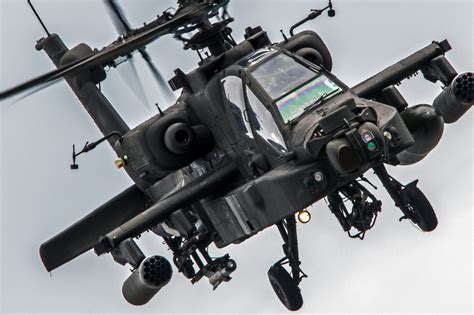
The helicopter is therefore not trying to defeat the fighter in a conventional air-to-air engagement. It is attempting to deny the fighter a clean engagement opportunity. That distinction is crucial. Survival may depend less on the helicopter’s ability to shoot back and more on its ability to prevent the opponent from obtaining a stable firing solution.
When Fighter Jets Have the Upper Hand
The equation changes immediately when terrain masking disappears. A helicopter flying over a broad, flat landscape with little concealment has far fewer options. If the fighter receives accurate targeting information and establishes a reliable track, the helicopter’s low speed becomes a serious liability.
Altitude can be even more dangerous. A helicopter operating significantly above the surface may become visible against a relatively uncluttered background, while its thermal signature becomes easier for infrared sensors to exploit. Modern short-range air-to-air missiles are well suited to engaging slow aircraft under these circumstances.
This is why the statement that fighter jets “struggle” against helicopters should never be interpreted as saying helicopters are difficult air targets under all conditions. The difficulty is highly conditional. Geography, altitude, weather, sensor coverage, warning time, weapon availability, and supporting aircraft can matter more than the nominal performance figures printed on an aircraft specification sheet.
A fighter supported by airborne early-warning assets and other networked sensors represents a fundamentally different threat from a fighter operating alone. Offboard information can reduce the need for the fighter to search a huge area independently. Instead, the pilot can receive a cue and concentrate on completing the engagement.
The Apache’s Changing Battlefield Role
These physical realities help explain the broader debate surrounding the AH-64 Apache. The issue facing modern attack helicopters is not simply that enemy fighters can shoot them down. In many contemporary battlefields, the more serious problem is the density of short-range air defenses and the growing availability of inexpensive unmanned systems.
The Cold War concept of the attack helicopter emphasized its ability to operate close to the front and destroy armored formations. Modern battlefields have made that environment increasingly dangerous. MANPADS, mobile air-defense systems, drones, electronic warfare, and long-range precision weapons can all threaten an aircraft operating close to enemy forces.
The result is a gradual shift away from the idea of the helicopter as a heavily armed aircraft that should repeatedly expose itself over the forward edge of the battlefield. Instead, modern attack helicopters are increasingly being considered as maneuver elements, reconnaissance platforms, and deep-strike assets operating as part of a larger network.
This does not make the Apache irrelevant. It changes where and how its capabilities are most valuable.
From Tank Hunter to Networked Deep-Strike Platform
The image of the Apache as a dedicated tank killer is increasingly outdated. Attack helicopters can still destroy armored vehicles, but modern anti-armor warfare is no longer simply about flying close to tanks and firing missiles at short range.
The most survivable approach is often to engage from greater distance, exploit terrain, use external targeting information, and minimize exposure. Russian Ka-52 operations in Ukraine have illustrated this broader transformation, with helicopters making extensive use of longer-range weapons rather than repeatedly entering the immediate engagement envelope of ground-based defenses.
The battlefield environment also makes helicopter bases vulnerable. Precision missiles and drones can attack aircraft while they are parked, while persistent surveillance makes it increasingly difficult to hide large aviation facilities. This means the helicopter’s vulnerability is not limited to the moment when it is airborne.
The same logic applies to logistics. A helicopter may survive an air-defense encounter yet still face serious risks from drones, artillery, missiles, and persistent reconnaissance. Aircraft survivability is therefore becoming a system-level problem rather than merely a question of armor or maneuverability.
Why Drones Are Changing the Calculation
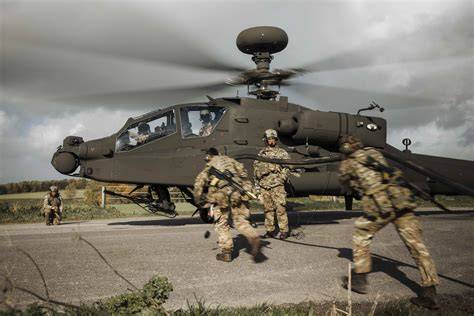
Perhaps the most important challenge to attack helicopters is not the fighter jet at all. It is the rise of uncrewed aircraft systems that can perform some of the same missions at a fraction of the cost and without placing a pilot inside the aircraft.
Reconnaissance is an obvious example. A small drone can provide persistent observation without requiring a crewed helicopter to remain near the front. Other unmanned systems can support communications, targeting, resupply, casualty evacuation, and attack missions.
This changes the economics of risk. A helicopter is an expensive, complex machine carrying highly trained personnel. Sending it into a heavily defended area creates a significant human and financial cost. An expendable or semi-expendable unmanned aircraft can sometimes accept risks that would be unacceptable for a crewed platform.
That does not mean drones can simply replace helicopters. Helicopters retain major advantages in payload, flexibility, endurance, speed of response, and the ability to carry personnel and equipment. Instead, the emerging battlefield is likely to combine the two.
The Future: Helicopters Inside a Larger Combat Network
The most plausible future for attack helicopters is therefore not disappearance but integration. A helicopter operating alone against a modern integrated air-defense network is increasingly difficult to justify. A helicopter connected to drones, satellites, ground sensors, other aircraft, and command networks represents a much more capable system.
This is particularly important for the concept of “hunting the hunters.” Rather than simply avoiding enemy air defenses, attack helicopters could contribute to locating and defeating the systems that threaten them. In such a model, the helicopter becomes one node within a larger sensor-and-strike architecture rather than an isolated aircraft flying toward enemy positions.
The same principle explains why future combat aviation increasingly emphasizes networking. The best sensor does not necessarily need to be mounted on the aircraft carrying the weapon. One platform can detect a target, another can track it, and a third can conduct the engagement.
For helicopters, this could reduce exposure while preserving many of their unique strengths. They can exploit terrain, maneuver at low altitude, carry substantial weapons and sensors, and operate from locations inaccessible to conventional fixed-wing aircraft.
Why the Low-Flying Helicopter Still Matters
The physics of the ambush ultimately explains why a fighter jet does not automatically dominate every encounter with a helicopter. Speed is not the same as visibility, sensor range is not the same as target access, and superior maneuverability does not eliminate terrain.
A helicopter close to the ground can exploit the physical environment in ways a fighter cannot easily reproduce. Hills block radar and visual observation. Trees and buildings create clutter. Low altitude reduces detection opportunities. Slow speed permits tight maneuvering around obstacles. Short exposure windows complicate the fighter’s firing solution.
But these advantages have limits. Networked sensors, modern missiles, airborne early-warning aircraft, drones, and dense air-defense networks are steadily shrinking the safe operating space for helicopters. The central question is no longer whether helicopters can survive because they fly low. It is whether their unique capabilities justify the risk and cost of operating them in an increasingly transparent battlespace.
That is why the future of the attack helicopter is becoming less about dueling with fighter jets and more about choosing the right mission, location, weapon, and network. The low-flying helicopter remains a difficult target when terrain and timing work in its favor. Yet the modern battlefield is steadily becoming better at finding everything that tries to hide.