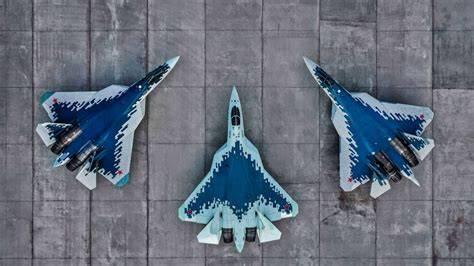
Russia’s Su-57 Felon was designed to be the centerpiece of Moscow’s fifth-generation fighter ambitions. On paper, it was supposed to give Russia an aircraft capable of challenging the American F-22 Raptor and F-35 Lightning II while offering an advanced combination of stealth, speed, sensors, maneuverability, and long-range weapons. Yet, six years after entering operational service, the most striking feature of the Su-57 program may not be its technology. It is the small size of the fleet.
That raises an uncomfortable question for Russia. If the Su-57 is genuinely intended to compete with the leading Western fifth-generation fighters, why has Russia ordered so few of them? The answer is more complicated than simply claiming that the aircraft has failed. Production constraints, sanctions, engine development, Russia’s wartime priorities, export difficulties, and the realities of modern air combat all help explain why the Felon remains a relatively rare sight.
The numbers are particularly revealing. Russia ordered 76 Su-57s, including the first two serial-production aircraft, with deliveries originally expected to run through the late 2020s. By early 2026, open-source estimates suggested that only around 20 to 30 Su-57s were actually in Russian service. Algeria was reportedly becoming the first confirmed foreign customer, with an order for approximately 14 aircraft, but even that deal represents a remarkably small international footprint for a fighter that was conceived partly with export ambitions in mind.
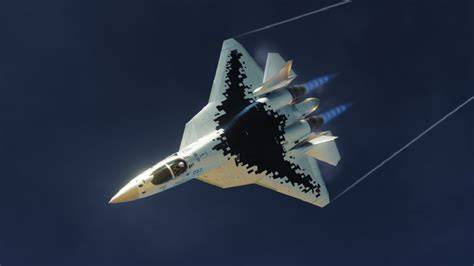
The Su-57 Was Built To Be More Than A Russian Fighter
The Su-57 originated from Russia’s PAK FA program, which sought to create a new-generation tactical fighter capable of replacing important elements of the aging Soviet-era fleet. The project was not simply about building a faster Su-27 or a more maneuverable Su-35. It aimed to introduce low-observable design, advanced sensors, integrated avionics, and modern networked warfare capabilities into a completely new platform.
Its international ambitions were equally important. India became involved through the Fifth Generation Fighter Aircraft (FGFA) initiative, effectively making the Su-57 concept part of a broader attempt to establish a major export program. India eventually withdrew, citing concerns involving stealth characteristics, avionics, sensors, engines, and the overall division of industrial work. That decision removed a potentially enormous source of funding, production scale, and international credibility.
The loss of India mattered because large fighter programs benefit from economies of scale. A manufacturer producing hundreds or thousands of aircraft can distribute development costs across a much larger fleet. A program producing only dozens faces a very different economic and industrial reality. Every specialized component, software update, manufacturing process, and maintenance system becomes harder to justify at scale.
That is one reason production numbers can tell us something important about a fighter’s long-term success. A technologically impressive prototype is not necessarily a successful weapons system. The real test comes when an aircraft can be manufactured repeatedly, maintained affordably, upgraded continuously, and integrated into a large operational force.
Russia’s Su-57 Order Is Tiny Compared With Western Fleets
The contrast with the United States is dramatic. The US military has accumulated a fifth-generation fighter fleet numbering in the hundreds, with more than 800 F-35s delivered and 187 F-22s produced. The F-35 program alone has a long-term procurement requirement extending into the thousands across the US Air Force, Navy, and Marine Corps.
Russia’s publicly known Su-57 procurement plan is therefore extremely modest by comparison. Even if the full order of 76 aircraft is completed, the resulting fleet would be smaller than the number of fifth-generation fighters operated by several individual American services and comparable to the fighter fleets of some US allies.
China provides another revealing contrast. Precise Chinese procurement figures are classified, but open-source analysts have estimated that the J-20 fleet had already reached several hundred aircraft by the middle of the decade. China has also moved toward serial production of the carrier-capable J-35, suggesting that its fifth-generation ambitions extend across both land-based and naval aviation.
Australia, meanwhile, has settled on 72 operational F-35As despite previously having a larger program of record. That means Australia could eventually operate a fifth-generation fleet roughly comparable in size to Russia’s publicly announced Su-57 procurement.
For a country that seeks to remain one of the world’s major military powers, that is an extraordinary comparison. Russia has thousands of combat aircraft across its broader inventory, yet its newest and most technologically ambitious fighter remains a relatively small component of the force.
Why Russia Keeps Buying Flanker Family Fighters
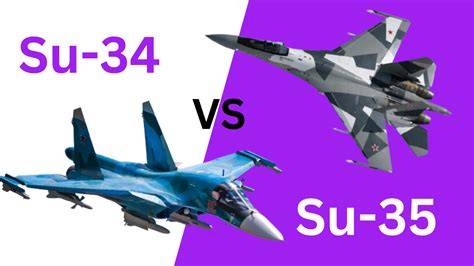
One of the strongest clues comes from what Russia is buying instead. The Russian Aerospace Forces have continued receiving substantial numbers of Su-30, Su-34, and Su-35 aircraft. These Flanker-family derivatives are based on an airframe architecture that originated during the Soviet period but has been repeatedly upgraded.
From 2020 through the end of 2025, estimates cited in the reference material suggest Russia received roughly 55 to 60 Su-35S fighters, around 48 to 50 Su-34 fighter-bombers, and a smaller number of Su-30 variants, compared with approximately 20 Su-57s.
That purchasing pattern is difficult to ignore. Russia clearly considers the Flanker family valuable enough to continue funding substantial production. The Su-35S remains an important air-superiority platform, while the Su-34 is particularly useful for long-range strike missions. Both aircraft can perform useful combat roles without requiring the technological and industrial ecosystem associated with a new fifth-generation aircraft.
The war in Ukraine has reinforced that logic. Russia has not achieved uncontested air superiority over Ukraine, meaning tactical aviation must operate in an environment characterized by long-range surface-to-air missiles, electronic warfare, dispersed forces, drones, and constant surveillance. In such an environment, the theoretical advantages of a sophisticated stealth fighter do not automatically translate into unrestricted freedom of action.
The Su-34 can launch weapons from considerable distances without necessarily entering the most dangerous parts of Ukrainian airspace. A Su-35 can provide air-defense and escort capabilities while using an established logistics and maintenance infrastructure. Russia therefore has practical reasons to keep producing aircraft that already have mature supply chains and operational experience.
The Su-57 Is Still An Immature Program
Another major explanation is that the Su-57 itself has not reached the level of maturity originally envisioned. One of the most important missing pieces has been the aircraft’s intended Izdeliye 30, also known as the AL-51F-1 engine.
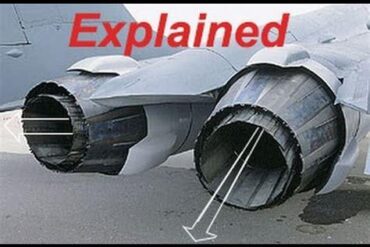
The Su-57 entered service using an interim engine configuration derived from the existing AL-41 family. That allowed the aircraft to become operational without waiting for the new powerplant, but it also meant that the production fighter did not immediately represent the final configuration originally envisioned for the program.
Engine development is notoriously difficult. A new high-performance turbofan must combine thrust, reliability, thermal management, fuel efficiency, durability, and manufacturing consistency. Introducing a new engine into a stealth fighter adds another layer of engineering complexity because the propulsion system affects infrared signatures, internal airflow, aircraft balance, maintenance, and performance.
This does not mean the Su-57 is incapable of combat. It means the aircraft has been entering service while the broader program is still evolving. Russia may therefore prefer a relatively conservative production rate while technologies mature.
That possibility remains speculative, but it offers a logical explanation for the gap between the aircraft’s strategic importance and the size of the fleet.
Sanctions Have Made The Su-57 Harder To Produce
Western sanctions create another significant problem. The Su-57 is considerably more dependent on sophisticated electronics and specialized industrial inputs than older Russian fighters. Restrictions on access to Western technology can therefore make production more complicated.
Modern fifth-generation fighters are not simply airframes with powerful engines. Their effectiveness depends heavily on processors, sensors, data links, electronic warfare equipment, software, radar technology, and precision manufacturing. Replacing restricted components with domestic alternatives is possible in some cases, but it can take years and may involve compromises in performance, availability, or production volume.
The Su-57’s low production rate may therefore partly reflect an industrial bottleneck rather than a complete lack of interest within the Russian military.
Russia also has competing demands for its defense industry. The war in Ukraine has created enormous requirements for ammunition, drones, missiles, armored vehicles, artillery systems, aircraft repairs, and replacement equipment. Resources directed toward maintaining a large fleet of mature aircraft may produce more immediate military value than accelerating production of a comparatively complex fighter.
India’s Withdrawal Was A Major Strategic Blow
Perhaps the clearest warning sign came from India. The two countries once envisioned the FGFA program as a major partnership that could have transformed the scale of the Su-57 project.
India ultimately concluded that the aircraft did not meet its requirements. Concerns reportedly included stealth, avionics, sensors, engines, and the extent of technology transfer and industrial participation available to Indian companies.
This is particularly significant because India has historically been willing to operate Russian-designed combat aircraft. The country has built a large fleet of Su-30MKIs, making its rejection of the Su-57 harder to dismiss as simple political hostility toward Russian defense products.
India’s decision also demonstrated that potential customers were evaluating the Su-57 on more than airshow performance or headline specifications. A modern fighter purchase is a decades-long commitment involving training, maintenance, weapons, upgrades, industrial partnerships, software support, and political relationships.
For India, those broader considerations ultimately outweighed the attraction of participating in the Russian fifth-generation program.
Why Export Sales Have Been So Difficult
The Su-57’s export record is another part of the puzzle. Algeria has reportedly ordered around 14 aircraft, but the international customer base remains extremely limited. A fighter intended to compete in the global fifth-generation market has therefore struggled to attract the type of international demand needed to create large production economies.
Western sanctions are an important factor. The Countering America’s Adversaries Through Sanctions Act, or CAATSA, has made purchases of major Russian defense equipment considerably more complicated for potential customers. Countries considering Russian fighters must evaluate not only the aircraft itself but also the possibility of diplomatic and financial consequences.
However, sanctions alone cannot explain everything. India’s withdrawal is evidence that technical and industrial considerations also matter.
Potential buyers increasingly want aircraft that connect them to broader ecosystems. The F-35, for example, is supported by a large international user community, shared training arrangements, common weapons, extensive maintenance infrastructure, and a multinational industrial network. Buying into such a system provides benefits extending well beyond the aircraft’s individual specifications.
The Su-57 does not yet have anything comparable.
Stealth Is Only One Part Of Fifth-Generation Warfare
The Su-57’s appearance often dominates public discussions. Its sharply angled surfaces, internal weapons bays, high-speed performance, and extraordinary maneuverability make it visually compelling. But fifth-generation combat capability is determined by far more than what an aircraft looks like or how dramatically it performs at an airshow.
Modern air combat increasingly revolves around situational awareness, sensor fusion, electronic warfare, data sharing, and network integration. A fighter can be exceptionally fast and maneuverable yet still struggle if its pilot receives an incomplete picture of the battlespace.
That distinction is crucial when evaluating the Su-57. Demonstrations of high-angle-of-attack maneuvers or other spectacular aerodynamic feats reveal something about the aircraft’s flight-control system, but they reveal almost nothing about how effectively its sensors identify targets, how rapidly its computers process information, or how seamlessly it shares that information with other platforms.
This is also why simple comparisons of maximum speed or purchase price can be misleading. A fighter is not purchased like a sports car. Governments are buying an entire military capability.
The Ukraine War Complicates The Su-57’s Role
The battlefield experience of Russia and Ukraine has also created an unusual environment for evaluating the Su-57. Russia has employed the aircraft cautiously, with reports indicating its use for missions involving long-range weapons and operations away from the most heavily defended airspace.
That makes practical sense. A fifth-generation fighter is expensive and difficult to replace. If long-range missiles can achieve a desired effect without exposing the aircraft unnecessarily, commanders have strong incentives to preserve the platform.
There have also been claims that Ukrainian attacks damaged Su-57 aircraft on the ground in separate incidents. Ukrainian sources have claimed several Felons were affected, although only one of the reported damaged aircraft had been visually and independently confirmed by Oryx according to the reference material.
Losses are especially important for a fleet this small. When a country operates hundreds of advanced fighters, losing one or two aircraft is painful but manageable. When the fleet numbers only a few dozen, every airframe represents a much larger percentage of the total capability.
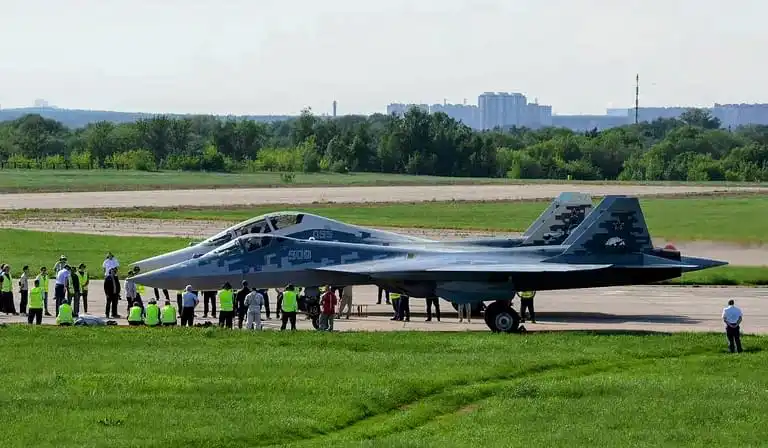
A Small Fleet Does Not Automatically Mean A Bad Fighter
It would be a mistake to conclude that the Su-57’s limited production proves the aircraft is a failure. Military procurement decisions are rarely that simple.
The F-22 provides an important example. The United States produced only 187 operational F-22s, far fewer than the eventual F-35 fleet. Yet nobody would seriously argue that the F-22 was unsuccessful simply because production ended early. Its procurement was shaped by the end of the Cold War, changing strategic priorities, high costs, and the decision to prevent foreign sales.
The difference is that the F-22 was not designed around a large international export strategy in the same way the Su-57 was. The Felon’s small customer base therefore tells us more about the difficulties surrounding the Russian program than it tells us about the aircraft’s aerodynamic or combat qualities.
The bigger issue is whether Russia can turn the Su-57 into a mature, scalable weapons system.
Russia’s Fifth-Generation Problem Is Bigger Than The Su-57
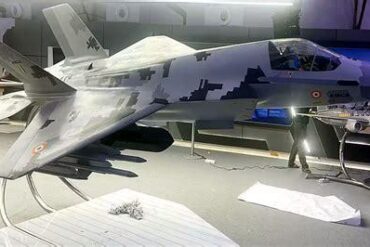
The Su-57’s difficulties also exist alongside the Su-75 Checkmate, Russia’s proposed single-engine fifth-generation fighter aimed primarily at export markets. The aircraft was presented as a potentially cheaper and more accessible alternative, but by 2026 it had not attracted the firm international demand that Moscow would need to establish a major production program.
That creates a strategic dilemma. Russia needs modern fighters to replace aging Soviet-era aircraft, but it also needs to maintain production of aircraft that can be delivered quickly and supported through existing industrial infrastructure.
The result is a two-speed fighter industry. Mature Flanker derivatives continue to perform the bulk of operational work, while the Su-57 remains a smaller, more technologically ambitious force.
For now, that may be rational. A limited number of highly capable aircraft can provide specialized capabilities without requiring Russia to transform its entire tactical aviation structure around them.
Why The Su-57 Fleet May Remain Small
Several factors ultimately converge on the same conclusion. Russia’s 76-aircraft order is small because the Su-57 remains expensive and technologically demanding, its production has faced sanctions-related difficulties, its intended engine and systems have continued evolving, and the Russian military has urgent requirements for mature aircraft already suited to current combat operations.
The export market has not solved the problem. India withdrew from the program, Western sanctions complicate potential purchases, and the international fighter market increasingly rewards aircraft supported by large alliances and industrial ecosystems.
Russia may eventually expand Su-57 procurement. A more mature engine, improved avionics, greater production efficiency, or changes in strategic requirements could all encourage Moscow to increase orders. But without a publicly announced expansion, the known numbers remain strikingly modest.
The Su-57 therefore occupies an unusual position in modern military aviation. It is supposed to represent Russia’s answer to the world’s leading fifth-generation fighters, yet it is being produced on a scale closer to a specialized capability than a mass fleet.
That does not make the Su-57 Felon irrelevant. Quite the opposite. Its small numbers make every aircraft strategically valuable. But the limited fleet exposes the difference between designing an advanced fighter and building an advanced fighter ecosystem.
Ultimately, the Su-57’s biggest challenge may not be whether it can match a Western fifth-generation aircraft in a particular performance category. The harder challenge is whether Russia can produce, sustain, upgrade, arm, and integrate the aircraft in sufficient numbers to make it the backbone of a modern air force.
For now, Russia appears to be betting on a mixed fleet in which the Su-57 provides specialized fifth-generation capabilities while the much larger Flanker family continues carrying much of the operational burden. That strategy may prove practical in the short term. But if Russia truly wants the Su-57 to stand alongside the F-35 and J-20 as the defining fighter of its generation, a fleet measured in dozens rather than hundreds will remain its most obvious strategic weakness.