The Airbus A350 cabin design is one of the aircraft’s most important innovations, even though it is rarely as visually dramatic as its swept wings, composite fuselage, or enormous Rolls-Royce Trent XWB engines. The difference becomes obvious only after passengers step through the aircraft door. Instead of relying on a single headline feature, Airbus built the A350 around a collection of carefully integrated cabin technologies and design choices intended to make long-haul travel feel quieter, more spacious, and less exhausting.
That approach begins with the aircraft’s fundamental geometry. Airbus did not simply take an existing widebody fuselage and install a new interior. The A350 was developed as a clean-sheet aircraft, originally known as the A350 XWB, with its extra-wide-body concept influencing the shape of the fuselage and the space available to passengers. This gave Airbus designers a much broader canvas for developing seating, aisles, galleys, lavatories, crew areas, overhead storage, and premium cabins.
The result is an aircraft in which the passenger experience is closely connected to the underlying engineering. Higher ceilings, sculpted sidewalls, large windows, spacious overhead bins, advanced air management, lower cabin noise, and carefully controlled lighting work together rather than functioning as isolated features. For passengers spending 10, 12, or even 18 hours aboard a long-haul aircraft, that integration can matter enormously.

The Airbus A350 Was Designed Around the Cabin
The A350 entered service as Airbus’ answer to a rapidly changing widebody market. Airlines wanted aircraft capable of flying long distances with substantially better economics, while passengers increasingly expected quieter cabins, better connectivity, improved seating, and a more comfortable environment.
Airbus responded with a composite-heavy aircraft featuring a lightweight fuselage, an advanced high-aspect-ratio wing, and efficient Rolls-Royce Trent XWB engines. Yet the significance of the aircraft’s structure extends beyond fuel consumption. The fuselage architecture provided Airbus with an opportunity to rethink how passengers occupy the available space.
The company’s Airspace cabin concept became the visual and functional expression of that philosophy. Rather than treating the interior as an afterthought, Airbus created a cabin architecture that could be adapted by individual airlines while maintaining a recognizable sense of openness. The approach also allowed carriers to create very different products on the same aircraft.
An A350 operated by a premium-focused flag carrier can therefore feel dramatically different from a high-density leisure configuration. One airline may devote substantial space to business-class suites and first-class accommodation, while another can prioritize economy seating and additional capacity. The underlying aircraft remains the same, but the cabin becomes a flexible platform.
This flexibility is particularly valuable because modern airlines increasingly compete through the passenger experience. Cabin design has become part of an airline’s brand, not simply a matter of fitting the maximum number of seats into a fuselage.
A Wider Cabin Creates More Design Freedom
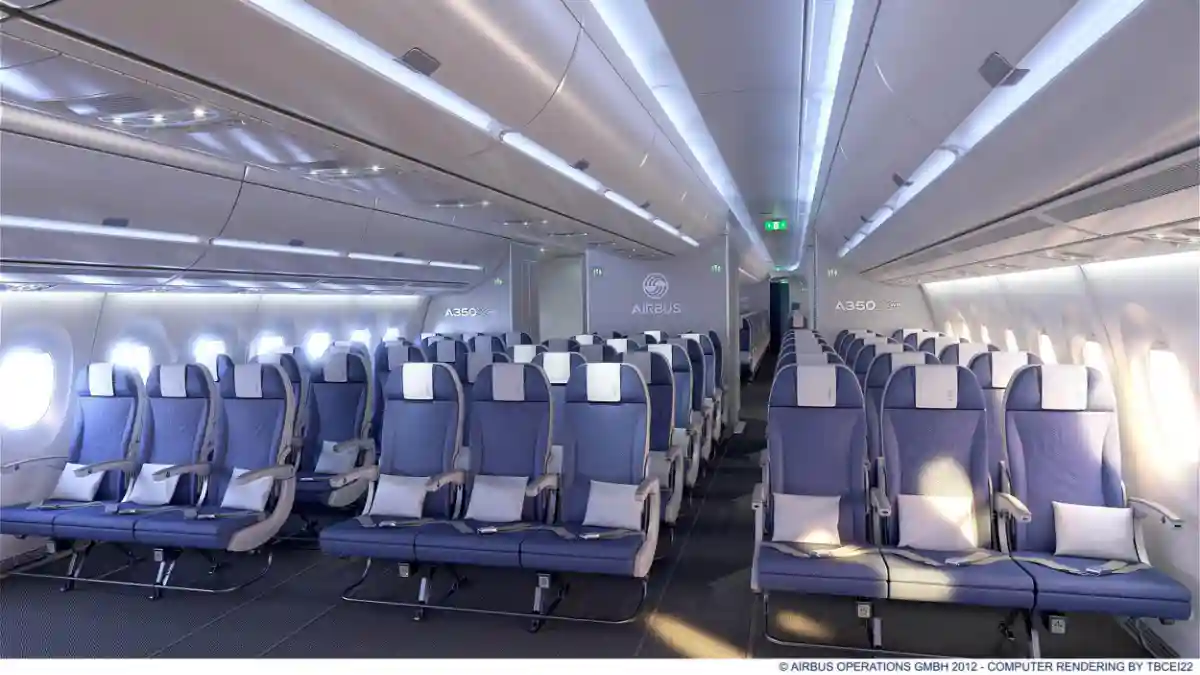
One of the A350’s most important characteristics is its wide, oval-shaped fuselage cross-section. The aircraft was conceived around the extra-wide-body principle, giving designers useful space between the sidewalls and creating opportunities to improve the passenger environment.
That additional width does not automatically mean every passenger receives a dramatically wider seat. Airlines determine seat width, pitch, aisle dimensions, and cabin density according to their commercial strategies. Instead, the A350’s advantage is the amount of flexibility available to interior designers.
The available space can be distributed in different ways. Airlines can install wider seats, create broader aisles, provide larger armrests, increase personal space around premium seats, or use the additional room to accommodate other cabin features. This makes the aircraft particularly attractive for carriers that want to create differentiated premium products.
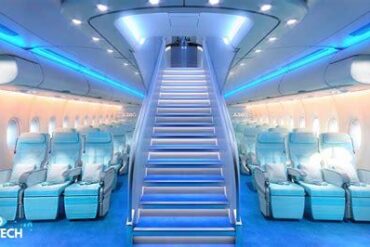
The effect is also noticeable visually. Curved sidewalls and a carefully shaped ceiling help prevent the cabin from feeling like a narrow tube. Passengers often perceive the interior as more open because the walls transition smoothly toward the ceiling rather than producing the hard, enclosed feeling associated with some older widebody designs.
Large Windows Change the Passenger Experience
The Airbus A350’s large passenger windows are another defining part of its cabin identity. Natural light can have a surprisingly strong effect on how passengers perceive an aircraft interior, especially during long daytime flights.
Larger windows allow more daylight into the cabin and provide passengers with a stronger connection to the outside environment. That is particularly useful during long-haul flights, when a completely enclosed cabin can begin to feel detached from the changing conditions outside.
The A350 also uses electronically controlled window shades rather than conventional pull-down shades. This allows cabin crew and automated systems to manage the level of light more gradually. Instead of simply switching between a fully open and fully closed window, passengers can experience different levels of darkness depending on the phase of the flight.
That capability becomes especially valuable when airlines operate overnight services across multiple time zones. Lighting and window management can be coordinated to encourage passengers to rest or remain awake, supporting the broader goal of reducing the discomfort associated with long-distance travel.
A Quieter Airbus A350 Cabin
Noise is one of the least visible but most important components of aircraft comfort. A passenger may not consciously identify a quieter cabin as a technological achievement, but the difference can become obvious after several hours.
The A350 was designed with a strong emphasis on reducing cabin noise. Its modern engines, composite structure, aerodynamic design, and cabin systems all contribute to a comparatively quiet passenger environment. The result is especially useful in premium cabins, where airlines are selling sleep, privacy, and relaxation rather than simply transportation.
A quieter cabin can make conversations easier, improve the perceived quality of an entertainment system, and make sleeping less difficult. On ultra-long-haul flights, these seemingly small improvements become much more significant because passengers are exposed to the environment for extended periods.
The quietness also complements the aircraft’s visual design. A spacious cabin that is simultaneously bright and quiet feels substantially different from an older-generation widebody, even when passengers cannot identify every engineering feature responsible for the difference.
Cabin Pressure and Humidity Matter on Long Flights
The A350’s cabin environment goes beyond seats and storage. Airbus incorporated advanced systems intended to create a more comfortable atmosphere during long flights, including improved humidity management and a lower effective cabin altitude than many older aircraft.
Conventional aircraft cabins are pressurized to an altitude considerably above sea level because maintaining sea-level pressure throughout the entire flight would add structural weight. The A350’s design allows Airbus to operate with a lower cabin altitude, helping create a cabin environment that can feel less dry and less physically demanding during long sectors.
Higher humidity is another important element. Aircraft cabins naturally tend to be dry, which can contribute to discomfort during extended flights. A more carefully managed environment can make the cabin feel less harsh, particularly on overnight journeys.
These features do not eliminate jet lag, and they cannot turn an intercontinental flight into a spa treatment. However, they form part of a broader philosophy: if passengers are going to spend half a day or more inside the aircraft, the cabin should impose as little unnecessary discomfort as possible.
The A350 Is Built for Premium Cabins
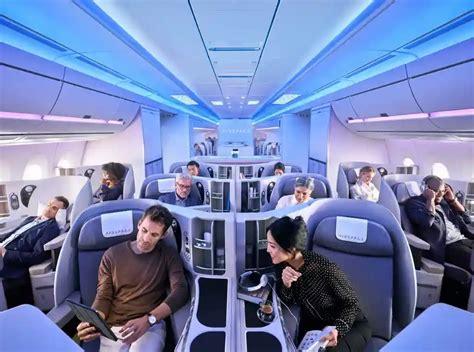
The A350’s geometry has also made it particularly attractive to airlines developing premium business-class and first-class cabins. The available width provides designers with more freedom to create layouts that would be difficult to accommodate efficiently in a narrower fuselage.
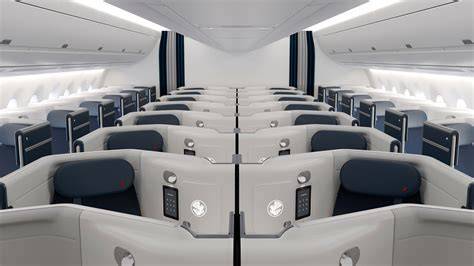
A 1-2-1 business-class arrangement is especially well suited to the aircraft. Every passenger can receive direct aisle access while the airline retains sufficient space for generous seats, storage areas, side consoles, and longer fully flat beds.
Modern airlines have pushed this concept considerably further. Door-equipped business-class suites, larger personal storage areas, privacy partitions, and individualized lighting have become increasingly common. The A350 provides a strong structural foundation for these products.
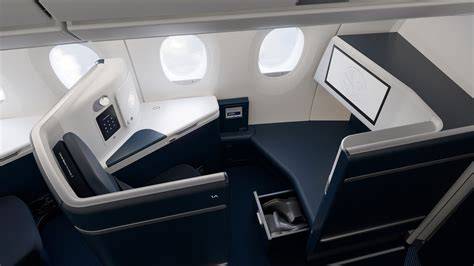
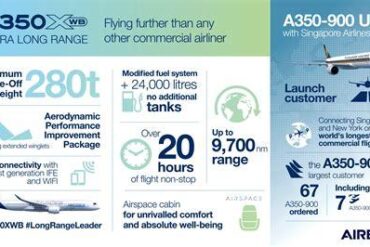
Ultra-long-haul operations demonstrate the concept even more clearly. Qantas’ Project Sunrise uses specially configured Airbus A350 aircraft to support flights lasting well beyond the duration of conventional long-haul services. The airline’s approach includes highly differentiated premium cabins and dedicated passenger wellbeing features.
SWISS has similarly used the A350 platform for its SWISS Senses cabin concept, demonstrating how a common aircraft platform can support a highly distinctive premium product. These configurations illustrate an important point: Airbus supplies the cabin architecture, but airlines can turn that architecture into a commercial experience of their own.
Overhead Bins Make the Cabin Feel Larger
Storage is another area where the A350’s cabin design makes a practical difference. The aircraft features large pivoting overhead bins designed to accommodate substantial quantities of carry-on luggage.
Large bins are useful for obvious reasons, but their psychological impact is also important. When passengers can store their bags above their seats rather than leaving luggage beneath seats or competing for limited overhead space, the cabin floor remains less cluttered.
The bins also contribute to the sense of openness. Their shape allows them to sit efficiently above the passenger area while maintaining useful headroom around the aisle. For passengers boarding with modern roller bags, this can be far more noticeable than an abstract specification about fuselage dimensions.
Flexible Lighting Is Part of the Design
The A350’s cabin lighting system is another feature designed around the realities of long-haul travel. Airlines can use different lighting scenes to create distinct moods during boarding, meal services, nighttime periods, and the approach to a destination.
The technology allows airlines to move away from the traditional concept of a cabin that is simply bright or dark. Dynamic LED lighting can support the rhythm of a long-haul flight, creating warmer and softer environments when passengers are expected to sleep and brighter conditions when it is time to wake up.
This becomes particularly useful when an aircraft crosses several time zones. The objective is not merely aesthetic. Properly timed lighting can help passengers adjust their perception of day and night while reducing the harsh transition between different stages of an ultra-long journey.
The New Production Standard Expands the Concept
Airbus has continued refining the A350 rather than treating the original cabin design as a finished product. The New Production Standard introduces further improvements to the aircraft, including changes that provide additional usable cabin space and improve overall aircraft performance.
The updated approach gives airlines more flexibility in arranging galleys, crew-rest areas, passenger seating, and other interior components. Even relatively small increases in usable cabin dimensions can have significant commercial value when multiplied across hundreds of seats.
This is particularly important because airlines do not all want the same aircraft interior. A carrier operating a dense regional configuration may use additional space to improve capacity, while a premium-focused airline may devote it to larger seats, suites, lounges, or service areas.
The A350 therefore continues to evolve without abandoning its original cabin philosophy.
Airlines Turn the Cabin Into a Brand
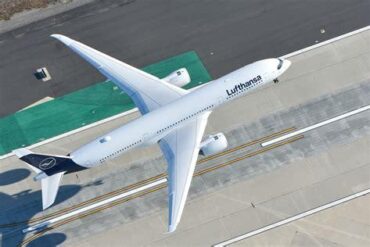
The A350 is now operated by a broad range of airlines, including Singapore Airlines, Qatar Airways, Cathay Pacific, Air France, Delta Air Lines, Lufthansa, Turkish Airlines, Iberia, Finnair, and Ethiopian Airlines. Each carrier can configure the aircraft according to its network, passenger demographics, and brand identity.
That diversity demonstrates one of the A350’s strongest commercial qualities. Airbus provides a sophisticated foundation, but airlines determine what passengers ultimately experience.
For a premium flag carrier, the aircraft can become a showcase for enclosed suites and sophisticated business-class products. For another operator, the same platform can emphasize efficient economy seating, large overhead bins, reliable connectivity, and a spacious visual environment.
This adaptability also helps explain why the A350 has become a core long-haul aircraft rather than a niche product. Airlines can use one family across different routes while adapting cabin density and service levels to individual markets.
Why the Airbus A350 Cabin Stands Apart
The most distinctive aspect of the Airbus A350 cabin design is that no single feature is responsible for its reputation. Its strength comes from the way multiple elements reinforce one another.
The wide fuselage creates design freedom. The sculpted sidewalls make the cabin appear more open. Large windows increase natural light. Large overhead bins improve practical storage. Lower cabin noise creates a calmer environment. Advanced air management addresses the physical conditions inside the cabin, while dynamic lighting helps airlines manage the psychological rhythm of long-distance travel.
That combination creates a cabin that feels modern without depending entirely on flashy technology.
The aircraft’s composite construction and efficient engines are obviously central to its success, but passengers experience the A350 primarily through the cabin. For travelers, fuel efficiency is invisible; the seat, air, light, noise, space, and storage are not.
The Future of A350 Cabin Design
The A350’s cabin architecture is likely to become even more important as airlines continue developing longer routes and increasingly sophisticated premium products. The aircraft already provides a platform for ultra-long-haul operations, high-end business suites, premium-economy cabins, and differentiated first-class concepts.
The arrival of the A350-1000, the ultra-long-range configurations used for specialized missions, and the forthcoming A350F freighter further extend the family’s reach. At the same time, retrofit programs allow airlines to update existing aircraft rather than replacing them simply to obtain a newer passenger experience.
This creates an interesting dynamic. The A350 is not just an aircraft that airlines purchase; it is a long-term cabin platform that can evolve with changing passenger expectations.
As airlines compete more aggressively over premium travelers and long-haul comfort, that flexibility becomes increasingly valuable. A cabin that can accommodate new seating concepts, improved connectivity, evolving lighting systems, and changing service models has a longer commercial life.
The Bottom Line
The Airbus A350’s unique cabin design succeeds because Airbus approached passenger comfort as an architectural problem rather than a collection of cosmetic upgrades. The aircraft’s wide fuselage, high ceiling, sculpted walls, large windows, generous storage, quiet environment, controlled humidity, lower effective cabin altitude, and adaptable lighting all contribute to the experience.
Airlines then build upon that foundation with their own seats, suites, entertainment systems, connectivity, service concepts, and cabin layouts. That is why two A350s can feel completely different while still sharing the same underlying philosophy.
For passengers, the payoff is a cabin that can feel calmer, brighter, quieter, and more spacious during the most demanding part of air travel: the long flight itself. For airlines, the benefit is an adaptable platform capable of supporting everything from dense economy operations to some of the world’s most sophisticated ultra-long-haul premium cabins.
That combination is ultimately what sets the A350 apart. Its cabin was not designed merely to fit passengers inside an efficient aircraft. The aircraft itself was designed to give cabin designers more freedom to decide how passengers should experience the journey.