The Boeing 757 remains a marvel of aviation engineering, even decades after its production ceased. Designed during a transformative era for commercial aviation, this narrow-body twinjet is renowned not just for its transcontinental range or operational versatility, but for its exceptional short-field performance — a characteristic that has made it indispensable for airlines operating in constrained environments. The reasons behind this capability are rooted in aerodynamic efficiency, engine power, and structural ingenuity.
The Boeing 757: An Engineering Evolution From the 727
In the late 1970s, Boeing was faced with the challenge of replacing the aging tri-engine 727. The result was the 757 — a jet that would incorporate the latest aerodynamics, fuel-efficient high-bypass turbofan engines, and modern avionics. Its design was conceived alongside the wide-body 767, allowing Boeing to share components, including a common two-crew glass cockpit. Despite being a narrow-body aircraft, the 757 inherited performance DNA that made it far more powerful than most aircraft of its size.

The 757-200, the most widely used variant, had a range of nearly 3,900 nautical miles and could comfortably seat 200 passengers. Its performance parameters placed it in a unique niche — one where it could serve both short, high-demand routes and long, transatlantic journeys. But its real superpower? The ability to take off from short runways and still deliver intercontinental performance.
Powerhouse Under the Wings: Engine Thrust and Efficiency
The 757 was equipped with two of the most powerful engines ever mounted on a narrow-body jet: either the Rolls-Royce RB211-535C or the Pratt & Whitney PW2000. Both options provided extraordinary thrust for the aircraft’s size, creating a high thrust-to-weight ratio — a key metric for short-field capability.
- The RB211-535E4, the most common engine type on the 757, could deliver up to 43,100 pounds of thrust per engine.
- This allowed the aircraft to reach rotation speeds quickly and climb rapidly, even from shorter or obstacle-laden runways.
This abundance of thrust had another advantage: reduced engine wear. Airlines could operate the engines well below maximum output during standard flights, extending lifespan and minimizing maintenance, while retaining the ability to surge power when needed — especially during high-altitude, high-temperature takeoffs or operations from challenging airfields.
Short-Field Performance: More Than Just Engines
While engine thrust is a critical factor, the 757’s aerodynamic design is equally responsible for its runway agility. Boeing incorporated a supercritical wing — a flattened upper surface and a cambered lower profile — which delayed shockwave formation at transonic speeds, but also generated more lift at lower speeds.
This enabled the aircraft to become airborne at lower takeoff speeds, reducing the takeoff roll required. When combined with multi-slotted flaps and full-span leading-edge slats, the wing could generate substantial lift even at lower angles of attack, ideal for short-field departure profiles.
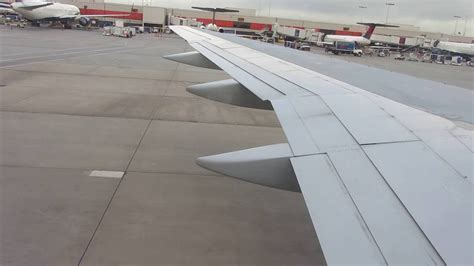
The aircraft’s landing performance also impressed. Advanced autobrake systems, thrust reversers, and robust landing gear allowed the 757 to touch down and stop within tighter parameters than comparable jets, especially on wet or icy runways.
Performance Data: What the Numbers Say
The Boeing 757’s numbers reveal just how specialized the aircraft is:
- Takeoff Distance:
- Boeing 757-200: 6,800 feet
- Boeing 757-300: 8,550 feet
- Boeing 757F: 6,900 feet
- Landing Distance:
- Boeing 757-200 (MLW): Just over 5,000 feet, depending on configuration and conditions
These figures are even more impressive when considering that the 757-200’s MTOW exceeds 255,000 pounds, yet it can outperform many smaller aircraft on the same runway.
Operational Scenarios: Why Short-Field Capability Matters
The benefits of this performance go beyond just engineering showmanship — it’s about real-world utility. Airlines like Delta Air Lines, American Airlines, and United have long relied on the 757 to operate from short, slot-constrained, or high-altitude airports such as:
- LaGuardia (LGA) – A notoriously short runway for its heavy traffic.
- Ronald Reagan Washington National (DCA) – Requires steep climbs over the Potomac.
- Denver International (DEN) – High elevation, low air density.
- Bermuda and Caribbean island airports – Often have limited runway length.

At such airports, even wide-body jets struggle, but the 757 thrives, becoming the workhorse aircraft in tight operational scenarios. The combination of raw thrust, aerodynamic lift, and rugged landing gear makes the 757 uniquely fit to handle such demanding conditions.
Why the 757 Is Still Flying Decades Later
Despite its last delivery in 2005, the Boeing 757 continues to serve extensively today — especially in the United States and Europe. Airlines find it irreplaceable due to its unmatched versatility. As of 2025, over 500 aircraft remain in active service, particularly with:
- Delta Air Lines – The largest operator of the type
- United Airlines – Keeps the 757 on premium transcontinental routes
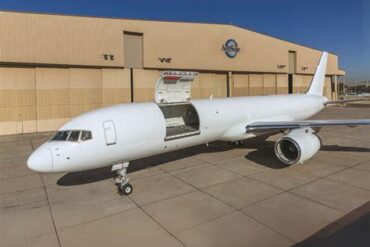
- FedEx Express and UPS – Rely on the freighter variant for rapid cargo deployment
Even attempts to replace it with aircraft like the Airbus A321XLR or Boeing 737 MAX 10 have fallen short when it comes to thrust performance, climb rates, and takeoff runway flexibility.

The Future: A Legend With No Clear Replacement
Boeing’s reluctance to build a direct replacement for the 757 has created a vacuum. There is no true successor that matches its range-payload capability combined with short-field performance. While Boeing hints at future middle-of-the-market aircraft, airlines today are reluctantly refurbishing their 757s, retrofitting avionics, cabin interiors, and even winglets to keep them viable well into the 2030s.
With global demand for high-thrust, short-field aircraft rising — particularly in regions with aging infrastructure or challenging terrain — the Boeing 757’s role only becomes more critical. It’s not just a legacy aircraft; it’s a benchmark that no manufacturer has yet matched.
Conclusion: Why the 757 Still Wows Pilots and Airlines
The Boeing 757 isn’t admired solely for nostalgic reasons. Its design genius, engine configuration, and short-field dominance are what continue to define its relevance. With takeoff distances rivaling smaller regional jets and climb performance that impresses even experienced captains, the 757 is, quite literally, overpowered by design — and that’s exactly what makes it a short-field superstar.
In a market flooded with compromise aircraft, the 757 stands apart: purpose-built, performance-first, and enduringly powerful. Unless Boeing or Airbus develops a clean-sheet design to meet or exceed its capabilities, the 757 will remain a fixture of short-field excellence in global aviation.