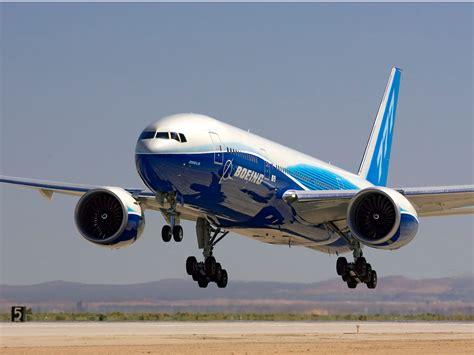
The Boeing 777 did not simply enter commercial aviation; it rearranged the map. When airlines talk about globalization in practical terms—routes opened, hubs reinforced, markets connected—the 777 is often the quiet constant in the background. Its massive global presence is not an accident of marketing or luck. It is the product of a precise alignment between technology, timing, and airline economics, executed with rare discipline. The aircraft arrived just as airlines were rethinking how to fly far, full, and profitably, and it delivered exactly what the moment demanded.
At its core, the 777 solved a problem that had frustrated airlines for decades: how to move large numbers of passengers across oceans without the cost and complexity of four engines. Long-haul travel was historically dominated by aircraft like the Boeing 747 and Airbus A340, magnificent machines that were also expensive to operate. The 777 challenged that orthodoxy by proving that two engines could safely and efficiently handle missions once reserved for four, changing fleet planning assumptions across the industry.
What followed was not a short-lived success story but a structural shift. Airlines redesigned networks around the 777, passengers grew accustomed to its cabins, and regulators adapted to its capabilities. The result was an aircraft that became not just popular, but foundational. Understanding why the Boeing 777 achieved such a massive global presence requires looking beyond headline specifications and into how it quietly rewired the economics of long-haul aviation.
A Clean-Sheet Design Built for the Long Haul
The Boeing 777 was conceived during a period of unusual clarity at Boeing. By the late 1980s, the company understood that the future of long-haul aviation would be shaped less by prestige and more by operational efficiency. Airlines wanted range without excess weight, capacity without four-engine fuel bills, and reliability that could support increasingly tight schedules. The 777 was designed from the outset to meet those goals, rather than adapted from an existing platform.
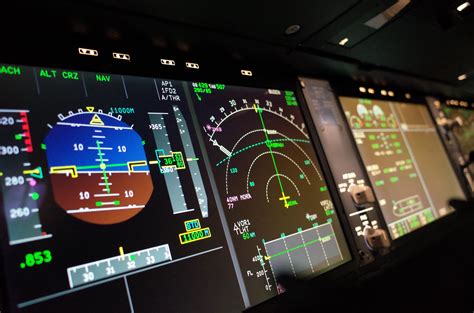
It became the first commercial aircraft designed entirely using digital three-dimensional computer-aided design. This was not a cosmetic innovation. Digital design allowed Boeing to achieve unprecedented structural precision, reducing assembly errors and improving long-term durability. Airlines were invited into the development process in a way that was almost radical for its time, influencing cockpit ergonomics, maintenance access, and cabin flexibility. The aircraft that emerged felt less like a manufacturer’s vision and more like a collective solution to airline pain points.
The 777’s size also mattered. It sat perfectly between the 767 and the 747, offering enough capacity to replace older widebodies while avoiding the operational risk of oversupplying seats. This balance made it immediately attractive to airlines operating both dense trunk routes and thinner intercontinental services. The aircraft did not force airlines to change their business models; it adapted to them.
Twin Engines That Changed the Rules
The defining technical achievement of the Boeing 777 was not its fuselage or its wings, but its engines. Powered by some of the most powerful turbofans ever built, including the GE90, the 777 demonstrated that twin-engine aircraft could deliver thrust, reliability, and endurance at a scale previously considered impractical. This directly enabled extended-range twin-engine operational performance standards, better known as ETOPS, to expand dramatically.
As ETOPS limits increased, airlines gained the freedom to fly direct routes across oceans and remote regions with confidence. The 777 was not merely compliant with these standards; it helped justify their expansion. This regulatory and technical alignment unlocked nonstop routes that had never been economically viable before, connecting cities without requiring intermediate hubs. The global route map quietly redrew itself around what the 777 could do.
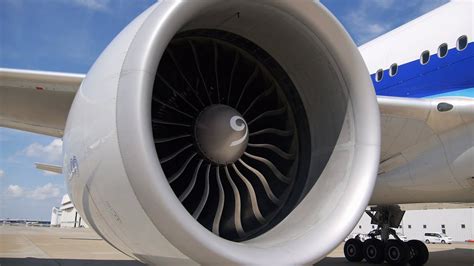
For airlines, the implications were enormous. Fewer engines meant lower fuel burn, reduced maintenance costs, and simplified spare parts inventories. Dispatch reliability improved, and so did scheduling flexibility. Over time, the 777 earned a reputation for exceptional dependability, reinforcing airline confidence and encouraging further adoption. Once a carrier committed to the type, expanding the fleet became a logical next step rather than a risky decision.
Timing That Aligned With Airline Strategy
The 777’s introduction in the mid-1990s coincided with a pivotal shift in airline strategy. Deregulation in many markets had intensified competition, forcing carriers to focus relentlessly on unit costs and network efficiency. At the same time, globalization was accelerating demand for long-haul travel, particularly between emerging markets and established economic centers. Airlines needed an aircraft that could scale with that demand without exposing them to financial volatility.
The 777 arrived as a perfectly timed answer. It offered long range without the financial burden of very large aircraft, allowing airlines to experiment with new routes while maintaining profitability. This flexibility was especially valuable for carriers in Asia and the Middle East, regions where rapid growth and geographic distance made long-haul efficiency a strategic priority. The aircraft became a tool for expansion rather than a constraint.
As hub-and-spoke networks matured, the 777 proved equally effective at reinforcing major hubs. High-capacity variants could absorb growing demand on flagship routes, while extended-range models enabled thinner but strategically important city pairs. Few aircraft have been as adaptable to evolving airline strategies, and that adaptability directly translated into global presence.
A Family That Covered Every Major Mission
One of the most underestimated drivers of the 777’s dominance is the breadth of its family. Boeing did not treat the 777 as a single aircraft but as a platform that could evolve alongside market needs. Early variants established the baseline, but it was the introduction of extended-range and stretched models that cemented the type’s ubiquity.
The 777-300ER became the standout success, combining high passenger capacity with intercontinental range. It allowed airlines to replace older four-engine jets on premium routes while offering superior economics. Its popularity was such that it effectively defined the long-haul widebody segment for more than a decade. Meanwhile, the 777 Freighter carved out an equally important role in global logistics, moving high-value cargo across continents with unmatched efficiency.
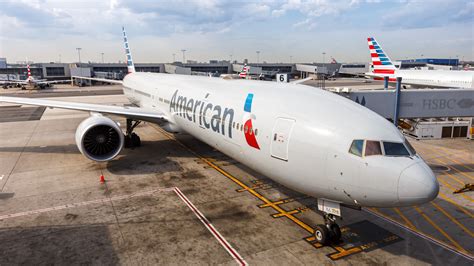
This family approach reduced risk for airlines. Once crews, maintenance teams, and infrastructure were in place, adding new variants became relatively straightforward. Training commonality and operational familiarity created powerful incentives to stick with the platform. Over time, this network effect reinforced itself, making the 777 not just a choice, but the default option for many long-haul requirements.
Reliability as a Strategic Asset
Aircraft specifications attract attention, but reliability builds empires. The Boeing 777 accumulated millions of flight hours while maintaining an exceptional safety record, and that consistency mattered deeply to airlines operating complex global networks. Delays and cancellations are expensive not only in direct costs but in brand reputation, and the 777 proved remarkably resilient under intense utilization.
This reliability extended beyond mechanical performance. The aircraft’s systems architecture simplified troubleshooting, and its maintenance intervals aligned well with long-haul scheduling realities. For airlines operating 24-hour global networks, this predictability was invaluable. Over time, the 777 became known as an aircraft that simply did its job, day after day, across climates, continents, and operational contexts.
Passengers benefited as well. The 777’s wide cabin allowed airlines to design interiors that balanced density and comfort, supporting everything from high-end premium products to high-capacity configurations. This versatility helped airlines maintain consistent passenger experiences across fleets, reinforcing the aircraft’s role as a long-term backbone rather than a transitional type.
Outlasting and Outmaneuvering Its Rivals
Competition in the widebody market has been fierce, yet the 777 consistently held its ground. Aircraft like the Airbus A340 struggled under the weight of four-engine inefficiency, while smaller twins lacked the capacity to fully replace large long-haul jets. Even as newer competitors emerged, the 777’s combination of range, capacity, and proven economics kept it relevant.
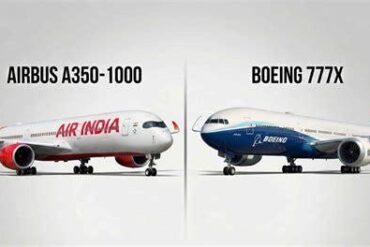
The arrival of the Airbus A350 introduced a technologically advanced rival, but by then the 777’s installed base was immense. Airlines with large 777 fleets faced high switching costs, both operationally and strategically. In many cases, incremental improvements and future variants were more attractive than wholesale fleet changes. This inertia was not accidental; it was the result of decades of consistent performance.
Boeing capitalized on this position by evolving the platform rather than abandoning it. The 777X represents a continuation of that philosophy, blending new materials, advanced aerodynamics, and next-generation engines with the familiar logic that made the original successful. It is a reminder that global presence is maintained not through disruption alone, but through careful continuity.
The Invisible Role in Global Connectivity
Perhaps the most remarkable aspect of the Boeing 777’s global presence is how often it goes unnoticed. It operates quietly on some of the world’s most important routes, carrying millions of passengers who rarely think about the aircraft itself. Yet modern global connectivity—from international business travel to long-distance tourism—would look very different without it.

The 777 enabled airlines to connect cities directly, reducing travel times and reshaping economic relationships. It supported the rise of global hubs while also empowering point-to-point travel. In doing so, it became a physical expression of globalization, a machine optimized not just for flight, but for connection.
Its massive global presence is therefore not measured only in delivery numbers or flight hours, but in influence. The Boeing 777 changed how airlines think about distance, risk, and scale. It proved that efficiency and ambition could coexist in a single airframe, and that lesson continues to shape aviation today.