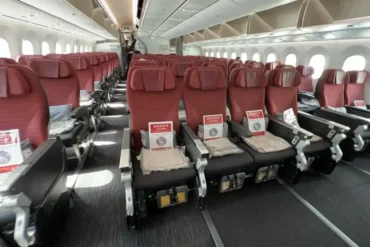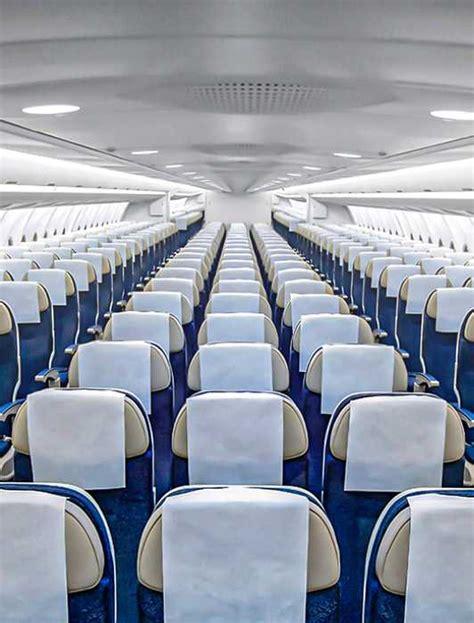
Premium Economy is no longer a marketing afterthought wedged awkwardly between economy and business class. In 2026, it has matured into one of the most strategically important cabins in commercial aviation. Airlines now treat it as a revenue engine and a loyalty builder, particularly on long-haul routes where travelers crave comfort but hesitate at business-class pricing. At the center of this evolution lies one measurement that quietly determines whether a flight feels survivable or serene: seat pitch.
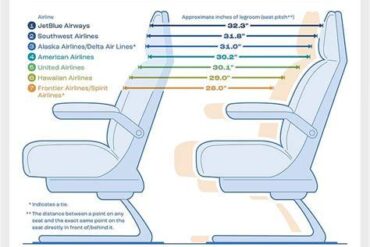
Seat pitch, measured in inches, represents the distance between a point on one seat and the same point on the seat in front. While it does not tell the entire story of comfort, it remains the clearest indicator of legroom. On flights exceeding eight hours, a difference of even two inches can dramatically affect circulation, joint flexibility, and overall fatigue. In a world where ultra-long-haul flights routinely stretch past twelve hours, legroom is no longer a luxury detail. It is a physiological advantage.
Not all Premium Economy cabins are created equal. Some airlines offer only modest improvements over standard economy, adding a few inches and upgraded meals while leaving the fundamental geometry unchanged. Others, however, have engineered cabins that meaningfully transform the long-haul experience. The following five airlines stand out in 2026 for delivering the world’s longest Premium Economy legroom, combining generous seat pitch with thoughtful cabin design that turns raw space into genuine comfort.
Cathay Pacific Premium Economy: Intelligent Design With 40 Inches of Space
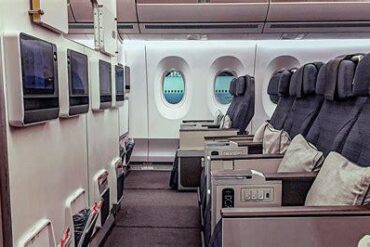
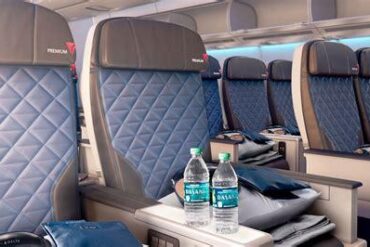
Cathay Pacific approaches Premium Economy with a philosophy rooted in balance rather than spectacle. On its Airbus A350 fleet, seat pitch averages around 40 inches, a clear step above standard economy configurations that often hover in the low 30s. The difference becomes tangible the moment a passenger settles into the seat. Knees no longer hover anxiously near the seatback ahead, and stretching forward feels natural rather than constrained.
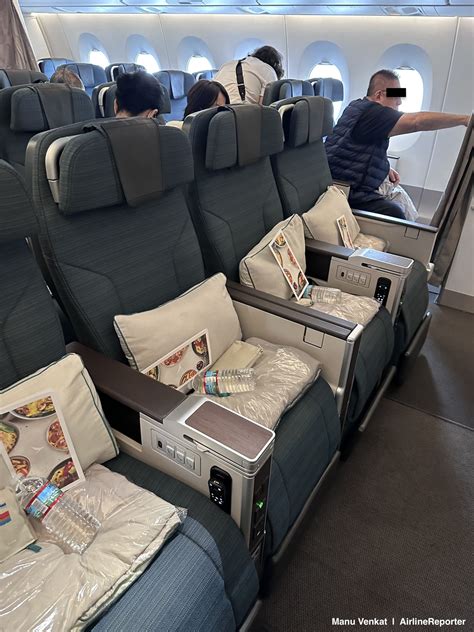
What makes Cathay distinctive is not merely the measurement, but how the airline uses it. The cabin is arranged in a dedicated zone that feels separated and calmer than the main economy cabin. Fixed armrests prevent encroachment from neighboring passengers, while sculpted seat cushions promote upright posture. Adjustable calf rests and footrests transform the additional pitch into usable support, reducing pressure on the lower legs during long periods of sitting.
Large high-definition personal screens, often exceeding 15 inches, reinforce the perception of spaciousness. The tray table design feels sturdy and practical rather than cramped, and the overall layout maintains clean visual lines that reduce the psychological sense of density. Space, after all, is as much about perception as geometry.
Cathay Pacific may not hold the absolute numerical crown for legroom, but its Premium Economy cabin consistently ranks among the most comfortable in 2026 because it blends 40-inch seat pitch, ergonomic engineering, and refined service. Priority boarding, upgraded meal presentation, and generous baggage allowances complete a product that feels intentionally designed rather than incrementally upgraded.
Air New Zealand Premium Economy: Built for Ultra-Long-Haul Survival
Air New Zealand operates some of the longest commercial routes on the planet, connecting Auckland with North America and Europe across vast expanses of ocean. Designing a cabin for these missions requires a different mindset. Short-haul comfort metrics simply do not apply when passengers remain seated for twelve to sixteen hours. The airline’s Premium Economy seat pitch of approximately 41 inches reflects that reality.
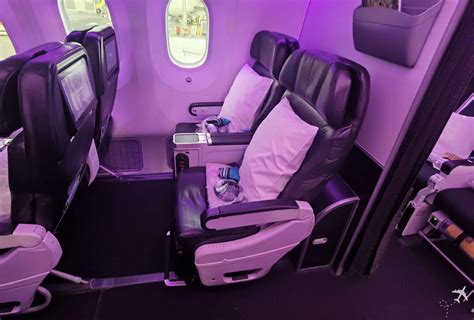
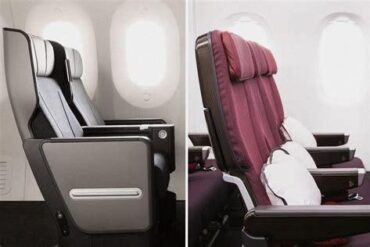
Those extra inches translate into practical endurance. The fixed-shell seat design allows passengers to recline without dramatically invading the space behind them. This preserves legroom integrity throughout the flight, ensuring that one traveler’s comfort does not erode another’s. On ultra-long-haul sectors, that structural stability becomes crucial.
The leg rest and foot platform are carefully positioned to distribute body weight evenly, supporting the thighs and calves rather than concentrating pressure in the lower back. Over time, this reduces stiffness and helps maintain circulation. The result is a seat engineered not for momentary luxury, but for sustained comfort across intercontinental distances.
In 2026, Air New Zealand’s Premium Economy remains particularly popular among travelers crossing the Pacific. With 41 inches of seat pitch, the cabin allows meaningful movement and posture adjustments that mitigate fatigue. For journeys that stretch close to a full waking day, that added space feels less like a perk and more like essential equipment.
EVA Air Premium Economy: 42 Inches of Legroom and Industry-Leading Service
EVA Air occupies a unique place in aviation history. In 1992, it introduced what many consider the first true Premium Economy product, then branded as Evergreen Deluxe Class. Decades later, the airline continues to refine the concept. On its Boeing 787-9 fleet, EVA Air offers approximately 42 inches of seat pitch, placing it among the global leaders in legroom.
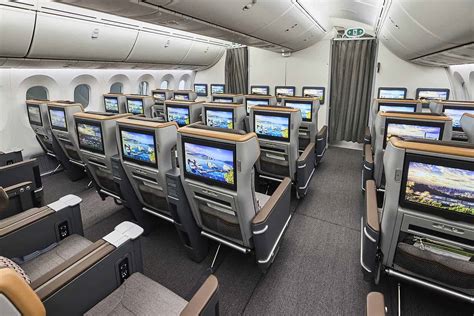
The immediate sensation is freedom. Legs can extend without grazing the seat in front, and shifting positions feels effortless rather than awkward. For taller travelers, this difference is profound. Flights between Asia, North America, and Europe often exceed ten hours, and EVA’s cabin geometry acknowledges that reality.
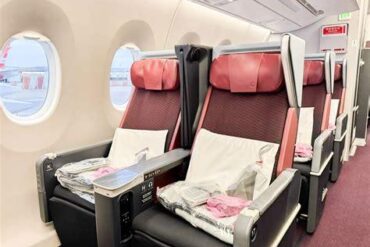
Yet EVA Air does not rely on dimensions alone. Privacy wings around the headrest subtly shield passengers from adjacent movement, enhancing the sense of personal space. Wide armrests and substantial calf supports reinforce the structural solidity of the seat. Large entertainment screens and intuitive controls contribute to a cabin environment that feels thoughtfully cohesive.
Dining in EVA’s Premium Economy further elevates the experience. Meals arrive on upgraded tableware with enhanced presentation, and cabin crew deliver attentive, polished service that often rivals older-generation business class. The combination of 42-inch legroom, refined ergonomics, and consistently high service standards explains why frequent flyers regularly rank EVA Air as the most well-rounded Premium Economy product in 2026.
Japan Airlines Premium Economy: Precision Engineering Meets 42 Inches of Space
Japan Airlines approaches cabin design with characteristic restraint and precision. Its Premium Economy seat pitch averages around 42 inches on many long-haul aircraft, placing it squarely among the most spacious offerings worldwide. Yet what distinguishes JAL is how it integrates that space into a disciplined, harmonious cabin layout.
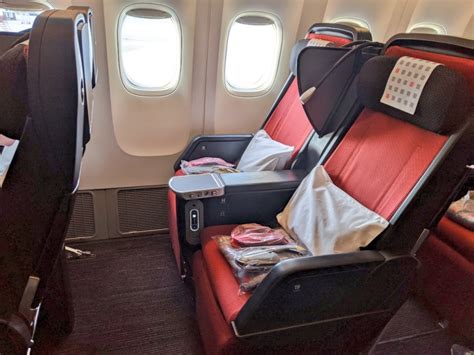
Rather than relying on aggressive recline angles, JAL employs flexible seatback technology that supports natural spinal alignment. The additional pitch becomes usable rather than theoretical. Large footrests and extendable leg supports encourage varied seating positions, allowing passengers to stretch, shift, and settle without disturbing others.
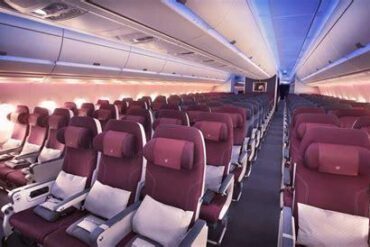
The cabin’s visual calm enhances the physical sensation of openness. Neutral tones, clean lines, and orderly seat spacing create an environment that feels intentionally premium. On long-haul routes between Tokyo and cities across North America or Europe, the benefits accumulate hour by hour. Reduced joint compression, improved circulation, and the freedom to reposition translate into noticeably lower fatigue upon arrival.
In 2026, Japan Airlines demonstrates that generous legroom does not require flamboyance. Through meticulous engineering and disciplined design, its 42-inch Premium Economy seat pitch delivers comfort that rivals older business-class configurations while preserving affordability.
Norse Atlantic Airways Premium Cabin: The 43 to 46 Inch Legroom Champion
When the discussion turns purely to numbers, Norse Atlantic Airways dominates. Operating Boeing 787 Dreamliners, the airline offers seat pitch ranging from approximately 43 to 46 inches, depending on configuration. In the Premium Economy category, these figures are extraordinary.
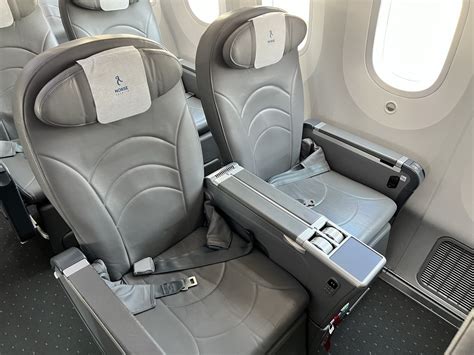
This amount of legroom fundamentally alters the geometry of flight. Knees no longer approach the seatback ahead. Stretching becomes a natural movement rather than a calculated maneuver. For tall passengers in particular, the difference feels transformative.
Norse Atlantic’s approach is unapologetically space-first. The cabin prioritizes physical openness and upright posture support over elaborate luxury signaling. Dining and ancillary services remain more streamlined than those offered by legacy carriers, but the trade-off is clear: maximum legroom at a competitive price.
On transatlantic routes lasting seven to ten hours, the value proposition becomes compelling. The combination of up to 46 inches of seat pitch and the inherently comfortable Boeing 787 cabin environment creates one of the most spacious Premium Economy experiences available in 2026. For travelers whose primary metric is legroom above all else, Norse stands at the top of the global rankings.
Why Premium Economy Legroom Matters More Than Ever in 2026
The growing emphasis on Premium Economy legroom reflects broader shifts in travel patterns. Ultra-long-haul routes are expanding, and passengers increasingly seek balance between cost and comfort. Business-class fares often remain prohibitively expensive for leisure travelers, while standard economy configurations continue to densify.
In this environment, Premium Economy functions as a strategic compromise. Seat pitch between 40 and 46 inches represents a meaningful biomechanical improvement over standard economy, where pitch frequently falls below 32 inches. The additional space enhances circulation, reduces lower-back compression, and allows more natural leg positioning. These factors contribute directly to reduced fatigue and improved arrival readiness.
The five airlines highlighted here demonstrate different philosophies. Cathay Pacific emphasizes balanced refinement at 40 inches. Air New Zealand designs for endurance with 41 inches. EVA Air and Japan Airlines refine the experience around 42 inches of precision-engineered comfort. Norse Atlantic pushes the boundaries with up to 46 inches of unmatched space.
For travelers planning long-haul journeys in 2026, Premium Economy is no longer merely a marginal upgrade. It is a carefully engineered cabin category where legroom defines the experience. In a pressurized aluminum tube traveling at 35,000 feet, a few extra inches can mean the difference between counting down the minutes and arriving refreshed, ready to step into the world beyond the jet bridge with energy intact.