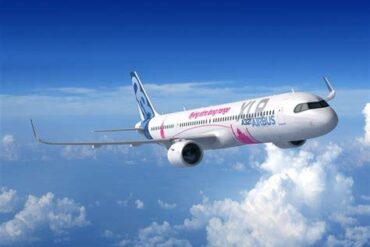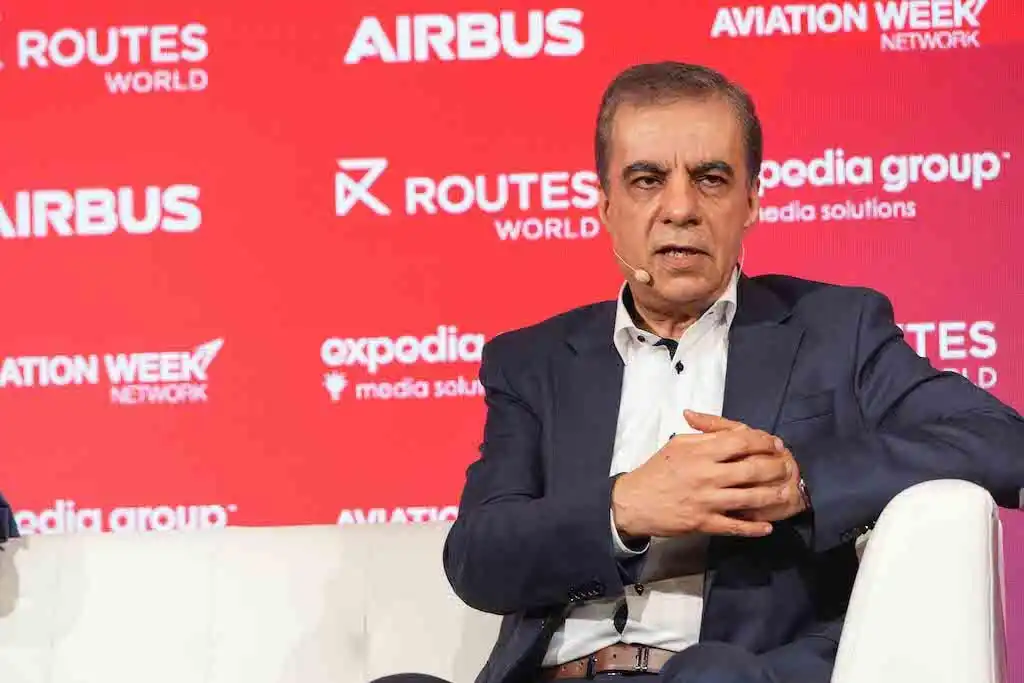
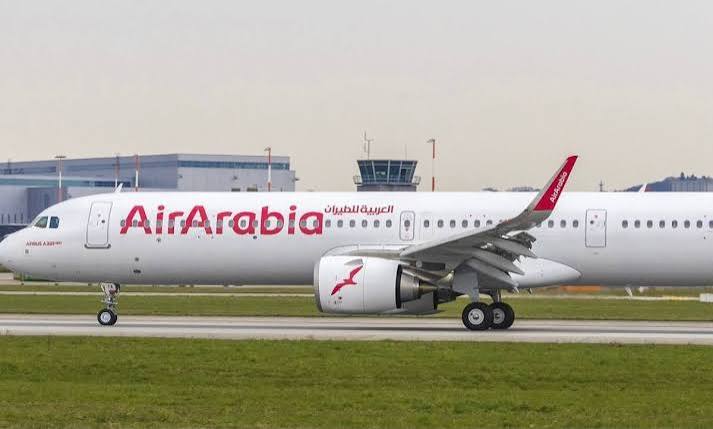
The Air Arabia fleet is about to gain its most capable aircraft yet, but the carrier’s leadership is drawing a firm line between technical possibility and commercial intent. In a wide-ranging conversation with Simple Flying in Frankfurt ahead of the airline’s new German route launch on December 15, Group CEO Adel Ali addressed the question of whether the incoming Airbus A321XLR could one day connect Morocco to the United States. His answer was candid and carefully hedged: the airline may consider transatlantic flying, but it is not currently part of its strategy. The first example of the type is due to join the carrier next year, making the next twelve months a decisive period for how the aircraft is deployed across Air Arabia’s expanding network.
Morocco Sits Within A321XLR Range But Remains Outside Air Arabia’s Strategy
The Airbus A321XLR carries an advertised range of 4,700 nautical miles (8,700 km), a figure that comfortably places the US East Coast within reach of the airline’s Moroccan subsidiary. That geographic reality is not lost on Ali, who acknowledged the theoretical capability while stressing that range alone does not create a route. “We may consider [transatlantic flights], but it is not in our plan at the moment,” he said. The distinction matters because the aircraft’s published range is calculated as a still-air maximum, and westbound headwinds, payload variations and seasonal conditions can trim the practical distance on any given flight. Even so, the East Coast would sit well inside the envelope. Iberia’s first A321XLR route connected Madrid Barajas Airport (MAD) to Boston Logan International Airport (BOS) at a distance of 2,956 NM (5,475 km), roughly 50 km shorter than the gap between Casablanca Mohammed V International Airport (CMN) and Boston.
A Different Market: Why Transatlantic Flying Does Not Fit Air Arabia’s Model
Ali was direct about the commercial logic behind his caution, describing the transatlantic as “a different market” from the short and medium-haul segments Air Arabia has built its business around. His position rests on two conditions that would need to be satisfied before any westward expansion could be contemplated: real-world performance of the XLR in service, and proven demand from Morocco across the Atlantic. In his words, “If the market demands from Morocco across the Atlantic, we may consider it, but it is not in our plan at the moment.” That sequencing is telling. Rather than stretching into a new market on the strength of a specification sheet, Air Arabia appears determined to let operational data and passenger demand dictate the next move. The Moroccan subsidiary has steadily grown as a base for the group, and any long-haul ambition would need to be supported by traffic that justifies the commitment rather than by the aircraft’s theoretical reach.
Extra 45 Minutes Of Flying Time Opens Southeast Asia And Hong Kong
Where the A321XLR does fit neatly is in extending the range of Air Arabia’s existing network. Ali expects the aircraft to deliver roughly 45 minutes more flying time than the Airbus A321LR it currently operates, a modest but meaningful gain that pushes new destinations into feasible territory. “That will take us more into places such as Southeast Asia, into perhaps Jakarta, if we wanted to go into Hong Kong,” he explained. The aircraft will also allow the carrier to carry more comfortable payloads on its existing long flights, including services to London. Each successive addition to the fleet has stretched the group’s reach: the A320ceo offered a range of roughly five hours, the A320neo family added 45 to 60 minutes, and the A321LR opened markets including Malaysia, Thailand, Milan and London. London Gatwick takes around seven and a half hours on the LR from Sharjah, illustrating how far the narrowbody model has already been pushed.
All-Economy Comfort And The Eurobusiness Question
The prospect of passengers spending almost an entire working day in an all-economy narrowbody drew a pragmatic response. Ali noted that “the seat factors are good,” suggesting that customers are voting with their bookings rather than their complaints. Asked whether a Eurobusiness model, which blocks out the middle seat to create a premium cabin, could appeal to the airline, he declined to entertain the idea for now. “It’s not broken at the moment, so it doesn’t need fixing,” he said. “Will we do it one day? I wouldn’t say no. But I also say it is not in the plan today.” The answer reflects a carrier focused on unit economics and high utilisation rather than cabin segmentation. The strategy has proven resilient, with strong load factors across long sectors that many observers once doubted a low-cost narrowbody could sustain.
No Widebodies Planned As 4,700 Nautical Miles Sets The Ceiling
For the foreseeable future, 4,700 nautical miles appears to be the outer boundary of Air Arabia’s network. While neighbouring flydubai prepares to welcome the Boeing 787 Dreamliner, Air Arabia has no plans to introduce widebody aircraft. Ali framed the decision in terms of margins and fit. “I’ve always said that what we’ve got seems to be working, seems to be giving us the right margins, and reaches where we want to operate. Hence, we’ve not really looked into [widebodies],” he said. The narrowbody model continues to deliver the returns the group expects, and the CEO sees little reason to complicate a fleet strategy that has already proven itself across multiple markets.
Frankfurt Launch And A 120-Aircraft Order Fuel Continued Expansion
The airline headquartered in Sharjah, UAE remains in a pronounced growth phase. A new long-haul route to Frankfurt, Germany launches in mid-December, adding a major European business destination to the map, and the group has just opened a domestic hub in Dammam, Saudi Arabia. The Airbus A321XLR order sits within a much larger commitment for 120 Airbus A320neo family aircraft placed at the 2019 Dubai Airshow, a deal that underpins the carrier’s expansion plans for years to come. The XLR’s arrival next year will mark the next step in a carefully managed evolution, one that adds capability without abandoning the disciplined low-cost foundations on which Air Arabia has built its position. For now, the Atlantic remains a possibility rather than a priority, and the airline’s focus stays firmly on the markets it knows best.