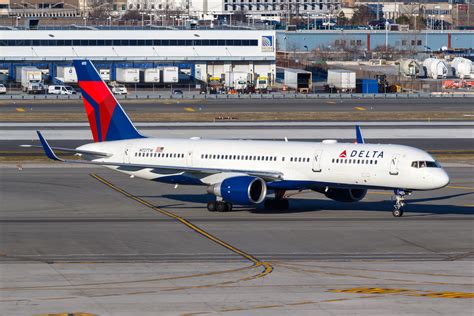
A Delta Air Lines captain became seriously ill during a flight from Los Angeles to Boston, prompting the crew to divert the Boeing 757-200 to Detroit on August 25, 2026. What made the incident particularly unusual was the captain’s transmission to air traffic control after landing, in which he explained that he was the ill pilot and intended to taxi the aircraft to the gate before going directly to a hospital.
The flight, Delta DL437, was scheduled to operate from Los Angeles International Airport (LAX) to Boston Logan International Airport (BOS). The aircraft was a Boeing 757-200 registered as N707TW. During the flight, the captain became ill enough that the crew determined Detroit Metropolitan Wayne County Airport (DTW) was the appropriate diversion point for immediate medical attention.
The exchange with Detroit controllers provided an unusually direct glimpse into the situation. As the aircraft approached runway 22L, the pilot declared an emergency and subsequently told the tower, “This is the captain, I’m the one that’s ill.” He then stated that he would taxi the aircraft to the gate before heading to the hospital. The controller responded by directing the crew toward the quickest available taxi route.
Why the Delta Captain Taxied to the Gate
The decision for the captain to continue taxiing may initially seem surprising, particularly because he had just explained that he needed hospital treatment. However, the circumstances make considerably more sense when we consider how airline flight crews divide responsibilities.
With two qualified pilots on the flight deck, one pilot normally serves as the pilot flying, while the other acts as the pilot monitoring. Their duties can change throughout a trip. Based on the circumstances, it is plausible that the first officer was flying when the captain became ill, although the exact cockpit roles during the emergency have not been publicly established.
Taxiing also involves different considerations from controlling the aircraft during cruise. At many airlines, captains traditionally handle taxi operations, and the Boeing 757’s cockpit controls and airline procedures can influence who is expected to perform that task. If the captain remained capable of safely taxiing, reaching the gate could have been the quickest way to get him into the terminal and medical care.
Stopping on a taxiway might instead have created additional complications. Ground equipment, stairs, vehicles, or emergency personnel could have been required to reach the aircraft. By continuing directly to the gate, the captain could potentially leave the aircraft through the normal terminal area without introducing unnecessary delays or additional operational complexity.
Delta DL437 Diversion Highlights Pilot Medical Emergencies
Pilot illness in flight is uncommon but not unprecedented. Airline crews receive extensive training for situations in which a flight crew member becomes incapacitated, including procedures for transferring responsibilities and coordinating with air traffic control.
In this case, the diversion to Detroit demonstrated the importance of having multiple layers of safety available. The first officer could continue managing the aircraft, while controllers could prioritize the emergency arrival and help the crew reach the gate efficiently.
The incident also illustrates how calm, concise communication can be valuable during an emergency. Despite his apparent condition, the Delta captain clearly identified himself, explained what was happening, and communicated his immediate plan to the controller.
What Happened After the Detroit Landing?
The available account does not provide details about the captain’s medical condition or subsequent treatment. His statement that he needed to go to the hospital indicates that the situation was taken seriously, but the specific nature of his illness has not been disclosed.
For passengers, the diversion likely transformed an ordinary transcontinental journey into an unexpected delay. For the crew, however, the priority was straightforward: get the aircraft safely on the ground, get the captain to appropriate medical care, and ensure the flight was handled safely.
The unusual radio exchange has attracted attention precisely because it was so candid. A captain telling Detroit Tower that he would taxi to the gate and then go to the hospital is certainly not something controllers hear every day. More importantly, the incident underscores the professionalism of the crew and controllers involved—and hopefully marks only a temporary setback for the Delta captain, who will make a full recovery.