Eastern Air Lines, once a titan of the American skies, carved an indelible mark on the history of aviation. Operating from 1926 to 1991, it rose from a modest mail carrier to become one of the “Big Four” domestic airlines, a term coined following the Spoils Conferences of 1930. Headquartered for much of its later life at Miami International Airport in unincorporated Miami-Dade County, Florida, Eastern’s story is one of ambitious growth, pioneering innovation, fierce competition, and ultimately, a dramatic downfall. Its legacy is interwoven with iconic figures such as World War I flying ace Eddie Rickenbacker, who steered its early successes, and later, former astronaut Frank Borman and the controversial Frank Lorenzo, whose tenures marked periods of intense struggle and transformation.
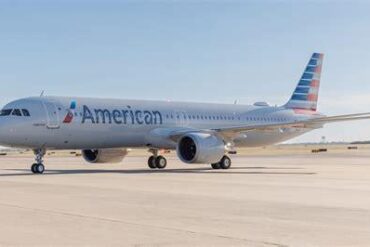
Eastern’s influence extended far beyond its extensive route network, which at its peak connected cities across the United States, Canada, Mexico, the Caribbean, and South America, even briefly touching Europe. The airline was a pioneer in numerous aspects of air travel, from popularizing the New York-Florida route, where it held a near-monopoly for decades, to introducing the innovative Eastern Air Lines Shuttle service. Its dissolution in 1991 sent ripples throughout the industry, with its valuable assets, including routes and aircraft, being absorbed by competitors like American Airlines and Delta Air Lines. The story of Eastern Air Lines is a compelling chronicle of ambition, technological advancement, labor relations, and the unforgiving dynamics of the airline industry.
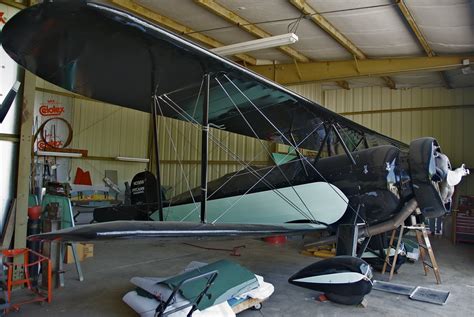
The airline’s complex history is a tapestry woven from various smaller air travel corporations. Its earliest antecedent was Pitcairn Aviation, founded on April 19, 1926, by Harold Frederick Pitcairn. In the late 1920s, Pitcairn Aviation secured a crucial government contract to fly airmail between New York City and Atlanta, Georgia, utilizing its rugged Pitcairn Mailwing single-engine biplanes. This airmail route, CAM-19, became a foundational element of Eastern’s future network. The landscape of Pitcairn Aviation changed significantly in 1929 when Clement Keys, the influential owner of North American Aviation, acquired the company. Keys, a pivotal figure in early American aviation development, renamed the company Eastern Air Transport in 1930, signaling a broader ambition beyond mail carriage. The nascent airline continued to expand its mail and passenger services along the Eastern Seaboard. A further transformation occurred following the Air Mail Scandal of 1934 and the subsequent Airmail Act, which forced a reorganization of aviation holdings. General Motors, which had acquired North American Aviation (and thus Eastern Air Transport), divested the airline. Under new leadership, the company was rebranded once more, adopting the iconic name: Eastern Air Lines.
The Rickenbacker Era: Forging a Profitable Empire
In 1938, a defining moment in Eastern’s history occurred when Captain Eddie Rickenbacker, America’s most celebrated World War I fighter ace, purchased the airline from General Motors. The acquisition was a complex financial maneuver, culminating in Rickenbacker and his associate Sidney Shannon presenting Alfred P. Sloan, GM’s chairman, with a certified check for US$3,500,000. Rickenbacker’s leadership ushered in an era of remarkable growth and, crucially, sustained profitability. He ran Eastern with a famously tight fist, emphasizing efficiency and cost control, often eschewing government subsidies that many of its competitors relied upon. This fiscal discipline allowed Eastern to thrive, becoming one of the most profitable airlines in the post-war era. Under Rickenbacker, the airline became known as “The Great Silver Fleet,” a moniker reflecting its polished metal aircraft and a commitment to service. By 1937, even before Rickenbacker’s full takeover, Eastern’s route system was already impressive, stretching from New York to Washington, Atlanta, and New Orleans, and from Chicago to Miami. A testament to its operational intensity was its New York-Washington service, which by that year featured 20 daily flights in each direction, operating hourly, with a flight time of just one hour and twenty minutes.
Rickenbacker’s tenure, however, was not without its challenges. His legendary frugality and skepticism towards new, expensive technologies sometimes put Eastern at a disadvantage. He was notably reluctant to embrace the jet age, underestimating the public’s fascination with and preference for faster jet aircraft. This hesitation contributed to a gradual erosion of Eastern’s dominant market position in the late 1950s as competitors began introducing jetliners. Ultimately, this resistance to change led to his ousting as CEO on October 1, 1959, replaced by Malcolm A. MacIntyre, a lawyer with little airline operations experience. Rickenbacker remained as chairman of the board but finally departed all roles on December 31, 1963, at the age of 73, making way for a new management team led by Floyd D. Hall. Despite his later-career conservatism regarding jets, Rickenbacker’s foundational work established Eastern as a formidable force in American aviation. In a significant network expansion during this period, Eastern acquired Colonial Airlines in 1956, which provided the airline with its first international routes into Canada.
Embracing the Jet Age and Expanding Horizons
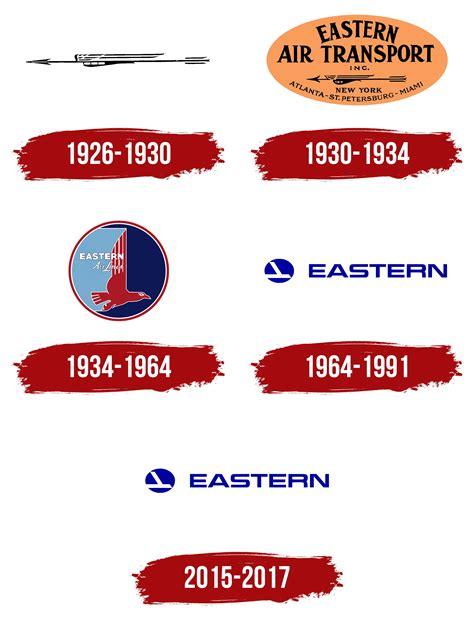
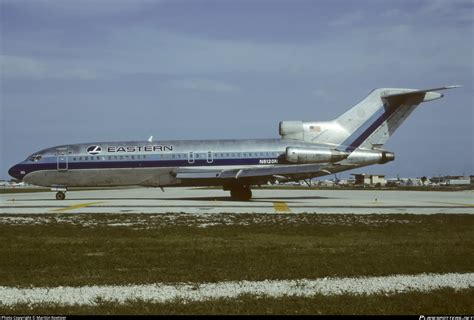
The arrival of the jet age, though initially met with caution by Rickenbacker, eventually transformed Eastern Air Lines. In November 1959, Eastern unveiled its modern, Chester L. Churchill-designed Terminal 1 at New York’s Idlewild Airport (later John F. Kennedy International Airport), a clear statement of its commitment to the new era of travel. The airline’s first jet aircraft, Douglas DC-8-21s, entered service in 1960, primarily deployed on prestigious long-haul routes such as non-stops from Chicago and New York to Miami. These were soon complemented by the Boeing 720 in 1962. A pivotal moment came in 1964 with the introduction of the Boeing 727-100. Eastern, alongside American Airlines and United Airlines, had played a significant role in the development of this versatile tri-jet, and on February 1, 1964, Eastern became the first airline to operate the 727 in commercial service. This period also saw a rebranding effort, with the adoption of the famous “hockey stick” livery, featuring a striking Caribbean Blue over Ionosphere Blue design, which became synonymous with the airline for decades.
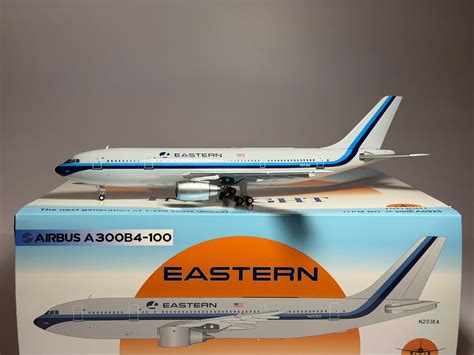
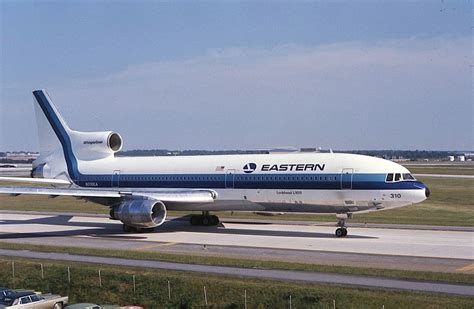
Innovation continued with Eastern becoming the first U.S. carrier to fly the European-built Airbus A300 and notably, the launch customer for the Boeing 757. The Eastern Air Lines Shuttle, inaugurated on April 30, 1961, revolutionized short-haul travel. Initially using 95-seat Lockheed Constellation 1049s and 1049Cs, the shuttle offered hourly, no-reservation flights between New York-LaGuardia, Washington National, and Boston. Passengers could simply show up and pay their fare in cash onboard, and if a flight filled up, a backup aircraft was guaranteed to accommodate everyone. This service became immensely popular with business travelers. International expansion also gained momentum, with new routes to Santo Domingo and Nassau, Bahamas. Services from San Juan, Puerto Rico’s Luis Muñoz Marín International Airport were significantly expanded. Eastern further solidified its Caribbean presence by purchasing Mackey Airlines in 1967, a smaller carrier operating in Florida and the Bahamas, and later, in 1973, Caribair (Puerto Rico), which operated McDonnell Douglas DC-9-30 jets throughout the Caribbean. The acquisition of widebody jets like the Lockheed L-1011 TriStar (affectionately nicknamed “El Grandote” – the huge one – in the Caribbean) and the Airbus A300 marked another leap. Interestingly, Eastern had initially ordered four Boeing 747s but sold these delivery slots to TWA, opting for the L-1011. Delays in the L-1011 program, primarily due to issues with its Rolls-Royce RB211 engines, led Eastern to temporarily lease two Boeing 747-100s from Pan Am between 1970 and 1972 for high-density routes. Eastern’s steadfast support for the RB211 engine program, particularly from its then-president Sam Higginbottom, was crucial in preventing its collapse.
Eastern also forged a significant marketing partnership, becoming the “official airline” of Walt Disney World just before its opening in 1971. This relationship included sponsoring the “If You Had Wings” attraction in Tomorrowland at the Magic Kingdom. The popular “Wings of Man” advertising campaign, created by Young & Rubicam in the late 1960s, successfully polished Eastern’s image, projecting an aura of sophistication and reliability. This image held strong until the late 1970s when a new campaign, “We Have To Earn Our Wings Every Day,” featuring then-president Frank Borman, was introduced.
Mounting Turmoil and Financial Pressures
The mid-1970s marked the beginning of a more turbulent period for Eastern Air Lines. In 1975, under the leadership of former astronaut Frank Borman, who became president late that year, the airline relocated its headquarters from Rockefeller Center in Manhattan to Miami-Dade County, Florida. This move aimed to consolidate operations and potentially reduce costs. However, Eastern faced intense competition, particularly at its massive Atlanta hub, where it went head-to-head with Delta Air Lines. Delta, with a largely non-unionized workforce and a strategically expanding international network, proved to be a formidable adversary, especially in the wake of airline deregulation in 1978. Deregulation unleashed new competitive forces and pricing pressures that strained Eastern’s financial stability.
Despite these challenges, Eastern continued to expand in certain areas. A Caribbean hub was established in 1980 at Luis Muñoz Marín International Airport in San Juan, Puerto Rico, building on its earlier acquisitions in the region. In a significant move in 1982, Eastern acquired Braniff International’s South American route network following Braniff’s collapse, substantially increasing its international footprint. By 1985, Eastern had become the largest airline in the ATA (Air Transport Association) in terms of passengers carried and operated services in 26 countries across three continents. This era saw Eastern’s fleet sporting two main livery variations: the classic “silver-colored hockey stick,” where the lack of paint reduced aircraft weight by approximately 100 pounds, and a “white-colored hockey stick” scheme, primarily used on its Airbus aircraft, as paint was required to protect their composite skin panels. Eastern also served London Gatwick starting in 1985 with its McDonnell Douglas DC-10-30 “Golden Wings” service, though a planned Madrid service in 1986 never materialized. The London Gatwick service was short-lived, discontinued in 1986 and replaced by codeshare flights with British Caledonian from Atlanta.
In 1983, Eastern became the launch customer for the Boeing 757, an aircraft Borman believed would be a cornerstone of the airline’s future due to its anticipated low operating costs. These aircraft were ordered in 1978. However, the expected lower oil prices did not materialize, and the substantial debt incurred from the Boeing 757 and earlier Airbus A300 purchases in 1977 severely burdened the airline’s finances. By this point, Eastern was reportedly paying over $700,000 in interest daily before a single ticket was sold or an aircraft left the gate. As a cost-saving and revenue-generating measure, around 1985, Eastern introduced “Moonlight Specials.” These were late-night flights, operating between midnight and 7 a.m., primarily designed to carry cargo for thirty freight companies, with passenger seats offered at very low fares. These flights served 18 U.S. cities, connecting mainly through Houston. Passengers were limited to carry-on baggage, with checked bags incurring a fee and shipped on a standby basis. Onboard service was minimal, with beverages and snacks sold. This no-frills approach was an attempt to compete with emerging low-cost carriers like People Express, but it also highlighted the financial desperation setting in.
The Contentious Sale to Texas Air
Facing mounting losses and unable to secure necessary concessions from its labor unions, Frank Borman reluctantly agreed to sell Eastern Air Lines in 1986 to Texas Air Corporation, headed by the aggressive and controversial airline magnate Frank Lorenzo. Lorenzo had already acquired Continental Airlines and had recently lost a bidding war for TWA to Carl Icahn. The acquisition of Eastern by Texas Air was seen by many as a move by Lorenzo to create a mega-carrier capable of dominating the U.S. airline industry. However, the integration proved fraught with difficulty, exacerbated by Lorenzo’s reputation for hard-line tactics with organized labor.
Even before the Texas Air acquisition, Eastern had been grappling with safety concerns. In February 1987, the Federal Aviation Administration (FAA) imposed a staggering $9.5 million fine against Eastern Air Lines for safety violations. At the time, this was the largest fine ever levied against an airline. It’s important to note that these violations occurred prior to Lorenzo’s takeover. Under new ownership, the pressure to cut costs intensified. In 1988, Phil Bakes, then president of Eastern, announced plans for significant retrenchment. This included the layoff of 4,000 employees and the elimination or reduction of service to many airports in the Western United States, signaling a strategic retreat to Eastern’s traditional strongholds in the East. At the time, Eastern was the largest corporate employer in the Miami area, and while it remained so even after these cuts, its local prominence began to wane as Miami’s economy diversified beyond tourism into finance and international trade.
Crippling Strikes, Bankruptcy, and Final Liquidation
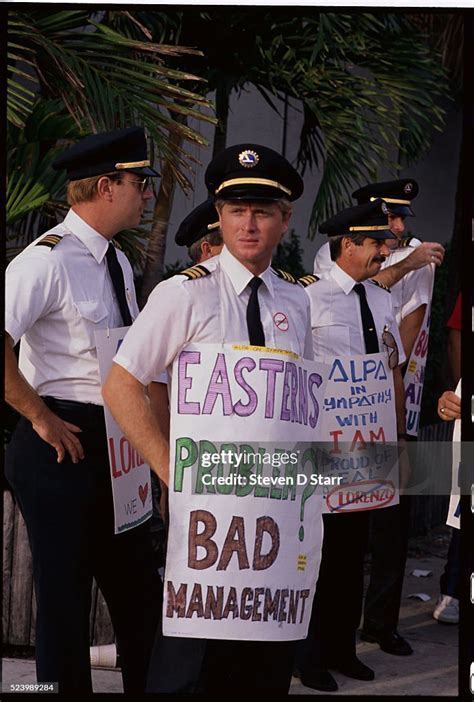
Frank Lorenzo’s tenure at Eastern Air Lines was dominated by severe labor unrest, the roots of which predated his arrival but were significantly inflamed by his management style. Lorenzo demanded deep concessions from Eastern’s powerful unions, arguing they were necessary for the airline’s survival. On March 4, 1989, after protracted and bitter negotiations, Lorenzo locked out Eastern’s mechanics and ramp service employees, who were represented by the International Association of Machinists and Aerospace Workers (IAM). This move triggered a catastrophic chain reaction. Fearing that a defeated IAM would leave them vulnerable, Eastern’s pilots, represented by the Air Line Pilots Association (ALPA), and flight attendants, represented by the Transport Workers Union (TWU), called a sympathy strike. This collective action effectively crippled Eastern’s domestic operations, leading to mass flight cancellations and a devastating loss of revenue.
Just days later, on March 9, 1989, Eastern Air Lines filed for Chapter 11 bankruptcy protection. While this allowed the airline to continue operating on a severely reduced scale, it marked the beginning of the end. Lorenzo initially sought to sell the entire airline. In April 1989, a deal was struck for former Major League Baseball commissioner Peter Ueberroth to acquire Eastern for $464 million. However, this agreement collapsed shortly thereafter when Lorenzo refused to cede temporary control to a trustee. Subsequently, Lorenzo proposed selling off assets piecemeal to allow a smaller, independent Eastern to emerge. In May 1989, the highly profitable East Coast shuttle service was sold to real estate developer Donald Trump for $365 million, who rebranded it as the Trump Shuttle. In August, sixteen DC-9 aircraft and valuable gates in Philadelphia, Washington, and New York were sold to Midway Airlines for $210 million. A more substantial divestiture occurred in May 1990, when American Airlines acquired Eastern’s coveted Latin American routes and related assets for $471 million.
In April 1990, after several failed attempts to gain creditor approval for restructuring plans, Frank Lorenzo lost control of Eastern. The bankruptcy court appointed Martin Shugrue, a former Continental Airlines president, as trustee to manage Eastern’s reorganization. A damning report prepared by David Shapiro, an examiner appointed by the bankruptcy court, concluded that Eastern had been systematically shortchanged by Texas Air in numerous inter-company transactions. For instance, Texas Air had acquired assets like System One, Eastern’s computer reservation system, at prices far below their market value. Under Shugrue’s leadership, Eastern launched a desperate “100 Days” advertising campaign, featuring Shugrue himself, promising that the airline would “become a little bit better every day.” While this campaign, conceived by Ogilvy & Mather, did lead to a temporary surge in bookings, it was not enough to reverse the airline’s terminal decline. The Gulf War in late 1990, with its associated spike in fuel prices and drop in air travel, delivered the final blow. Eastern Air Lines, burdened by insurmountable debt and unable to generate sufficient cash flow, ceased all operations at midnight on Saturday, January 19, 1991. The shutdown was abrupt; company agents were reportedly still taking reservations the previous evening, unaware of the impending decision. The closure resulted in the immediate loss of 5,000 jobs, out of a workforce of 18,000, and had a significant economic impact on communities in Miami and the New York City area. In the aftermath, Delta Air Lines acquired Eastern’s gates in Atlanta, and Northwest Airlines took over its gates at Washington National.
Eastern Air Lines Fleet Over The Years
Throughout its 65-year history, Eastern Air Lines operated a diverse and evolving fleet of aircraft, reflecting the technological advancements in aviation. Here’s a summary of the major types:
- Pitcairn Mailwing (54 aircraft, 1927-1937): The foundational aircraft for Pitcairn Aviation and early Eastern Air Transport mail routes.
- Curtiss Condor (6 aircraft, 1930-1936): Early biplane passenger aircraft.
- Curtiss Kingbird (14 aircraft, 1930-1934): Another early passenger type.
- Douglas DC-2 (14 aircraft, 1934-1941): A significant step towards modern airliners.
- Douglas DC-3 (76 aircraft, 1936-1957): The iconic workhorse that revolutionized air travel.
- Lockheed Model 10 Electra (6 aircraft, 1935-1937): A sleek, twin-engine monoplane.
- Douglas DC-4 (38 aircraft, 1946-1960): A four-engine transport that saw post-war civilian service.
- Lockheed Constellation (L-049, L-749, L-1049 Super Constellation) (10 L-049, 21 L-749, 76 L-1049; various periods between 1947-1968): The elegant, triple-tailed “Connie” was a long-range champion.
- Martin 4-0-4 (60 aircraft, 1951-1962): Eastern was the largest operator of this twin-engine airliner.
- Convair CV-340/440/640 (20 CV-440, others acquired later; 1957-1974): Popular twin-engine aircraft.
- Douglas DC-6/DC-7B (Various models; DC-7B: 54 aircraft, 1953-1966): Advanced piston-engine airliners, representing the peak of that technology.
- Lockheed L-188 Electra (40 aircraft, 1959-1978): Eastern’s first and only mainline turboprop, known for its speed and comfort but also marred by early structural issues (not specific to Eastern’s operation of them but the type generally).
- Douglas DC-8 Series (DC-8-21, -51, -54CF, -61, -63PF) (Various models; DC-8-21: 16 aircraft, 1960-1979): Eastern’s first jet aircraft, ushering in a new era of speed.
- Boeing 720 (15 aircraft, 1961-1970): A medium-range jetliner, derived from the Boeing 707.
- Boeing 727 Series (727-100, 727-200/Adv) (727-100: 75 aircraft, 1964-1991; 727-200: 99 aircraft, 1968-1991): The backbone of Eastern’s fleet for many years; Eastern was a launch customer for the 727-100.
- McDonnell Douglas DC-9 Series (DC-9-14, -31, -32, -51) (Various models; DC-9-31: 75 aircraft, 1967-1991): A ubiquitous short to medium-range twinjet.
- Boeing 747-100 (3 aircraft, 1971-1972): Leased from Pan Am pending L-1011 deliveries. Eastern had also ordered 747-200Bs for planned European services, with one aircraft painted but never delivered, the order ultimately cancelled.
- Lockheed L-1011-1 TriStar (66 aircraft, 1972-1991): A technologically advanced widebody; Eastern was a launch customer along with TWA.
- Airbus A300B2/B4 (A300B4: 32 aircraft, 1977-1991; A300B2: 2 aircraft, 1980-1988): Eastern was the first U.S. operator of this European widebody twinjet.
- Boeing 757-200 (25 aircraft, 1983-1991): Eastern was a launch customer for this narrow-body twinjet, envisioned as a fuel-efficient successor to the 727.
- McDonnell Douglas DC-10-30 (3 aircraft, 1985-1990): Acquired from Alitalia, used for long-range services to South America and Europe.
Regional Feeder Network: Eastern Express and Partners
To supplement its mainline operations and feed passengers into its hubs, Eastern Air Lines established code-sharing agreements with several regional and commuter airlines. These carriers often operated aircraft painted in liveries that mirrored Eastern’s mainline branding, creating a seamless passenger experience. The branding for these services included Eastern Express, Eastern Atlantis Express, and Eastern Metro Express.
Key Eastern Express air carriers and their typical aircraft included:
- Air Midwest: Operated Fairchild Swearingen Metroliner (Metro II model) turboprops.
- Atlantis Airlines: Flew British Aerospace BAe Jetstream 31, de Havilland Canada DHC-6 Twin Otter, and Fairchild Swearingen Metroliner turboprops. This airline also operated as Eastern Atlantis Express with BAe Jetstream 31 aircraft.
- Bar Harbor Airlines: Utilized ATR-42, Beechcraft 1900C, Beechcraft 99, and Saab 340A turboprops.
- Metro Airlines: Operated de Havilland Canada DHC-6 Twin Otter turboprops. As Eastern Metro Express, based at Eastern’s Atlanta (ATL) hub, Metro Airlines flew British Aerospace BAe Jetstream 31 and de Havilland Canada DHC-8-100 Dash 8 turboprops.
- Precision Airlines: Flew Dornier 228 turboprops.
- Provincetown-Boston Airlines (PBA): Notably operated Douglas DC-3 prop aircraft in its feeder services.
- Sunaire (Aviation Associates): A division of Metro Airlines, operated de Havilland Canada DHC-6 Twin Otter turboprops.
Additionally, Eastern Partner service was provided by Leeward Islands Air Transport (LIAT), a Caribbean-based airline, offering turboprop connections between Eastern’s San Juan hub and destinations like Antigua, St. Kitts, and St. Maarten. Earlier, Eastern had a close working relationship with Caribair (Puerto Rico). By 1967, Caribair was operating Convair 640 turboprops connecting with Eastern flights in San Juan. Caribair later transitioned to an all-jet fleet of McDonnell Douglas DC-9-30s, serving numerous Caribbean islands and Miami, before being acquired by Eastern in 1973.
A Legacy of Safety and Notable Incidents
Over its long operational history, Eastern Air Lines, like many pioneering airlines, experienced a range of accidents and incidents. These events, while tragic, often contributed to advancements in aviation safety and operational procedures.
Fatal Accidents Involving Eastern Air Lines
- August 10, 1937: Trip 7, a Douglas DC-2 (NC13739), crashed on takeoff from Daytona Beach Municipal Airport after striking a utility pylon during a nighttime departure. Four of the nine people on board were killed.
- February 26, 1941: Flight 21, a Douglas DST, crashed near Atlanta in foggy conditions due to a misread altimeter. This accident nearly claimed the life of Eddie Rickenbacker, who was traveling on airline business. Of the 16 on board, eight perished, including U.S. Congressman William D. Byron.
- July 12, 1945: Flight 45, a Douglas DC-3-201C (NC25647), en route from Washington, D.C. to Columbia, SC, collided mid-air with a USAAF A-26C Invader near Florence, South Carolina. The A-26 crashed, with one of its two crew members surviving. The DC-3 made a forced landing in a cornfield; tragically, one passenger, a two-year-old child, died.
- September 7, 1945: Flight 42, a Douglas DC-3-201G (NC33631), crashed near Florence, South Carolina, after an unexplained fire developed in the rear of the aircraft. The fire spread to the right elevator, leading to a loss of control. All 22 individuals on board were killed.
- December 30, 1945: Flight 14, a Douglas DC-3-201 (NC18123), overran the runway upon landing at LaGuardia Airport after approaching too high and too fast. One of the 14 people on board died.
- January 18, 1946: Flight 105, a Douglas DC-3-201E (NC19970), crashed in Cheshire, Connecticut, following a catastrophic wing separation. A fuel leak-induced fire in the left engine spread to the wing, causing its failure. All 17 occupants perished.
- January 12, 1947: Flight 665, a Douglas C-49 (NC88872), crashed near Galax, Virginia, after the pilot deviated from the planned flight route. Eighteen of the 19 people on board were killed.
- May 30, 1947: Flight 605, a Douglas DC-4 en route from Newark to Miami, crashed near Bainbridge, Maryland, killing all 53 people aboard. At the time, it was the deadliest crash in U.S. aviation history. The cause was cited as “loss of control.”
- January 13, 1948: Flight 572, a Douglas DC-3-201F (NC28384), crashed in Oxon Hill, Maryland, after striking trees while on approach to Washington National Airport due to flying too low. Five of the nine people on board died.
- November 1, 1949: Flight 537, a Douglas DC-4 (N88727) on approach to Washington National Airport, collided in mid-air with a Lockheed P-38 Lightning being test-flown. All 55 aboard the DC-4 were killed, making it the deadliest U.S. airliner crash at that time. The P-38 pilot was seriously injured.
- October 19, 1953: A Lockheed L-749A Constellation (N119A) crashed shortly after takeoff from Idlewild International Airport, bound for San Juan, Puerto Rico. Two of the 27 on board died.
- December 21, 1955: A Lockheed L-749A Constellation (N112A) crashed on approach to Jacksonville’s Imeson Airport. The flight originated in Miami with stops planned in Washington, D.C., New York, and Boston. Twelve passengers and the crew of five were killed.
- October 4, 1960: Flight 375, a Lockheed L-188 Electra departing Boston’s Logan International Airport for Philadelphia, crashed on takeoff after ingesting a flock of birds into its engines. Sixty-two of the 72 people on board were killed. This accident highlighted the dangers of bird strikes.
- November 30, 1962: Flight 512, a Douglas DC-7, crashed during a go-around in heavy fog at Idlewild Airport (JFK) in New York City. Twenty-five of the 51 passengers and crew perished.
- February 25, 1964: Flight 304, a Douglas DC-8 flying from New Orleans to Washington-National, crashed into Lake Pontchartrain. The cause was attributed to a degradation of aircraft stability in turbulence due to abnormal longitudinal trim settings. All 51 passengers and seven crew members were killed.
- February 8, 1965: Flight 663, a Douglas DC-7 departing New York City for Richmond, Virginia, crashed into the Atlantic Ocean off Jones Beach State Park after takeoff from JFK. The aircraft was forced into an evasive maneuver to avoid Pan Am Flight 212, an inbound Boeing 707. This maneuver led to a loss of control. All 84 people on board died.
- December 4, 1965: Flight 853, a Lockheed L-1049C Super Constellation, collided with TWA Flight 42, a Boeing 707, over Carmel, New York. The Constellation crashed on Hunt Mountain in North Salem, New York, killing four of its 53 occupants. The TWA 707 landed safely with no casualties.
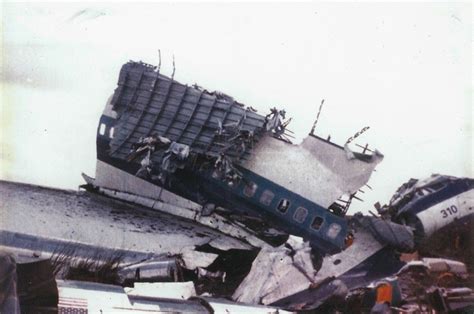
- December 29, 1972: Flight 401, a nearly new Lockheed L-1011 TriStar, crashed into the Florida Everglades while on approach to Miami International Airport. The flight crew became preoccupied with a burnt-out landing gear indicator light and failed to notice the aircraft’s gradual descent. Of the 176 people on board, 101 died. This was the first major crash of a widebody aircraft and led to significant advancements in crew resource management.
- September 11, 1974: Flight 212, a Douglas DC-9-31, crashed short of the runway while conducting an instrument approach in dense fog at Douglas Municipal Airport in Charlotte, North Carolina. Seventy-two of the 82 people on board were killed, including the father and two older brothers of comedian Stephen Colbert. Three initial survivors later succumbed to their injuries.
- June 24, 1975: Flight 66, a Boeing 727, crashed into approach lights while attempting to land during a severe thunderstorm at JFK Airport in New York City. The accident was attributed to wind shear (a strong downdraft). One hundred thirteen of the 124 people on board were killed, including ABA basketball star Wendell Ladner.
- January 1, 1985: Flight 980, a Boeing 727 flying from Asunción, Paraguay, to La Paz, Bolivia, crashed into Mount Illimani in Bolivia. All 19 passengers and 10 crew members were killed on impact. The remote, high-altitude crash site made recovery efforts extremely difficult.
Non-Fatal Accidents and Incidents
Eastern Air Lines also experienced numerous non-fatal incidents, some of which involved significant damage to aircraft or heroic actions by crew members.
- July 19, 1951: Flight 601, a Lockheed L-749A Constellation (N119A), experienced severe buffeting after an access door opened in flight. The crew executed a successful flapless, wheels-up landing at Curles Neck Farm, Virginia. The aircraft was repaired and returned to service.
- May 5, 1983: Flight 855, a Lockheed L-1011 TriStar en route from Miami to Nassau, experienced the shutdown of all three engines over the Atlantic Ocean due to incorrect O-ring seals on the master chip detectors of all three engines, leading to oil loss. The crew managed to restart one engine after a lengthy descent and safely returned the aircraft to Miami International Airport. All 172 people on board survived. This incident highlighted critical maintenance and engine design issues.
- April 21, 1984: Flight 494, a DC-9, suffered an uncommanded deployment of reverse thrust on one engine during a flight from Atlanta to Greensboro, NC, causing a rapid roll. The crew disabled the engine and landed safely back in Atlanta, earning the Air Line Pilots Association’s Superior Airmanship Award.
- September 15, 1987: Flight 216, a Boeing 727 (N8857E), sustained serious damage during a hard landing in severe winds at Tulsa International Airport. Though the 55 passengers and 7 crew were uninjured, the aircraft was initially cleared to fly by mechanics but later removed from service after skin wrinkles were found in the fuselage.
- December 27, 1987: Flight 573, a Douglas DC-9-31 (N8948E), landed hard at Pensacola Regional Airport. The aircraft bounced, and on the second touchdown, the fuselage broke aft of the wings. The tail section rested on the runway, but all 103 passengers and 4 crew survived.
- January 18, 1990: Flight 111, a Boeing 727 (N8867E), collided with an Epps Air Service Beechcraft King Air upon landing at Atlanta’s Hartsfield Airport. The 727 sustained substantial damage but all 149 passengers and 8 crew were unharmed; it was later repaired. The King Air was destroyed, its pilot killed, and the first officer seriously injured.
Hijackings
Eastern Air Lines flights were also targets of hijackings, particularly during the 1960s and 1970s, with many aircraft being diverted to Cuba.
- July 24, 1961: Flight 202, a Lockheed L-188 Electra, was hijacked to Cuba. It was one of the early hijackings of U.S. airliners to Cuba.
- February 3, 1969: Flight 7 was hijacked to Cuba. The flight gained notoriety because Allen Funt, host of the popular TV show “Candid Camera,” was on board. Many passengers initially believed the hijacking was a prank staged for the show. Funt and other passengers were eventually released after several hours.
- March 17, 1970: Eastern Air Lines Shuttle Flight 1320, a DC-9-31, became the scene of a violent hijacking attempt. The hijacker shot both pilots. The first officer, though mortally wounded, managed to shoot the hijacker. The captain, despite being shot in both arms, successfully fought off the wounded assailant and landed the aircraft safely, saving the lives of the 68 passengers and other crew members.
Memorable Company Slogans
Over the decades, Eastern Air Lines used several memorable slogans in its advertising and branding efforts:
- First in on-time dependability (1963)
- See How Much Better An Airline Can Be (1963-late 1960s)
- We want everyone to fly (1967-late 1960s)
- Number one to the sun (late 1960s)
- The Wings of Man (early 1970s-mid-1980s) – Perhaps its most iconic slogan.
- Official Airline of Walt Disney World (1971–1987)
- We Have To Earn Our Wings Every Day (1980-mid-1980s) – Associated with Frank Borman’s leadership.
- We’ve got your sunshine (mid-1980s)
- America’s Favorite way to Fly (Spanish variant: “Su forma favorita de volar”) (late 1980s)
- Official Airline of the Tampa Bay Bucs (late 1980s)
- 100 Days (Early 1990–1991) – During the final bankruptcy period under Martin Shugrue.
- The second largest airline in the free world (at one point)
- Las Alas de America (Spanish, “The Wings of America,” 1980–1991)
Attempts to Revive the Eastern Brand
Despite its demise in 1991, the Eastern Air Lines name and iconic livery held a strong nostalgic appeal. In 2011, a group acquired the intellectual property, including trademarks, of the original Eastern Air Lines and formed the Eastern Air Lines Group. This new entity announced in early 2014 that it had applied for regulatory approval to commence operations. The revived airline began charter and wet-lease services from Miami International in late 2014, utilizing Boeing 737-800 jetliners painted in the classic Eastern “hockey stick” livery. This new iteration even used the original IATA (EA) and ICAO (EAL) codes and the “EASTERN” callsign.
However, this venture was relatively short-lived. After a sale to Swift Air, the trademarks were subsequently passed to Eastern Airlines, LLC in 2018. This latest incarnation aimed to establish a new presence. On January 12, 2020, an Eastern Airlines flight landed at JFK Airport, marking a symbolic return of the brand name to scheduled service after nearly three decades. These revivals, while invoking a storied past, operate in a vastly different aviation landscape than their namesake, striving to carve out a niche while carrying the weight of a legendary name.
Eastern Air Lines’ journey from a pioneering mail carrier to an aviation behemoth and its eventual, dramatic collapse offers a rich case study in the airline industry. Its legacy includes innovations in service, contributions to aircraft development, a deep connection with the regions it served, and cautionary tales about labor relations and financial management in a fiercely competitive and often unforgiving industry. The echoes of its wings continue to resonate in aviation history.