The F-16 Fighting Falcon, a multirole combat aircraft, has been a critical asset in various air forces worldwide due to its agility, versatility, and advanced avionics. However, one of the key limitations of any fighter jet is its operational range. To address this, the F-16 utilizes external drop tanks and conformal fuel tanks (CFTs) to extend its endurance, reduce reliance on aerial refueling, and maintain combat effectiveness during long missions.
Types of Drop Tanks on the F-16
1. External Drop Tanks
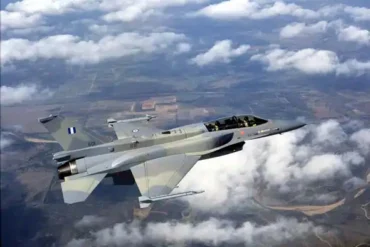
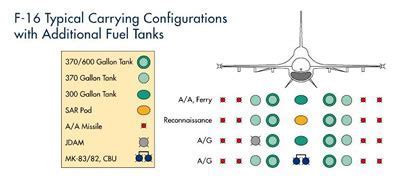
The F-16 employs jettisonable external drop tanks mounted on its wing pylons and centerline hardpoints. These tanks provide additional fuel storage while allowing for flexible mission profiles.
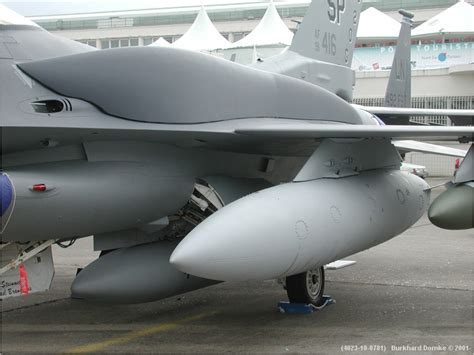
370-Gallon Drop Tanks
- Standard drop tanks mounted on the underwing pylons.
- Primarily used for extended-range operations.
- Designed to be jettisoned mid-flight if necessary to improve maneuverability.
- Common in combat air patrols (CAP) and strike missions.
600-Gallon Drop Tanks
- Attached to the centerline station beneath the fuselage.
- Typically non-jettisonable, used for prolonged loitering or patrol missions.
- Used when maximum fuel capacity is required without immediate concerns about dogfight agility.
Conformal Fuel Tanks (CFTs)
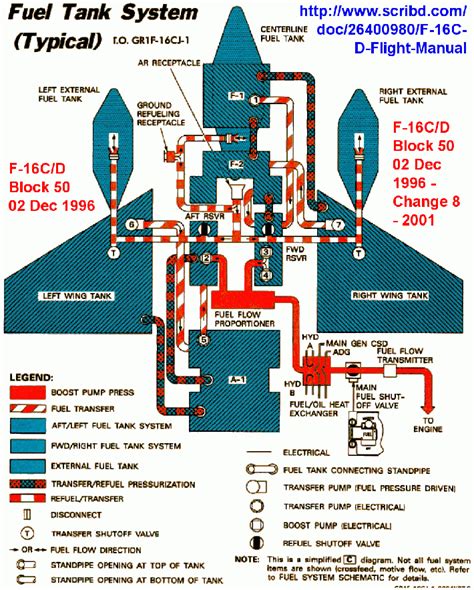
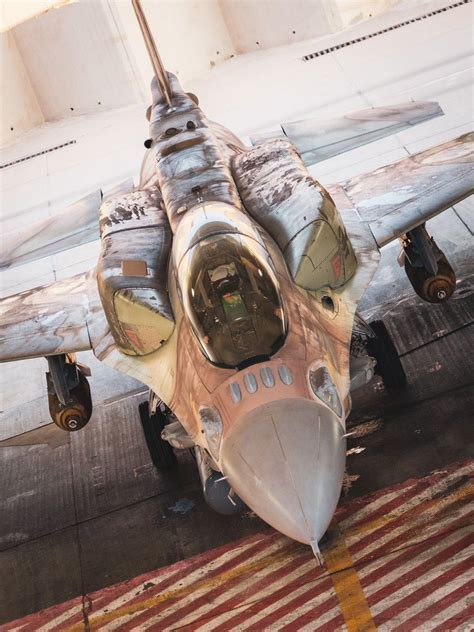
Unlike drop tanks, CFTs are semi-permanent fuel reservoirs mounted along the upper fuselage. They enhance range without occupying external weapon stations, thereby maintaining the aircraft’s full combat payload capacity.
CFT Specifications and Benefits
- Capacity: Each CFT holds approximately 450 gallons (1,703 liters) of additional fuel.
- Drag Impact: Minimal impact at subsonic speeds, though increased drag at supersonic velocities.
- Operational Efficiency: Reduces reliance on aerial refueling and extends range by 20–40%.
- Weapon Carrying Advantage: Frees up underwing pylons for additional air-to-air and air-to-ground munitions.
The F-16 Block 52 and Block 60 variants, such as those operated by Israel and the UAE, prominently feature CFTs, allowing them to conduct extended-range strike missions without compromising payload.
Mission Applications and Tactical Use
1. Long-Range Strike Missions
For deep penetration strikes or interdiction missions, the F-16 may carry a combination of drop tanks and CFTs to maximize fuel reserves while maintaining combat readiness.
2. Aerial Patrols and Air Superiority
In regions with vast airspace such as the Middle East and the Pacific, F-16s equipped with drop tanks can sustain longer combat air patrols (CAPs), ensuring continuous air dominance.
3. Multi-Role Configurations
F-16s engaged in anti-drone and ground attack missions often utilize a hybrid setup:
- Two 370-gallon drop tanks for range.
- AIM-120 AMRAAM missiles for air-to-air combat.
- APKWS II laser-guided rockets for precision strikes.
This combination was notably used by U.S. forces in the Middle East when countering Houthi drones and other asymmetric threats.
Challenges and Limitations of Drop Tanks
1. Drag and Maneuverability Trade-Off
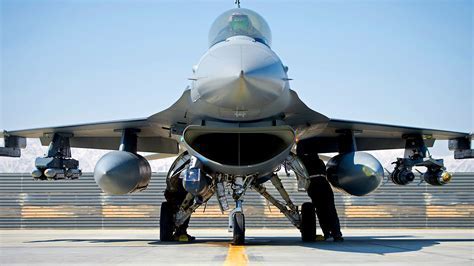
While drop tanks significantly increase operational range, they also induce aerodynamic drag, affecting the aircraft’s speed and agility. During dogfights or high-G maneuvers, pilots may opt to jettison drop tanks to regain full mobility.
2. Vulnerability in Combat Zones
External fuel tanks present an additional target for enemy fire. In high-threat environments, F-16 pilots may prefer internal fuel storage or CFTs to reduce radar cross-section and minimize vulnerability.
3. Ground Operations and Maintenance Considerations
On rough or damaged airstrips, the F-16’s drop tanks may increase the risk of foreign object debris (FOD) ingestion, potentially affecting engine performance. This issue was noted in operational scenarios such as those seen in the Russia-Ukraine conflict, where runway conditions played a critical role in aircraft effectiveness.
Strategic Importance of Drop Tanks for Global Air Forces
1. U.S. Air Force Operations
The USAF employs F-16s with external drop tanks for long-range missions, particularly in Pacific deployments and Middle Eastern combat zones. Their ability to conduct extended patrols over the South China Sea and Persian Gulf highlights the importance of fuel efficiency in modern air strategy.
2. Israeli Air Force (IAF) Usage
The F-16I “Sufa”, a specialized variant used by Israel, is frequently equipped with both drop tanks and CFTs, enabling deep-strike capabilities against distant targets in adversarial regions.
3. NATO and Allied Air Forces
Countries such as Greece, Poland, and South Korea have modified their F-16 fleets with extended fuel configurations to support their national defense strategies, particularly for maritime and border defense operations.
Conclusion
The F-16 drop tank system remains an essential component in extending the aircraft’s range and mission effectiveness. Whether through 370-gallon and 600-gallon external tanks or advanced CFT installations, fuel management plays a crucial role in maximizing the F-16’s operational impact. While they introduce trade-offs in maneuverability and vulnerability, their strategic benefits far outweigh their limitations, making them indispensable in modern aerial warfare.
Frequently Asked Questions (FAQ)
1. Can F-16 drop tanks be reused after being jettisoned?
No, once an F-16 jettisons its drop tanks, they are not recoverable. They are designed for single-use in emergencies or combat situations where fuel weight reduction is critical.
2. How do CFTs compare to drop tanks in operational efficiency?
Conformal Fuel Tanks (CFTs) provide a more streamlined solution, reducing drag while maintaining full weapon-carrying capability. Drop tanks, while offering greater flexibility, induce higher drag and need to be discarded in combat scenarios.
3. Why don’t all F-16s use CFTs instead of drop tanks?
CFTs are permanent installations, which may not be ideal for missions requiring frequent configuration changes. Many air forces prefer the flexibility of jettisonable drop tanks, especially in dynamic combat environments.