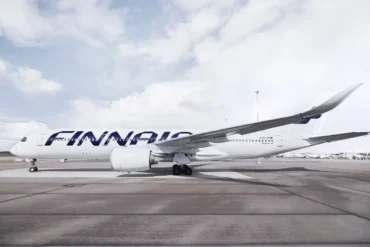
Finnair has long been a carrier defined by geography. Perched on the northern edge of Europe, Helsinki sits closer to Tokyo than many Central European hubs do. For decades, that proximity functioned as a quiet competitive advantage, allowing the Finnish flag carrier to build an efficient bridge between Europe and Asia. Now, in 2026, that geographic logic has evolved into something more strategic. Asia-Pacific is no longer just a strength for Finnair—it is its secret weapon. Meanwhile, the United States, once a dependable pillar of transatlantic demand, has slipped from the top of the airline’s priority list.
The shift is not dramatic in rhetoric, but it is unmistakable in numbers. While many European carriers have leaned heavily into the North Atlantic market, Finnair has maintained a different balance. The US accounts for roughly 9% of its total capacity, a modest share compared to peers that built their profitability on transatlantic corridors. This lighter exposure now looks less like caution and more like foresight.
The Transatlantic Slowdown And Demand Realignment
In recent months, the North Atlantic market has shown signs of strain. Geopolitical uncertainty, shifting consumer sentiment, and broader global tensions have nudged some international travelers to reconsider trips to the United States. Canadian outbound demand has softened noticeably, and European carriers have reported a measurable dip in forward bookings on key US routes.
For airlines that structured their long-haul networks around transatlantic dominance, this wobble is uncomfortable. For Finnair, it is manageable. The airline’s DNA is not rooted in JFK, Chicago O’Hare, or Los Angeles. Its historic growth story was written in Tokyo, Seoul, Shanghai, and Bangkok. That distinction now matters.
Christine Rovelli, Finnair’s Chief Revenue Officer, underscored the airline’s continued dominance in Japan, noting that Finnair remains the largest European carrier to Japan, operating 20 weekly frequencies in the summer season. That is not a marginal presence; it is a structural commitment. Even without the ability to overfly Russian airspace—an operational complication that has lengthened some Asian routings—Finnair has preserved a strong foothold in Northeast Asia.
The asymmetry in demand is particularly telling. While European-origin traffic to the US shows softness, inbound US demand toward Europe remains more resilient. In contrast, Australian and Asian travelers are actively seeking connections to the Nordics. For a revenue strategist, that distinction is gold. Airlines do not chase sentiment; they chase paying passengers.
Australia: The Bold Melbourne Bet
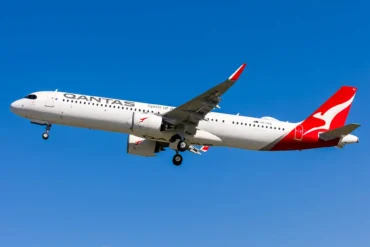
The clearest signal of Finnair’s Asia-Pacific ambition arrived with its announcement of a new route from Helsinki to Melbourne. Beginning in late October, the airline will operate daily flights using the Airbus A350-900, with a technical stop in Bangkok and fifth-freedom rights between Bangkok and Melbourne.
On paper, the route raised eyebrows. Daily service between Finland and Australia is not an incremental experiment; it is a statement. Yet the logic behind the launch reveals Finnair’s deeper calculus. According to CEO Turka Kuusisto, corporate demand from Australian travelers had already been robust before the route was even public. Australians ranked among Finnair’s top ten nationalities in corporate travel flows.
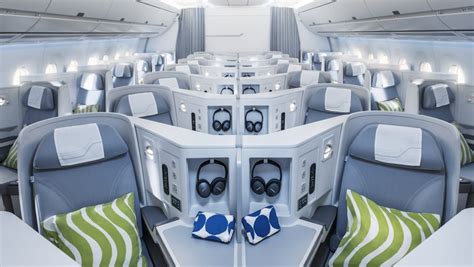
That detail changes the narrative. This is not speculative expansion. It is a supply response to existing premium demand. Business travelers filling lie-flat seats provide stability and yield strength, especially on ultra-long-haul sectors where operating costs are significant.
Leisure dynamics further strengthen the case. Northern Europe holds a powerful appeal for Australian tourists. The Nordics represent a blend of design, wilderness, and cultural distinctiveness that resonates strongly in long-haul leisure markets. Kuusisto’s observation that Australians actively want to visit Finland and the wider Nordic region suggests that Finnair is positioning itself not merely as a transport provider but as a curated gateway.
The Bangkok stop adds flexibility. Fifth-freedom rights allow Finnair to sell tickets between Bangkok and Melbourne, tapping into intra-Asia-Pacific flows. That layer of revenue diversification reduces risk and enhances aircraft utilization. In network planning terms, the Melbourne route is less a gamble and more a carefully engineered corridor.
Operating Without Russian Airspace: Constraint Or Catalyst?
The Ukraine conflict and resulting Russian airspace closures forced European carriers to redraw Asian routings. For Finnair, whose shortest paths to East Asia once crossed Siberia, the impact was particularly acute. Flight times increased, fuel burn rose, and cost structures shifted.
Yet adversity sometimes sharpens strategic clarity. Instead of retreating from Asia, Finnair doubled down on markets demonstrating resilient demand. Japan remained central. Southeast Asia retained relevance. Australia emerged as a new pillar.
Longer routings are operationally inconvenient, but they are not fatal when demand justifies the economics. The Airbus A350, with its fuel efficiency and range capabilities, provides a technological buffer against geopolitical headwinds. Fleet decisions, in this context, become strategic assets. Finnair’s investment in next-generation widebodies now supports its pivot.
Why The US Is No Longer Priority #1
The United States has not vanished from Finnair’s network. The airline maintains a long-term commitment to the market, reinforced by its oneworld partnership with American Airlines. Connectivity, loyalty reciprocity, and alliance feed still matter.
However, priority is about relative allocation. When capacity is finite, aircraft hours are precious, and crew resources are constrained, airlines must choose where incremental growth generates the strongest return. In 2026, that calculus points south and east rather than west.
Demand asymmetry tells the story. European-origin traffic to the US lacks the urgency seen in Australian and Asian demand toward Europe. Corporate flows from Australia show structural consistency. Japanese connectivity remains entrenched. In revenue management terms, Asia-Pacific offers clearer yield visibility.
Moreover, competitive density on the North Atlantic is intense. Joint ventures between major US and European carriers create formidable pricing pressure. Asia-Pacific corridors, while competitive, offer differentiated positioning for a carrier whose brand is intertwined with Nordic identity and geographic proximity.
Finnair is not abandoning the US. It is reallocating ambition.
Strategic Patience In A Volatile Era
Airline strategy is rarely about dramatic exits. It is about calibrated emphasis. Finnair’s 2026 playbook reflects a nuanced reading of global travel currents. Rather than overreacting to short-term softness in the transatlantic market, the airline is reinforcing markets that actively seek its presence.
The Asia-Pacific pivot is not opportunistic. It aligns with Finnair’s historic identity, fleet composition, alliance partnerships, and geographic logic. The Melbourne route exemplifies this synthesis: corporate demand, leisure appeal, alliance connectivity, and aircraft capability converging into a single daily service.
In an industry prone to chasing trends, Finnair’s secret weapon is disciplined focus. The US remains in the portfolio, but it no longer commands the spotlight. Instead, the airline is leaning into corridors where passenger intent is clear and premium demand is tangible.
As 2026 unfolds, Finnair’s strategy underscores a broader lesson in long-haul aviation. Growth does not belong to the loudest market; it belongs to the most aligned one. By redirecting attention toward Asia-Pacific—despite airspace constraints and geopolitical complexity—Finnair is demonstrating that strategic clarity often matters more than sheer scale.