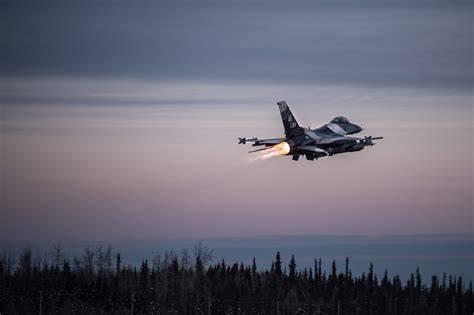
The modern fighter-jet industry is usually associated with rapid technological change. New sensors, stealth coatings, electronic warfare systems, weapons, engines, and software can make an aircraft look obsolete long before its airframe reaches the end of its structural life. Yet several remarkably old fighter designs continue to emerge from factories as brand-new aircraft. Their survival is not simply a matter of nostalgia. It reflects a combination of combat effectiveness, upgrade potential, export demand, industrial infrastructure, and the enormous cost of developing an entirely new fighter.
Five production lines stand out because the designs behind them first flew decades ago, yet new examples are still being assembled today. They range from the Soviet-origin Sukhoi Su-30 family, whose Indian production line recently returned after a five-year pause, to the American F-15 Eagle, whose lineage reaches back more than half a century. Between those extremes are the Saab Gripen, Dassault Rafale, and Lockheed Martin F-16 Fighting Falcon.
The age of these aircraft is particularly striking when we consider how dramatically military aviation has changed since their first flights. Some were designed during the Cold War, when analog instruments and mechanically scanned radars were still commonplace. Today, their newest versions incorporate digital avionics, modern radar systems, advanced data links, precision weapons, improved electronic warfare equipment, and highly sophisticated mission computers.
There is also an important distinction between design longevity and continuous production. A fighter can remain relevant for decades without being continuously manufactured. One aircraft on this list experienced a complete production stoppage before its line was revived by a new contract. Others maintained an uninterrupted industrial lineage or successfully transferred production to new facilities and even new countries.
Ranking these five aircraft by the gap between their original maiden flight and current production reveals something fascinating about modern fighter aviation. The oldest design is not necessarily the most technologically advanced, and the newest design is not necessarily the easiest to manufacture. Instead, each surviving production line represents a different answer to the same question: How can a fighter designed decades ago remain valuable enough to justify building new examples today?
5. Sukhoi Su-30: A 37-Year-Old Fighter Production Line Returns
The Sukhoi Su-30 represents the most complicated production story in the group because its current manufacturing activity is technically a restart rather than an uninterrupted continuation. The aircraft’s lineage can be traced to the Su-27 family and the prototype known as the Su-27PU, which made its first flight on December 30, 1989. The basic concept was developed from the highly capable Flanker family, but the Su-30 evolved into a much more sophisticated multirole aircraft.
India eventually transformed the aircraft into the distinctive Su-30MKI, a version that bears relatively little resemblance to a simple export-standard Flanker. The Indian aircraft incorporates canards, thrust-vectoring AL-31FP engines, and a complex avionics architecture combining Russian, Indian, Israeli, and French technologies. That combination made the Su-30MKI one of the most capable heavy fighters in the Indian Air Force inventory.
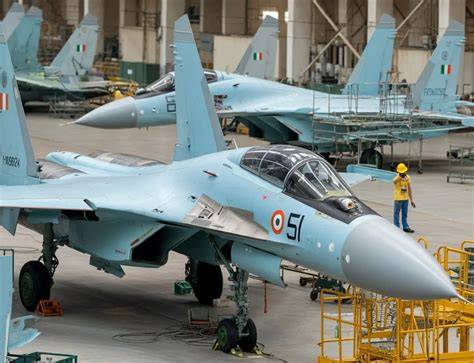
For decades, Hindustan Aeronautics Limited’s Nashik facility produced the aircraft under license. The Indian production program eventually delivered 222 Su-30MKIs, creating a substantial domestic industrial capability around the type. But the line eventually became inactive after the aircraft covered by the existing production contract had been completed, with the final production activity ending around 2020–2021.
The story changed in December 2024, when a new contract worth roughly INR 11,000 crore, or approximately $1.3 billion, was signed for 12 additional Su-30MKIs. The aircraft are intended to replace fighters lost through accidents rather than establish a major new expansion of India’s fleet. Production is expected to resume at Nashik, with the first aircraft anticipated around 2027–2028 and all 12 expected by 2029.
This restart also has an important industrial dimension. More than 50% of the aircraft’s components are expected to be domestically produced, reflecting India’s broader effort to expand indigenous defense manufacturing. The Su-30 therefore demonstrates how an aircraft can remain valuable even after its original production cycle ends. Existing infrastructure, established maintenance expertise, trained personnel, and a large operational fleet can make restarting an old design considerably more practical than introducing an entirely new heavy fighter.
The 37-year gap between the prototype’s first flight and renewed production is therefore somewhat deceptive. The design is 37 years old, but the Nashik line was not continuously active for all those years. That makes the Su-30 the clear exception among these five production stories.
4. Saab Gripen: 38 Years From First Flight to Multinational Production
The Saab JAS 39 Gripen followed a very different path. Its first prototype, serial number 39-1, flew on December 9, 1988, with test pilot Stig Holmström at the controls. The program immediately faced a serious challenge when the prototype crashed during landing in 1989 following a pilot-induced oscillation associated with the aircraft’s fly-by-wire control system.
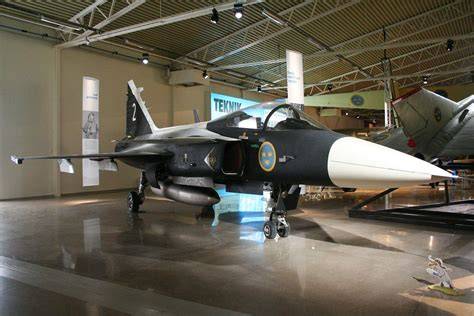
Despite that difficult beginning, the Gripen matured into one of Europe’s most distinctive fourth-generation fighter designs. Sweden eventually introduced it into operational service in 1996, and Saab continued developing the aircraft through successive versions. The latest Gripen E and F variants have significantly more advanced systems than the original aircraft, demonstrating how much modernization can be incorporated into a long-lived airframe concept.
The Gripen’s production story became even more interesting in 2026. On March 25, Saab, Embraer, and the Brazilian Air Force unveiled the first Gripen E assembled outside Sweden at Embraer’s Gavião Peixoto facility in Brazil. Brazil’s program covers 36 aircraft, consisting of 28 single-seat F-39E fighters and eight two-seat F-39F aircraft, with production and deliveries extending toward the early 2030s.
This means the Gripen is now being produced through a genuinely international industrial arrangement. Sweden’s original production infrastructure at Linköping remains active, while Brazil has developed its own assembly capability through technology transfer.
That distinction makes the Gripen particularly important. Unlike the Su-30, its production line did not need to be resurrected after a lengthy shutdown. Instead, the original industrial ecosystem continued while a second country gradually gained the capability to build the aircraft itself.
The Gripen’s longevity is closely tied to its design philosophy. It was created as a relatively compact fighter capable of operating from dispersed bases and maintaining high availability. Its modern versions retain that underlying philosophy while receiving dramatically improved avionics and mission systems. The result is an aircraft that has survived not by remaining frozen in its original configuration, but by evolving into a substantially more capable fighter.
3. Dassault Rafale: 39 Years of Continuous Evolution
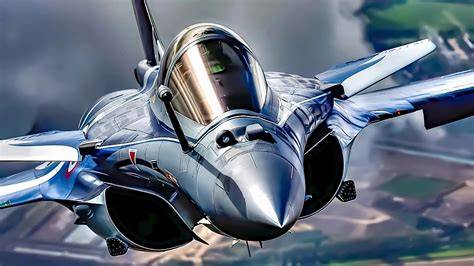
The Dassault Rafale occupies an unusual position on this list because its first aircraft was not actually the production fighter. The Rafale A technology demonstrator first flew in 1986, beginning a development story that would ultimately produce one of Europe’s most capable multirole combat aircraft.
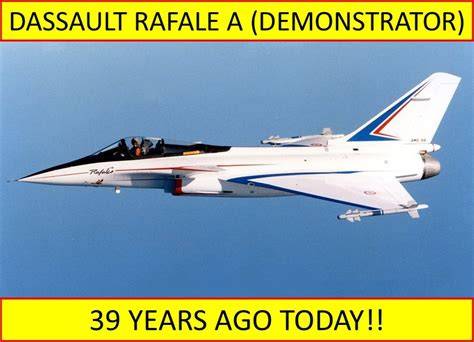
The production-standard Rafale took considerably longer to reach operational service. The French Navy introduced the aircraft in 2004, followed by the French Air Force in 2006. Its export career began later still, with Egypt becoming the first foreign customer in 2015.
Yet the program’s recent momentum has been remarkable. In October 2025, Dassault Aviation announced delivery of the 300th Rafale, a milestone that highlighted how dramatically the program had expanded from its early development phase. The aircraft is now supported by an industrial network involving roughly 400 French companies.
The numbers behind the production program are equally significant. Dassault’s year-end figures recorded 533 firm orders from France and eight export customers, with 233 aircraft still awaiting delivery. Production rates are planned to increase to approximately four aircraft per month, a remarkable acceleration for an aircraft whose technology demonstrator first flew four decades ago.
The Rafale’s success demonstrates why a fighter does not necessarily become obsolete simply because its original design dates back to the Cold War era. Its architecture has provided sufficient room for continuous modernization. Radar technology, electronic warfare equipment, cockpit systems, communications, weapons integration, and mission software have all evolved while the fundamental airframe remains recognizable.
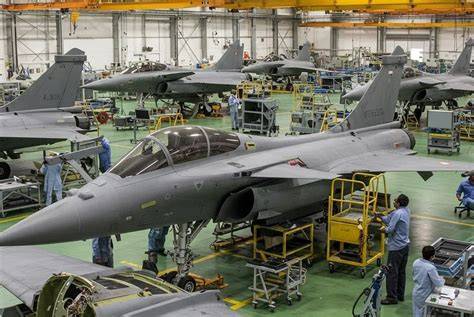
The aircraft has also benefited from France’s decision to maintain sovereign control over a complete combat-aircraft ecosystem. Dassault, French engine and electronics industries, weapons manufacturers, and a broad domestic supplier base have preserved the industrial knowledge required to continue producing and upgrading the Rafale.
Its 39-year gap therefore tells only part of the story. The more important fact is that the Rafale program is not merely surviving. Its production rate and international order book are expanding, giving the aircraft a level of industrial momentum that many newer fighters would struggle to achieve.
2. F-16 Fighting Falcon: 51 Years and a New Production State
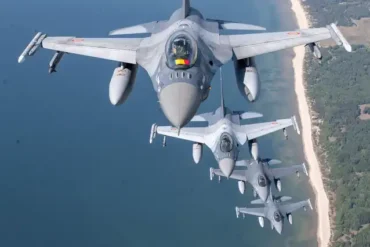
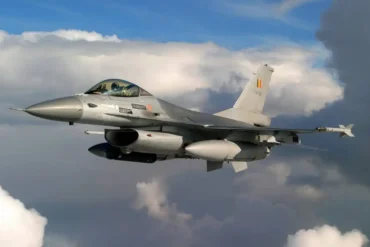
Few fighters demonstrate longevity as clearly as the F-16 Fighting Falcon. The YF-16 prototype rolled out at Fort Worth, Texas, in December 1973 and made its first flight on January 20, 1974. That was more than half a century ago, yet new F-16s are still being assembled for international customers.
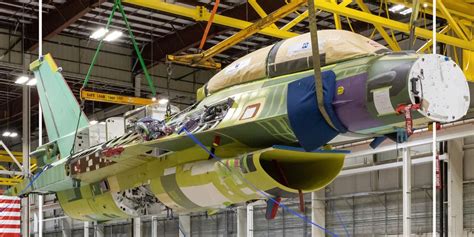
The original Fort Worth production line ultimately produced roughly 3,620 aircraft under General Dynamics and later Lockheed Martin. Production at the Texas facility continued for approximately 44 years before the final Iraqi Air Force F-16 left the line in November 2017. The factory space was subsequently used for the expanding F-35 program.
That might have appeared to mark the end of new F-16 production. Instead, Lockheed Martin had already established another facility. Its Greenville, South Carolina, plant opened in 2021, creating a new manufacturing home for the fighter.
The first F-16 Block 70 aircraft produced at Greenville rolled out in late 2022. By December 2025, Lockheed Martin announced that it had completed the F-16 Block 70 aircraft associated with the initial fleets for Bulgaria and Slovakia, describing Greenville as the world’s only active F-16 production line.
The modern F-16 is far removed from the lightweight fighter that first flew in 1974. The Block 70 incorporates advanced avionics, an improved mission computer, modernized cockpit technology, advanced radar capability, and structural improvements intended to extend service life.
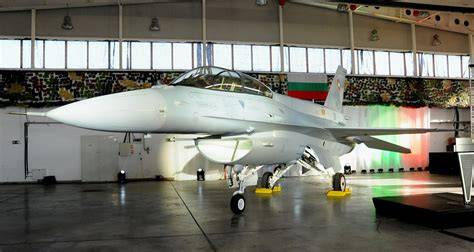
The aircraft’s continued popularity is also driven by its enormous global ecosystem. More than 1,500 F-16s remain in service worldwide, while the type is operated by numerous NATO members and other allied nations. A massive installed fleet creates demand for training, maintenance, weapons integration, upgrades, spare parts, and replacement aircraft.
That ecosystem helps explain why an aircraft born during the Nixon administration can still attract new international orders. The F-16 does not need to convince customers that it is a revolutionary new fighter. It needs to demonstrate that the latest version offers a mature, affordable, highly interoperable combat platform with decades of operational experience behind it.
1. F-15 Eagle: 54 Years From YF-15 to F-15EX
The F-15 Eagle holds the longest gap on this list. The YF-15A first flew on July 27, 1972, making the basic design 54 years old in 2026. Yet Boeing is still producing brand-new F-15s at its St. Louis facility.
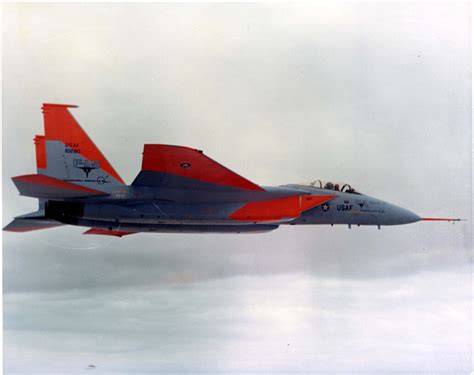
The original F-15 entered U.S. Air Force service in 1976 and quickly established a reputation for exceptional air-to-air performance. More than 1,500 F-15s remain in service around the world, and the aircraft’s combat record has helped sustain its reputation long after many of its contemporaries disappeared from production.
The crucial reason the F-15 survived commercially is that the production line never had to completely die. Export orders from countries including Saudi Arabia and Qatar helped keep the industrial base alive after U.S. Air Force procurement of earlier variants declined. That continuity created a foundation for the aircraft’s newest incarnation.
The F-15EX Eagle II first flew on February 2, 2021. Although it looks unmistakably related to the original Eagle, the modern aircraft incorporates contemporary avionics, electronic warfare capabilities, digital systems, advanced weapons integration, and substantially updated mission architecture.
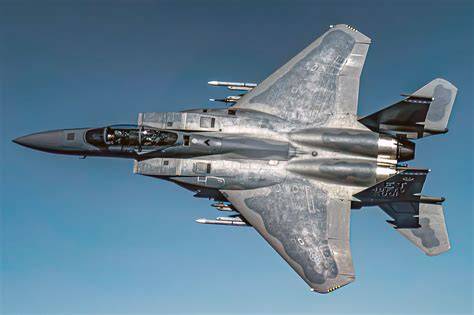
By March 2026, Boeing reportedly had around 90 F-15EX aircraft in various stages of production at St. Louis, with the company working toward an assembly rate of two aircraft per month by late 2026. The U.S. Air Force’s order book stood at 98 aircraft, with a potential program of record reaching 144.
The F-15EX demonstrates perhaps the clearest example of why an old fighter design can remain industrially relevant. The aircraft’s basic aerodynamic configuration has proven successful, while modern technology has transformed what that configuration can accomplish.
The decision to procure the F-15EX also reflected practical considerations. Rather than creating an entirely new production ecosystem, the United States could leverage an existing line and an established supplier network. That reduced industrial risk and allowed a proven aircraft architecture to absorb modern systems without requiring a completely new fighter-development program.
Why These Fighter Jet Production Lines Survived
The five aircraft share one important characteristic: their airframes are old, but their capabilities are not necessarily old. Each program has survived by adapting. The Gripen gained a new international production base, the Rafale expanded its export market, the F-16 moved production to a new American facility, and the F-15 evolved into the F-15EX while retaining its established manufacturing infrastructure.
The Su-30 is different because its Indian production line actually stopped. Its return demonstrates that even an inactive fighter production facility can retain value when a large existing fleet creates a reason to manufacture replacements.
There is another lesson hidden in these production histories. Fighter aircraft are extraordinarily expensive to design from scratch. Developing a new airframe involves years of aerodynamic testing, flight testing, weapons integration, certification, manufacturing development, and supply-chain preparation. Once an aircraft has already demonstrated that its basic design works, upgrading it can be considerably more practical than replacing it.
That is why fighter-jet longevity is increasingly measured in generations of technology rather than years of airframe design. A 1970s airframe equipped with modern radar, digital mission systems, electronic warfare technology, contemporary communications, and new weapons can perform a dramatically different role from the aircraft that first flew decades earlier.
The five surviving production lines also show that industrial continuity can be as important as technical excellence. A fighter with a mature supplier network and an established factory has a major advantage when governments need additional aircraft quickly. Maintaining a production line may therefore be strategically valuable even when annual output is relatively low.
Ultimately, the F-15’s 54-year production lineage is the most extraordinary example, but every aircraft on this list tells a similar story. The Su-30 has returned to production in India, the Gripen is now manufactured across two countries, the Rafale is accelerating toward higher output, the F-16 has found a new home in South Carolina, and the F-15 continues evolving in St. Louis.
These aircraft prove that a fighter’s first flight is not necessarily the beginning of a short technological lifespan. With sustained investment, international demand, industrial continuity, and aggressive modernization, a design born in one era can remain relevant in another—and sometimes remain on the assembly line for more than half a century.