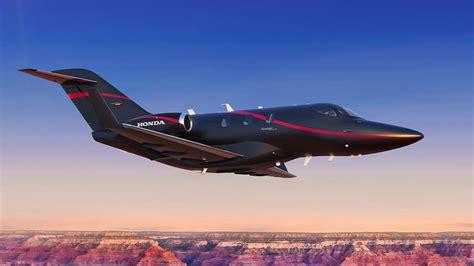
The HondaJet, a bold leap from a brand renowned for motorcycles and sedans, has taken flight—literally. Over the past two decades, Honda Aircraft Company has disrupted the light business jet market with a clean-sheet design that fuses high performance, quiet cabin comfort, and cutting-edge efficiency. In this deep dive, we explore how far the HondaJet can fly, how fast it can cruise, and what makes it one of the most distinct private jets in the skies today.
Maximum Range: How Far Can a HondaJet Fly?
The flight range of a private jet defines its mission flexibility, and HondaJet excels beyond expectations for a light jet. The latest two models—the Elite II and the Echelon—offer distinct operational capabilities tailored for different types of flyers.
- HondaJet Elite II: With NBAA IFR reserves, the Elite II achieves a maximum range of 2,865 kilometers (1,780 miles). This range covers popular city pairs such as New York to Dallas, Los Angeles to Chicago, or Miami to Toronto without refueling.
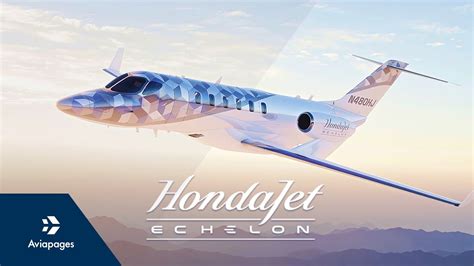
- HondaJet Echelon: Designed with intercontinental ambitions, the Echelon pushes boundaries with an astounding maximum range of 4,862 kilometers (3,021 miles). This makes cross-continental travel possible, such as Los Angeles to New York, or London to Istanbul, for up to five occupants (one pilot and four passengers).
This range advantage is especially impressive considering that many competitors in the light jet category, such as the Embraer Phenom 100 or Cessna Citation M2, fall short of the 2,000-mile mark.
Top Speed: How Fast Can a HondaJet Fly?
Performance in business aviation is more than luxury—it’s about speed and schedule flexibility. Honda has engineered the Elite II and Echelon to cruise faster than many of their peers:
- HondaJet Elite II: The Elite II boasts a top cruising speed of 782 kilometers per hour (485 mph). It comfortably outruns competitors in the same weight class and minimizes travel time on mid-range routes.
- HondaJet Echelon: With its upgraded aerodynamics and powerplant enhancements, the Echelon reaches a maximum cruising speed of 834 kilometers per hour (518 mph)—putting it in the upper tier of performance among light business jets.
To put this into context, most light jets in this category average 627–759 km/h (389–471 mph). The Echelon’s performance is not just fast; it’s elite.
Altitude Advantage: Flying Higher Than Commercial Jets
One of the less obvious but highly valuable characteristics of the HondaJet series is its ability to fly higher than commercial airliners. While airlines typically cruise at 35,000 feet, HondaJets operate above much of the traffic and turbulence:
- Elite II: Cruises at up to 43,000 feet.
- Echelon: Pushes that ceiling to 47,000 feet (FL470).
Flying at such altitudes not only avoids congested airways and adverse weather but also results in fuel-efficient cruising and smoother passenger experiences.
Engineering Innovation: The Over-The-Wing Engine Mount (OTWEM)
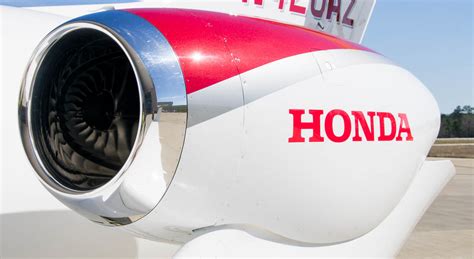
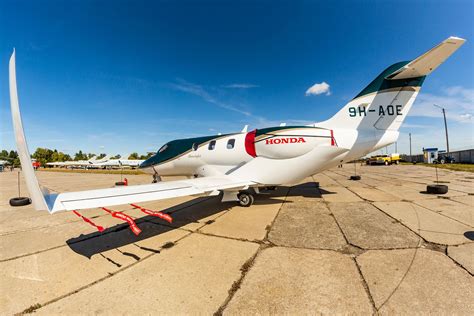
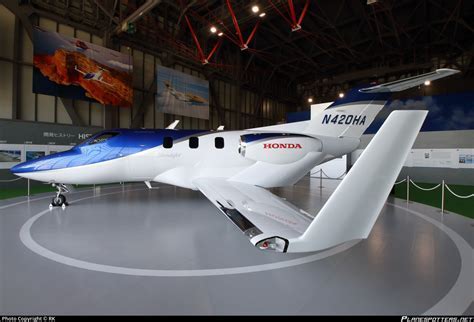
A hallmark of HondaJet’s uniqueness lies in its Over-The-Wing Engine Mount (OTWEM) configuration. Spearheaded by visionary designer Michimasa Fujino, this design was not a cosmetic gimmick but a transformative shift in jet architecture.
By placing the twin GE Honda HF120 turbofan engines above and forward of the wing, Honda achieved:
- Cabin space optimization: Without engine mounts on the fuselage, interior volume expands for more comfort.
- Reduced noise and vibration: Engine noise is isolated away from the cabin, enhancing tranquility during flight.
- Improved aerodynamics: The over-wing design reduces drag and increases lift-to-drag efficiency.
This bold departure from traditional rear-fuselage engine placements is what gives HondaJet its signature look—and quieter cabin.
Interior Comfort and Cabin Technology
Inside the HondaJet, comfort meets utility. The cabin is meticulously crafted with leather seats, customizable configurations, and cutting-edge avionics, including Garmin’s G3000 system.
Passengers benefit from:
- Flat-floor cabin layout
- Enclosed lavatory with skylight
- Executive club seating for four
- Climate-controlled zones
The pressurization system, coupled with minimal cabin noise, makes long flights feel shorter. Whether it’s a corporate executive or a private entrepreneur flying, the experience rivals that of jets double its size.
Cost of Ownership: How Much Does a HondaJet Cost?
HondaJets are premium aircraft with pricing to match their luxury and performance specs:
- HondaJet Elite II: Approximately $7.3 million USD, new from the factory.
- HondaJet Echelon: Between $10–$12 million USD, depending on custom options.
But purchasing the jet is only the beginning. Ongoing costs include:
- Annual maintenance and inspections
- Crew salaries (if operated commercially)
- Hangar fees, insurance, and fuel
For example, total yearly ownership costs can range between $500,000 to over $1 million, depending on usage.
For those seeking a more affordable entry point, certified pre-owned models, such as the original HondaJet HA-420, start around $2.5 million.
Why HondaJet Is Dominating the Light Jet Market
Beyond just specs, HondaJet’s dominance stems from how seamlessly it blends technology, efficiency, and elegance. Honda’s meticulous testing—spanning two decades—culminated in a product that redefines what a light jet can do.
- Fuel efficiency: The HondaJet burns less fuel per nautical mile than competitors, thanks to lightweight materials and superior aerodynamics.
- Single-pilot certification: FAA-certified for solo pilot operations, which appeals to owner-operators and reduces staffing overhead.
- Global support: Honda Aircraft Company has built a growing global support network, making international operations increasingly practical.
Who Is the HondaJet For?
The HondaJet is ideal for:
- Business professionals who need fast regional and transcontinental access.
- Private owners seeking control over their schedule and comfort.
- Charter companies looking to offer elite, quiet service on short-haul routes.
Its blend of range, speed, and luxury places it as a market leader among high-performance light jets.
Looking Ahead: The Future of Honda Aircraft
With the success of the Elite II and the introduction of the Echelon, Honda Aircraft is not just dipping its toes into aviation—it’s rewriting the playbook. The company is actively investing in more fuel-efficient designs, hybrid-electric propulsion research, and expanding service centers worldwide.
Expect future HondaJets to fly farther, faster, and quieter—continuing the upward trajectory of Japanese aerospace innovation.
Conclusion
The HondaJet Elite II and Echelon prove that light jets can punch far above their weight. With class-leading range, cruise speed, and operating altitude, these aircraft aren’t just for show—they’re workhorses engineered for today’s fast-paced, high-performance aviation landscape. Whether flying executives across states or entrepreneurs across continents, HondaJet is redefining how far and how fast business aviation can go.