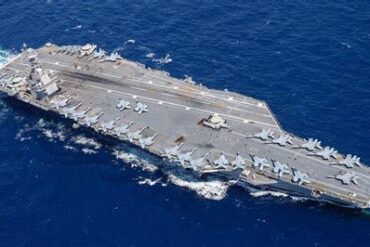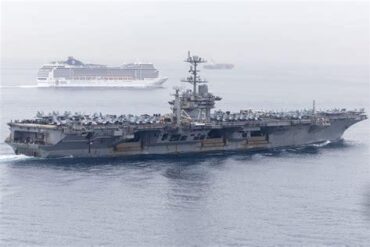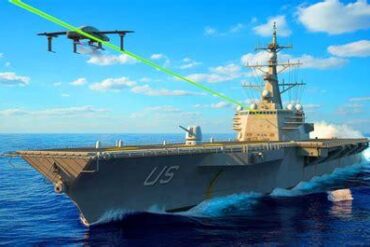
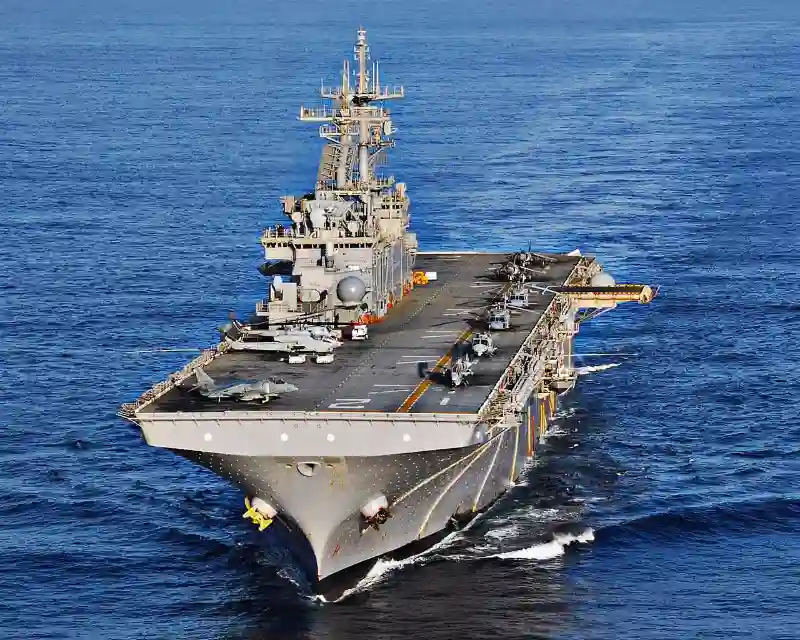
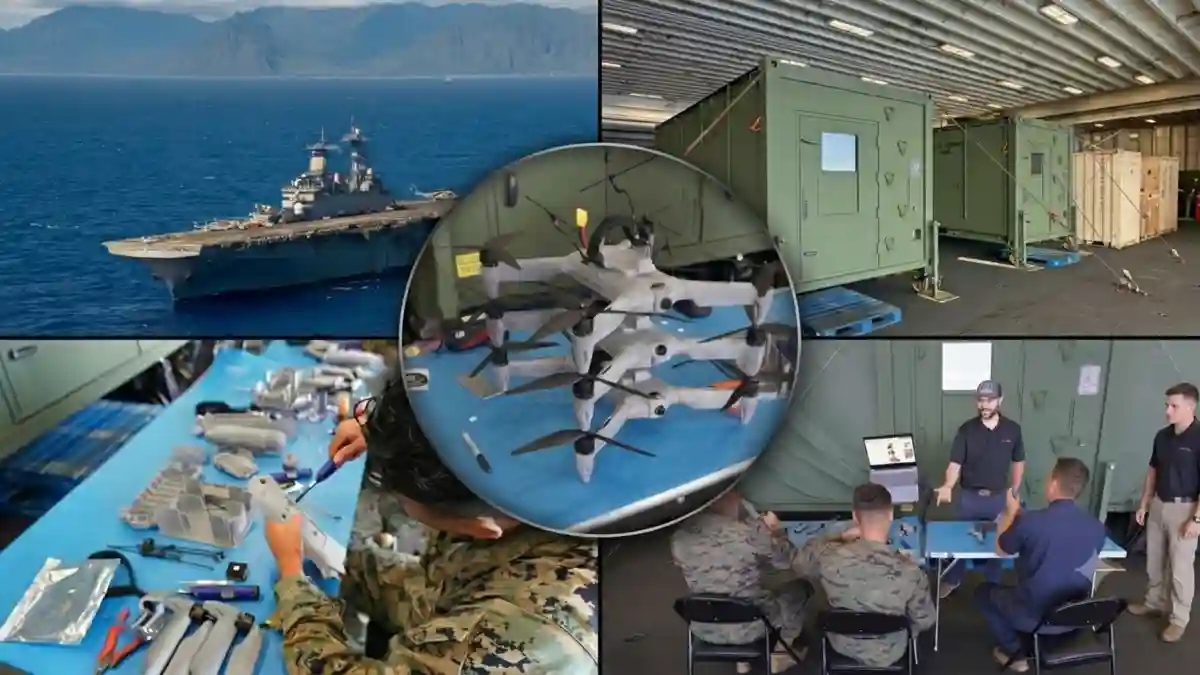
Modern naval warfare is increasingly shaped by a simple question: how quickly can a military force replace, modify, and manufacture its unmanned systems? During its voyage toward the 2026 Rim of the Pacific (RIMPAC) exercise, the USS Essex demonstrated one possible answer. Rather than relying entirely on a traditional stockpile of finished drones and spare components, the amphibious assault ship carried a containerized microfactory capable of producing equipment while underway.
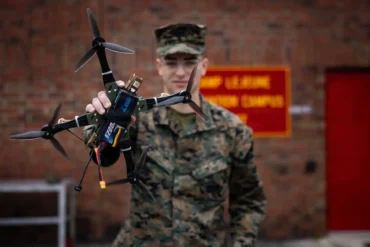
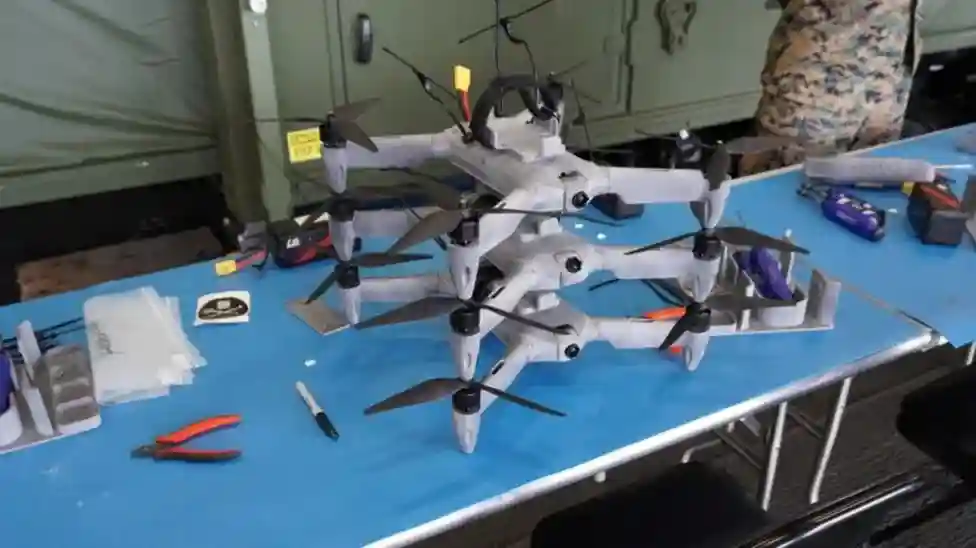
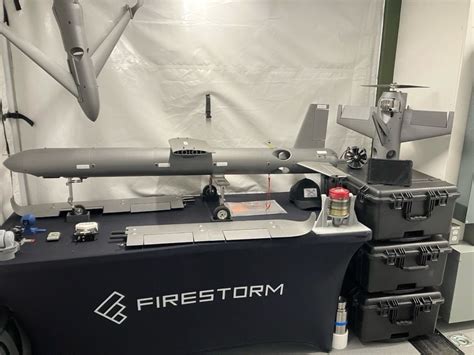
The system was operated by Firestorm Labs, whose xCell platform essentially turns a shipping-container-sized space into a compact additive manufacturing facility. During the voyage, personnel reportedly produced more than 1,000 individual parts and assembled 12 Squall first-person-view drones. The equipment was also used to manufacture test components and repair parts for the ship itself, including while the Essex operated through Sea State 5 conditions.
That demonstration is important because it changes what we mean by a deployed drone force. A conventional deployment requires aircraft, spare parts, tools, and replacement inventory to be transported before operations begin. A ship equipped with an onboard production capability instead carries something closer to a manufacturing capability in a box. That distinction could become increasingly valuable as the US Navy considers how to operate in a conflict where unmanned systems may be consumed in large numbers.
The Rise of Distributed Drone Manufacturing
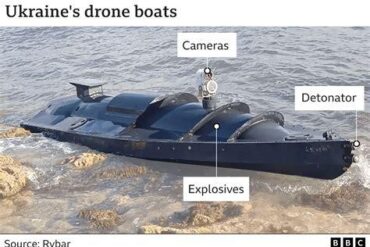
The strategic logic behind 3D-printed drones extends well beyond the USS Essex. Modern warfare is placing greater emphasis on mass, affordability, and adaptability, particularly as inexpensive autonomous systems become capable of challenging much more expensive military platforms.
For decades, military procurement often emphasized sophisticated systems built in relatively limited quantities. That approach remains important for aircraft, ships, missiles, and other high-end capabilities, but the economics become more complicated when thousands of inexpensive drones can be deployed against them. A force that can manufacture simple unmanned systems rapidly may be able to sustain pressure even when individual drones are lost.
This is closely connected to the Pentagon’s emerging interest in distributed mass. The 2023 Replicator initiative established a major strategic push toward producing large numbers of affordable, attritable autonomous systems. By 2026, related efforts included Low-Cost Containerized Munitions, Ground-Based Affordable Mass, and Affordable Cruise Missile programs. The broader objective is to reduce the distance between technological development, manufacturing, and battlefield deployment.
Bringing the Factory Onto the Warship
The most interesting feature of a containerized microfactory is not simply that it can print plastic or composite components. Its real value lies in moving production closer to the operational problem.
Traditional military logistics can be slow. A unit identifies a weakness, engineers develop a solution, manufacturers produce it, testing takes place, and the finished equipment eventually moves through a supply chain before reaching the people who need it. That process can be appropriate for complex systems requiring extensive certification, but it is poorly suited to a battlefield where drone designs and tactical requirements can change rapidly.
An onboard additive manufacturing system compresses part of that cycle. If a drone component breaks, a replacement can potentially be manufactured locally. If a particular configuration proves ineffective, designers can modify a digital model and produce another version. Instead of transporting every possible component before a mission begins, a force can carry digital designs, raw materials, and manufacturing equipment and produce selected items as required.
Why Additive Manufacturing Matters at Sea
Operating a production system aboard a warship presents obvious challenges. Space is limited, environmental conditions can be harsh, and equipment must continue functioning despite vibration, motion, humidity, and other stresses associated with maritime operations. The Essex demonstration therefore provides an especially interesting test of the concept.
The ability to manufacture components while a ship is underway could also reduce dependence on large inventories of replacement parts. Naval vessels routinely carry substantial supplies because resupply may not always be available when needed. A manufacturing capability cannot replace every spare part or every sophisticated weapon, but it can potentially supplement conventional logistics with on-demand production.
The concept could eventually extend beyond drones. The Essex reportedly used its microfactory to produce repair and test components for the ship itself. That suggests a broader role for additive manufacturing in naval sustainment, where producing relatively simple replacement parts locally could reduce waiting times and logistical burdens.
From Finished Drones to Digital Inventories
Perhaps the biggest conceptual change is the shift from thinking about inventory as physical objects to thinking about it partly as digital designs.
A conventional logistics system must predict what equipment will be needed and transport it accordingly. A digitally enabled manufacturing system can potentially store thousands of designs without physically carrying thousands of finished components. The physical inventory becomes the feedstock and machinery required to turn those designs into usable objects.
That model could also make drone development more responsive. Battlefield experience can reveal weaknesses that were impossible to anticipate during laboratory development. With modular architectures and editable designs, manufacturers and military operators could potentially respond more quickly by modifying components instead of waiting for an entirely new procurement cycle.
The Strategic Advantage Is Speed
The ultimate advantage of 3D-printed drones at sea may therefore have less to do with the printer itself and more to do with speed.
A military force that can identify a problem, redesign a component, manufacture it, test it, and return it to operations faster than an opponent can respond gains a powerful form of operational flexibility. In a conflict dominated by rapidly evolving unmanned systems, that cycle could matter as much as the performance of any individual drone.
The USS Essex demonstration points toward a future in which warships may carry not just weapons and aircraft, but miniature factories capable of producing the next generation of those systems. If the technology matures, containerized manufacturing could help the US Navy move from a model based primarily on transporting finished equipment toward one built around producing and adapting equipment closer to where it is needed.
That would represent a significant change in naval logistics. The factory would no longer be thousands of miles behind the fleet. In a limited but potentially powerful form, the factory could sail with the fleet.