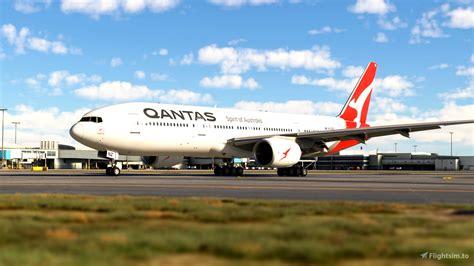
At the turn of the millennium, Qantas believed it was making one of the safest and smartest fleet decisions in modern aviation history. The airline doubled down on jumbo jets, embraced the Airbus A380 before the aircraft had even entered service, and selected the Airbus A330 to dominate regional and domestic operations across Australia and Asia. On paper, the strategy looked logical, disciplined, and deeply aligned with the realities of the aviation industry in 2000.
What Qantas did not realize was that the same decision would effectively shut the airline out of the single most successful widebody aircraft generation ever built: the Boeing 777 family.
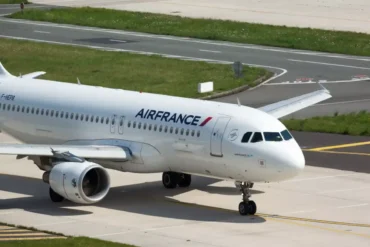
For more than two decades, airlines across the globe transformed their long-haul businesses around the Boeing 777-300ER and later the 777X program. Emirates built a global super-connector empire with it. Singapore Airlines used it to refine ultra-premium long-haul flying. Cathay Pacific turned it into the backbone of its intercontinental network. Air France, ANA, Qatar Airways, British Airways, and dozens more relied on the aircraft as their flagship workhorse.
Qantas never joined them.
The irony was extraordinary because Qantas had actually participated in discussions during the early development of the 777 program in the 1990s. Boeing considered the Australian carrier an important voice due to its uniquely demanding route structure and extreme long-haul operations across oceans and remote airspace. Yet when the moment came to commit, Qantas walked away.
That single fleet order in 2000 shaped the airline’s trajectory for an entire generation.
The reasons were far more complicated than simple brand loyalty or poor forecasting. Australia’s regulatory environment, especially its unusually strict ETOPS rules, fundamentally altered what aircraft made sense for Qantas at the time. Fuel economics looked completely different. Four-engine aircraft still appeared commercially viable. Fleet commonality mattered enormously. And nobody could fully predict how dominant the Boeing 777-300ER would eventually become.
Understanding why Qantas rejected the 777 requires revisiting an aviation industry that operated under very different assumptions from today.
Qantas Entered The 2000s Defending Its Global Position
During the 1980s and early 1990s, Qantas faced growing pressure from both international competitors and structural industry changes. Asian airlines were expanding aggressively, offering newer aircraft, competitive pricing, and increasingly sophisticated hub strategies that threatened Australia’s traditional long-haul market.
Singapore Airlines and Cathay Pacific were becoming global benchmarks for premium international travel. Meanwhile, Gulf carriers were beginning to lay the foundations for the massive connecting networks that would later dominate intercontinental traffic flows.
Qantas could no longer rely solely on its national identity or historic prestige.
The airline underwent significant restructuring to modernize operations, improve profitability, and reinforce its international network. The acquisition of Australian Airlines in 1992 strengthened Qantas domestically, while its partnership with British Airways in 1993 expanded global connectivity and reinforced the famous Kangaroo Route between Australia and Europe.
By the late 1990s, Qantas was attempting to balance several competing priorities simultaneously. It wanted to remain Australia’s premium flag carrier while defending market share against increasingly efficient competitors. It needed to modernize its fleet without introducing unnecessary complexity. And it had to preserve profitability in an era where low-cost carriers were rapidly changing passenger expectations.
The pressure was intense because Australia’s geography created unique operational challenges. Nearly every major international route involved extremely long sectors across oceans or sparsely populated regions. Aircraft selection mattered more to Qantas than it did for many airlines operating shorter and denser continental networks.
The carrier’s fleet decisions would influence profitability for decades.
The Fleet Order That Changed Qantas Forever
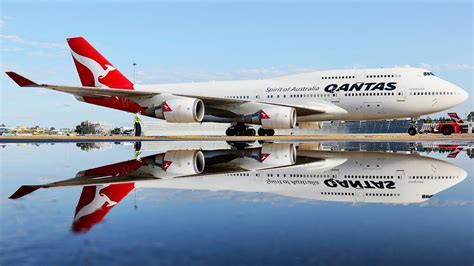
In 2000, under CEO James Strong, Qantas announced one of the most consequential fleet orders in aviation history.
The order included:
- 12 Airbus A380s
- 13 Airbus A330s
- 6 Boeing 747-400ERs
Conspicuously absent from the deal was the Boeing 777.
At the time, Qantas concluded that the 777 was too large for domestic and regional operations, where the airline wanted flexibility and efficiency rather than oversized capacity. The Airbus A330 appeared to offer the ideal middle ground for flights within Australia and across Asia.
For ultra-long-haul operations, Qantas instead believed the future belonged to very large four-engine aircraft.
The Airbus A380 represented the centerpiece of that strategy. The aircraft promised unmatched passenger comfort, massive capacity, and the ability to dominate trunk routes such as Sydney-Los Angeles and Melbourne-London. Simultaneously, the Boeing 747-400ER allowed Qantas to continue operating proven jumbo-jet services with extended range capability.
At the time, the logic was remarkably coherent.
Twin-engine aircraft still faced operational limitations under ETOPS regulations. Fuel prices remained relatively low and stable. Passenger demand on flagship international routes appeared to support larger aircraft. And the aviation industry still largely believed hub-and-spoke systems would favor giant jets transporting enormous numbers of passengers between major global gateways.
Qantas essentially bet the future on the continued dominance of the jumbo jet era.
The Boeing 777-300ER changed everything.
Why The Boeing 777-300ER Became The World’s Favorite Widebody
When Boeing launched the 777-300ER in 2000, few people fully appreciated how transformative the aircraft would become.
The aircraft struck a nearly perfect balance between efficiency, capacity, range, and economics. It could carry fewer passengers than a Boeing 747 while generating dramatically lower operating costs. Airlines no longer needed to consistently fill 500-seat aircraft to maintain profitability on long-haul routes.
Instead, the 777-300ER offered something more valuable: flexibility.
Carriers could deploy the aircraft across a wide range of markets while maintaining premium-heavy cabin configurations and strong cargo capability. The jet became equally effective on ultra-dense flagship routes and thinner long-haul sectors that would have struggled to support a jumbo aircraft.
That versatility fundamentally reshaped global long-haul aviation.
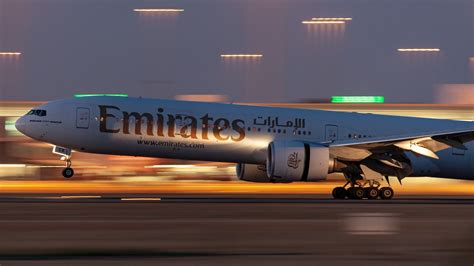
Emirates built one of the largest 777 fleets in history. Cathay Pacific relied on the aircraft to connect Hong Kong with Europe and North America. Singapore Airlines used it extensively before transitioning toward the Airbus A350. Air France, KLM, ANA, Qatar Airways, and United Airlines all embraced the aircraft as a backbone of their intercontinental operations.
The 777-300ER rapidly became the industry standard for long-haul flying.
Qantas watched from the sidelines.
Instead of operating highly flexible twinjets, the airline remained heavily invested in a fleet structure centered around the Airbus A380 and aging Boeing 747 variants. As fuel prices climbed sharply throughout the 2000s, the economics increasingly favored efficient twin-engine aircraft.
Suddenly, the strategic assumptions underpinning the 2000 fleet order looked far less convincing.
Australia’s Strict ETOPS Rules Shaped Everything
One of the most misunderstood aspects of Qantas’ fleet strategy involved Australia’s exceptionally strict ETOPS environment during the late 1990s and early 2000s.
ETOPS, or Extended-range Twin-engine Operational Performance Standards, determines how far twin-engine aircraft may operate from suitable diversion airports during an engine failure scenario.
Today, ultra-long-haul twinjets routinely cross oceans and polar regions with minimal controversy. But two decades ago, regulators approached such operations much more cautiously.
Australia maintained particularly conservative ETOPS requirements.
That created serious limitations for routes from Australia to destinations such as Johannesburg and Santiago, where diversion airports were sparse and distances immense. Under the regulatory framework at the time, certain routes simply were not commercially practical for twin-engine aircraft.
For Qantas, this mattered enormously.
The airline could not risk building its future long-haul network around aircraft that might face operational restrictions or route limitations. Four-engine jets such as the Boeing 747 and Airbus A380 provided regulatory certainty, operational redundancy, and unrestricted routing flexibility.
In hindsight, it is easy to criticize the decision. But within the context of 2000, Qantas’ caution appeared entirely rational.
The aviation industry had not yet fully embraced the idea that twin-engine aircraft would eventually dominate virtually every long-haul market segment.
That transformation came later.
Fleet Commonality Quietly Influenced The Decision
Another major factor behind the rejection of the Boeing 777 involved something passengers rarely notice but airlines obsess over relentlessly: fleet commonality.
By the late 1990s, Qantas operated a relatively streamlined fleet centered around Boeing aircraft powered by familiar engine families. Maintenance systems, pilot training pipelines, spare parts inventories, and engineering expertise were all deeply interconnected.
The Airbus A330 fit neatly into that ecosystem because its GE CF6 engines aligned closely with existing infrastructure already supporting the airline’s Boeing 747s and 767s.
The Boeing 777 did not.
Introducing the 777 would have required Qantas to absorb the costs of integrating the GE90 engine family alongside entirely new maintenance requirements and operational procedures. While these costs might seem secondary from a passenger perspective, airlines evaluate them obsessively because even small inefficiencies become massively expensive over decades.
Qantas believed its existing structure could support the A330 and 747-400ER combination more efficiently than a new 777 fleet.
Again, the decision made sense at the time.
What changed was the industry itself.
Fuel prices surged during the 2000s. Environmental pressures intensified. Airlines increasingly prioritized efficiency over sheer capacity. Suddenly, the operating economics of four-engine aircraft became dramatically less attractive than they had appeared only a few years earlier.
The Boeing 777 suddenly looked visionary.
The Airbus A380 increasingly looked like a magnificent but financially difficult niche aircraft.
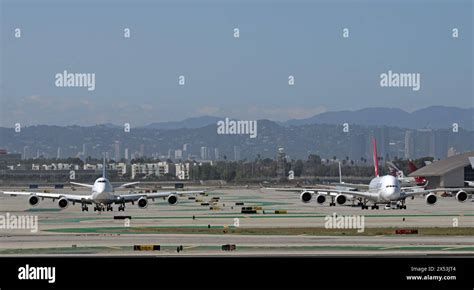
The Airbus A380 Became Both Flagship And Constraint
Qantas genuinely loved the Airbus A380.
Passengers loved it too.
The aircraft delivered exceptional comfort, quieter cabins, and enormous premium seating opportunities on routes connecting Australia with London, Los Angeles, and other major global destinations. For years, the A380 represented the pinnacle of long-haul travel.
But the industry gradually moved away from the very philosophy that created the aircraft.
Instead of concentrating traffic through giant hub-to-hub operations using massive aircraft, airlines increasingly favored point-to-point connectivity enabled by efficient twinjets like the Boeing 777 and Boeing 787.
The A380 became harder to fill consistently outside a small number of ultra-dense routes.
Operating costs remained enormous. Flexibility was limited. Secondary market demand collapsed. Eventually, Airbus terminated the program entirely.
Qantas remained committed longer than many airlines because the aircraft still performed effectively on certain flagship routes. Even today, the carrier continues investing in refurbished A380 cabins and intends to operate the type into the 2030s.
Yet the broader market verdict became impossible to ignore.
The future belonged to highly efficient twin-engine aircraft.
Ironically, the very aircraft Qantas declined in 2000 helped define that future.
Project Sunrise Gave Boeing One More Opportunity
Nearly two decades after rejecting the 777, Qantas launched Project Sunrise, an ambitious initiative aimed at operating some of the world’s longest nonstop flights.
The airline explored routes linking Sydney directly with London and New York, requiring aircraft capable of spending nearly an entire day airborne.
Boeing saw an opportunity for redemption.
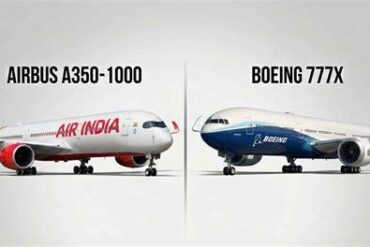
The manufacturer proposed the Boeing 777-8X, a next-generation ultra-long-haul variant designed to combine massive range with advanced efficiency. The aircraft appeared well suited for Project Sunrise requirements and potentially offered a long-term replacement path for the Airbus A380.
But history repeated itself.
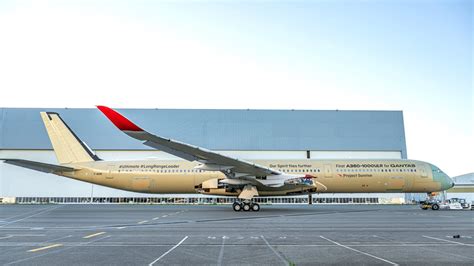
In 2019, Qantas selected the Airbus A350-1000ULR instead.
The airline cited superior commercial terms, stronger operating economics, and better fuel efficiency. Airbus secured another major strategic victory over Boeing at one of the world’s most geographically demanding airlines.
Qantas ordered 12 specially configured A350-1000 aircraft for Project Sunrise, with deliveries expected to begin in late 2026.
Despite decades of speculation, the Boeing 777 never entered Qantas mainline service.
That absence remains one of the most unusual fleet stories in global aviation.
Alan Joyce Admitted The 2000 Decision Became A Problem
Former Qantas CEO Alan Joyce later acknowledged that the airline’s original rejection of the Boeing 777 looked increasingly questionable in hindsight.
In 2014, Joyce famously remarked that he wished for a “time machine” to reverse the decision made years earlier.
The comment captured a growing recognition across the industry that the Boeing 777-300ER had fundamentally altered long-haul economics.
Yet hindsight can distort reality.
The aviation world of 2000 was radically different from the world of 2014 or 2026. Fuel prices, ETOPS regulations, environmental priorities, aircraft technology, and market structures evolved dramatically within a relatively short period.
What later appeared obvious was far less clear at the time.
Qantas did not irrationally reject the Boeing 777. The airline made a calculated decision based on the information, regulations, economics, and strategic assumptions available at that moment.
The problem was that the industry evolved in ways few airlines fully predicted.
Twin-engine aircraft became extraordinarily capable. ETOPS restrictions loosened significantly. Fuel efficiency became central to airline survival. Passenger preferences shifted toward frequency and direct routes rather than giant connecting hubs.
The Boeing 777 happened to align perfectly with those trends.
Qantas’ 2000 fleet strategy did not.
The Decision Still Shapes Qantas Today
Even now, the legacy of that single fleet order continues influencing Qantas.
The airline eventually retired its Boeing 747 fleet entirely, accelerated Airbus integration, and committed heavily to the Airbus A350 for the future of ultra-long-haul flying. Meanwhile, competitors that built enormous Boeing 777 fleets continue benefiting from decades of operational familiarity and fleet flexibility.
Qantas never experienced the same economies of scale surrounding the 777 ecosystem that airlines such as Emirates or Cathay Pacific enjoyed.
Instead, the airline followed a different path shaped by Australian geography, regulatory conservatism, and long-standing strategic assumptions about long-haul aviation.
In some respects, Qantas adapted successfully. The carrier remains one of the world’s most recognizable airlines and continues pioneering ultra-long-haul operations. In other respects, however, the absence of the Boeing 777 left a noticeable gap in fleet flexibility for years.
The story ultimately reveals how even highly rational decisions can age poorly when technology and economics evolve faster than expected.
One fleet order in 2000 effectively locked Qantas out of the world’s most successful widebody generation.
Few airlines have ever missed an aviation revolution so completely while standing so close to it from the very beginning.