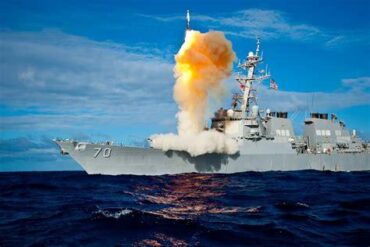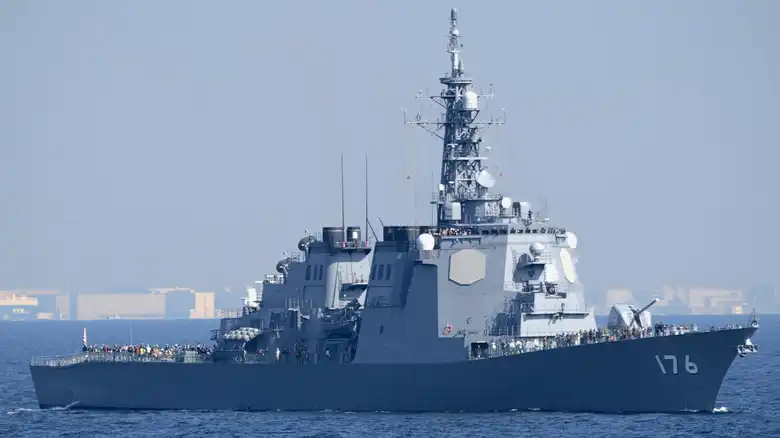
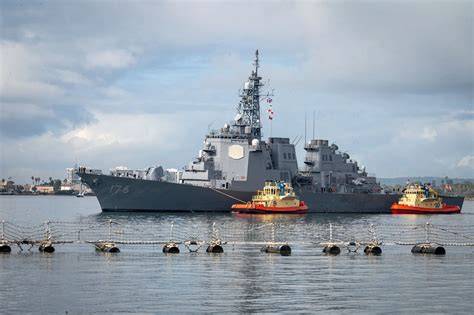
The JS Chokai, a Japan Maritime Self-Defense Force Aegis destroyer, has returned to Japan after spending roughly a year in the United States for modifications, testing, and training connected to its new Tomahawk cruise missile capability. The ship became a major milestone in Japan’s evolving long-range strike strategy after being selected in 2025 as the first Japanese destroyer to receive the American-made weapon.
The modification work itself took approximately six months, transforming the Chokai into the first Japanese naval platform prepared to operate Tomahawk missiles. A successful weapons demonstration on July 29, 2026, confirmed that the upgraded ship was ready to employ the system. Its extended absence also represented the longest period a Japanese naval vessel had remained away from its home country.
Japan’s Tomahawk Missile Upgrade
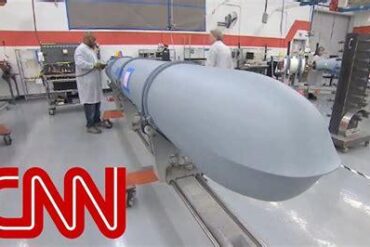
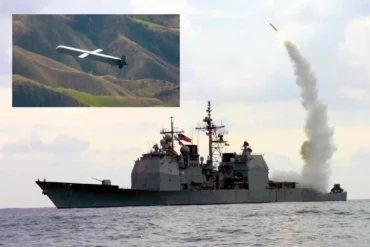
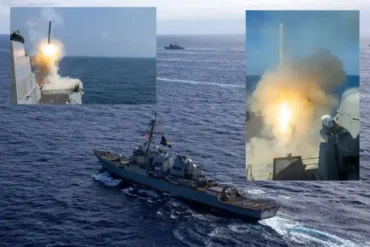
Japan’s decision to introduce Tomahawk reflects a broader effort to expand the capabilities of its Aegis destroyer fleet beyond traditional air and missile defense. Unlike defensive interceptors, the Tomahawk is a long-range cruise missile designed primarily for precision strikes against land targets. This gives Japanese warships an additional stand-off capability while allowing them to retain their established defensive missions.
The program began in 2024, when Japan agreed to purchase 400 Tomahawk missiles from the United States. The package reportedly included 200 Block IV missiles, 200 newer Block V missiles, and 14 associated weapon-control systems, with an estimated value of approximately $2.35 billion.
The Chokai’s upgrade is only the beginning. Japan plans to equip its other seven Aegis destroyers with the same capability, while two Aegis System Equipped Vessels under construction are also expected to receive Tomahawk integration. The result will be a significantly broader Japanese naval force capable of conducting long-range precision operations.
Tomahawk and Japan’s Domestic Missiles
The American missile purchase does not mean Japan has abandoned its domestic weapons development. Instead, Tokyo has pursued both approaches simultaneously. Japan accelerated its Tomahawk acquisition by one year because it wanted an operational long-range strike capability sooner, while continuing development of indigenous stand-off weapons.
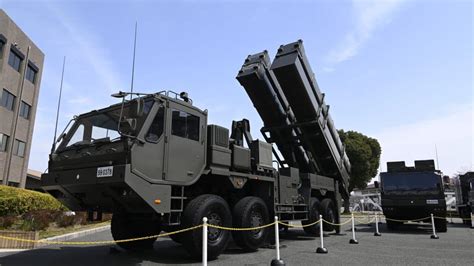
That parallel strategy is now producing results. On March 31, 2026, Japan announced the deployment of the Type-25 SSM and Type-25 HVGP to units in Kumamoto and Shizuoka. These systems marked the country’s first deployment of domestically produced stand-off missiles, complementing the longer-range capability provided by Tomahawk.
A New Role for Japanese Aegis Destroyers
With the Chokai home and its Tomahawk capability demonstrated, Japan has taken another significant step toward a more diversified maritime strike force. The upgrade combines an established Aegis combat system with a weapon specifically designed for long-range land attack.
The development also highlights how Japan is rapidly adapting its naval forces to a changing regional security environment. Rather than relying on a single missile family, Tokyo is building layered capabilities through American Tomahawks and increasingly sophisticated domestic systems. The Chokai’s return therefore represents more than the completion of a ship modification: it marks the operational beginning of a much wider Japanese long-range strike capability.