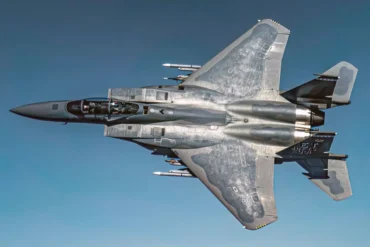
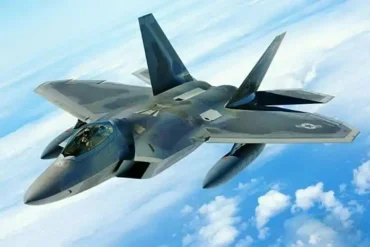
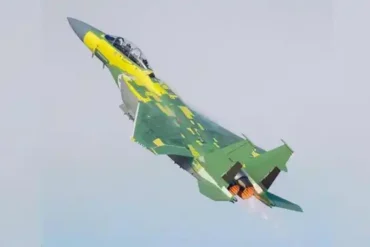
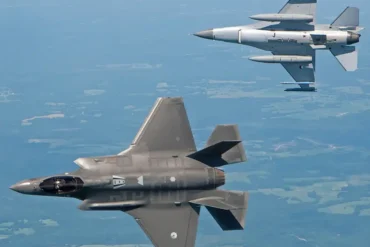
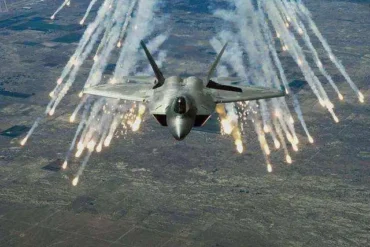
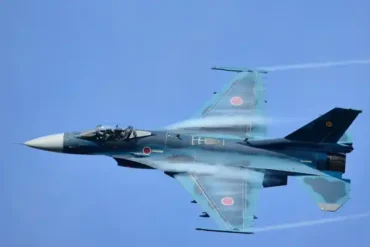
The KF-21 Boramae and the F-22 Raptor represent two different approaches to modern fighter aircraft development. While the KF-21 is South Korea’s first domestically developed 4.5-generation fighter, the F-22 remains the pinnacle of fifth-generation air superiority. This article provides an in-depth comparison of these two aircraft across key performance parameters, highlighting their stealth capabilities, weapon systems, maneuverability, avionics, and overall strategic roles.
Stealth Capabilities
Stealth is a defining feature of fifth-generation fighters. The F-22 Raptor was designed with an extremely low radar cross-section (RCS) of less than 0.01 square meters, making it nearly invisible to enemy radars. This is achieved through its internal weapon bays, advanced radar-absorbent materials, and carefully engineered airframe with blended edges and minimized radar reflectors.
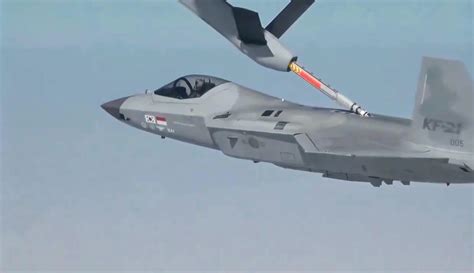
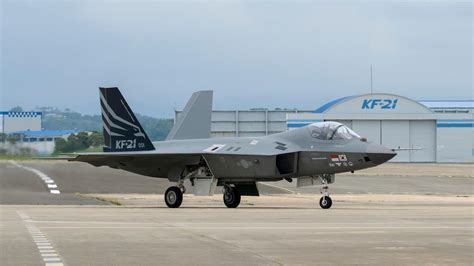
The KF-21, on the other hand, is classified as a 4.5-generation fighter due to its relatively higher RCS of 0.1–1 square meters. While its airframe incorporates some stealth design principles, such as lift-body configuration and V-tail, it still relies on semi-recessed weapon mounts and external hardpoints, significantly compromising its stealth profile. Future iterations (Block II and Block III) aim to incorporate internal weapon bays and advanced stealth coatings, but in its current form, the KF-21 cannot match the F-22’s stealth capabilities.
Weapon Systems and Payload
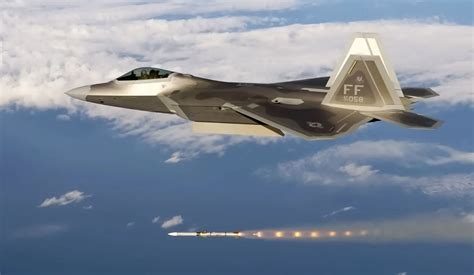
The F-22 Raptor is optimized for beyond-visual-range (BVR) and air superiority missions. Its internal weapon bays allow it to carry up to six AIM-120 AMRAAMs and two AIM-9X Sidewinders in full stealth mode, maintaining minimal radar detectability. The Raptor can also carry precision-guided bombs if required but primarily serves as an air dominance fighter.
Conversely, the KF-21 is designed with more flexible weapon configurations. It has four semi-recessed fuselage hardpoints capable of carrying MBDA Meteor air-to-air missiles and six underwing hardpoints for JDAM bombs, IRIS-T short-range missiles, and other guided munitions. While this makes the KF-21 a versatile multi-role fighter, the reliance on external hardpoints further reduces its stealth capabilities.
Engine Power and Maneuverability
The F-22’s superior power and agility stem from its twin Pratt & Whitney F119-PW-100 engines, producing a combined thrust of 311 kN. This allows for supercruise at Mach 1.8 without afterburners and enables advanced post-stall maneuvers like the Herbst maneuver and Cobra maneuver, making it one of the most maneuverable aircraft in history.
The KF-21 is powered by two General Electric F414 engines, generating 195.8 kN of thrust. This gives it a maximum speed of Mach 1.81, but with a thrust-to-weight ratio of around 0.95–1.0, it lacks the high-speed supercruise capability and extreme agility of the F-22. While the KF-21 surpasses older fighters like the F-16 in maneuverability, it remains inferior to fifth-generation aircraft in dynamic combat scenarios.
Avionics and Sensor Suite
The F-22 Raptor is equipped with the AN/APG-77 active electronically scanned array (AESA) radar, offering over 200 km of detection range and the ability to engage multiple targets simultaneously. Its advanced sensor fusion integrates data from electronic warfare (EW) systems, infrared sensors, and satellite links, providing a comprehensive battlefield awareness unmatched by older aircraft.
The KF-21, while equipped with a domestic AESA radar, has a slightly shorter detection range (150–200 km) and lacks the F-22’s full sensor fusion capabilities. It does include an infrared search and track (IRST) system with an 80 km detection range, which enhances its BVR engagement potential, but the overall sensor suite remains closer to that of the F-16V or early F-35 models rather than the F-22.
Strategic Role and Development Potential
The F-22 was purpose-built for air superiority, excelling in stealth, speed, and sensor integration. However, due to its high production costs, the Raptor’s production was halted after 195 units, limiting its deployment. The F-22 remains unmatched in aerial combat but is expensive to maintain, and newer aircraft like the F-35 have taken on more multi-role functions.
The KF-21, by contrast, is a cost-effective, modular design aimed at regional air forces. South Korea intends to upgrade the aircraft over time with drone integration, improved stealth features, and more advanced avionics. However, its current dependence on U.S.-supplied engines and weapons systems limits its full operational independence.
Conclusion
The KF-21 and F-22 cater to vastly different combat requirements. The F-22 remains the gold standard for air superiority, with unmatched stealth, advanced avionics, and extreme maneuverability. The KF-21, while modern and cost-effective, currently lacks true fifth-generation stealth capabilities and raw performance metrics. Future upgrades may narrow the gap, but the KF-21 will remain a transitional platform between fourth and fifth-generation fighters, whereas the F-22 continues to define air dominance in the modern era.
Frequently Asked Questions
1. Can the KF-21 compete with the F-22 in air-to-air combat?
The KF-21 is a capable 4.5-generation fighter, but it lacks the stealth, supercruise, and maneuverability required to compete directly with the F-22 in an air-to-air engagement.
2. Will the KF-21 be upgraded to a full fifth-generation fighter?
South Korea plans to enhance the KF-21 with internal weapon bays, improved stealth coatings, and better avionics, but it is unlikely to achieve true fifth-generation capabilities comparable to the F-22.
3. Why was the F-22 Raptor discontinued?
The F-22 was discontinued due to high production costs and a strategic shift towards multi-role fighters like the F-35, which provide greater versatility for modern combat scenarios.