The F-16 Fighting Falcon and the F-22 Raptor represent two different generations of fighter aircraft, each designed with unique objectives in mind. The F-16, a fourth-generation multirole fighter, prioritizes maneuverability, cost-effectiveness, and versatility, while the F-22, a fifth-generation air superiority fighter, emphasizes stealth, sensor fusion, and supercruise capabilities. This comparison delves into their technological differences, combat effectiveness, survivability, and operational roles.
Generational Differences and Technological Design
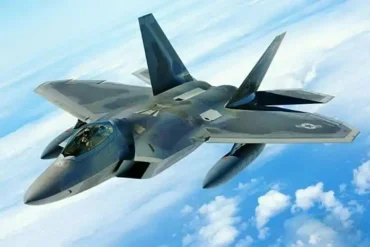
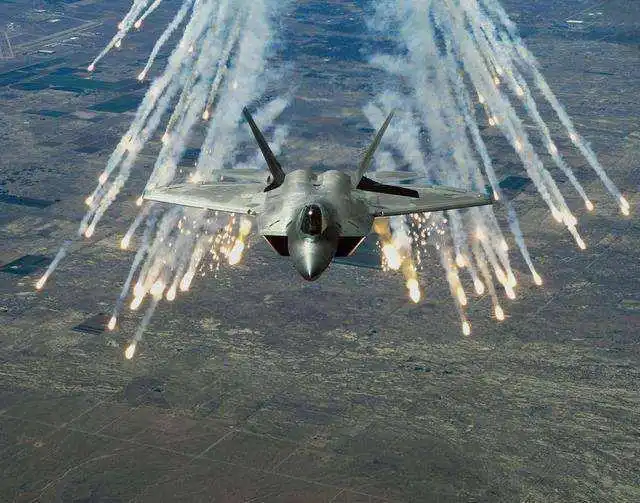
The F-22 Raptor, developed by Lockheed Martin, is the world’s first fifth-generation fighter jet. From its inception, it was designed to integrate stealth technology, supercruise, advanced sensor fusion, and network-centric warfare. It features a blended wing-body design and a diamond-shaped fuselage, significantly reducing its radar cross-section (RCS).
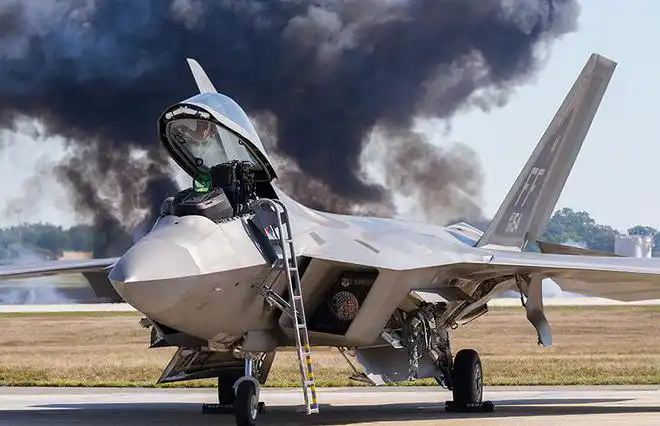
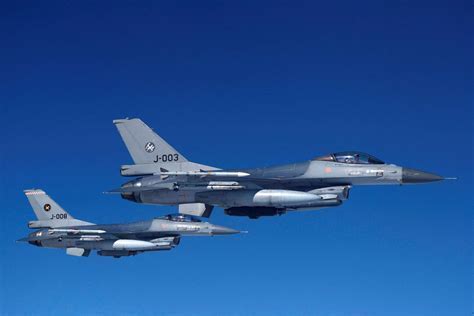
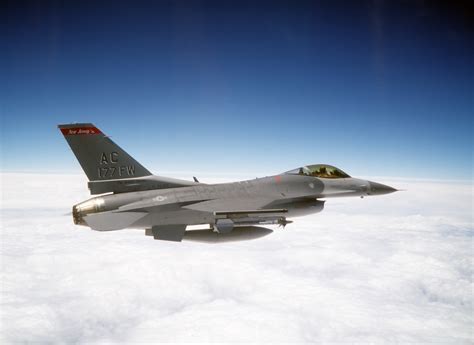
Conversely, the F-16 Fighting Falcon, developed by General Dynamics (now Lockheed Martin), belongs to the fourth generation of fighter jets. It was designed to be a lightweight, cost-effective, and highly maneuverable aircraft. Unlike the F-22, the F-16 does not feature inherent stealth capabilities but has received numerous upgrades over the years, including advanced avionics and weapon systems.

Stealth and Survivability
The F-22’s stealth design includes angled surfaces, radar-absorbent materials, and an internal weapons bay, which contribute to an extremely low RCS (~0.0001 m² from the front aspect). It also employs the AN/ALR-94 electronic warfare system, capable of detecting and jamming enemy radars before they can lock onto the aircraft.
In contrast, the F-16 lacks stealth and has an RCS of approximately 5 m². To compensate for its lack of stealth, it relies on external electronic warfare pods such as the AN/ALQ-131 ECM pod and defensive tactics, including high-G maneuvers and flares to evade threats.
Avionics and Sensor Systems
The F-22 integrates advanced avionics through a fully networked architecture. Its AN/APG-77 active electronically scanned array (AESA) radar allows it to detect enemy aircraft from over 400 km away without revealing its own position. It is also equipped with distributed infrared sensor systems (DAS) for 360-degree situational awareness. In 2025, the F-22 is expected to receive the Thales Scorpion Helmet-Mounted Display (HMD), enhancing night vision and augmented reality targeting capabilities.
The F-16 originally used mechanically scanned radars like the AN/APG-68 but has since been upgraded with AESA radars such as the AN/APG-83 in later variants. While the F-16’s sensor fusion capabilities remain limited compared to the F-22, the integration of the Scorpion HMD in 2025 will improve pilot situational awareness.
Maneuverability and Combat Performance
The F-22’s maneuverability is enhanced by two-dimensional thrust vectoring nozzles and a high thrust-to-weight ratio (1.25:1), allowing it to perform supermaneuverable combat maneuvers such as the Herbst maneuver and Pugachev’s Cobra. Additionally, its supercruise ability (Mach 1.58) enables it to fly at sustained supersonic speeds without afterburners, giving it a significant advantage in beyond-visual-range (BVR) engagements.
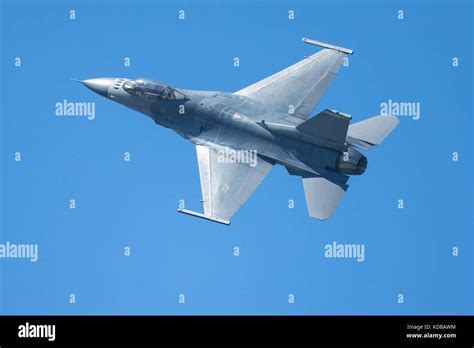
The F-16, while not a supermaneuverable fighter, is highly agile due to its relaxed static stability design and fly-by-wire flight controls. It excels in close-range dogfighting with its high-G maneuvering capability. Simulated engagements have shown that an F-16 can threaten an F-22 in a close-quarters engagement, particularly when using high-G maneuvers and countermeasures.
Weapons and Mission Flexibility
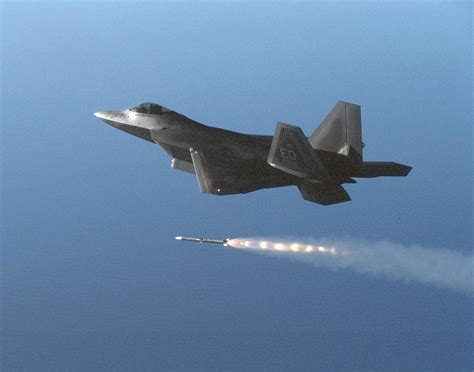
The F-22 carries its weapons internally to preserve its stealth profile. It is armed with six AIM-120C AMRAAM missiles and two AIM-9X Sidewinder missiles for air superiority missions. It can also carry JDAM precision-guided bombs for ground-attack missions. The latest AIM-120D missile extends its engagement range to 160 km with fire-and-forget capability.
The F-16 is highly versatile with 11 external hardpoints for a diverse arsenal, including AIM-9X Sidewinders, AGM-88 HARM anti-radiation missiles, and GBU-54 laser-guided bombs. However, external weapon mounts increase its radar signature, making it less suitable for high-end contested airspace.
Upgrade Potential and Cost Efficiency
The F-22, while highly advanced, faces upgrade challenges due to its closed architecture design. Efforts to enhance its capabilities include an open mission systems upgrade and additional sensor pods like distributed IRST pods. Despite its superior capabilities, the F-22’s production ceased in 2011, and it is set to remain in service until the 2040s. Its unit cost is approximately $150 million, with high maintenance costs.
The F-16, in contrast, is more cost-effective with a unit price of around $30 million. Its modular design allows for continuous upgrades, making it a long-term asset for air forces worldwide. Many countries continue to upgrade their F-16 fleets with advanced radars, avionics, and weapons systems, ensuring its relevance in modern air combat.
Conclusion
While the F-22 dominates in stealth, supercruise, and sensor fusion, the F-16 remains a formidable multirole fighter due to its low cost, flexibility, and ease of upgrade. In simulated dogfights, F-16s have managed to challenge F-22s, but in a high-end warfare scenario, the technological gap between fourth and fifth-generation fighters is significant. The F-22 excels in network-centric warfare, whereas the F-16 remains a versatile workhorse for air forces worldwide.
Frequently Asked Questions (FAQs)
1. Can the F-16 defeat the F-22 in combat?
The F-16 can pose a threat to the F-22 in close-range dogfights, particularly when using high-G maneuvers and countermeasures. However, in a beyond-visual-range engagement, the F-22’s stealth and superior sensors provide a decisive advantage.
2. Why was the F-22 production discontinued?
The F-22’s production ended in 2011 due to high costs, shifting defense priorities, and the emergence of the F-35. The U.S. Air Force chose to focus on multirole capabilities instead of dedicated air superiority fighters.
3. How does the F-16 remain relevant despite being a fourth-generation fighter?
The F-16 remains relevant due to continuous upgrades, including AESA radars, new avionics, and advanced weapons. Its low cost and high mission flexibility ensure it continues to serve as a key fighter in many air forces worldwide.