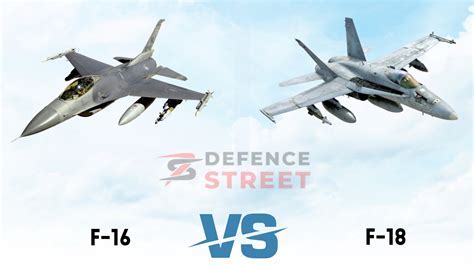
The F-2 and F-16 are two closely related fighter jets with distinct design philosophies, capabilities, and operational roles. While the F-16 was developed as a cost-effective multirole fighter for air superiority and ground attack, the F-2 was specifically tailored for Japan’s maritime defense needs, emphasizing anti-ship warfare, extended range, and advanced avionics. Below, we provide a detailed analysis of their differences and similarities.
Design Origins and Purpose
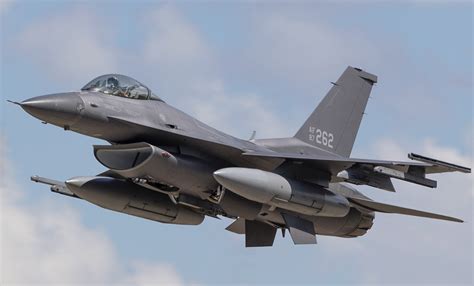
The F-16 Fighting Falcon, introduced in the late 1970s, was designed as a lightweight, highly maneuverable, and affordable fighter for the United States and allied air forces. It serves as a multirole combat aircraft, excelling in both air-to-air and air-to-ground missions.
In contrast, the F-2 was developed under a joint U.S.-Japan program, based on the F-16 but modified to meet Japan’s unique defense requirements. The Japan Air Self-Defense Force (JASDF) sought a fighter with enhanced maritime strike capabilities, greater fuel capacity, and advanced avionics suited for long-range coastal defense.
Structural and Aerodynamic Differences
Size and Airframe
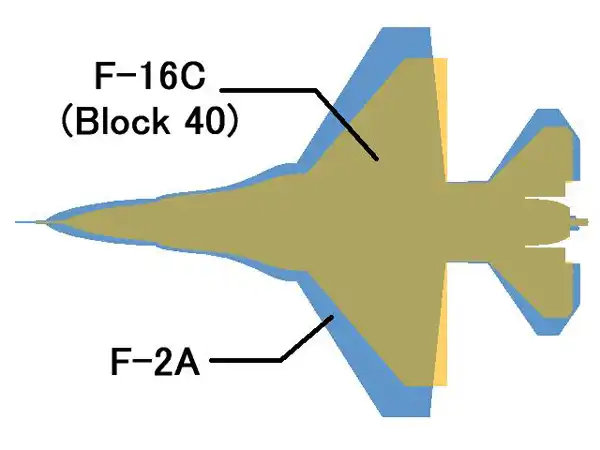
The F-2 is physically larger than the F-16, with a 25% increase in wing area and an extended fuselage (17 inches longer). This design allows it to carry more fuel and a heavier weapons payload.
Materials and Weight
One of the F-2’s most significant innovations is its extensive use of composite materials. Its graphite-epoxy composite wings and fuselage reduce weight by 25% compared to conventional metal structures, improving fuel efficiency and structural durability.
Maneuverability and Performance
Both aircraft use the F110-IHI-129 turbofan engine (comparable to the F-16 Block 50/52). However, due to the F-2’s larger frame and increased weight, it has slightly lower acceleration and sustained turn rates than the F-16. Conversely, the F-2’s larger wings provide better instantaneous turn performance, which enhances dogfighting agility.
Avionics and Sensor Systems
Radar Technology
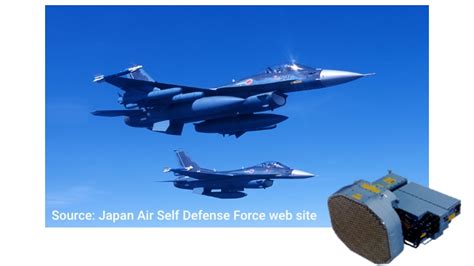
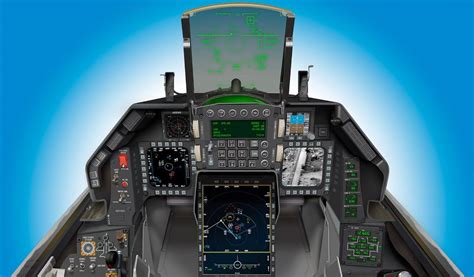
The F-2 was the first fighter aircraft in the world equipped with an Active Electronically Scanned Array (AESA) radar, the J/APG-1. This radar offers improved tracking speed and target acquisition over the F-16’s older mechanically scanned APG-68 radar. However, early versions of the J/APG-1 faced performance issues, such as lock-on failures and a limited detection range (~70 km).
Cockpit Design
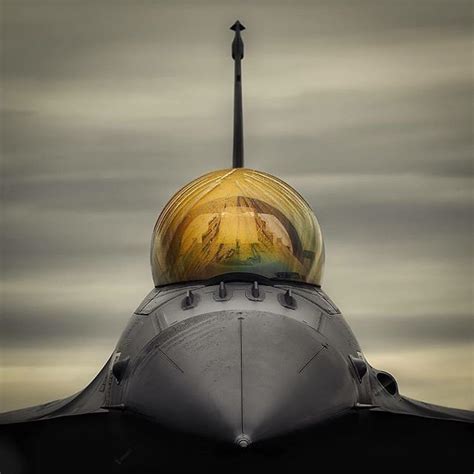
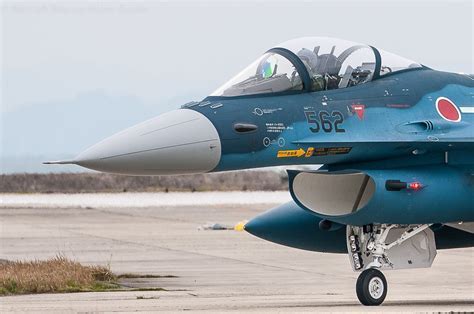
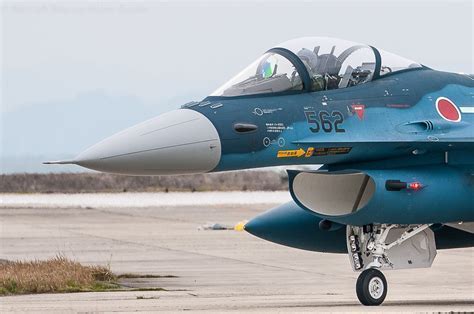
The F-16 features a single-piece bubble canopy, providing unobstructed visibility for pilots. Meanwhile, the F-2 employs a three-piece canopy design, reinforced to withstand bird strikes, a crucial safety measure for Japan’s island-based operations.
Electronic Warfare and Communication
The F-2 incorporates advanced Japanese-built electronic warfare (EW) systems, navigation aids, and communication suites, distinguishing it from its F-16 counterpart, which primarily relies on U.S. avionics.
Armament and Payload Capacity
Hardpoints and Weapons Compatibility
The F-2 outperforms the F-16 in terms of payload capacity, featuring 11 external hardpoints (compared to the F-16’s 9). This allows it to carry a wider range of armaments, particularly anti-ship missiles.
- F-2 Weapons Loadout: Designed for maritime strike missions, it carries up to four ASM-1/ASM-2 anti-ship missiles, in addition to AAM-3/AAM-5 short-range and AAM-4B medium-range air-to-air missiles.
- F-16 Weapons Loadout: The F-16 is optimized for both air-to-air and ground attack roles, utilizing AIM-9, AIM-7, and AIM-120 AMRAAM missiles, as well as JDAMs, laser-guided bombs, and Maverick air-to-ground missiles.
Operational Performance and Cost Considerations
Range and Endurance
With its larger fuel tanks and wing design, the F-2 has a combat radius of 833 km, slightly surpassing most F-16 variants. This extended range allows it to conduct longer patrol missions over Japan’s maritime territories.
Production and Cost Efficiency
One of the major drawbacks of the F-2 is its high production cost. Due to its low manufacturing volume (98 units, including prototypes) and the integration of advanced domestic technologies, the F-2 costs approximately $110 million per unit—significantly more than the F-16, which ranges from $18 to $35 million per unit depending on the variant.
Reliability and Maintenance
The F-2’s composite materials posed maintenance challenges, as repairs required specialized techniques and resources. Additionally, early radar performance issues limited its combat effectiveness.
Key Visual Identifiers
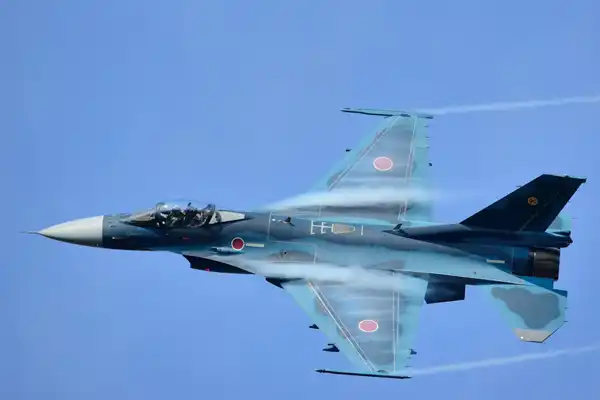
- Canopy: The F-2 has a three-piece design, whereas the F-16 uses a single bubble canopy.
- Wings: The F-2’s wings are larger and diamond-shaped, while the F-16’s wings follow a more traditional delta design.
- Tail and Stabilizers: The F-2’s tail cone is longer, and its horizontal stabilizers are 20% larger.
Conclusion
While both fighters share a common design heritage, the F-2 and F-16 serve different strategic purposes. The F-16 remains a cost-effective, highly versatile multirole fighter, excelling in both air combat and ground attack roles. The F-2, by contrast, specializes in maritime operations, with extended range, greater payload capacity, and advanced radar systems. However, its higher cost and maintenance challenges have limited its production and upgrade potential.
Frequently Asked Questions (FAQ)
1. Why is the F-2 more expensive than the F-16?
The F-2 incorporates high-end Japanese technology, composite materials, and a customized radar system, all of which significantly increase its cost. Additionally, low production numbers contribute to its high per-unit price.
2. Can the F-2 and F-16 operate together in joint missions?
Yes, both aircraft share many fundamental systems, including the F110 engine. However, the F-2 specializes in maritime operations, while the F-16 excels in a wider range of combat roles.
3. What are the key visual differences between the F-2 and F-16?
The F-2 has a three-piece canopy, larger wings, and a longer tail cone, making it visually distinct from the F-16.