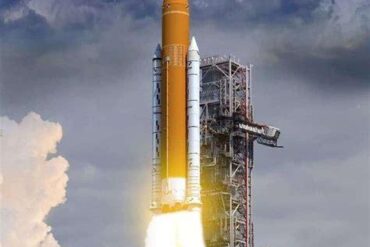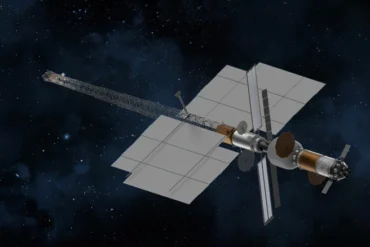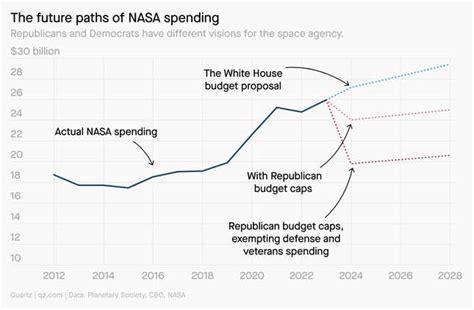
The proposal to significantly reduce NASA’s funding is more than a fiscal adjustment—it is a defining moment for the future of American innovation, scientific leadership, and global influence. At a time when space exploration is accelerating into a new era of competition and discovery, a 23% reduction to NASA’s 2027 budget signals a dramatic shift in priorities. The consequences extend far beyond spreadsheets, potentially reshaping the trajectory of space exploration for decades.
A Historic Moment Overshadowed by Uncertainty
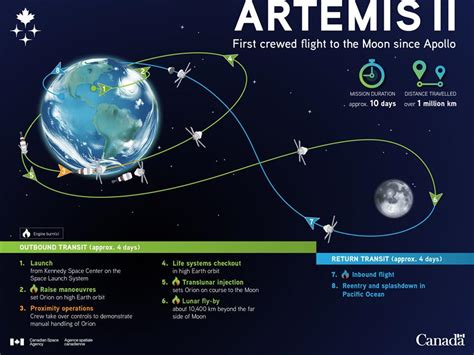
NASA recently achieved a milestone that rekindled global fascination with space: the successful Artemis II mission. For the first time in over fifty years, astronauts journeyed toward the Moon, capturing vivid imagery and reigniting public imagination. This mission was not merely symbolic—it marked a tangible step toward establishing a sustained human presence beyond Earth.
Yet, instead of building on this momentum, the proposed budget cuts threaten to stall progress. Nearly half of NASA’s science funding—approximately 46%—could be eliminated. This reduction would directly impact the agency’s ability to design spacecraft, conduct experiments, and process the vast streams of data that define modern space exploration.
The timing could not be more precarious. Just as NASA stands on the threshold of a new era, its financial foundation is being called into question.
The Ripple Effect: Cancelled Missions and Scientific Setbacks
A reduction of this magnitude is not a minor adjustment—it is a structural upheaval. According to estimates from the Planetary Society, as many as 53 scientific missions could be canceled. These missions span planetary exploration, astrophysics, and Earth science, each representing years of planning, billions of dollars in investment, and the collective effort of thousands of scientists.
The loss is not only immediate but cumulative. Scientific progress relies on continuity. When missions are canceled or delayed, entire fields can stagnate. Data gaps emerge, research pipelines collapse, and future discoveries are postponed indefinitely.
Even missions that survive would operate under constrained budgets, limiting their scope and effectiveness. This creates a cascading effect where reduced funding leads to diminished outcomes, further justifying future cuts—a cycle that is difficult to reverse.
Human Capital at Risk: The Silent Cost of Layoffs
Beyond spacecraft and missions lies NASA’s most valuable asset: its people. A projected loss of approximately 2,000 staff members would represent a profound erosion of expertise. Engineers, scientists, and technicians—many with decades of specialized knowledge—would be forced to leave, taking with them irreplaceable experience.
This is not a workforce that can be easily rebuilt. Training the next generation of aerospace professionals requires years of education and hands-on experience. Once lost, institutional knowledge cannot simply be reassembled.
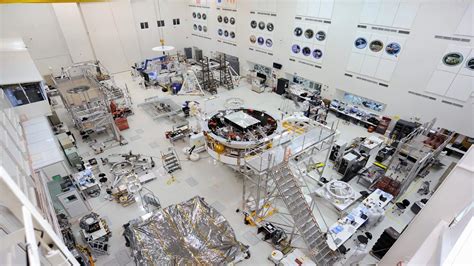
The recent layoffs at the Jet Propulsion Laboratory already hint at what a prolonged funding shortage could look like: uncertainty, reduced morale, and a gradual weakening of one of the world’s most advanced scientific institutions.
STEM Education and the Future Workforce
NASA’s influence extends far beyond its missions. Its STEM engagement programs inspire millions of students, turning curiosity into careers. Through hands-on initiatives like rocket clubs and classroom partnerships, NASA cultivates the scientists and engineers of tomorrow.
A reduction in funding threatens to dismantle these programs. Without them, fewer students will pursue careers in aerospace and related fields. The long-term consequence is a diminished talent pipeline, not only for NASA but for the broader technology sector.
This is where the true cost becomes evident. Budget cuts today translate into a less skilled workforce tomorrow, weakening the nation’s ability to compete in high-tech industries.
Global Competition: A Vacuum Waiting to Be Filled
Space is no longer the exclusive domain of a single superpower. Nations around the world are investing heavily in their space programs, with China emerging as a formidable competitor. Unlike NASA, China’s space initiatives benefit from consistent governmental support and long-term strategic planning.
If NASA’s capabilities are diminished, the balance of power in space could shift. Lunar exploration, Mars missions, and even the development of extraterrestrial infrastructure may increasingly fall under the leadership of other nations.
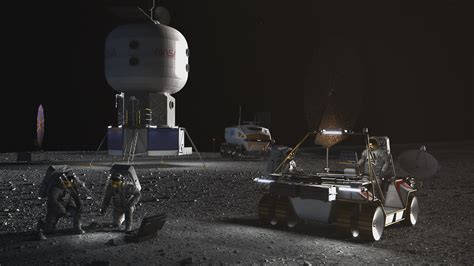
The implications are profound. Leadership in space translates into technological dominance, economic opportunities, and geopolitical influence. Losing that leadership would mark a significant turning point in global dynamics.
Innovation Beyond Space: Everyday Technologies at Stake
NASA’s contributions are not confined to rockets and satellites. Many technologies that define modern life—from advanced materials to medical imaging techniques—originated from NASA research. Aeronautics experiments conducted by the agency have improved aircraft efficiency, safety, and performance worldwide.
Cutting funding for these programs would slow innovation across multiple industries. The ripple effects would be felt in aviation, healthcare, environmental monitoring, and beyond.
This interconnected ecosystem underscores a critical reality: investing in NASA is not an isolated expense; it is a catalyst for broader technological advancement.
Political Resistance and an Uncertain Outcome
The proposed cuts have sparked bipartisan opposition. Lawmakers, scientists, and public figures have voiced strong criticism, arguing that the reductions are both short-sighted and strategically unsound. Advocates emphasize that NASA’s achievements are not merely scientific—they are integral to national identity and pride.
There is precedent for resistance. Similar proposals have been rejected in the past, reflecting a recognition of NASA’s value. Yet uncertainty remains. The mere suggestion of such cuts has already created instability within the agency, affecting planning and morale.
The True Cost of Saving Money
On paper, reducing NASA’s budget may appear to yield short-term savings. In reality, the long-term costs are far greater. Lost missions, diminished innovation, weakened global standing, and a shrinking talent pool all carry economic and strategic consequences that far outweigh immediate fiscal gains.
The decision ultimately comes down to priorities. Space exploration has always been a reflection of ambition—a willingness to invest in the unknown for the promise of discovery. Scaling back that ambition risks more than missed opportunities; it risks redefining a nation’s role in shaping the future.
In the end, the question is not how much NASA costs, but what it is worth.