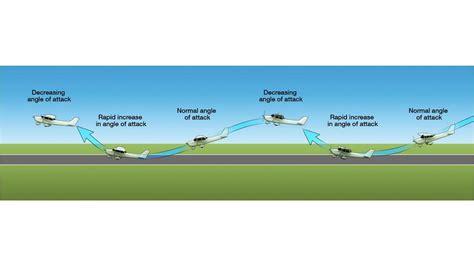
What is Pilot Induced Oscillation?
Pilot Induced Oscillation (PIO), sometimes called Pilot Involved Oscillation or unfavourable Aircraft-Pilot Coupling (APC), refers to unexpected and unwanted changes in an aircraft’s attitude and flight path. These events happen due to unusual interactions between the pilot and the aircraft, which can lead to dangerous situations.
Description of PIO
PIO events encompass a range of problematic phenomena that arise from less-than-ideal interactions between pilots and their aircraft. As technology in civil and military aviation evolves, the complexity of these interactions has increased. This added complexity has resulted in accidents attributed to PIO in military settings and even contributed to some civilian incidents.
Essentially, PIO occurs when a pilot unintentionally makes a series of corrective inputs in alternating directions, trying to manage the aircraft’s response to their previous actions. The spectrum of PIO can vary greatly. On one end, there are minor oscillations, easy to correct and often experienced by pilots learning to handle new aircraft types. At the other extreme, severe PIO can lead to catastrophic situations, jeopardizing the safety of everyone onboard.
Most serious PIO incidents stem from flaws in the aircraft’s Flight Control Systems (FCS). These flaws can cause the pilot’s actions to result in unintended oscillations, especially during manual control. Even with all systems functioning normally, PIO can still occur, particularly when pilots are engaged in demanding tasks like landing or dealing with emergencies. Typically, a smooth control experience turns into increasing pilot commands, leading to oscillation and further control input, creating a cycle that is hard to escape.
Exiting PIO
To break free from PIO, it’s crucial for pilots to recognize their role in maintaining the oscillation. They need to step out of the ‘loop’ that keeps the situation going. There are three primary strategies for doing this:
-
Freezing the controls
-
Releasing the controls
-
Reducing the aggressiveness of control input
Among these options, reducing control input is often the hardest to execute. Studies show that even experienced pilots struggle to adjust their inputs once caught in a high-gain situation. When PIO arises, the pilot monitoring (PM) plays an essential role in identifying the issue and might need to intervene forcefully to prompt the pilot flying (PF) to adopt one of the exit strategies. Often, a go-around is the safest choice, especially close to the ground.
Accidents and Incidents Involving PIO
Several notable accidents illustrate the dangers of PIO:
-
A333, Montréal QC, Canada, 2014: An Airbus A330-300 struggled to stay on the runway centerline during landing due to sudden visibility changes. The investigation cited delayed corrective action as a factor.
-
F900, South of Bucharest, Romania, 1999: A F900 experienced violent load oscillations after crew mismanagement of a minor pitch control issue, resulting in multiple fatalities.
-
GL5T, Fox Harbour NS, Canada, 2007: A Bombardier BD-700 landed short of the runway, losing control and causing serious injuries to several passengers.
-
CL30, North West of Moscow, Russia, 2010: A sudden pitch upset injured passengers due to inappropriate pilot responses to autopilot issues, highlighting gaps in crew knowledge.
These examples underscore the importance of understanding and addressing PIO as a critical aspect of aviation safety.