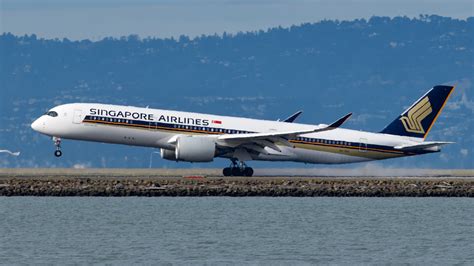
Singapore Airlines is preparing to make a major return to the Spanish market by restoring flights to Madrid after an absence of more than two decades. Scheduled to begin on October 26, 2026, the new operation will connect Singapore Changi Airport with Madrid Barajas Airport through Barcelona, creating a five-times-weekly service that significantly expands the airline’s footprint in Europe.
The announcement represents more than the addition of another destination. It reflects a carefully planned strategy to maximize aircraft efficiency while strengthening links between Southeast Asia and one of Europe’s largest tourism and business markets. With approximately 16 hours of total block time, the service will rank among the carrier’s longer scheduled operations and showcase the capabilities of the modern Airbus A350-900.
For Singapore Airlines, the return also marks the revival of a route that disappeared from its network in 2004, when Boeing 747-era economics shaped international expansion in very different ways.
Singapore Airlines Returns to Madrid After a 22-Year Absence
Madrid has not appeared on Singapore Airlines’ route map for more than 22 years. The airline last served the Spanish capital in October 2004 with flights operating through Paris using the Boeing 747-400, ending an era that relied heavily on four-engine aircraft for intercontinental services.
Since then, Barcelona has remained the airline’s only destination in Spain. The restoration of Madrid therefore signals renewed confidence in passenger demand between Asia and the Iberian Peninsula, supported by stronger tourism flows, expanding commercial ties, and improved long-haul aircraft technology.
Reservations for the service opened in early June 2026, giving travelers advance access to flights that will make Madrid the airline’s 15th European destination and only its second Spanish gateway.
Why Madrid Has Become an Increasingly Important Destination
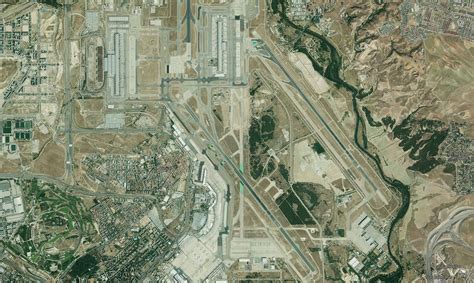
Spain’s capital has evolved into one of Europe’s most influential economic and transportation centers. Beyond serving as the nation’s political headquarters, Madrid hosts major multinational corporations, financial institutions, and one of the continent’s busiest international airports.
Its strategic location also makes it a valuable connecting point for travelers heading to Latin America, where Spain maintains extensive commercial and cultural relationships. Improved links with Singapore are expected to encourage additional business travel while opening new tourism opportunities for visitors from across Southeast Asia.
Local officials have highlighted the wider economic benefits of direct airline investment, anticipating increased visitor spending, stronger trade connections, and enhanced international visibility for Madrid as an Asian gateway.
A Barcelona–Madrid Routing Designed for Maximum Efficiency
Rather than operating separate nonstop flights to both Spanish cities, Singapore Airlines has adopted a Singapore–Barcelona–Madrid routing in each direction.
The strategy enables the airline to maintain service to Barcelona while simultaneously restoring Madrid without allocating additional aircraft to an entirely new route. By combining both cities into a single rotation, operational efficiency improves while preserving market coverage.
The restructuring also replaces existing nonstop Singapore–Barcelona flights and the previous Milan–Barcelona operation, consolidating capacity into a more streamlined network design. This approach reflects a broader trend among international airlines seeking greater flexibility while managing fleet resources effectively.
Passengers benefit from the arrangement as well. Travelers departing Singapore can conveniently reach either Barcelona or Madrid on one itinerary, while Spanish customers gain seamless onward access through Singapore Changi Airport to destinations throughout Southeast Asia, East Asia, India, Australia, and New Zealand.
Airbus A350-900 Powers the New Long-Haul Operation
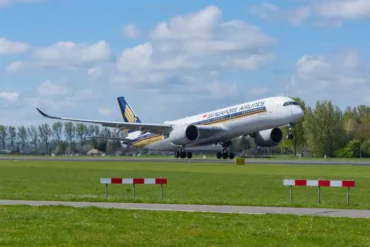
The revived Madrid route will be operated using the airline’s Airbus A350-900, one of the most technologically advanced twin-engine aircraft currently serving international markets.
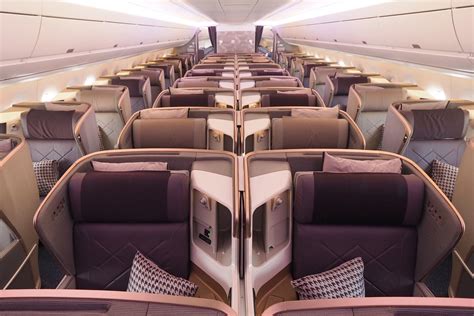
Configured with 253 seats, the aircraft includes:
- 42 Business Class seats
- 24 Premium Economy seats
- 187 Economy Class seats
This balanced cabin layout allows Singapore Airlines to accommodate premium corporate travelers alongside leisure passengers heading between Europe and Asia.
The aircraft’s advanced aerodynamics, lightweight composite construction, and fuel-efficient engines make long-distance operations economically viable while offering improved passenger comfort compared with earlier generations of widebody jets.
A 16-Hour Journey Demonstrating Modern Aviation Capability
Although the service includes an intermediate stop in Barcelona, its overall block time approaches 16 hours, placing it among the airline’s lengthier scheduled operations.
While still shorter than Singapore Airlines’ famous nonstop ultra-long-haul flights to destinations such as New York, the new service highlights how modern aircraft have transformed network planning. Airlines can now profitably operate lengthy international routes using highly efficient twin-engine designs that consume less fuel and require lower operating costs than the four-engine aircraft they replaced.
For passengers, these technological advances translate into quieter cabins, improved environmental performance, and more reliable long-haul connectivity between distant global regions.
Strengthening Singapore’s Role as an International Transit Hub
The Madrid expansion reinforces Singapore Changi Airport’s position as one of the world’s leading connecting hubs. Travelers arriving from Spain will gain convenient one-stop access to numerous destinations across the Asia-Pacific region, while passengers from Asia receive expanded options for visiting Spain’s two largest metropolitan areas.
This network philosophy has become central to Singapore Airlines’ long-term strategy. Rather than relying exclusively on point-to-point demand, the carrier leverages Changi’s extensive connectivity to combine passengers from multiple markets onto efficient long-haul services.
The approach strengthens route sustainability while enhancing schedule flexibility for customers traveling between Europe and Asia.
European Expansion Continues as Demand Remains Strong
The Madrid announcement forms part of a wider expansion across the airline’s European network. Growing passenger demand has already prompted increased frequencies to destinations including Manchester, Milan, Munich, and London Gatwick, reflecting sustained recovery and continued interest in travel between Europe and Southeast Asia.
Reintroducing Madrid demonstrates how airlines continue adapting their route maps to changing market conditions. A destination abandoned during the Boeing 747 era is returning in a new form, supported by modern aircraft technology, evolving passenger demand, and more sophisticated network planning.
More than two decades after its last scheduled service to the Spanish capital, Singapore Airlines is once again positioning Madrid as a key element of its European ambitions, reinforcing Spain’s importance within its global long-haul strategy while offering travelers a fresh connection between two dynamic regions.